Ukraine, Taiwan on agenda at Trump-Xi summit in Washington
 on Google
Editor's note: The story was updated to include a comment from President Volodymyr Zelensky.
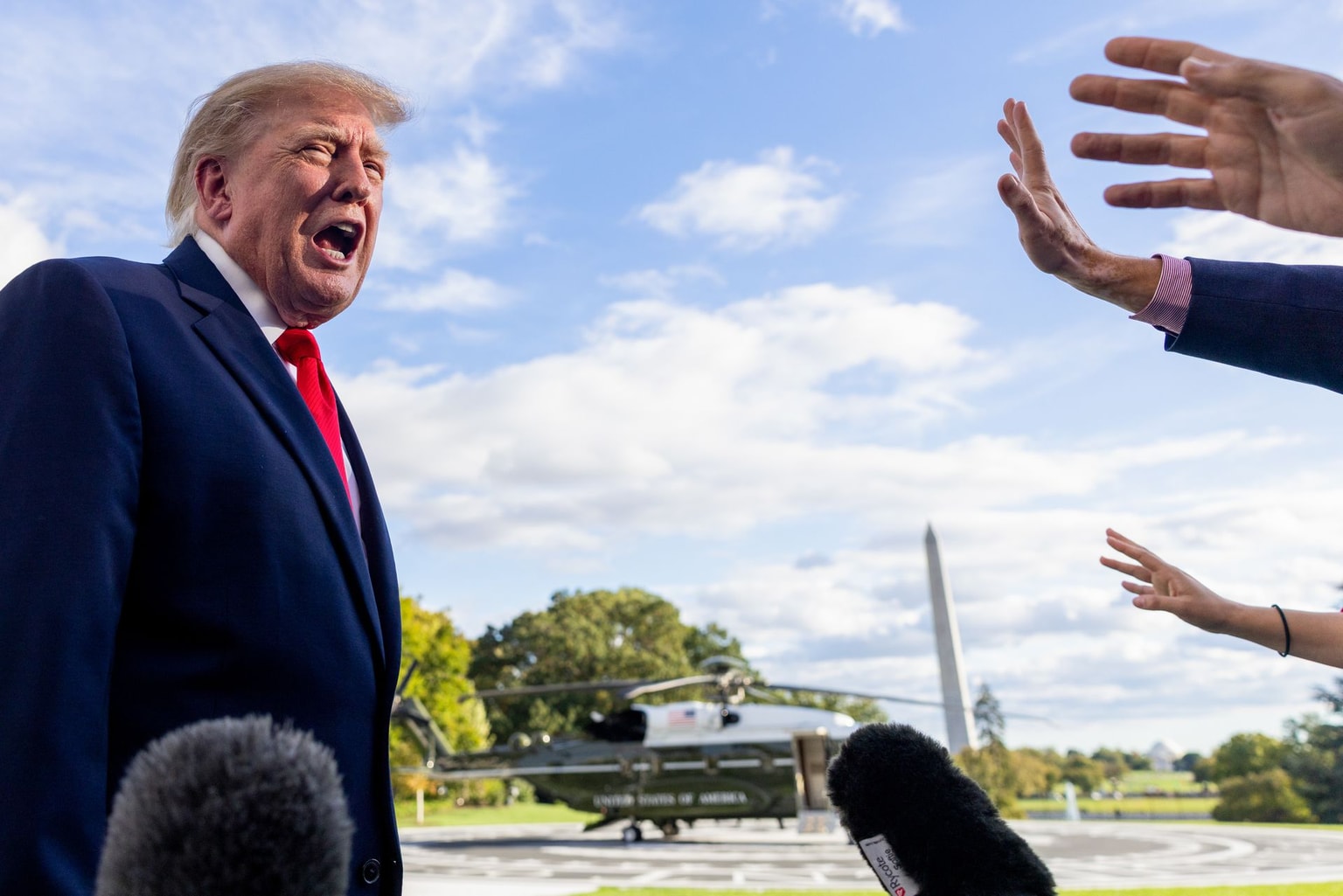
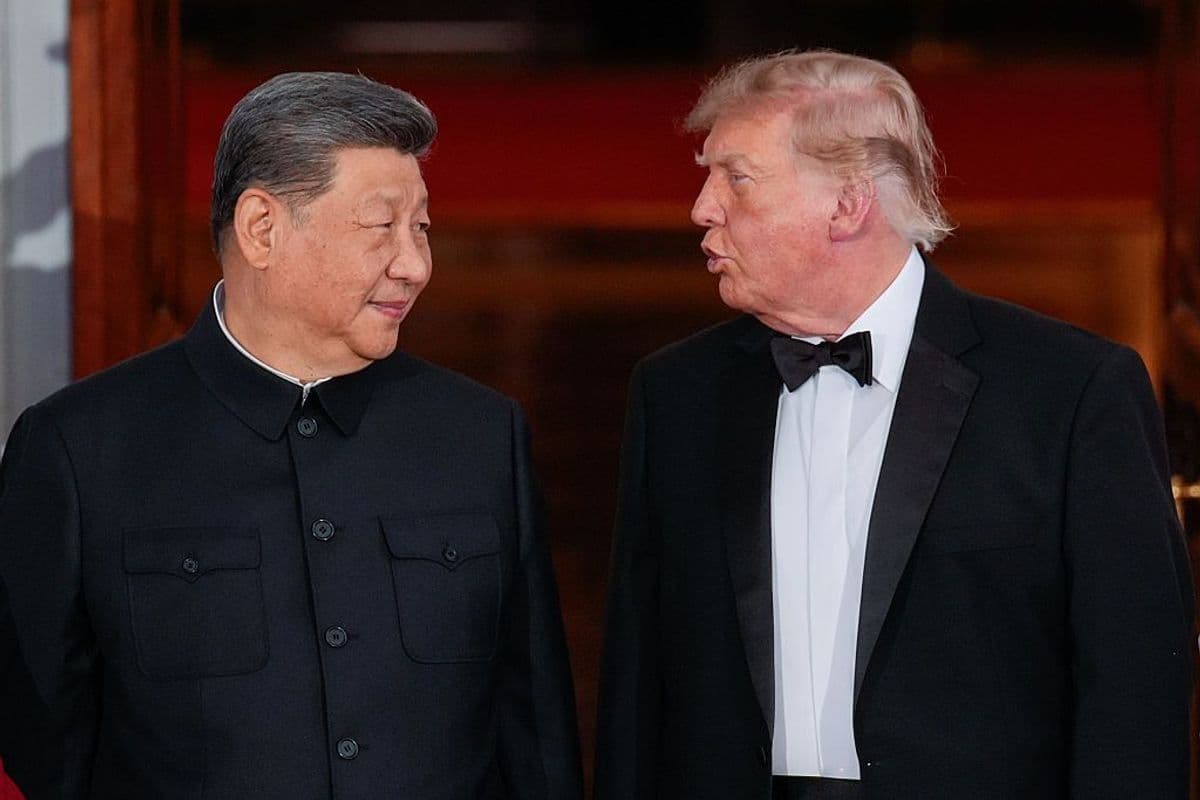
U.S. President Donald Trump held a meeting with Chinese President Xi Jinping at the White House on Sept. 24, marking the leaders' second face-to-face meeting this year.
The war in Ukraine was one of several topics that Trump and Xi discussed during their three-hour private meeting, along with trade, AI, the U.S. war in Iran, and Taiwan.
"Both heads of state also exchanged views on major international and regional issues including the Middle East situation, Ukraine crisis, and Korean Peninsula," the Chinese government said in its official summary of events.
Neither Trump nor Xi has spoken publicly about the details of their discussion on Ukraine.
President Volodymyr Zelensky told reporters on Sept. 25 that he expects feedback from the U.S. on the Trump-Xi meeting, including on efforts to pressure Russian President Vladimir Putin to end the all-out war.
Ahead of the U.S.-China summit, Zelensky said on Sept. 22 that he hoped Trump would encourage Xi to use his influence with Putin to move the peace process forward.
"Tomorrow President Trump will have a meeting with the leader of China," Zelensky said after his own one-on-one with the U.S. president.
"I said to (Trump) very openly that we think that if he will also engage President Xi, he has influence on Putin."
China has emerged as Moscow's key trading partner and economic backer amid the sanctions regime imposed by Western countries against Russia since the launch of the full-scale invasion. While China officially claims neutrality in Russia's war against Ukraine, Beijing is one fo the top suppliers of dual-use goods used in Russian military equipment.
Kyiv has even accused China of directly providing arms to Russia — an allegation Beijing denied. Several Chinese nationals have also been captured fighting in Ukraine within Russian ranks.
Overall military cooperation between Moscow and Beijing is on the rise, with Reuters reporting that over 200 Russian military personnel were secretly trained in China in 2025. During Putin's latest visit to Beijing in May 2026, the two countries signed various agreements intended to deepen their strategic partnership.
China is also the world's number one purchaser of Russian oil — opening the country up to the possibility of steep tariffs under the newly signed U.S. sanctions bill.
While Putin has thus far refused to meet Zelensky for direct talks in a third country, Ukraine hopes the upcoming G20 summit in Miami will provide an opportunity for trilateral talks with Trump, Zelensky, and Putin.
U.S. Secretary of State Marco Rubio confirmed that Washington would invite Putin to the summit, which is scheduled to take place in December. Putin has not yet said whether he will attend.
The Kremlin has also suggested that Putin could hold trilateral talks with Xi and Trump at the APEC summit in China in November.
During their meeting on Sept. 24, Trump and Xi agreed to "support each other" in hosting the G20 and APEC summits, according to Beijing's statement.
While the statement did not include details on the Russia-Ukraine portion of the meeting, the Chinese government was more forthcoming when it came to Xi's remarks to Trump about another matter related to independence and territorial integrity: Taiwan.
According to the government's statement, Xi told Trump that "China hopes the U.S. side will adhere to the correct position of opposing 'Taiwan independence,' and handle the Taiwan question with prudence."
The statement went on to say that Xi was "crystal clear" with Trump regarding China's position on maintaining what it considers to be its national unity and territorial integrity.
Experts have warned that China is closely watching Russia's invasion of Ukraine to learn lessons for a potential invasion of Taiwan, a self-governing democratic island nation that China considers part of its territory.
Beijing has ramped up military pressure on Taiwan in recent years, while leaked documents show that Russia has been helping China prepare for a possible invasion, including by arming and training Chinese airborne troops.
Taiwan has consistently condemned Russia's invasion and voiced support for Ukraine's sovereignty. Despite lacking formal diplomatic ties, Taipei has provided humanitarian assistance and backed international sanctions against Moscow.