KI short logo
How a dissident poet became Ukraine’s moral compass

How a dissident poet became Ukraine’s moral compass

Copied!

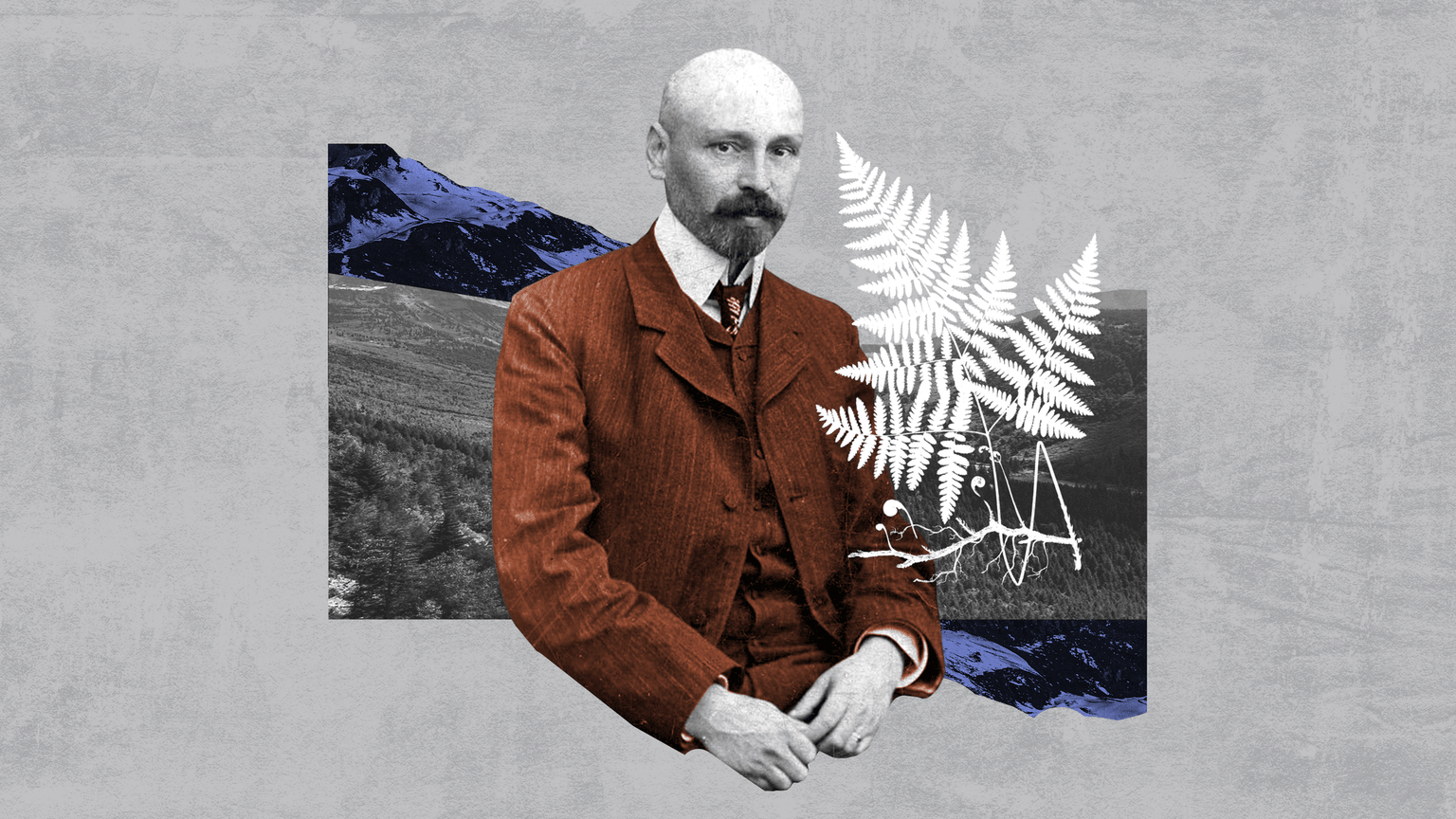
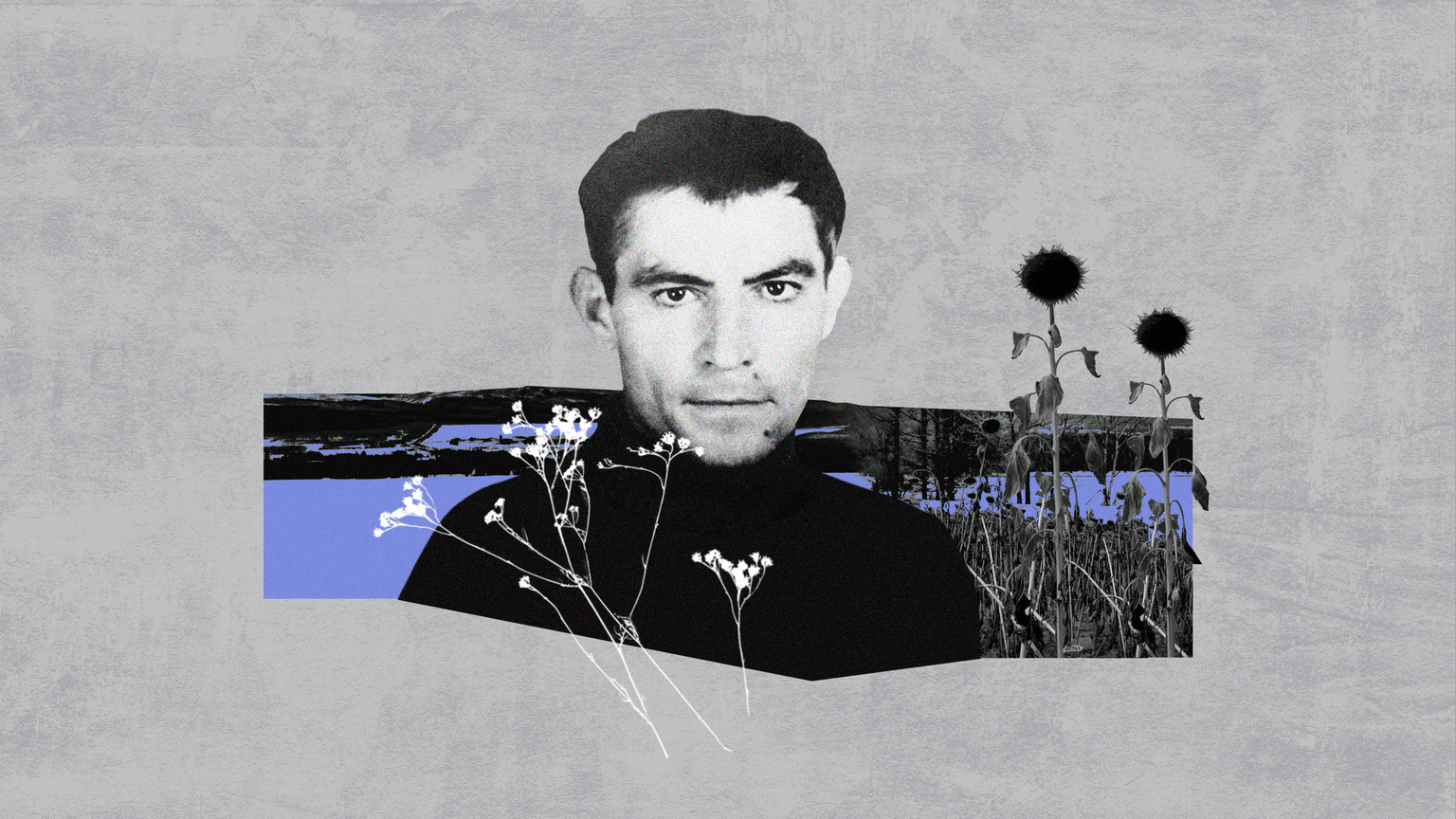
Ukrainian poet Vasyl Stus. (Collage by Anastasiia Starko / the Kyiv Independent)


Editor's Note: This story is part of the "Hidden Canon"  – a special series celebrating Ukrainian classic literature and aiming to bring it to a wider international audience. The series is supported by the Ukrainian Institute.

One Christmas Eve night, in a prison camp in the Russian republic of Mordovia, Ukrainian female political prisoners braved the cold to gather near the barbed wire that separated them from the men to sing carols.

They gathered there for the poet Vasyl Stus, who had been given a five-year sentence from 1973 to 1978 for “anti-Soviet agitation and propaganda.” It just happened to be his birthday.

Fellow poet and dissident Iryna Kalynets, who was also in the camp, later recounted how they called out to him, and when they finally heard him reply, they “sent (their) voices soaring toward the stars” until “(their) throats began to scrape with the barbed wire of the bitter frost.”

Kalynets managed to pass Stus a message the following day, asking if he had heard their carols, to which he playfully wrote back that he had heard “something squeaking beyond the wire.” On the second page of his reply was a poem which included the following lines:

As though through panes bedewed with rain,
through the cry of parting, of lanterns and of bars,
there trembled forth, in thin and reedlike voices,
a faceted goblet of flowers and of girls.
There the marble acanthus greens anew,
its carved tongues murmuring
a carol — as though from behind the icons —
carrying the mournful fragrance of song.

One of the most prolific figures in Ukrainian literature, Stus' commitment to democracy and human rights cost Stus years of his life behind bars and in exile. He ultimately perished in a Russian prison camp in the Perm region in 1985, the very year the world celebrated the rise of “perestroika,” the so-called dawn of new societal freedoms in the USSR.

Stus was part of a generation of Ukrainian intellectuals later known collectively as the Sixtiers, named so after the decade they were most active in, the 1960s. They championed a cultural awakening in the brief thaw following Soviet leader Joseph Stalin’s death.

The Sixtiers pushed back against the idea that the Russian language should take precedence over Ukrainian and that Ukrainian history and culture couldn’t be discussed openly. They also began to question why so many Ukrainian intellectuals had been arrested, imprisoned, and executed during the Stalinist purges of the 1930s.

The answers to these questions exposed the fatal flaw of the Soviet regime. For this, the Sixtiers would soon become targets of the Soviets themselves — and those like Stus who refused to stand down became dissidents.

Article image
Iryna Kalynets' prison photos (C) at an exhibition dedicated to Vasyl Stus in Kyiv, Ukraine, on Nov. 13, 2025. (Anna Donets / The Kyiv Independent)

One of the most well-known protests that Stus participated in took place on September 4, 1965, during the Kyiv premiere of Sergei Parajanov’s film “Shadows of Forgotten Ancestors.” Based on 19th-century writer Mykhailo Kotsiubynskyi’s novella of the same name, the film was itself a landmark achievement. It explored the inner world of Ukrainians, wasn’t dubbed into Russian, and its rich, folkloric visuals stood in stark contrast to Socialist Realism's conventions.
After Parajanov spoke to the audience about how difficult it had been to make the film, literary critic Ivan Dziuba seized the opportunity to take the stage, grab the microphone, and sound the alarm about the return of political oppression, naming recently arrested Ukrainian intellectuals. According to witness accounts, he then called on the audience — about 800 people — to stand up in protest. A commotion broke out, and Stus was among the few who stood up in support, trying to rally the crowd.

For his participation in the protest, Stus was expelled from graduate school. It was just one of many setbacks he would face throughout his life because of his pro-Ukrainian stance. Yet Stus’s poetry shows his clear-eyed grasp of the dangers Russia poses to Ukraine’s sovereignty, and the sacrifices required of those who take up the fight against it.

Stus also pays homage to those who took part in this fight before him. In his poem, “‘Fight on — you shall prevail!’ Taras once counseled me,” Stus not only quotes one of the famous lines from 19th century poet Taras Shevchenko’s work — he engages with him as a sort of mentor.

Shevchenko was born into serfdom in 1814, when much of Ukraine was under Russian imperial control. After gaining his freedom in 1838, he devoted his life and art to Ukrainian national identity and the suffering of his people under Russian rule. For his involvement in these efforts, the tsarist authorities arrested Shevchenko and exiled him to a remote military outpost.

"Fight on — and you shall win!" Taras once counseled me,
through a sleepless night,
When my eyes burned like suns, and
my body blazed in their fire.
You counsel me still, awake and in dreams,
until despair fills me whole,
Though I take comfort in hope: I will believe in
the struggle — even if that day is far.

The fire imagery in these lines from Stus’ poem symbolizes both suffering and illumination. By repeating Shevchenko’s phrase “Fight on, and you shall prevail!” across multiple stanzas, Stus turns it into a mantra. The weight of the responsibilities he must undertake to fight for Ukraine’s cause drives him to exhaustion, but it also gives him the energy to keep going no matter what he faces.

According to translator and literary scholar Alessandro Achilli, one of the main ideas in Stus’ work is that Ukraine is “a project, a home that needs to be rebuilt.”

“This is one of the ideas that reflect his deep similarity with Shevchenko. Stus saw his own poetry as a key element in Ukraine's cultural rebuilding,” Achilli said.

On this difficult path to rebuild Ukrainian national identity, a number of the Sixtiers would be taken before their time. At the funeral of artist Alla Horska in 1970, who died under suspicious circumstances, Stus carried her portrait to the cemetery and did not hesitate to call her death what it was: a murder.

“Today, it’s you. Tomorrow, it’ll be me,” he said when it was his time to speak. The poem he later wrote in memory of Horska is more than just an elegy — it is a meditation on the fate of the entire Sixtiers’ circle — and, crucially, places Stus himself inside the sequence of deaths.

Rage on, soul. Rage on, and do not weep.
In white frost lies the sun of Ukraine.
But you — go seek the red shadow of the viburnum
on black waters — seek its shadow,
where our small handful stands. A tiny pinch
fit only for prayers and hoping.
Death was foretold for all of us, long ago,
for viburnum-blood runs just as fierce,
just as bitter as the blood in our own veins.
In the grey blizzard of lament
these clusters of pain, falling into the depths,
have settled into undying misfortune.

Stus faces the prospect of his own death head-on in the poem, but there’s nothing fatalistic or resigned in his attitude. Instead, he transforms the certainty of death into a rallying cry — a reminder that, precisely because death is inevitable, one must fight with every ounce of strength while life endures.

Stus’s determination held firm even amid the brutal realities of the prison camps. His son, Dmytro, spent considerable time sifting through KGB archives about his father — the details now available online at the Stus Center.

These records reveal how, in the Mordovian camp, Stus repeatedly defied the authorities by doing things like refusing to wear his identification badge or show up for morning roll call. He was punished repeatedly for these acts, but for Stus, they were a way to reassert his dignity and prove he could not be broken by the system.

“He behaved arrogantly (toward camp employees) and insolently and made no secret of his hatred toward them... He called administration employees sadists, claiming that they exploited him and took money from his earnings to fatten KGB and administration employees,” one report from 1974 reads.

In the summer of 1976, Stus would write a declaration attempting to renounce his Soviet citizenship, telling the Presidium of the Supreme Soviet of the USSR that he had been “convicted for striving for social justice, because there were forces that initially reacted with fierce hostility to this striving and subsequently called it a criminal tendency leading to anti-state activity.”

“I advocated democratization — this was construed as an attempt to slander the Soviet system; my love for my native people, my concern over the crisis in Ukrainian culture, were classified as nationalism; my rejection of the practices that gave rise to Stalinism, Beriaism, and other similar phenomena was interpreted as particularly malicious slander.”

While Stus took a strong political stance in his life, he was careful, as Achilli notes, to ensure that his poetry did not devolve into straightforward political rhetoric, striving instead to maintain its artistic and existential complexity.

“This also explains why he was critical of much of Ukrainian literature,” Achilli said. “In the 1970s, he dedicated himself to (translating) Rainer Maria Rilke's “Duino Elegies,” an extremely difficult and hermetic work. I'd claim he did so to keep on refining and ‘purifying’ his own poetic language.”

Article image
Official KGB photo of Vasyl Stus from his file after his arrest, in 1980. (National Archive of Ukraine / Wikimedia)

Even after he returned from the prison camp in Mordovia, Stus would continue his activism and outspoken criticism of the Soviet regime. Once again, his writings and human-rights advocacy were labeled “anti-Soviet agitation and propaganda.” This led to his second, harsher sentence — when he was sentenced to 10 years of forced labor and five years of internal exile.

His court-appointed lawyer after his arrest in 1980 was none other than Viktor Medvedchuk, who would later become one of Ukraine’s most notorious pro-Russian oligarchs — Russian President Vladimir Putin is the godfather to one of his daughters. Medvedchuk did nothing to defend Stus, and acted only to reaffirm the poet’s “guilt.”

The forced labor camp in Russia’s Perm region where Stus was sent would be where he met his death. During his time there, his poetry collection “The Bird of the Soul” was confiscated — its whereabouts remain unknown to this day. On a hunger strike, on either Sept. 3 or 4 in 1985, Stus succumbed to poor health and died in a punishment cell.

His wife Valentyna and son Dmytro would not be able to obtain permission to reinter his remains until 1989, and even then, a number of bureaucratic obstacles delayed the transfer.

In mid-November that year, his remains and those of two other political prisoners were brought back to Ukraine, and tens of thousands of mourners in Kyiv came to pay their respects. It was a momentous event of the late Soviet period, in which Ukrainians came together in a powerful display of national unity, openly honoring their heroes and signaling a renewed demand for independence.

Stus became Ukraine's moral conscience, embodying integrity, courage, and an unyielding commitment to truth. He stood firm against tyranny and refused to be silenced — lessons that remain relevant decades later, as Russia’s full-scale war against Ukraine rages on.

His clarity of purpose and devotion to a higher ideal are captured in a letter he wrote to his son on Feb. 1, 1985: “The greater the goal, the greater the person. Therefore, the meaning of life is to have as great a goal as possible, to make that goal your own, to make it yourself — in other words, to exchange places with it, to immerse yourself completely in it, right to the very end.”

Poem excerpts translated by Kate Tsurkan


Lost Horse Press announced on Sept. 4 that it would publish a selection of Stus’ poems in Bohdan Tokarskyi and Nina Murray’s translation, although the release date hasn’t yet been specified. No other collections of Stus' work have been published yet in English.

Share
Avatar
Kate Tsurkan

Culture Reporter

Kate Tsurkan is a reporter at the Kyiv Independent who writes mostly about culture-related topics. Her newsletter Explaining Ukraine with Kate Tsurkan, which focuses specifically on Ukrainian culture, is published weekly by the Kyiv Independent and is partially supported by a generous grant from the Nadia Sophie Seiler Fund. Kate co-translated Oleh Sentsov’s “Diary of a Hunger Striker,” Myroslav Laiuk’s “Bakhmut,” Andriy Lyubka’s “War from the Rear,” and Khrystia Vengryniuk’s “Long Eyes,” among other books. Some of her previous writing and translations have appeared in the New Yorker, Vanity Fair, Harpers, the Washington Post, the New York Times, the Los Angeles Review of Books, and elsewhere. She is the co-founder of Apofenie Magazine and, in addition to Ukrainian and Russian, also knows French.

Read more

How a dissident poet became Ukraine’s moral compass

9 min read

Ukrainian poet Vasyl Stus. (Collage by Anastasiia Starko / the Kyiv Independent)

Editor's Note: This story is part of the "Hidden Canon"  – a special series celebrating Ukrainian classic literature and aiming to bring it to a wider international audience. The series is supported by the Ukrainian Institute.

One Christmas Eve night, in a prison camp in the Russian republic of Mordovia, Ukrainian female political prisoners braved the cold to gather near the barbed wire that separated them from the men to sing carols.

They gathered there for the poet Vasyl Stus, who had been given a five-year sentence from 1973 to 1978 for “anti-Soviet agitation and propaganda.” It just happened to be his birthday.

Fellow poet and dissident Iryna Kalynets, who was also in the camp, later recounted how they called out to him, and when they finally heard him reply, they “sent (their) voices soaring toward the stars” until “(their) throats began to scrape with the barbed wire of the bitter frost.”

Kalynets managed to pass Stus a message the following day, asking if he had heard their carols, to which he playfully wrote back that he had heard “something squeaking beyond the wire.” On the second page of his reply was a poem which included the following lines:

As though through panes bedewed with rain,
through the cry of parting, of lanterns and of bars,
there trembled forth, in thin and reedlike voices,
a faceted goblet of flowers and of girls.
There the marble acanthus greens anew,
its carved tongues murmuring
a carol — as though from behind the icons —
carrying the mournful fragrance of song.

One of the most prolific figures in Ukrainian literature, Stus' commitment to democracy and human rights cost Stus years of his life behind bars and in exile. He ultimately perished in a Russian prison camp in the Perm region in 1985, the very year the world celebrated the rise of “perestroika,” the so-called dawn of new societal freedoms in the USSR.

Stus was part of a generation of Ukrainian intellectuals later known collectively as the Sixtiers, named so after the decade they were most active in, the 1960s. They championed a cultural awakening in the brief thaw following Soviet leader Joseph Stalin’s death.

The Sixtiers pushed back against the idea that the Russian language should take precedence over Ukrainian and that Ukrainian history and culture couldn’t be discussed openly. They also began to question why so many Ukrainian intellectuals had been arrested, imprisoned, and executed during the Stalinist purges of the 1930s.

The answers to these questions exposed the fatal flaw of the Soviet regime. For this, the Sixtiers would soon become targets of the Soviets themselves — and those like Stus who refused to stand down became dissidents.

Article image
Iryna Kalynets' prison photos (C) at an exhibition dedicated to Vasyl Stus in Kyiv, Ukraine, on Nov. 13, 2025. (Anna Donets / The Kyiv Independent)

One of the most well-known protests that Stus participated in took place on September 4, 1965, during the Kyiv premiere of Sergei Parajanov’s film “Shadows of Forgotten Ancestors.” Based on 19th-century writer Mykhailo Kotsiubynskyi’s novella of the same name, the film was itself a landmark achievement. It explored the inner world of Ukrainians, wasn’t dubbed into Russian, and its rich, folkloric visuals stood in stark contrast to Socialist Realism's conventions.
After Parajanov spoke to the audience about how difficult it had been to make the film, literary critic Ivan Dziuba seized the opportunity to take the stage, grab the microphone, and sound the alarm about the return of political oppression, naming recently arrested Ukrainian intellectuals. According to witness accounts, he then called on the audience — about 800 people — to stand up in protest. A commotion broke out, and Stus was among the few who stood up in support, trying to rally the crowd.

For his participation in the protest, Stus was expelled from graduate school. It was just one of many setbacks he would face throughout his life because of his pro-Ukrainian stance. Yet Stus’s poetry shows his clear-eyed grasp of the dangers Russia poses to Ukraine’s sovereignty, and the sacrifices required of those who take up the fight against it.

Stus also pays homage to those who took part in this fight before him. In his poem, “‘Fight on — you shall prevail!’ Taras once counseled me,” Stus not only quotes one of the famous lines from 19th century poet Taras Shevchenko’s work — he engages with him as a sort of mentor.

Shevchenko was born into serfdom in 1814, when much of Ukraine was under Russian imperial control. After gaining his freedom in 1838, he devoted his life and art to Ukrainian national identity and the suffering of his people under Russian rule. For his involvement in these efforts, the tsarist authorities arrested Shevchenko and exiled him to a remote military outpost.

"Fight on — and you shall win!" Taras once counseled me,
through a sleepless night,
When my eyes burned like suns, and
my body blazed in their fire.
You counsel me still, awake and in dreams,
until despair fills me whole,
Though I take comfort in hope: I will believe in
the struggle — even if that day is far.

The fire imagery in these lines from Stus’ poem symbolizes both suffering and illumination. By repeating Shevchenko’s phrase “Fight on, and you shall prevail!” across multiple stanzas, Stus turns it into a mantra. The weight of the responsibilities he must undertake to fight for Ukraine’s cause drives him to exhaustion, but it also gives him the energy to keep going no matter what he faces.

According to translator and literary scholar Alessandro Achilli, one of the main ideas in Stus’ work is that Ukraine is “a project, a home that needs to be rebuilt.”

“This is one of the ideas that reflect his deep similarity with Shevchenko. Stus saw his own poetry as a key element in Ukraine's cultural rebuilding,” Achilli said.

On this difficult path to rebuild Ukrainian national identity, a number of the Sixtiers would be taken before their time. At the funeral of artist Alla Horska in 1970, who died under suspicious circumstances, Stus carried her portrait to the cemetery and did not hesitate to call her death what it was: a murder.

“Today, it’s you. Tomorrow, it’ll be me,” he said when it was his time to speak. The poem he later wrote in memory of Horska is more than just an elegy — it is a meditation on the fate of the entire Sixtiers’ circle — and, crucially, places Stus himself inside the sequence of deaths.

Rage on, soul. Rage on, and do not weep.
In white frost lies the sun of Ukraine.
But you — go seek the red shadow of the viburnum
on black waters — seek its shadow,
where our small handful stands. A tiny pinch
fit only for prayers and hoping.
Death was foretold for all of us, long ago,
for viburnum-blood runs just as fierce,
just as bitter as the blood in our own veins.
In the grey blizzard of lament
these clusters of pain, falling into the depths,
have settled into undying misfortune.

Stus faces the prospect of his own death head-on in the poem, but there’s nothing fatalistic or resigned in his attitude. Instead, he transforms the certainty of death into a rallying cry — a reminder that, precisely because death is inevitable, one must fight with every ounce of strength while life endures.

Stus’s determination held firm even amid the brutal realities of the prison camps. His son, Dmytro, spent considerable time sifting through KGB archives about his father — the details now available online at the Stus Center.

These records reveal how, in the Mordovian camp, Stus repeatedly defied the authorities by doing things like refusing to wear his identification badge or show up for morning roll call. He was punished repeatedly for these acts, but for Stus, they were a way to reassert his dignity and prove he could not be broken by the system.

“He behaved arrogantly (toward camp employees) and insolently and made no secret of his hatred toward them... He called administration employees sadists, claiming that they exploited him and took money from his earnings to fatten KGB and administration employees,” one report from 1974 reads.

In the summer of 1976, Stus would write a declaration attempting to renounce his Soviet citizenship, telling the Presidium of the Supreme Soviet of the USSR that he had been “convicted for striving for social justice, because there were forces that initially reacted with fierce hostility to this striving and subsequently called it a criminal tendency leading to anti-state activity.”

“I advocated democratization — this was construed as an attempt to slander the Soviet system; my love for my native people, my concern over the crisis in Ukrainian culture, were classified as nationalism; my rejection of the practices that gave rise to Stalinism, Beriaism, and other similar phenomena was interpreted as particularly malicious slander.”

While Stus took a strong political stance in his life, he was careful, as Achilli notes, to ensure that his poetry did not devolve into straightforward political rhetoric, striving instead to maintain its artistic and existential complexity.

“This also explains why he was critical of much of Ukrainian literature,” Achilli said. “In the 1970s, he dedicated himself to (translating) Rainer Maria Rilke's “Duino Elegies,” an extremely difficult and hermetic work. I'd claim he did so to keep on refining and ‘purifying’ his own poetic language.”

Article image
Official KGB photo of Vasyl Stus from his file after his arrest, in 1980. (National Archive of Ukraine / Wikimedia)

Even after he returned from the prison camp in Mordovia, Stus would continue his activism and outspoken criticism of the Soviet regime. Once again, his writings and human-rights advocacy were labeled “anti-Soviet agitation and propaganda.” This led to his second, harsher sentence — when he was sentenced to 10 years of forced labor and five years of internal exile.

His court-appointed lawyer after his arrest in 1980 was none other than Viktor Medvedchuk, who would later become one of Ukraine’s most notorious pro-Russian oligarchs — Russian President Vladimir Putin is the godfather to one of his daughters. Medvedchuk did nothing to defend Stus, and acted only to reaffirm the poet’s “guilt.”

The forced labor camp in Russia’s Perm region where Stus was sent would be where he met his death. During his time there, his poetry collection “The Bird of the Soul” was confiscated — its whereabouts remain unknown to this day. On a hunger strike, on either Sept. 3 or 4 in 1985, Stus succumbed to poor health and died in a punishment cell.

His wife Valentyna and son Dmytro would not be able to obtain permission to reinter his remains until 1989, and even then, a number of bureaucratic obstacles delayed the transfer.

In mid-November that year, his remains and those of two other political prisoners were brought back to Ukraine, and tens of thousands of mourners in Kyiv came to pay their respects. It was a momentous event of the late Soviet period, in which Ukrainians came together in a powerful display of national unity, openly honoring their heroes and signaling a renewed demand for independence.

Stus became Ukraine's moral conscience, embodying integrity, courage, and an unyielding commitment to truth. He stood firm against tyranny and refused to be silenced — lessons that remain relevant decades later, as Russia’s full-scale war against Ukraine rages on.

His clarity of purpose and devotion to a higher ideal are captured in a letter he wrote to his son on Feb. 1, 1985: “The greater the goal, the greater the person. Therefore, the meaning of life is to have as great a goal as possible, to make that goal your own, to make it yourself — in other words, to exchange places with it, to immerse yourself completely in it, right to the very end.”

Poem excerpts translated by Kate Tsurkan


Lost Horse Press announced on Sept. 4 that it would publish a selection of Stus’ poems in Bohdan Tokarskyi and Nina Murray’s translation, although the release date hasn’t yet been specified. No other collections of Stus' work have been published yet in English.
Avatar
Kate Tsurkan

Culture Reporter

Kate Tsurkan is a reporter at the Kyiv Independent who writes mostly about culture-related topics. Her newsletter Explaining Ukraine with Kate Tsurkan, which focuses specifically on Ukrainian culture, is published weekly by the Kyiv Independent and is partially supported by a generous grant from the Nadia Sophie Seiler Fund. Kate co-translated Oleh Sentsov’s “Diary of a Hunger Striker,” Myroslav Laiuk’s “Bakhmut,” Andriy Lyubka’s “War from the Rear,” and Khrystia Vengryniuk’s “Long Eyes,” among other books. Some of her previous writing and translations have appeared in the New Yorker, Vanity Fair, Harpers, the Washington Post, the New York Times, the Los Angeles Review of Books, and elsewhere. She is the co-founder of Apofenie Magazine and, in addition to Ukrainian and Russian, also knows French.

Read more
KI short logo
How a dissident poet became Ukraine’s moral compass

How a dissident poet became Ukraine’s moral compass

Copied!

Ukrainian poet Vasyl Stus. (Collage by Anastasiia Starko / the Kyiv Independent)


Editor's Note: This story is part of the "Hidden Canon"  – a special series celebrating Ukrainian classic literature and aiming to bring it to a wider international audience. The series is supported by the Ukrainian Institute.

One Christmas Eve night, in a prison camp in the Russian republic of Mordovia, Ukrainian female political prisoners braved the cold to gather near the barbed wire that separated them from the men to sing carols.

They gathered there for the poet Vasyl Stus, who had been given a five-year sentence from 1973 to 1978 for “anti-Soviet agitation and propaganda.” It just happened to be his birthday.

Fellow poet and dissident Iryna Kalynets, who was also in the camp, later recounted how they called out to him, and when they finally heard him reply, they “sent (their) voices soaring toward the stars” until “(their) throats began to scrape with the barbed wire of the bitter frost.”

Kalynets managed to pass Stus a message the following day, asking if he had heard their carols, to which he playfully wrote back that he had heard “something squeaking beyond the wire.” On the second page of his reply was a poem which included the following lines:

As though through panes bedewed with rain,
through the cry of parting, of lanterns and of bars,
there trembled forth, in thin and reedlike voices,
a faceted goblet of flowers and of girls.
There the marble acanthus greens anew,
its carved tongues murmuring
a carol — as though from behind the icons —
carrying the mournful fragrance of song.

One of the most prolific figures in Ukrainian literature, Stus' commitment to democracy and human rights cost Stus years of his life behind bars and in exile. He ultimately perished in a Russian prison camp in the Perm region in 1985, the very year the world celebrated the rise of “perestroika,” the so-called dawn of new societal freedoms in the USSR.

Stus was part of a generation of Ukrainian intellectuals later known collectively as the Sixtiers, named so after the decade they were most active in, the 1960s. They championed a cultural awakening in the brief thaw following Soviet leader Joseph Stalin’s death.

The Sixtiers pushed back against the idea that the Russian language should take precedence over Ukrainian and that Ukrainian history and culture couldn’t be discussed openly. They also began to question why so many Ukrainian intellectuals had been arrested, imprisoned, and executed during the Stalinist purges of the 1930s.

The answers to these questions exposed the fatal flaw of the Soviet regime. For this, the Sixtiers would soon become targets of the Soviets themselves — and those like Stus who refused to stand down became dissidents.

Article image
Iryna Kalynets' prison photos (C) at an exhibition dedicated to Vasyl Stus in Kyiv, Ukraine, on Nov. 13, 2025. (Anna Donets / The Kyiv Independent)

One of the most well-known protests that Stus participated in took place on September 4, 1965, during the Kyiv premiere of Sergei Parajanov’s film “Shadows of Forgotten Ancestors.” Based on 19th-century writer Mykhailo Kotsiubynskyi’s novella of the same name, the film was itself a landmark achievement. It explored the inner world of Ukrainians, wasn’t dubbed into Russian, and its rich, folkloric visuals stood in stark contrast to Socialist Realism's conventions.
After Parajanov spoke to the audience about how difficult it had been to make the film, literary critic Ivan Dziuba seized the opportunity to take the stage, grab the microphone, and sound the alarm about the return of political oppression, naming recently arrested Ukrainian intellectuals. According to witness accounts, he then called on the audience — about 800 people — to stand up in protest. A commotion broke out, and Stus was among the few who stood up in support, trying to rally the crowd.

For his participation in the protest, Stus was expelled from graduate school. It was just one of many setbacks he would face throughout his life because of his pro-Ukrainian stance. Yet Stus’s poetry shows his clear-eyed grasp of the dangers Russia poses to Ukraine’s sovereignty, and the sacrifices required of those who take up the fight against it.

Stus also pays homage to those who took part in this fight before him. In his poem, “‘Fight on — you shall prevail!’ Taras once counseled me,” Stus not only quotes one of the famous lines from 19th century poet Taras Shevchenko’s work — he engages with him as a sort of mentor.

Shevchenko was born into serfdom in 1814, when much of Ukraine was under Russian imperial control. After gaining his freedom in 1838, he devoted his life and art to Ukrainian national identity and the suffering of his people under Russian rule. For his involvement in these efforts, the tsarist authorities arrested Shevchenko and exiled him to a remote military outpost.

"Fight on — and you shall win!" Taras once counseled me,
through a sleepless night,
When my eyes burned like suns, and
my body blazed in their fire.
You counsel me still, awake and in dreams,
until despair fills me whole,
Though I take comfort in hope: I will believe in
the struggle — even if that day is far.

The fire imagery in these lines from Stus’ poem symbolizes both suffering and illumination. By repeating Shevchenko’s phrase “Fight on, and you shall prevail!” across multiple stanzas, Stus turns it into a mantra. The weight of the responsibilities he must undertake to fight for Ukraine’s cause drives him to exhaustion, but it also gives him the energy to keep going no matter what he faces.

According to translator and literary scholar Alessandro Achilli, one of the main ideas in Stus’ work is that Ukraine is “a project, a home that needs to be rebuilt.”

“This is one of the ideas that reflect his deep similarity with Shevchenko. Stus saw his own poetry as a key element in Ukraine's cultural rebuilding,” Achilli said.

On this difficult path to rebuild Ukrainian national identity, a number of the Sixtiers would be taken before their time. At the funeral of artist Alla Horska in 1970, who died under suspicious circumstances, Stus carried her portrait to the cemetery and did not hesitate to call her death what it was: a murder.

“Today, it’s you. Tomorrow, it’ll be me,” he said when it was his time to speak. The poem he later wrote in memory of Horska is more than just an elegy — it is a meditation on the fate of the entire Sixtiers’ circle — and, crucially, places Stus himself inside the sequence of deaths.

Rage on, soul. Rage on, and do not weep.
In white frost lies the sun of Ukraine.
But you — go seek the red shadow of the viburnum
on black waters — seek its shadow,
where our small handful stands. A tiny pinch
fit only for prayers and hoping.
Death was foretold for all of us, long ago,
for viburnum-blood runs just as fierce,
just as bitter as the blood in our own veins.
In the grey blizzard of lament
these clusters of pain, falling into the depths,
have settled into undying misfortune.

Stus faces the prospect of his own death head-on in the poem, but there’s nothing fatalistic or resigned in his attitude. Instead, he transforms the certainty of death into a rallying cry — a reminder that, precisely because death is inevitable, one must fight with every ounce of strength while life endures.

Stus’s determination held firm even amid the brutal realities of the prison camps. His son, Dmytro, spent considerable time sifting through KGB archives about his father — the details now available online at the Stus Center.

These records reveal how, in the Mordovian camp, Stus repeatedly defied the authorities by doing things like refusing to wear his identification badge or show up for morning roll call. He was punished repeatedly for these acts, but for Stus, they were a way to reassert his dignity and prove he could not be broken by the system.

“He behaved arrogantly (toward camp employees) and insolently and made no secret of his hatred toward them... He called administration employees sadists, claiming that they exploited him and took money from his earnings to fatten KGB and administration employees,” one report from 1974 reads.

In the summer of 1976, Stus would write a declaration attempting to renounce his Soviet citizenship, telling the Presidium of the Supreme Soviet of the USSR that he had been “convicted for striving for social justice, because there were forces that initially reacted with fierce hostility to this striving and subsequently called it a criminal tendency leading to anti-state activity.”

“I advocated democratization — this was construed as an attempt to slander the Soviet system; my love for my native people, my concern over the crisis in Ukrainian culture, were classified as nationalism; my rejection of the practices that gave rise to Stalinism, Beriaism, and other similar phenomena was interpreted as particularly malicious slander.”

While Stus took a strong political stance in his life, he was careful, as Achilli notes, to ensure that his poetry did not devolve into straightforward political rhetoric, striving instead to maintain its artistic and existential complexity.

“This also explains why he was critical of much of Ukrainian literature,” Achilli said. “In the 1970s, he dedicated himself to (translating) Rainer Maria Rilke's “Duino Elegies,” an extremely difficult and hermetic work. I'd claim he did so to keep on refining and ‘purifying’ his own poetic language.”

Article image
Official KGB photo of Vasyl Stus from his file after his arrest, in 1980. (National Archive of Ukraine / Wikimedia)

Even after he returned from the prison camp in Mordovia, Stus would continue his activism and outspoken criticism of the Soviet regime. Once again, his writings and human-rights advocacy were labeled “anti-Soviet agitation and propaganda.” This led to his second, harsher sentence — when he was sentenced to 10 years of forced labor and five years of internal exile.

His court-appointed lawyer after his arrest in 1980 was none other than Viktor Medvedchuk, who would later become one of Ukraine’s most notorious pro-Russian oligarchs — Russian President Vladimir Putin is the godfather to one of his daughters. Medvedchuk did nothing to defend Stus, and acted only to reaffirm the poet’s “guilt.”

The forced labor camp in Russia’s Perm region where Stus was sent would be where he met his death. During his time there, his poetry collection “The Bird of the Soul” was confiscated — its whereabouts remain unknown to this day. On a hunger strike, on either Sept. 3 or 4 in 1985, Stus succumbed to poor health and died in a punishment cell.

His wife Valentyna and son Dmytro would not be able to obtain permission to reinter his remains until 1989, and even then, a number of bureaucratic obstacles delayed the transfer.

In mid-November that year, his remains and those of two other political prisoners were brought back to Ukraine, and tens of thousands of mourners in Kyiv came to pay their respects. It was a momentous event of the late Soviet period, in which Ukrainians came together in a powerful display of national unity, openly honoring their heroes and signaling a renewed demand for independence.

Stus became Ukraine's moral conscience, embodying integrity, courage, and an unyielding commitment to truth. He stood firm against tyranny and refused to be silenced — lessons that remain relevant decades later, as Russia’s full-scale war against Ukraine rages on.

His clarity of purpose and devotion to a higher ideal are captured in a letter he wrote to his son on Feb. 1, 1985: “The greater the goal, the greater the person. Therefore, the meaning of life is to have as great a goal as possible, to make that goal your own, to make it yourself — in other words, to exchange places with it, to immerse yourself completely in it, right to the very end.”

Poem excerpts translated by Kate Tsurkan


Lost Horse Press announced on Sept. 4 that it would publish a selection of Stus’ poems in Bohdan Tokarskyi and Nina Murray’s translation, although the release date hasn’t yet been specified. No other collections of Stus' work have been published yet in English.
Share
Avatar
Kate Tsurkan

Culture Reporter

Kate Tsurkan is a reporter at the Kyiv Independent who writes mostly about culture-related topics. Her newsletter Explaining Ukraine with Kate Tsurkan, which focuses specifically on Ukrainian culture, is published weekly by the Kyiv Independent and is partially supported by a generous grant from the Nadia Sophie Seiler Fund. Kate co-translated Oleh Sentsov’s “Diary of a Hunger Striker,” Myroslav Laiuk’s “Bakhmut,” Andriy Lyubka’s “War from the Rear,” and Khrystia Vengryniuk’s “Long Eyes,” among other books. Some of her previous writing and translations have appeared in the New Yorker, Vanity Fair, Harpers, the Washington Post, the New York Times, the Los Angeles Review of Books, and elsewhere. She is the co-founder of Apofenie Magazine and, in addition to Ukrainian and Russian, also knows French.

Read more

How a dissident poet became Ukraine’s moral compass

9 min read

Ukrainian poet Vasyl Stus. (Collage by Anastasiia Starko / the Kyiv Independent)

Editor's Note: This story is part of the "Hidden Canon"  – a special series celebrating Ukrainian classic literature and aiming to bring it to a wider international audience. The series is supported by the Ukrainian Institute.

One Christmas Eve night, in a prison camp in the Russian republic of Mordovia, Ukrainian female political prisoners braved the cold to gather near the barbed wire that separated them from the men to sing carols.

They gathered there for the poet Vasyl Stus, who had been given a five-year sentence from 1973 to 1978 for “anti-Soviet agitation and propaganda.” It just happened to be his birthday.

Fellow poet and dissident Iryna Kalynets, who was also in the camp, later recounted how they called out to him, and when they finally heard him reply, they “sent (their) voices soaring toward the stars” until “(their) throats began to scrape with the barbed wire of the bitter frost.”

Kalynets managed to pass Stus a message the following day, asking if he had heard their carols, to which he playfully wrote back that he had heard “something squeaking beyond the wire.” On the second page of his reply was a poem which included the following lines:

As though through panes bedewed with rain,
through the cry of parting, of lanterns and of bars,
there trembled forth, in thin and reedlike voices,
a faceted goblet of flowers and of girls.
There the marble acanthus greens anew,
its carved tongues murmuring
a carol — as though from behind the icons —
carrying the mournful fragrance of song.

One of the most prolific figures in Ukrainian literature, Stus' commitment to democracy and human rights cost Stus years of his life behind bars and in exile. He ultimately perished in a Russian prison camp in the Perm region in 1985, the very year the world celebrated the rise of “perestroika,” the so-called dawn of new societal freedoms in the USSR.

Stus was part of a generation of Ukrainian intellectuals later known collectively as the Sixtiers, named so after the decade they were most active in, the 1960s. They championed a cultural awakening in the brief thaw following Soviet leader Joseph Stalin’s death.

The Sixtiers pushed back against the idea that the Russian language should take precedence over Ukrainian and that Ukrainian history and culture couldn’t be discussed openly. They also began to question why so many Ukrainian intellectuals had been arrested, imprisoned, and executed during the Stalinist purges of the 1930s.

The answers to these questions exposed the fatal flaw of the Soviet regime. For this, the Sixtiers would soon become targets of the Soviets themselves — and those like Stus who refused to stand down became dissidents.

Article image
Iryna Kalynets' prison photos (C) at an exhibition dedicated to Vasyl Stus in Kyiv, Ukraine, on Nov. 13, 2025. (Anna Donets / The Kyiv Independent)

One of the most well-known protests that Stus participated in took place on September 4, 1965, during the Kyiv premiere of Sergei Parajanov’s film “Shadows of Forgotten Ancestors.” Based on 19th-century writer Mykhailo Kotsiubynskyi’s novella of the same name, the film was itself a landmark achievement. It explored the inner world of Ukrainians, wasn’t dubbed into Russian, and its rich, folkloric visuals stood in stark contrast to Socialist Realism's conventions.
After Parajanov spoke to the audience about how difficult it had been to make the film, literary critic Ivan Dziuba seized the opportunity to take the stage, grab the microphone, and sound the alarm about the return of political oppression, naming recently arrested Ukrainian intellectuals. According to witness accounts, he then called on the audience — about 800 people — to stand up in protest. A commotion broke out, and Stus was among the few who stood up in support, trying to rally the crowd.

For his participation in the protest, Stus was expelled from graduate school. It was just one of many setbacks he would face throughout his life because of his pro-Ukrainian stance. Yet Stus’s poetry shows his clear-eyed grasp of the dangers Russia poses to Ukraine’s sovereignty, and the sacrifices required of those who take up the fight against it.

Stus also pays homage to those who took part in this fight before him. In his poem, “‘Fight on — you shall prevail!’ Taras once counseled me,” Stus not only quotes one of the famous lines from 19th century poet Taras Shevchenko’s work — he engages with him as a sort of mentor.

Shevchenko was born into serfdom in 1814, when much of Ukraine was under Russian imperial control. After gaining his freedom in 1838, he devoted his life and art to Ukrainian national identity and the suffering of his people under Russian rule. For his involvement in these efforts, the tsarist authorities arrested Shevchenko and exiled him to a remote military outpost.

"Fight on — and you shall win!" Taras once counseled me,
through a sleepless night,
When my eyes burned like suns, and
my body blazed in their fire.
You counsel me still, awake and in dreams,
until despair fills me whole,
Though I take comfort in hope: I will believe in
the struggle — even if that day is far.

The fire imagery in these lines from Stus’ poem symbolizes both suffering and illumination. By repeating Shevchenko’s phrase “Fight on, and you shall prevail!” across multiple stanzas, Stus turns it into a mantra. The weight of the responsibilities he must undertake to fight for Ukraine’s cause drives him to exhaustion, but it also gives him the energy to keep going no matter what he faces.

According to translator and literary scholar Alessandro Achilli, one of the main ideas in Stus’ work is that Ukraine is “a project, a home that needs to be rebuilt.”

“This is one of the ideas that reflect his deep similarity with Shevchenko. Stus saw his own poetry as a key element in Ukraine's cultural rebuilding,” Achilli said.

On this difficult path to rebuild Ukrainian national identity, a number of the Sixtiers would be taken before their time. At the funeral of artist Alla Horska in 1970, who died under suspicious circumstances, Stus carried her portrait to the cemetery and did not hesitate to call her death what it was: a murder.

“Today, it’s you. Tomorrow, it’ll be me,” he said when it was his time to speak. The poem he later wrote in memory of Horska is more than just an elegy — it is a meditation on the fate of the entire Sixtiers’ circle — and, crucially, places Stus himself inside the sequence of deaths.

Rage on, soul. Rage on, and do not weep.
In white frost lies the sun of Ukraine.
But you — go seek the red shadow of the viburnum
on black waters — seek its shadow,
where our small handful stands. A tiny pinch
fit only for prayers and hoping.
Death was foretold for all of us, long ago,
for viburnum-blood runs just as fierce,
just as bitter as the blood in our own veins.
In the grey blizzard of lament
these clusters of pain, falling into the depths,
have settled into undying misfortune.

Stus faces the prospect of his own death head-on in the poem, but there’s nothing fatalistic or resigned in his attitude. Instead, he transforms the certainty of death into a rallying cry — a reminder that, precisely because death is inevitable, one must fight with every ounce of strength while life endures.

Stus’s determination held firm even amid the brutal realities of the prison camps. His son, Dmytro, spent considerable time sifting through KGB archives about his father — the details now available online at the Stus Center.

These records reveal how, in the Mordovian camp, Stus repeatedly defied the authorities by doing things like refusing to wear his identification badge or show up for morning roll call. He was punished repeatedly for these acts, but for Stus, they were a way to reassert his dignity and prove he could not be broken by the system.

“He behaved arrogantly (toward camp employees) and insolently and made no secret of his hatred toward them... He called administration employees sadists, claiming that they exploited him and took money from his earnings to fatten KGB and administration employees,” one report from 1974 reads.

In the summer of 1976, Stus would write a declaration attempting to renounce his Soviet citizenship, telling the Presidium of the Supreme Soviet of the USSR that he had been “convicted for striving for social justice, because there were forces that initially reacted with fierce hostility to this striving and subsequently called it a criminal tendency leading to anti-state activity.”

“I advocated democratization — this was construed as an attempt to slander the Soviet system; my love for my native people, my concern over the crisis in Ukrainian culture, were classified as nationalism; my rejection of the practices that gave rise to Stalinism, Beriaism, and other similar phenomena was interpreted as particularly malicious slander.”

While Stus took a strong political stance in his life, he was careful, as Achilli notes, to ensure that his poetry did not devolve into straightforward political rhetoric, striving instead to maintain its artistic and existential complexity.

“This also explains why he was critical of much of Ukrainian literature,” Achilli said. “In the 1970s, he dedicated himself to (translating) Rainer Maria Rilke's “Duino Elegies,” an extremely difficult and hermetic work. I'd claim he did so to keep on refining and ‘purifying’ his own poetic language.”

Article image
Official KGB photo of Vasyl Stus from his file after his arrest, in 1980. (National Archive of Ukraine / Wikimedia)

Even after he returned from the prison camp in Mordovia, Stus would continue his activism and outspoken criticism of the Soviet regime. Once again, his writings and human-rights advocacy were labeled “anti-Soviet agitation and propaganda.” This led to his second, harsher sentence — when he was sentenced to 10 years of forced labor and five years of internal exile.

His court-appointed lawyer after his arrest in 1980 was none other than Viktor Medvedchuk, who would later become one of Ukraine’s most notorious pro-Russian oligarchs — Russian President Vladimir Putin is the godfather to one of his daughters. Medvedchuk did nothing to defend Stus, and acted only to reaffirm the poet’s “guilt.”

The forced labor camp in Russia’s Perm region where Stus was sent would be where he met his death. During his time there, his poetry collection “The Bird of the Soul” was confiscated — its whereabouts remain unknown to this day. On a hunger strike, on either Sept. 3 or 4 in 1985, Stus succumbed to poor health and died in a punishment cell.

His wife Valentyna and son Dmytro would not be able to obtain permission to reinter his remains until 1989, and even then, a number of bureaucratic obstacles delayed the transfer.

In mid-November that year, his remains and those of two other political prisoners were brought back to Ukraine, and tens of thousands of mourners in Kyiv came to pay their respects. It was a momentous event of the late Soviet period, in which Ukrainians came together in a powerful display of national unity, openly honoring their heroes and signaling a renewed demand for independence.

Stus became Ukraine's moral conscience, embodying integrity, courage, and an unyielding commitment to truth. He stood firm against tyranny and refused to be silenced — lessons that remain relevant decades later, as Russia’s full-scale war against Ukraine rages on.

His clarity of purpose and devotion to a higher ideal are captured in a letter he wrote to his son on Feb. 1, 1985: “The greater the goal, the greater the person. Therefore, the meaning of life is to have as great a goal as possible, to make that goal your own, to make it yourself — in other words, to exchange places with it, to immerse yourself completely in it, right to the very end.”

Poem excerpts translated by Kate Tsurkan


Lost Horse Press announced on Sept. 4 that it would publish a selection of Stus’ poems in Bohdan Tokarskyi and Nina Murray’s translation, although the release date hasn’t yet been specified. No other collections of Stus' work have been published yet in English.
Avatar
Kate Tsurkan

Culture Reporter

Kate Tsurkan is a reporter at the Kyiv Independent who writes mostly about culture-related topics. Her newsletter Explaining Ukraine with Kate Tsurkan, which focuses specifically on Ukrainian culture, is published weekly by the Kyiv Independent and is partially supported by a generous grant from the Nadia Sophie Seiler Fund. Kate co-translated Oleh Sentsov’s “Diary of a Hunger Striker,” Myroslav Laiuk’s “Bakhmut,” Andriy Lyubka’s “War from the Rear,” and Khrystia Vengryniuk’s “Long Eyes,” among other books. Some of her previous writing and translations have appeared in the New Yorker, Vanity Fair, Harpers, the Washington Post, the New York Times, the Los Angeles Review of Books, and elsewhere. She is the co-founder of Apofenie Magazine and, in addition to Ukrainian and Russian, also knows French.

Read more