Washington attempts dealmaking, Moscow sticks with warmaking
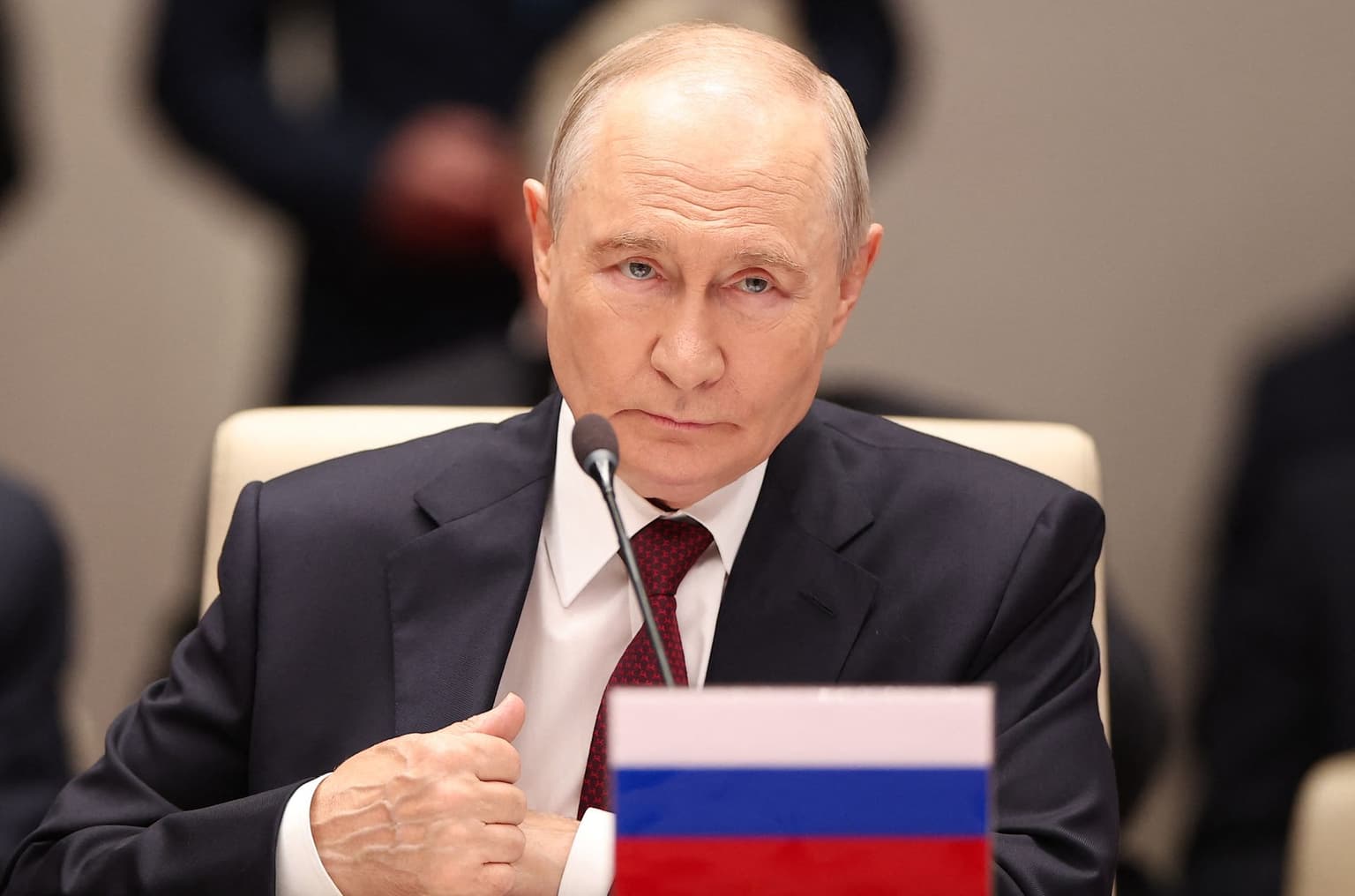
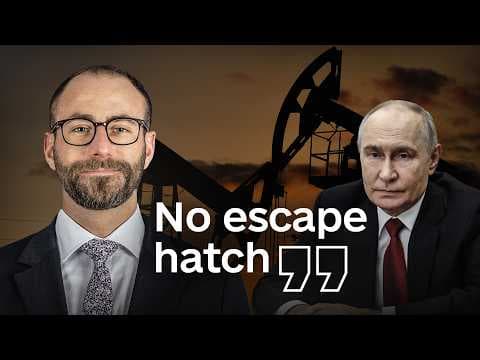
Russian President Vladimir Putin in Bishkek, Kyrgyzstan, on Sept. 1, 2026. (Peter Kovalev / Pool / AFP via Getty Images)
 on Google
Andrew Chakhoyan
Academic director at the University of Amsterdam
"I can't die now. I still need to do the Russia sanctions," Lindsey Graham joked hours before his passing.
Nine weeks later, the bill bearing his name became law with the U.S. president's signature. Reflecting the wishes of the American people, Congress placed a very large stick in the hands of the executive: tariffs of up to 100% on the largest buyers of Russian oil and gas.
It will matter only if Trump swings it.
The Senate passed the measure 86-11 and the House 262-159, a rare show of bipartisan resolve and the most significant Ukraine legislation since Trump returned to the White House.
Long overdue, the law also exposes a dissonance at the heart of American policy. Russia under Putin has been invading its neighbors for nearly two decades, as aggression went unpunished and victims left to fend for themselves. The war continues because of Moscow's belligerent revanchism, not because, in Donald Trump's words, "two people (Putin and Zelensky) that hate each other."

Russia invaded Georgia in 2008 and Ukraine in 2014, five years before Volodymyr Zelensky was elected president. By July 2021, Putin laid out his genocidal intentions in a 5,000-word essay, and seven months later came the full-scale invasion.
It is onto this record that the diplomatic track spearheaded by Steve Witkoff has now been layered. Lamentably, it accommodates the very pattern of Russian aggression that Congress is finally trying to arrest.
"Aren't you disgusted to be sitting at the same table with an international war criminal, the butcher of the Ukrainian people?" a journalist, Dmytro Gordon, asked Trump's envoys in Kyiv, where Witkoff and Kushner arrived after visiting with Putin in Moscow.
A question and an accusation packaged as one. But what did the Ukrainians expect? How could the White House stay engaged in high-stakes diplomacy without talking to Putin? How can American negotiators keep a channel open without protocol, decorum, and occasional displays of respect?
Defensible on the surface, this logic fails disastrously when assessed through a consequentialist lens. Pursuing a deal, Washington's emissaries have produced results diametrically opposite to their stated aims.
Soon after taking office, the Trump Administration put an unconditional ceasefire on the table.
Ukraine accepted within 24 hours in March 2025. Moscow rejected it then and every day since. The aggressor state has answered every diplomatic overture with more wanton violence. It is now raining missiles and killer drones on food storage facilities and passenger trains, committing ever more brazen war crimes in plain sight.
Today, Russia is helping Iran develop ramjet-powered supersonic cruise missiles to threaten U.S. aircraft carriers and penetrate the defenses of its allied military bases in the region. Make no mistake, these weapons are designed to target and kill Americans.
Jared Kushner has a theory of peace. "War is a negative sum, and everyone loses from it," he told Victor Pinchuk at the YES conference in Kyiv. "Economics, business, and peace are very positive-sum." The goal, he explained, is to find "the right formula that works for everyone."
This theory, too, falls apart on contact with Russian drone operators hunting Ukrainian civilians for sport, in what UN monitors have termed a "human safari."
Kushner and Witkoff are lifelong dealmakers, and, when all you have is a hammer, every problem looks like a nail. So they reach for the framework they know: build trust, find overlap, make the pie bigger, strike a deal. Kushner says the hardest issue is territory.
His solution? Negotiation and compromise, of course.

Russia's war is not a bargaining problem. Dealmaking does more than miss the point. It incentivizes and rewards predation.
What are Russians fighting for? According to British intelligence, Russia suffered 1.5 million casualties, half a million dead. The vast majority of the losses were incurred after January 2023 in exchange for 2% of Ukraine's territory.
Putin says he wants all of Donbas. Have American envoys asked why? The kinetic battlefield is in Ukraine, yet Moscow has long told its people that they are at war with NATO and that NATO is a fig leaf for American power projection.
Subverting Western institutions, fracturing the most successful military alliance in history, and making democracies abandon their principles and strategic interests serve a purpose for the Kremlin, which is much closer to home.
The primary aim of Moscow's war on Ukraine is, paradoxically, not in Ukraine. It is the survival of the "Russian Federation" itself, and the Kremlin's grip on the internal colonies that make it up. To an outsider, this may seem strange.
The USSR collapsed in 1991, Moscow shed 14 republics, and Russia, which was left, looked rock-solid.
From Moscow's vantage point, this is naivete wrapped in ignorance.
Anyone who sits on the Russian throne eventually grasps that this continent-sized Frankenstein state, spanning eleven time zones, is forever exposed to centrifugal forces pulling it apart. Moscow needs an enemy, a grievance, and a story of national greatness strong enough to justify its right to pillage Tatarstan's oil, Yamalo-Nenets's gas, and Yakutia's diamonds.
There is no conflict, no misunderstanding, no prospect of a win-win, when it comes to Russia's war of choice. None. It persists because Russia keeps waging it.
America can't resolve Moscow's need to sustain an extractive system of rule from Kaliningrad to Kamchatka. This is why the framework of a "deal" with the Kremlin is an error of first principles.
Reagan's doctrine of strength and moral clarity worked on Moscow. Attempts to sacrifice Ukraine on the altar of peace-through-weakness have had the opposite effect, costing America its reputation as a trustworthy, serious world power and Ukraine its bravest sons and daughters.
This compulsive dealmaking won't put an end to Russian warmaking.
To a Moscow-centered predatory empire, accommodation is encouragement.
Editor's note: The opinions expressed in the op-ed section are those of the authors and do not purport to reflect the views of the Kyiv Independent.