Australia commits to long-term Ukraine support, rolls out 100-plus new Russia sanctions
 on Google
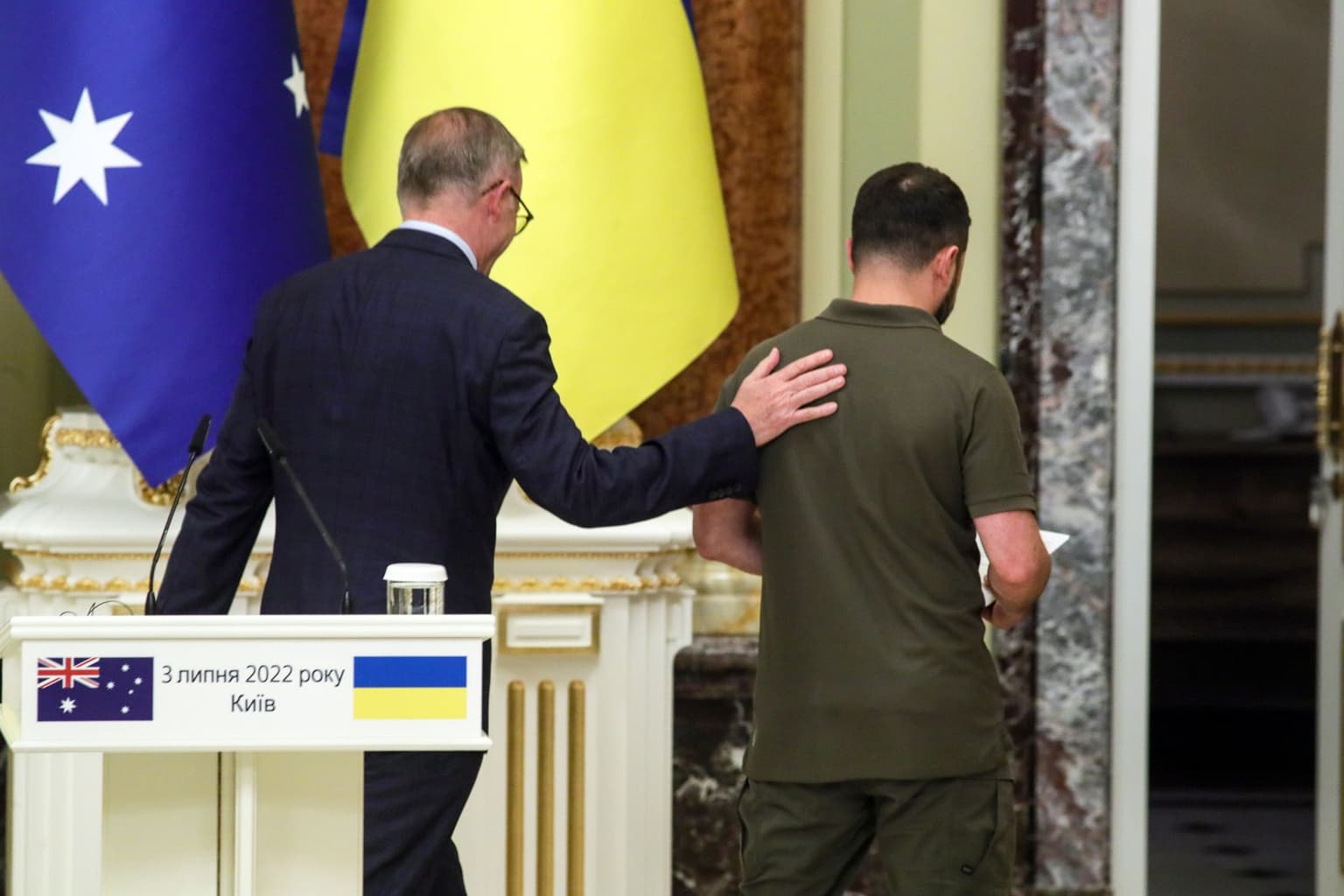
Ukraine and Australia signed a wide-ranging, 10-year security agreement on Sept. 23 on the margins of the U.N. General Assembly in New York, cementing cooperation between the two countries on a range of fronts.
"The people of Australia have always stood with Ukraine. Thank you for your real and concrete support," President Volodymyr Zelensky said, following a meeting with Australian Prime Minister Anthony Albanese.
"Once again, thank you for your support and for always standing with us — both politically and geopolitically," Zelensky said.
The Australia-Ukraine agreement repeatedly draws a direct geopolitical connection between "the Indo-Pacific and Euro-Atlantic" regions, citing, for example, "the threat that North Korea poses for both regions and global security by direct participation in the war against Ukraine."
Effectively, the text commits Australia to providing ongoing support to Ukraine on a range of fronts, whether by bolstering Kyiv's naval capacity, helping Ukraine to protect critical energy infrastructure, or sharing best practices to help with passing pro-democratic reforms.
"This Bilateral Security Agreement underscores Australia's ongoing commitment and enduring support for Ukraine as it defends itself against Russia's aggression," Albanese said.
Canberra also announced a 60 million Australian dollar ($42.2 million) support package for Kyiv, 75% of which will consist of Australian Defense Force equipment, with the remainder split between Ukraine's Energy Support Fund and humanitarian assistance.
Australia also enacted 106 new sanctions listings on Sept. 24, 38 of which target ships identified as belonging to Russia's shadow fleet, decrepit vessels that help Moscow evade restrictions on its fossil fuel trade.
The remainder cover a range of sectors, with many of the listings focused on key organizations and entities tasked with brainwashing and militarizing children, including Ukrainians that Moscow has abducted from occupied territories.
Those listings include names like the Kadyrov Foundation, the Center for the Development of Adolescent Socialization Programs, the Center for Military Sports Training and Patriotic Education of Youth, and the All-Russian Children Center.
The focus on children comes just days ahead of an expected summit focused on bringing back the more than 20,000 Ukrainian children illegally abducted by Russia, set to take place in Toronto on Sept. 28.
Also among the new restrictions are people connected to penal colonies, Russia's occupation of Crimea, several banks, Mikhail Zvinchuk, who is the military blogger behind the Russian Telegram channel Rybar, and Russia's Wrestling Federation President, Mikhail Mamiashvili.
"We will continue to provide unwavering support to Ukraine, and we will continue to work with partners to impose costs on Russia and starve its war machine," Australian Foreign Minister Penny Wong said.
But civil society groups still expect Canberra to go further on Russia sanctions.
B4Ukraine called Australia "an international outlier" for allowing third-country products made from Russian crude oil to enter the country.
Addressing that loophole was one of the main recommendations in an August report of the Australian Senate, which the government is required to respond to by Nov. 20.