Ukraine developing new low-cost way to down Russian Shahed-type drones
 on Google
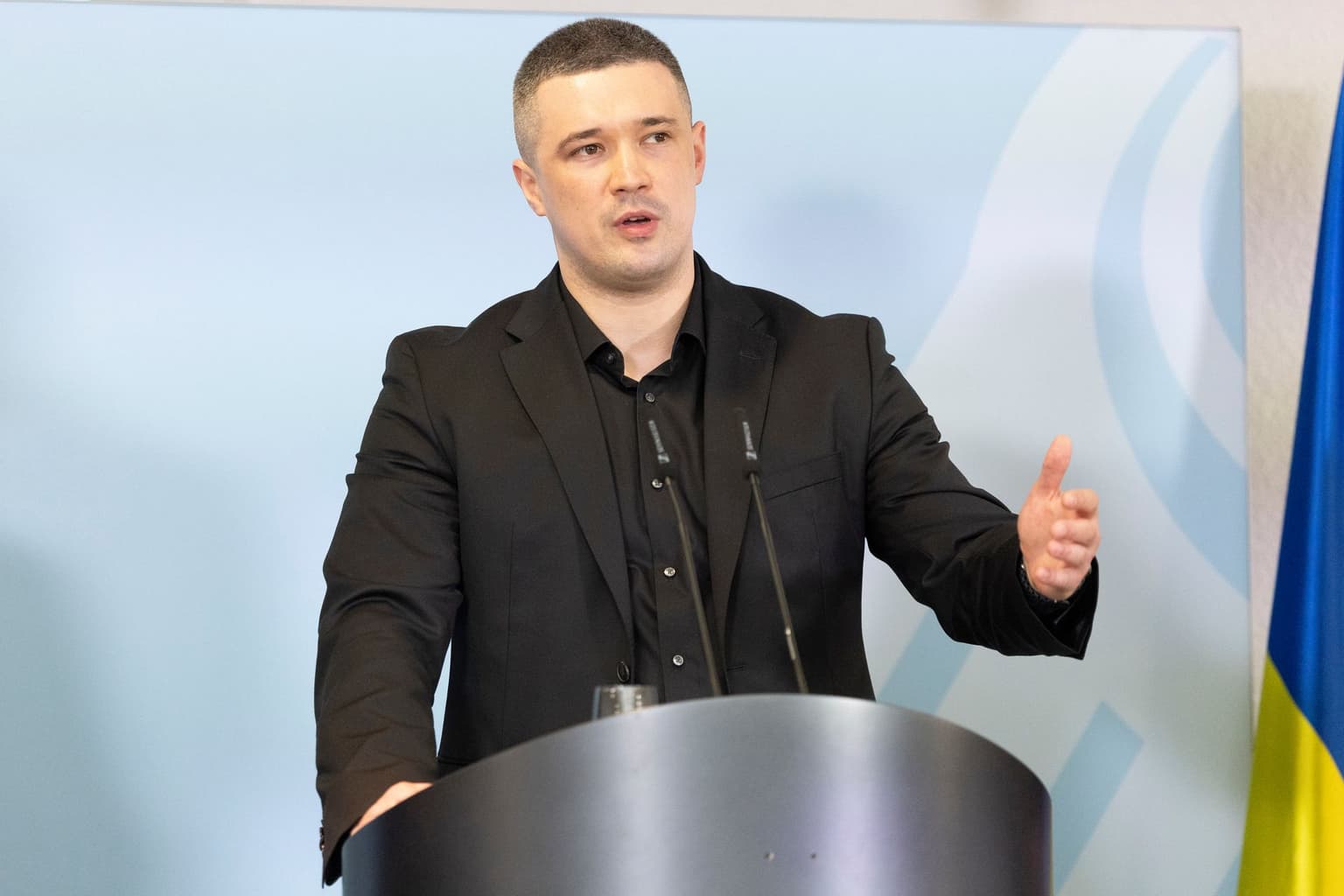
Ukraine is developing low-cost interceptor missiles to counter Russian Shahed-type drones, with prototypes already undergoing testing, Ukraine's Defense Minister Mykhailo Fedorov told journalists at a closed-door press briefing on May 16.
"We have already identified solutions that are nearly ready and have begun testing them," Fedorov said.
The Iranian-made Shahed is one of Russia's main long-range strike systems used against targets in Ukraine. First deployed in 2022, it was later produced domestically by Russia, which developed its own variant, the Geran.
Fedorov added that Ukraine plans to increase production of the missiles "tenfold" and build up additional stockpiles for the fall and winter season, following this winter's Russian strikes on energy infrastructure that caused widespread power outages and left many areas without heating during periods of severe cold.
The minister said the steps are necessary to counter Russia's expanded use of Shahed-type jet-powered drones, which can reach speeds of up to 600 km/h. Such kamikaze drones were first recorded in Ukraine in early 2024.
Over the past four months Ukraine has doubled its rate of downing Shahed-type drones, even as Russian attacks have increased by 35%, Fedorov said. The minister added that interceptor drone supplies have also grown 2.6-fold, with a strategic goal of achieving a 95% aerial interception rate.
"The introduction of the after-action review played a significant role in this process. This is a standard NATO procedure for conducting a detailed analysis of combat operations after they have concluded," Fedorov said.
"For us, it has become one of the key elements in building a modern air defense system."
Fedorov also said the number of private air defense units protecting businesses has increased to 27 in Ukraine, with requests to create additional units growing each week.
Fedorov added that the Defense Ministry has three main near-term priorities, including revising recruitment and service terms in the Ukrainian army, shifting to competitive defense procurement, and implementing a basic guaranteed minimum supply of drones to brigades.
However, the minister did not give a timeframe for the planned changes. The recruitment and service reforms would reportedly cover fair pay, clear terms of service, unit staffing, and efforts to reduce AWOL cases.
President Volodymyr Zelensky announced on May 1 that a reform of the Ukrainian military's pay system for soldiers, sergeants, and commanders is set to begin in June. Under the new system, personnel in non-combat roles would receive at least Hr 30,000 ($680), while infantry soldiers would be paid between Hr 250,000 ($5,645) and Hr 400,000 ($9,000) depending on their combat duties.
Zelensky also said changes will be made to the way units are staffed to introduce fixed terms of service and begin the gradual discharge of personnel who have served since 2022 and earlier.
Commander-in-Chief Oleksandr Syrskyi said in an interview with Militarnyi published on May 20 that the Ukrainian military is considering introducing new contract terms of six to 10 months for personnel who have served for an extended period.
Syrskyi added that Ukraine has the capacity to conduct rotations for troops who have been in the combat zone for a long time.
"We have calculated everything — the number of personnel stationed in brigades on average at their positions and the number of personnel deployed to the area of operations. There is a large number of service members stationed in combat zones," Syrskyi said.
"We have all the conditions to establish three rotations and ensure the training of the rotation that will take over on a rotational basis."