Ukraine repatriates OUN leader Melnyk’s remains from Luxembourg, for reburial near Kyiv
 on Google
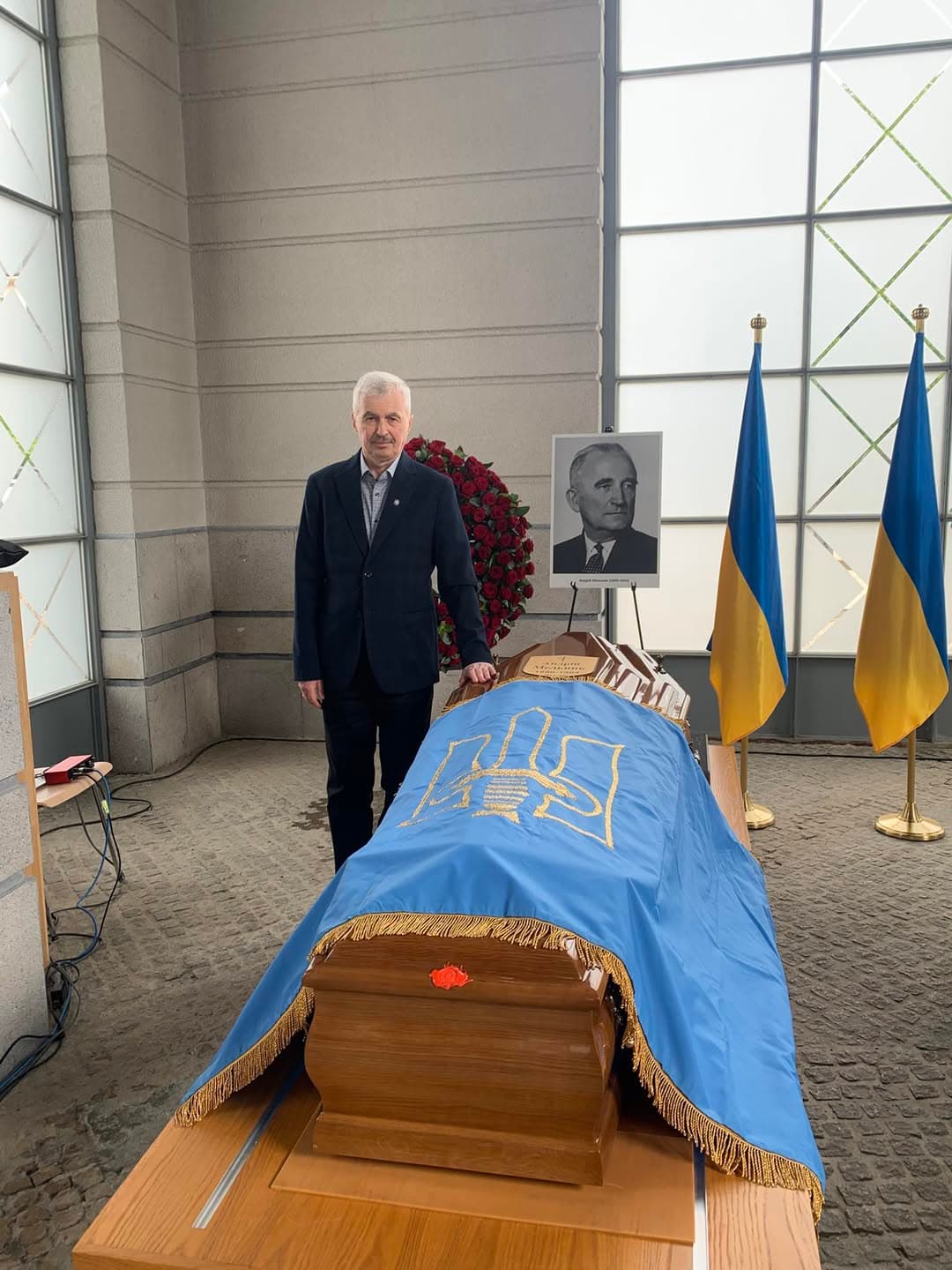
On May 19, the ashes of Andrii Melnyk, a key leader of the Organization of Ukrainian Nationalists, and his wife Sofia were exhumed in Luxembourg during an official ceremony attended by Ukrainian state representatives.
The OUN was founded in 1929 and attracted students and veterans from the Ukrainian Galician Army who wanted to fight oppression from Poles and Soviet Ukraine.
"Everything happened according to his burial ceremony in 1964: roses, the OUN flag, a prayer service, mournful singing, tears. But this time there was one significant difference: independent Ukraine paid the highest tribute to the colonel," Bohdan Chervak, the current head of the OUN, wrote on Facebook.
Following the ceremony, the remains were transported from Luxembourg to Ukraine, where they are set to be reburied on May 24 at the National War Memorial Cemetery near Kyiv.
In the days leading up to the reburial, memorial liturgies will take place in Kyiv, with additional requiem services scheduled for May 22–23 after the remains arrive.
Melnyk was a prominent military and political figure, closely associated with OUN founder Yevhen Konovalets, who was a veteran of the war for independence in Ukraine between 1917 and the early 1920s.
After the Soviet secret police killed Konovalets with an exploding chocolate box in 1938, the organization in 1940 split into two factions: the OUN-B, led by Stepan Bandera following his release from a Polish prison in 1939, and the OUN-M, led by Melnyk.
During World War II, Melnyk directed OUN activities from Germany but was later detained by the Nazis and imprisoned in Sachsenhausen.
After the war, he settled in Luxembourg, where he continued organizing Ukrainian emigre political efforts
He remained active in the diaspora until his death in 1964, including proposing the creation of a World Congress of Ukrainians, which was realized posthumously.
The groups associated with Bandera, the OUN, and its military wing, the UPA, have a somewhat controversial legacy.
In the spring and summer of 1943, UPA members massacred thousands of Poles throughout Volhynia in Nazi-occupied Poland, an area that is now part of western Ukraine.
Afterwards, thousands of Ukrainians were also killed by Poles in retaliation.
Plokhy estimates that the number of Ukrainians killed may vary between 15,000 and 30,000, while the estimates for the Polish victims vary between 60,000 and 90,000.