In photos: 7 years of Volodymyr Zelensky's presidency
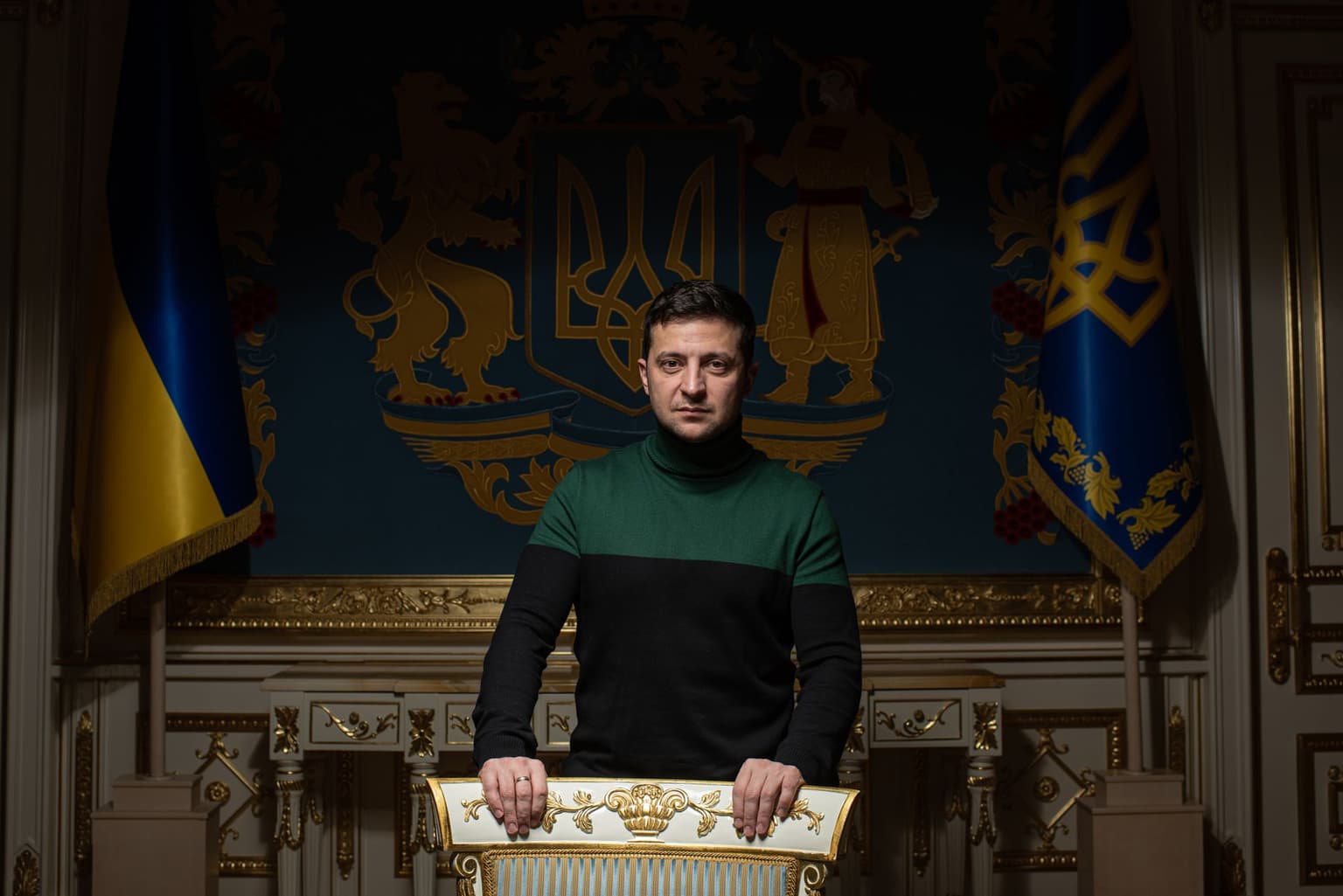
President Volodymyr Zelensky in Kyiv, Ukraine, on Nov. 30, 2019. (Oleksii Furman / Getty Images)
 on Google
Volodymyr Zelensky was sworn in as Ukraine's president on May 20, 2019.
He entered office as a political outsider — a relatively young comedian and television producer — promising anti-corruption reforms and peace with Russia.
Within years, he would become the face of Ukraine's wartime resistance and one of the world's most recognizable leaders during Europe's deadliest war since World War II.
Over the past seven years, Zelensky's rule has changed alongside the country itself: from ambitious reforms and major construction projects to an all-out war and a flurry of international meetings aimed at rallying support, securing aid, and redefining Ukraine's role on the global stage.
The Kyiv Independent sums up Zelensky's seven years in office through the defining moments that shaped both his leadership and the country he governs.

2019 election
Zelensky came to power in 2019 on a wave of frustration with Ukraine's political establishment.
He positioned himself as an outsider capable of breaking the old system and implementing the much-needed reforms.
At the time, many Ukrainians were exhausted by years of political turbulence, economic hardship, and slow progress following the 2014 EuroMaidan Revolution and the start of Russia's invasion of Ukraine.
Zelensky's message resonated particularly strongly with younger voters and people disillusioned with traditional politics.In the presidential runoff, Zelensky defeated then-President Petro Poroshenko in a commanding fashion, receiving over 74% of the votes.


First scandal with Trump
The first major crisis of Zelensky's presidency emerged almost immediately and was ignited by Donald Trump.
In 2019, a phone call between Zelensky and U.S. President Trump became public after a whistleblower complaint triggered a political scandal in Washington.
During the call, Trump pressed Zelensky to investigate political rival and presidential candidate Joe Biden and his son Hunter Biden while U.S. military aid to Ukraine was temporarily frozen.
Hunter Biden became part of the controversy due to his involvement with the Ukrainian energy company Burisma.
The scandal quickly escalated into Trump's first impeachment hearing, while Zelensky was forced to maintain a balancing act, maintaining ties with the U.S. administration and not spoiling relations with Trump's eventual successor.

Paris meeting with Putin
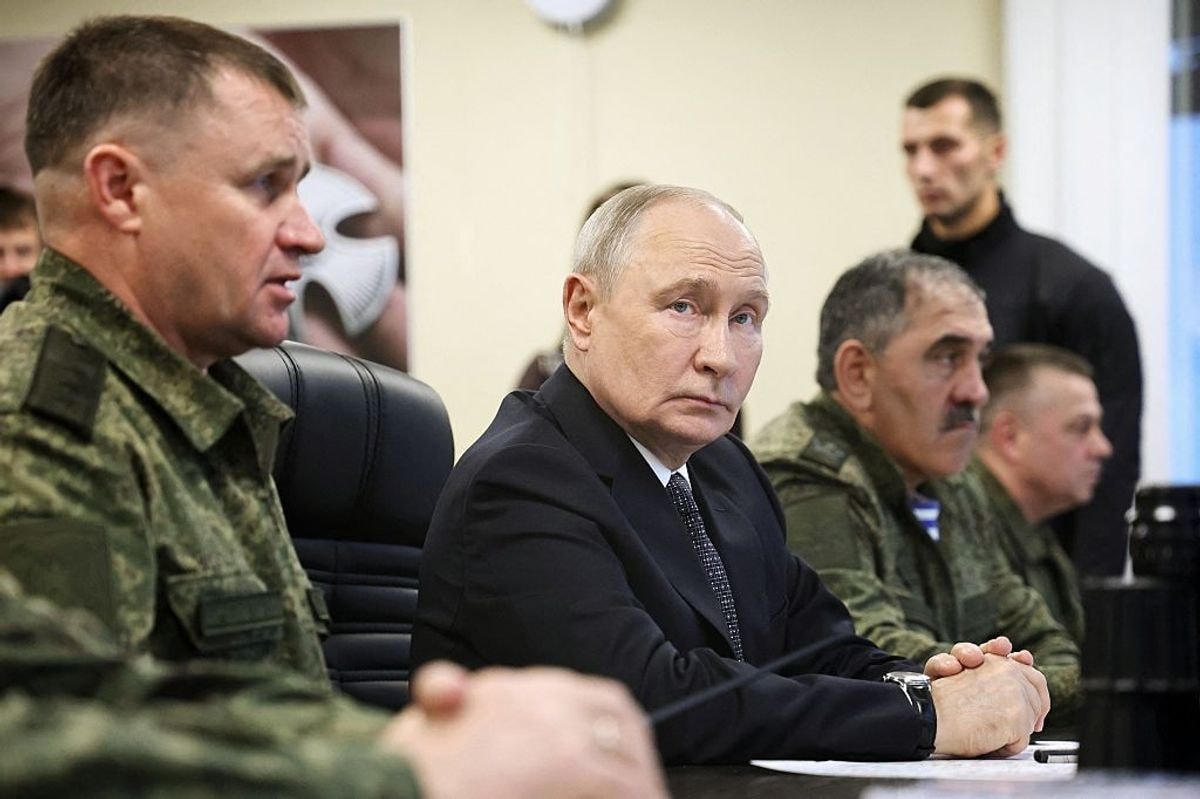
In December 2019, Zelensky met Russian President Vladimir Putin in Paris during a Normandy Format summit mediated by France and Germany.
It remains their first — and so far only — face-to-face meeting.
The summit was part of efforts to revive the stalled Minsk peace process and end fighting in Ukraine's eastern Donbas region, where Russia had maintained a military presence since 2014.
While the meeting produced limited progress, including agreements on prisoner swaps, it also exposed how fundamentally far apart Kyiv and Moscow remained.
Zelensky believed diplomacy could realistically end Russia's war and occupation of Ukrainian territories, while Russia sought to impose its terms on the newly elected president.


Great Construction project
One of the main domestic priorities of Zelensky's early years in office was infrastructure modernization.
In 2020, his administration launched the large-scale "Great Construction" initiative, a nationwide program to rebuild roads, hospitals, bridges, and public facilities across Ukraine.
Road construction quickly became the program's most recognizable symbol.
Across the country, Ukrainians saw highways and regional roads rebuilt at a pace rarely seen before. Politically, the initiative was important because it produced immediate results in daily life.
At the same time, critics questioned the transparency of some contracts and argued that the program also served as a political tool to strengthen Zelensky's popularity.

Russian military buildup in 2021
In 2021, as Russia began massing troops near Ukraine's borders, Western intelligence increasingly warned about the possibility of a full-scale Russian invasion.
Zelensky's public response, however, focused heavily on maintaining calm.
He repeatedly urged Ukrainians and foreign partners not to panic, insisting the situation remained under control despite alarming intelligence assessments coming from Washington and European capitals.
The Ukrainian leadership feared that panic itself could trigger severe economic consequences and public chaos.
One month before the all-out invasion, Zelensky released a video address that many Ukrainians still remember vividly. Calling for calm, he criticized what he described as excessive panic surrounding invasion predictions.
Looking ahead to summer, he suggested Ukrainians would continue living normally and "grill barbecue as usual."


Full-scale war begins
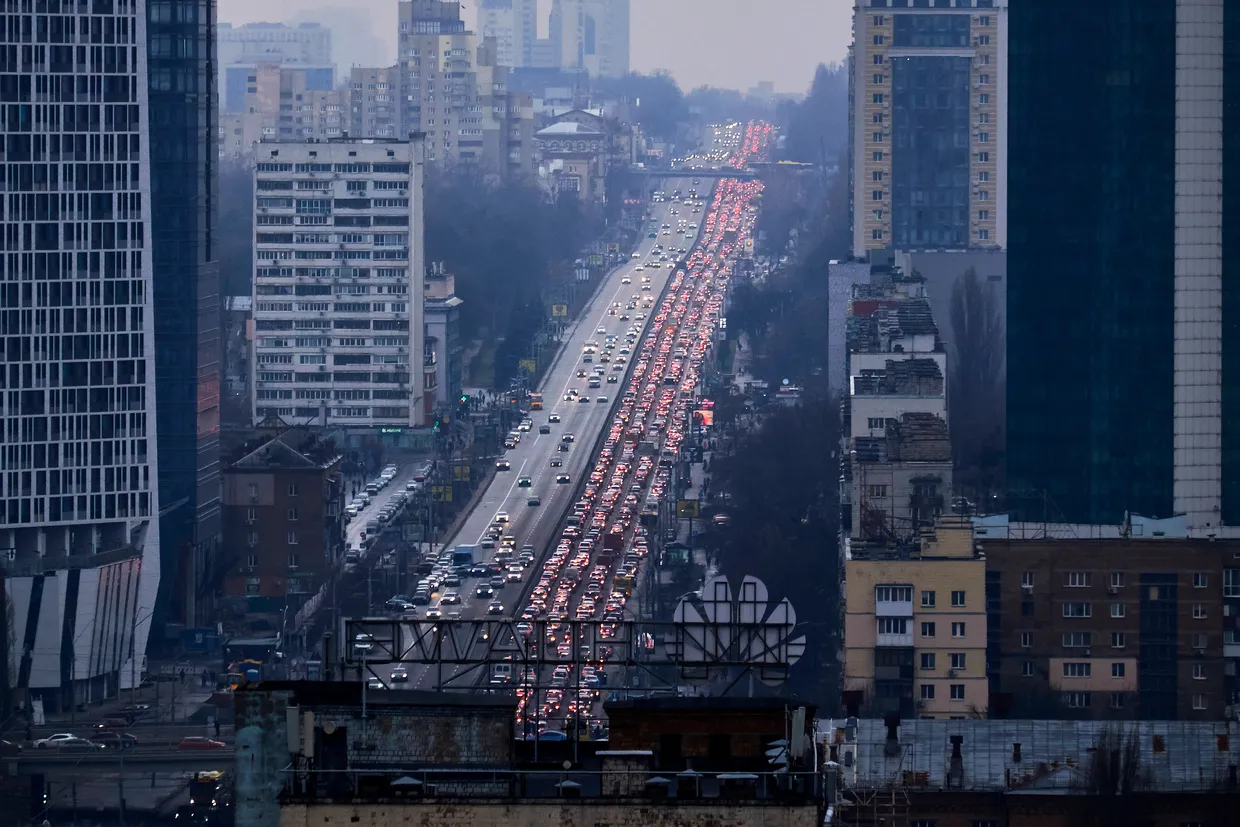
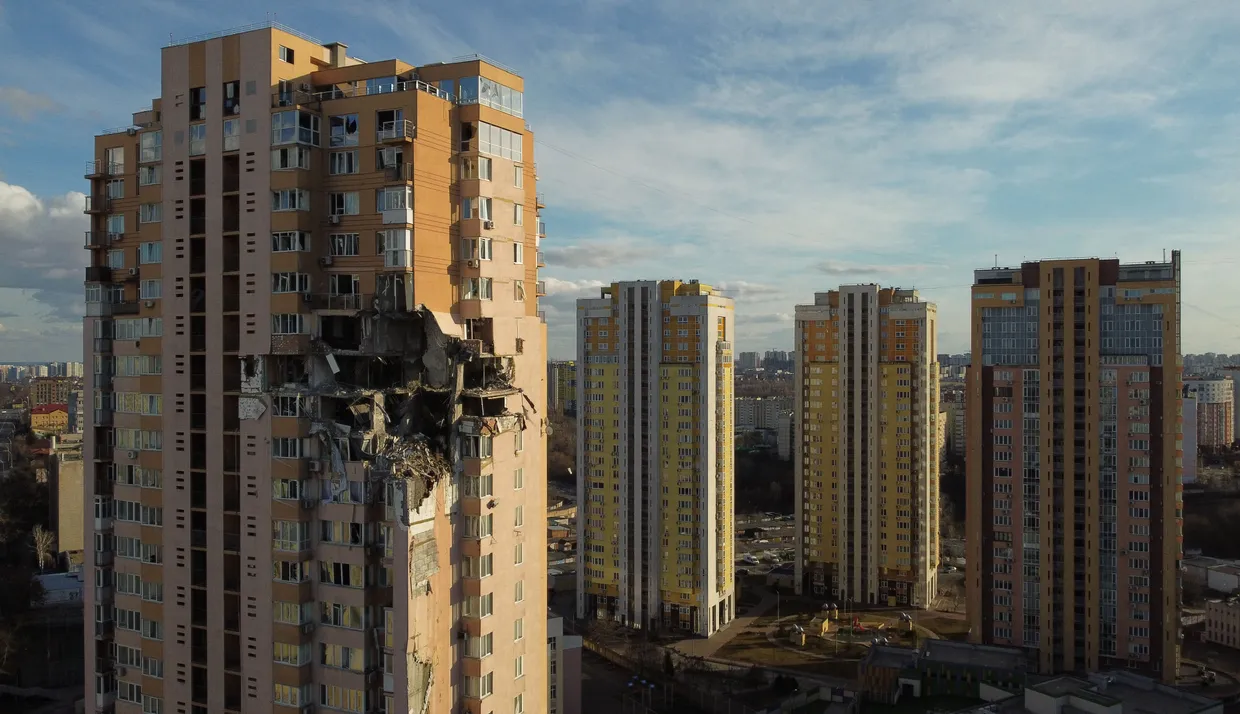
When Russia launched its full-scale invasion on Feb. 24, 2022, Zelensky's presidency changed instantly.
As Russian forces advanced toward Kyiv and U.S. officials offered evacuation options, Zelensky refused to leave the capital.
In the chaotic first days of the invasion, rumors spread online claiming that Ukraine's leadership had fled the city.
In response, Zelensky recorded a short nighttime video from central Kyiv alongside senior officials, directly rejecting Russian narratives.
"The president is here," he said.
The message became one of the defining moments of the opening phase of the war.
Around the same period, Zelensky reportedly responded to evacuation proposals with the now-famous phrase: "I need ammunition, not a ride."
Whether inside Ukraine or abroad, perceptions of him shifted. Public trust in the president skyrocketed from 37% in early 2022, an all-time low, to over 90% following Russia's full-scale invasion.
"Party's leader is here, the head of the President's office is here, PM is here, Podoliak is here, President is here. We are all here."



Russian massacre in Bucha
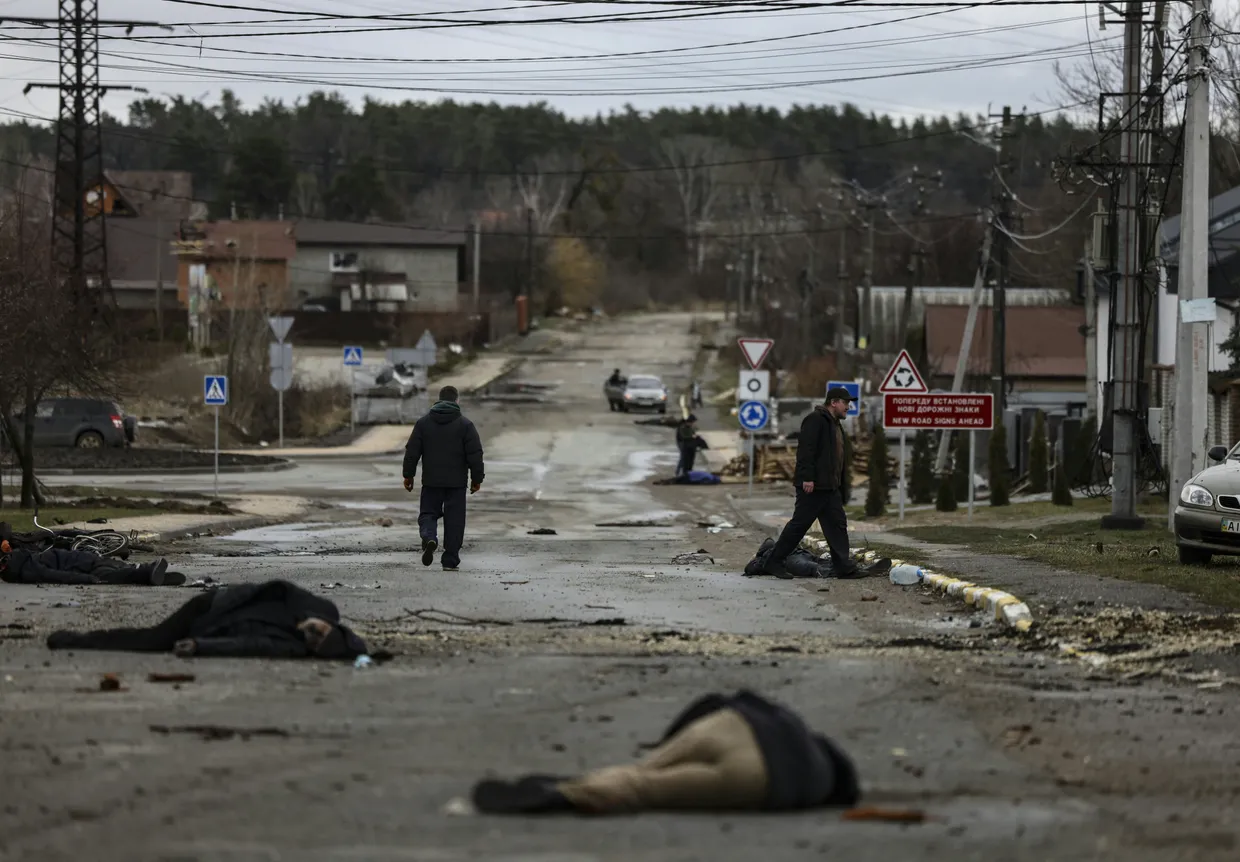
After Russian forces withdrew from parts of Kyiv Oblast in early April 2022, the town of Bucha became synonymous worldwide with the brutality of Russia's occupation.
Images emerging from the town showed bodies lying in the streets, signs of executions, torture, and widespread destruction.
The revelations shocked the international community.
Zelensky visited Bucha shortly after Ukrainian forces regained control of the town, walking through destroyed neighborhoods and describing the massacre as evidence of deliberate Russian atrocities.
The events in Bucha marked a major turning point.
For many Western governments, the discoveries hardened attitudes toward Moscow and accelerated military support for Ukraine.

Zelensky in Congress
In December 2022, Zelensky made his first foreign trip since the start of the full-scale invasion.
Traveling under extraordinary secrecy and security measures, he arrived in Washington to meet U.S. leaders and address the Congress in person.
The visit became a high point of his presidency.
Lawmakers greeted Zelensky with prolonged standing ovations as he thanked the U.S. for its support while urging further military assistance, particularly air defense systems.
At the time, Washington remained Ukraine's largest and most important military ally.

Zelensky in the European Parliament
Zelensky's diplomacy also reshaped Ukraine's relationship with Europe.
Only days after the full-scale invasion began in February 2022, he addressed the European Parliament remotely from wartime Kyiv, urging Europe to stand with Ukraine.
He framed Ukraine's fight as a defense of European values and democratic principles.
In February 2023, Zelensky made his first in-person visit to the European Parliament in Strasbourg.
Ukraine also applied to join the European Union, with the process formally launched in 2025.

Zelensky at the front
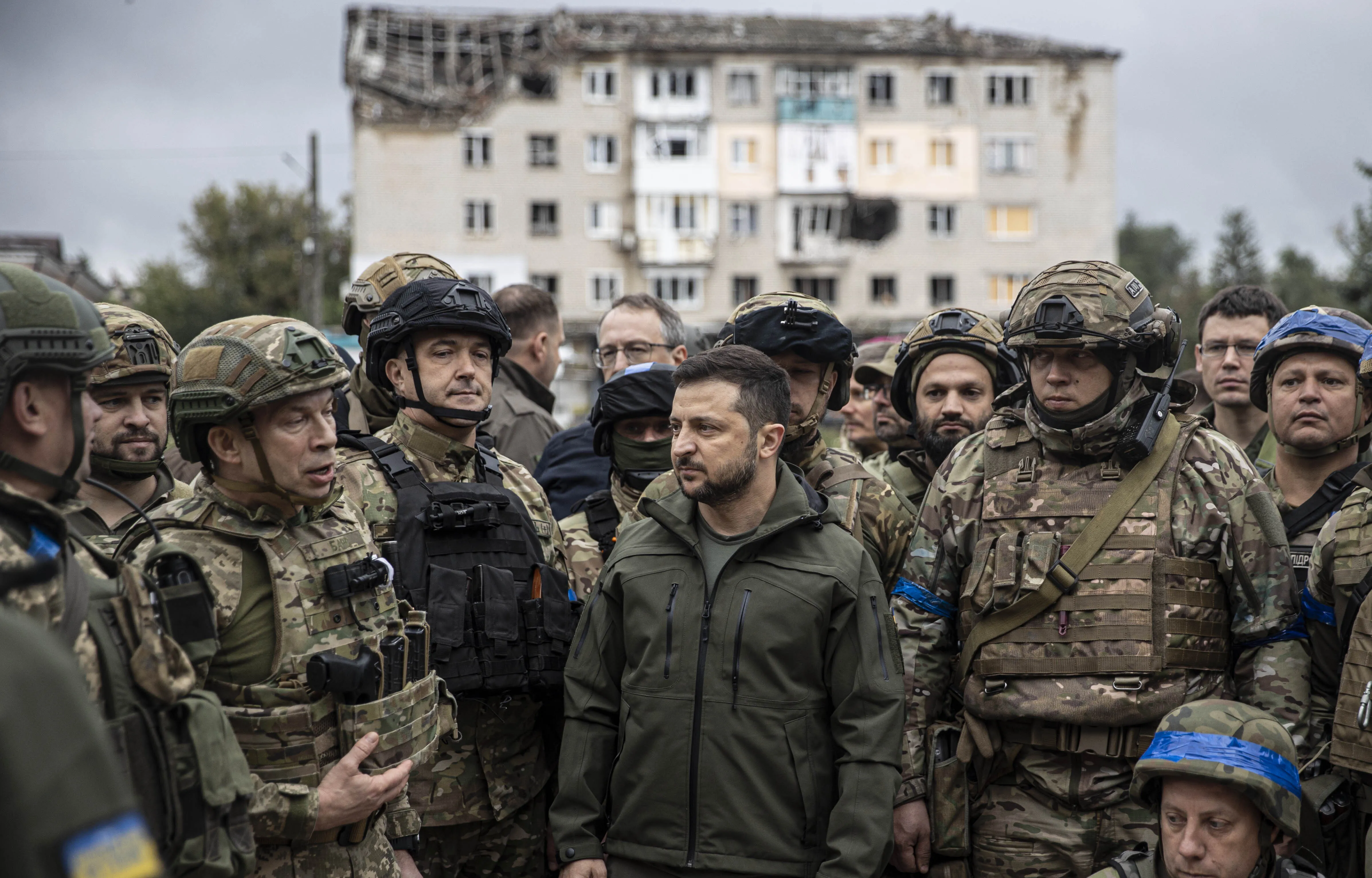
As Russia's war evolved into prolonged front-line combat, Zelensky increasingly traveled to areas close to active fighting.
He visited troops near the eastern and southern fronts, meeting soldiers, presenting awards, and speaking directly with commanders in combat zones.
These visits became a defining contrast with Putin's own wartime image.
While the Russian president largely remained isolated from the battlefield, Zelensky projected himself as a leader physically present during the war.

Oval Office clash
In February 2025, Zelensky returned to Washington for what became one of the most difficult meetings of his presidency.
During talks in the Oval Office, tensions emerged publicly between Zelensky, Trump, and U.S. Vice President JD Vance over future U.S. support for Ukraine.
The meeting, initially centered around a minerals agreement and discussions about possible peace talks with Russia, became confrontational.
At the center of the clash was Trump's remark that Zelensky "doesn't have the cards," portraying Ukraine as heavily dependent on U.S. support.
The comment quickly became symbolic of a broader shift in Washington's approach, as U.S. military support for Ukraine sharply declined.

Corruption scandal
By late 2025, Zelensky's presidency faced a crisis tied directly to one of his central campaign promises — fighting corruption.
Ukraine's National Anti-Corruption Bureau charged multiple suspects in a large-scale corruption scheme centered around state nuclear energy company Energoatom.
Among those implicated was Timur Mindich, a close associate of Zelensky. Another suspect was Oleksiy Chernyshov, his longtime ally and former deputy prime minister.
The scandal later expanded further, eventually involving Zelensky's closest political associate, Andrii Yermak.
Yermak resigned in late 2025 and, in May 2026, was charged with money laundering connected to the construction of a luxury residential complex outside Kyiv.
The scandal became one of the most serious political blows of Zelensky's presidency.


To be continued
Because of Russia's full-scale war, Ukraine has been unable to hold scheduled presidential elections.
Under martial law, voting remains suspended, effectively extending Zelensky's presidency beyond its original mandate.

Seven years after entering office as an anti-establishment reform candidate, Zelensky's presidency became inseparable from the war itself.
His political future — and ultimately his legacy — now depends less on elections than on how the war ends and what kind of Ukraine emerges from it.