Russia's foreign minister Lavrov cut out of Ukraine peace talks, officials say
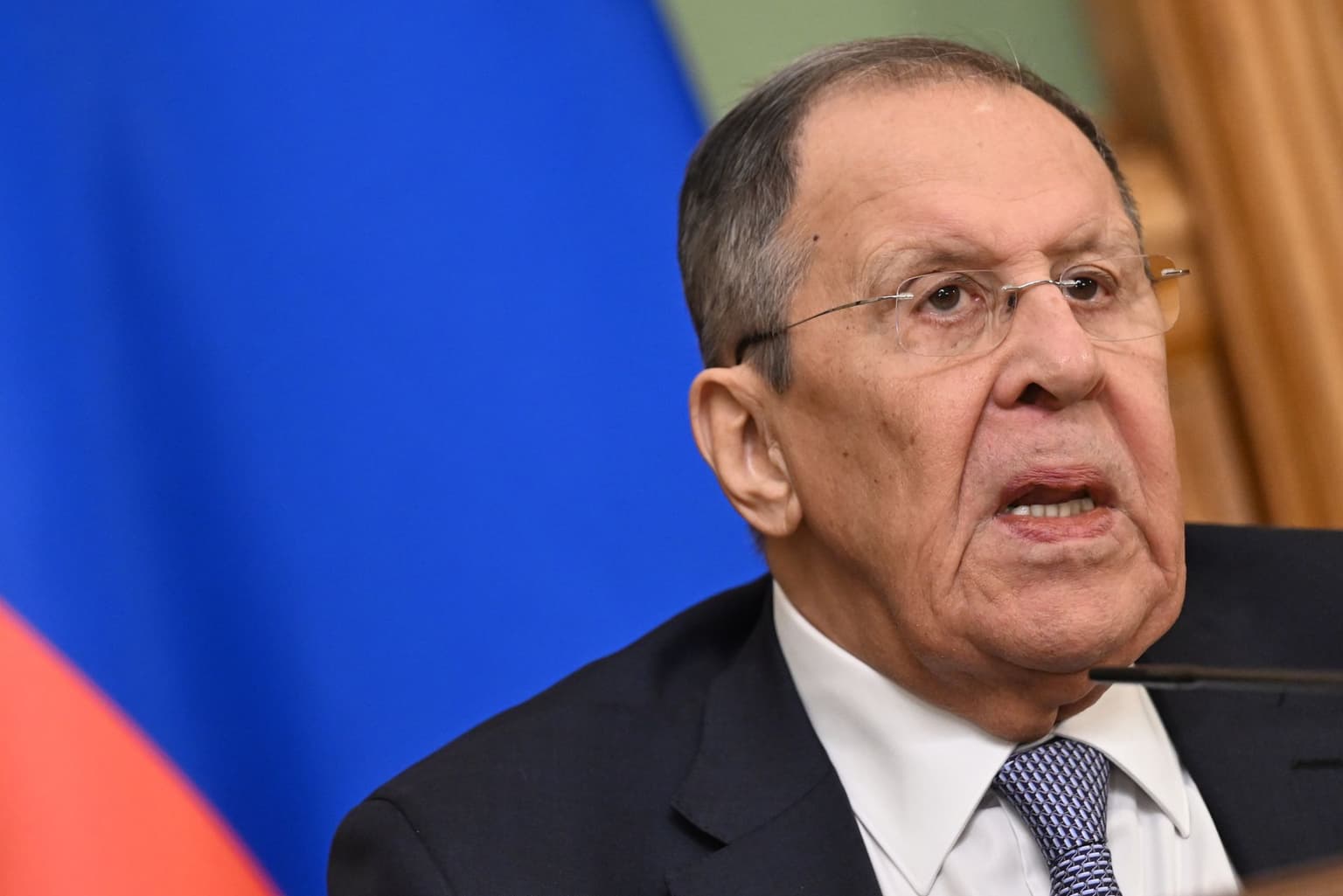
Russia's Foreign Minister Sergey Lavrov in Moscow, Russia, on April 21, 2026. (Sefa Karacan / Anadolu / Getty Images)
 on Google
Russia's top diplomat Sergey Lavrov has been almost completely sidelined from Moscow's most important foreign policy track — negotiations on ending Russia's war against Ukraine, two Ukrainian officials and one U.S. official told the Kyiv Independent.
For decades, Lavrov served as the public face of Russian diplomacy and one of the Kremlin's most recognizable hardliners.
Since the start of Russia's all-out war, he has remained one of the loudest voices defending Moscow's maximalist demands, regularly attacking Kyiv and the West.
Yet despite his frequent comments on peace talks, officials familiar with the negotiations say Lavrov plays no role in shaping the Kremlin's outreach to Washington.
"Basically, Lavrov doesn't have any say in the matter; they have other channels," said one senior Ukrainian official familiar with the negotiations.
Who forms Russia's foreign policy?
Three figures stand at the center of Russia's foreign policy apparatus.
The most influential among them is Yuri Ushakov, a longtime aide to Russian President Vladimir Putin and one of the Kremlin's most experienced foreign policy strategists.
Ushakov, who previously served as Russia's ambassador to the U.S., is widely viewed as one of the key architects of Moscow's foreign strategy.
Lavrov is largely responsible for executing policies designed elsewhere — primarily by Ushakov and the Russian president himself.
But when it comes to negotiations with the Trump administration, another figure has emerged as the Kremlin's main channel to Washington: Kirill Dmitriev.

Dmitriev, the head of Russia's sovereign wealth fund, is not a diplomat. Still, he is now among the most important intermediaries between Moscow and Washington.
According to one Ukrainian official, Dmitriev has effectively become "the channel" for Putin's outreach to U.S. President Donald Trump and his team.
He remains in constant contact with Trump envoy, Steve Witkoff, and has played a key role in lobbying for decisions favorable to Moscow, including U.S. sanctions waivers on Russian seaborne oil exports.
That growing influence has come at Lavrov's expense.
Lavrov's problem
Lavrov's diminished role appears tied to his own hardline approach to negotiations.
Even publicly, Lavrov often projected a message that contradicted or complicated Moscow's broader diplomatic outreach.
In mid-April, Lavrov openly said Russia was in no rush to restart negotiations with Ukraine. Shortly afterward, Kremlin spokesperson Dmitry Peskov publicly struck a softer tone, signaling that Moscow remained open to dialogue.

Days later, Lavrov directly accused Trump of continuing policies introduced under former U.S. President Joe Biden — remarks that could be viewed as potentially offensive to the White House.
The tensions were not isolated incidents.
Earlier this year, Lavrov repeatedly downplayed suggestions that negotiations were making progress. His message remained blunt: Russia's demands were non-negotiable, and any settlement would require Ukraine to accept them.
That rhetoric increasingly clashed with the White House's attempts to present diplomatic engagement with Moscow as productive.
Budapest summit collapse
Lavrov also played a central role in derailing what was supposed to become the second summit between Trump and Putin in Budapest in October.
Trump announced on Oct. 16 that he planned to hold another summit with Putin after what he described as a productive two-hour phone call with the Russian leader that yielded "progress" on ending the war.
But before the summit could take place, Lavrov held a phone call with U.S. Secretary of State Marco Rubio that effectively collapsed the initiative.

While the White House publicly described the call as "productive," officials concluded there was little point in moving forward with the summit because Moscow was unwilling to make concessions.
Soon afterward, Trump told reporters he did not "want to have a waste of time."
The failed summit fueled speculation in diplomatic circles that Lavrov had fallen out of favor inside the Kremlin and could resign.
Lavrov's role now
Lavrov ultimately stayed in office, but officials familiar with the talks say he was effectively pushed aside from the negotiations track.
Dmitriev increasingly took over the direct implementation of Moscow's outreach strategy while maintaining close coordination with Ushakov, as shown in leaked recordings of their conversations.
One U.S. official told the Kyiv Independent that Lavrov "had never played a major role" in discussions with Washington despite remaining Russia's foreign minister.
Lavrov has continued holding occasional contacts with Washington. On May 5, he spoke over the phone with Rubio, with official readouts mentioning discussions about Russia's war against Ukraine.
But U.S. officials made clear that Washington's diplomatic engagement extends beyond Lavrov himself.
"We speak with both Russia and Ukraine to bridge their differences and establish mutually agreeable terms for a negotiated settlement," a U.S. State Department official told the Kyiv Independent.
For Kyiv, Lavrov's declining influence appears so obvious that the Ukrainian foreign ministry sees little reason to engage with him directly.
"There's nothing to talk about with him," One Ukrainian official said.
Note from the author:
Hi, this is Tim Zadorozhnyy, the author of this article.
From our newsroom in Ukraine, we report on the issues that matter to a global audience, without outside influence. Independent journalism is only possible with reader support. If you value our work, please consider supporting us — it makes a real difference.