UK, France reject NATO plan to increase military aid to Ukraine, Telegraph reports
 on Google
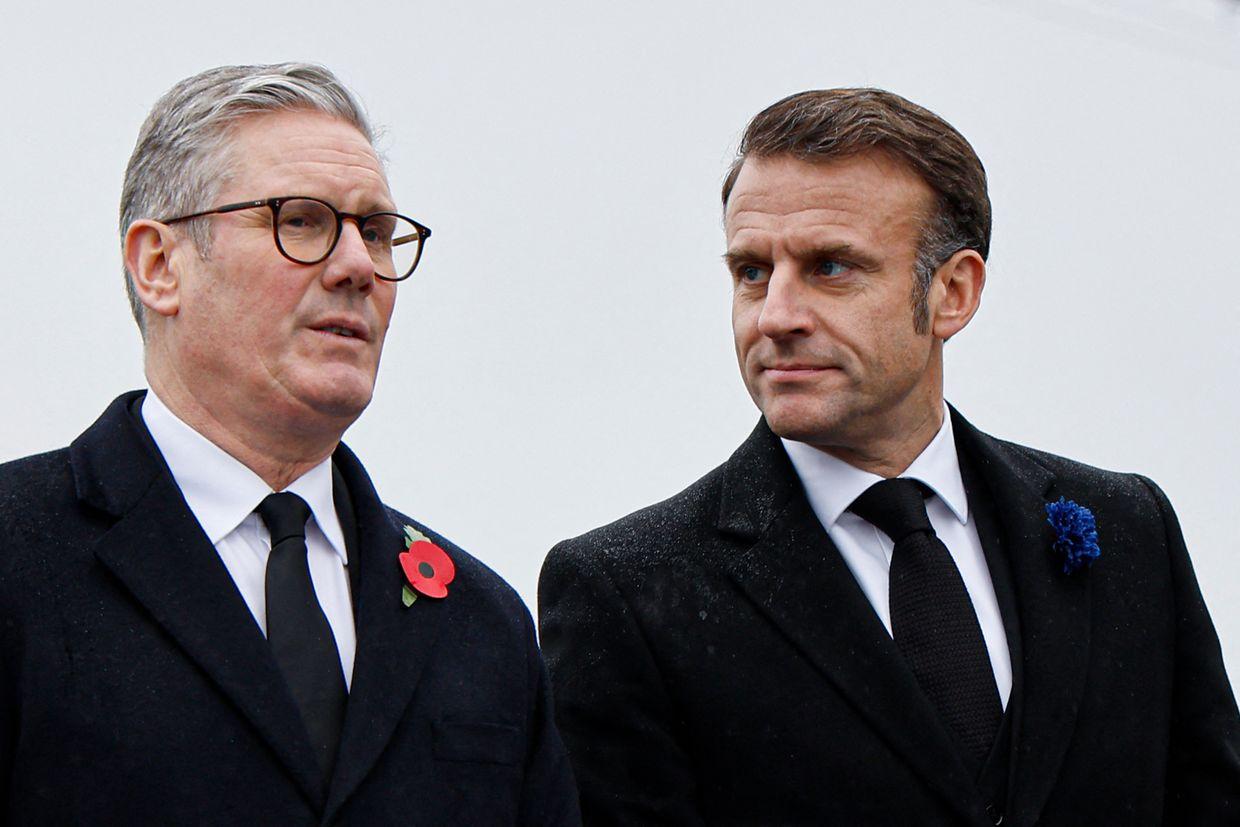
The United Kingdom, France, and other NATO states have blocked a plan under which each member would contribute 0.25% of their GDP to military aid for Ukraine, the Telegraph reported on May 24, citing an alliance source.
Previously, NATO Secretary General Mark Rutte told reporters on May 22 that the proposal would likely be rejected.
"I don't think this one will be accepted because there's a lot of opposition against this fixed 0.25," he said.
Rutte did not name the members blocking the proposal, but a NATO source told the Telegraph that the opponents were the U.K., France, Canada, Italy, and Spain. "They’re not very enthusiastic about the idea," the source said.
The news comes on the heels of the U.K.'s surprise easing of Russian oil sanctions, dealing a further blow to London's image as one of Ukraine's most steadfast partners.
The U.K. sparked shock and outrage on May 19 by quietly issuing a temporary license that permits imports of diesel and jet fuel made from Russian oil if "the products have been processed in a third country." The government also granted a license allowing the maritime transport and delivery of liquefied natural gas (LNG) from Russia's Sakhalin-2 or Yamal LNG terminals.
Ukrainian and European officials were caught off guard by the announcement, and London later issued an apology for the clumsy rollout.
The licenses, however, remain in effect.
France's rejection of the spending plan also undermines its status as a champion of Ukraine's fight against Russia. Paris shares leadership with London over the so-called "Coalition of the Willing" — allies working together to ensure long-term security guarantees for Kyiv.
According to the Telegraph's source, at least seven other NATO members supported Rutte's plan. All of these supporting members reportedly already spend over 0.25% of their GDP on military aid to Kyiv.
At the same NATO Foreign Ministers meeting where Rutte said the proposal was likely to fail, he said the alliance needs to become better at spreading the burden of supporting Ukraine more evenly across members.
"What I want to achieve is that the burden is more evenly spread, that there is more burden sharing here. Because at the moment, it is only six or seven allies who are doing the heavy lifting," he said.
NATO will hold its annual summit in Ankara, Turkey in July. President Volodymyr Zelensky has been invited to join, and Rutte reportedly had hoped to finalize the spending proposal at the summit.
Zelensky has not yet confirmed his participation.
Most NATO summits after 2022 centered on Western support for Ukraine amid Russia's full-scale war and Kyiv's bid to join the alliance. Since U.S. President Donald Trump took office in 2025, the focus has shifted.
Under Trump, the U.S. has dramatically reduced its support for Ukraine, calling on NATO and Europe to shoulder most of the financial burden. Trump has rejected Ukraine's NATO accession efforts while also repeatedly threatening to withdraw the U.S. from the alliance.