Putin repeats maximalist war claims as battlefield reality shifts
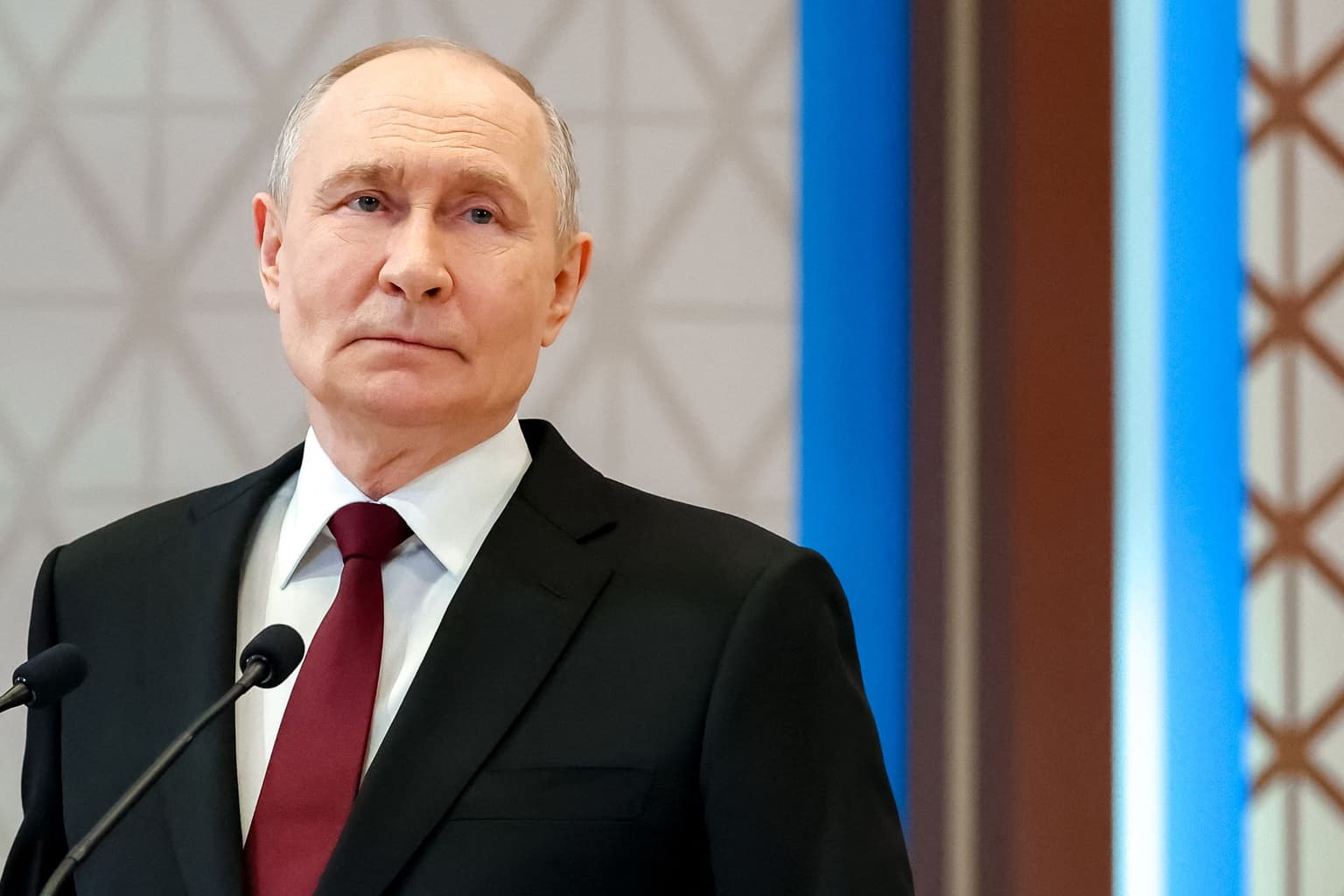
Russian President Vladimir Putin in Astana, Kazakhstan, on May 29, 2026. (Alexander Kazakov / Pool / AFP / Getty Images)
 on Google
Against the backdrop of Ukrainian drone strikes on St. Petersburg that sent plumes of smoke over the city, Russian President Vladimir Putin took part in a lengthy discussion at Russia's flagship economic forum.
Both the setting and the battlefield situation have changed since the beginning of the full-scale invasion, but Putin's vision of the war appears largely unchanged.
His rhetoric remained the same: Russia is advancing. Its goals remain the same. Any negotiations must happen on Moscow's terms. And the war, sooner or later, will end with Russia achieving its objectives.
But one remark stood out to Oleksii Melnyk, co-director of foreign relations and international security programs at the Razumkov Center.
"Putin said the war will end eventually, and then added 'based on the situation on the front line,' but he clearly does not mean that Russian forces made only limited territorial gains in May or that Russia is facing growing difficulties replacing its battlefield losses. He remains convinced the war will end with Ukraine's capitulation," Melnyk told the Kyiv Independent.
Days later, Putin would even claim that Russian forces had captured 2,440,000 square kilometers (nearly 940,000 square miles) of Ukrainian territory — roughly four times the size of Ukraine itself. The Kremlin later rendered the figure as 2,440 square kilometers in the official transcript, omitting the "thousand."
"He likes to improvise, but what is important is that Putin has once again confirmed that Russia's vision of how this war should end has not changed. These are the same maximalist demands we have been hearing for at least a year," Melnyk said.
What has changed, Melnyk argues, is the reality of the war itself, and any discussion of how the war ends should start from there.
Below is a closer look at some of Putin's latest claims and how they compare with the actual state of the war.
Battlefield and long-range strikes
"On the battlefield, we have parity in some places, and in some sectors we have an advantage," Putin said, adding that the same applies to long-range drone warfare.
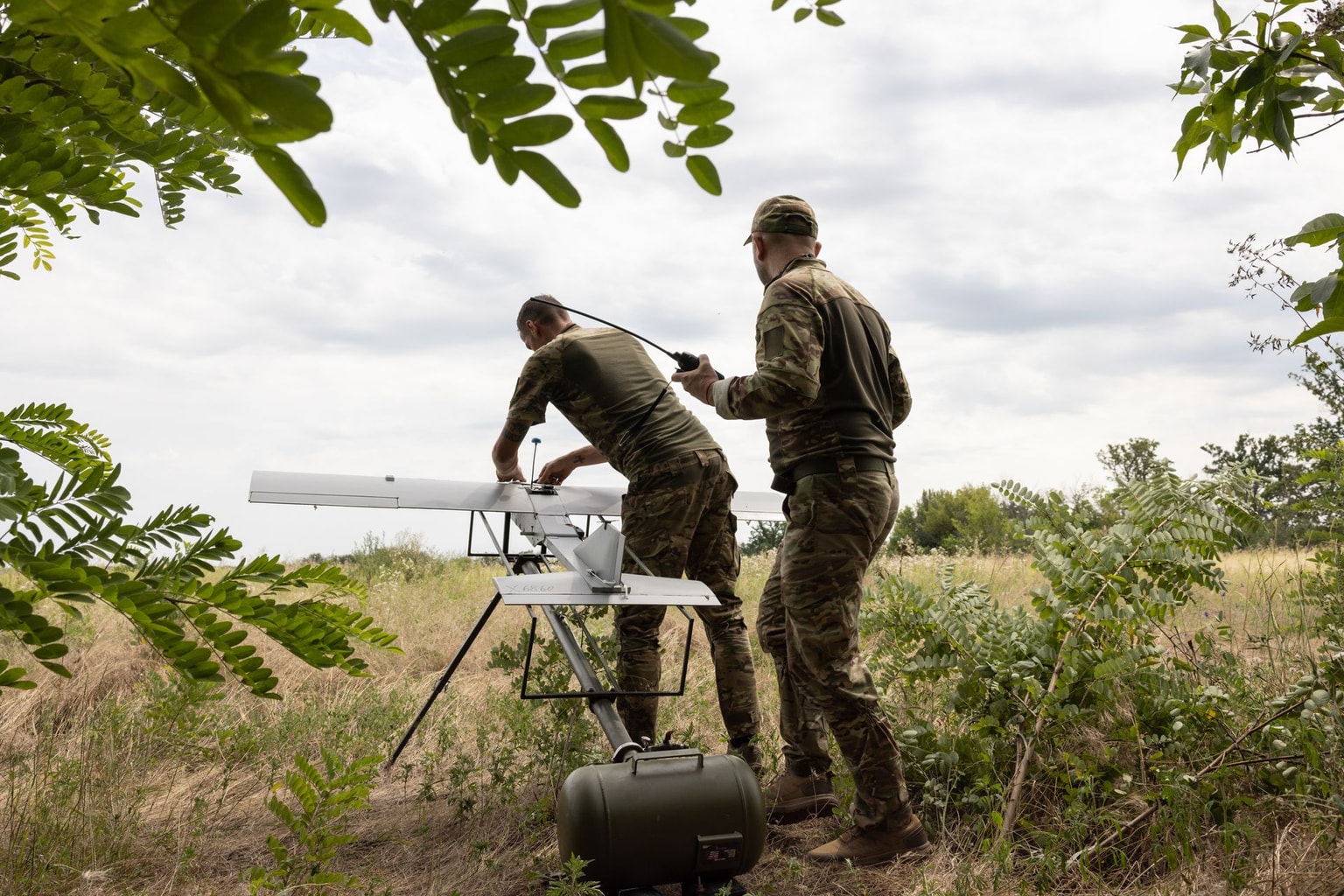
The claim is not entirely unfounded. More than four years into the war, Russia still has significant advantages in manpower, defense-industrial capacity, and access to resources. Moscow continues to recruit around 30,000 contract soldiers each month and remains less dependent on foreign military aid than Ukraine.
But analysts argue that battlefield momentum can no longer be measured solely by territorial gains or troop numbers.
According to Emil Kastehelmi, military analyst and co-founder of the Finland-based Black Bird Group, Ukraine has recently gained the upper hand in an increasingly important area: so-called middle strikes, or medium-range attacks on logistics hubs, air defense systems, and other targets beyond the reach of front-line drones.
"Lately, Ukrainians have had the upper hand, especially in medium-range strikes. Most likely, we haven't even seen the peak of it yet," Kastehelmi told the Kyiv Independent.

Rather than trying to achieve a breakthrough along heavily fortified front lines, Ukraine has increasingly shifted the fight deeper into Russia. Strikes on logistics hubs, ammunition depots, rail infrastructure and military-industrial facilities have become a central part of Kyiv's strategy.
If Russia fails to adapt to this campaign, Kastehelmi said, the costs could mount.
"Every week Russia can't adapt, they lose more vehicles and more personnel," he said.
At the same time, Russia's offensive model is becoming less effective.
"The front is not collapsing. But the way Russia is fighting is bringing fewer results. Russia's advances remain limited despite its continued offensive operations," Kastehelmi said.
According to Kastehelmi, Russian forces have advanced by less than 100 square kilometers (nearly 40 square miles) per month on average this year, relying on small infantry assaults that yield limited territorial gains but rarely change the broader battlefield picture.

Recent estimates by the open-source monitoring group DeepState show that Russian troops captured just 14 square kilometers (5 square miles) in May, marking the first time since the second half of 2023 that Russia has gained less territory than it has lost. Yet the number of battlefield clashes increased by 37.5% in May.
Meanwhile, Ukraine has increasingly focused on maximizing Russian losses, with battlefield losses exceeding its recruitment rate for five consecutive months.
"Ukraine has found ways to inflict maximum casualties and destroy vehicles with the resources available to them. If they cannot make major territorial gains, they can still create problems for Russia through logistics, industry and the economy," Kastehelmi said.
Capturing Donbas
Putin also reiterated what he described as Russia's primary objective in the war.
"Our goal is to achieve the liberation of Donbas," he said, claiming that Russian forces fully control Luhansk Oblast and that less than 15% of Donetsk Oblast remains under Ukrainian control.
"The Luhansk claim is almost true. You could say it's around 99% under Russian control," Kastehelmi said.
The situation in Donetsk Oblast is more complex. Analysts estimate that roughly 20% of the oblast remains under Ukrainian control, including the heavily fortified "fortress belt" centered on Kostiantynivka, Druzhkivka, Sloviansk, and Kramatorsk. This urban agglomeration forms the backbone of Ukraine's defenses in the Donbas region and serves as a critical military and logistical hub, making the capture of the remaining Ukrainian-held territory more challenging.
"There are still several major urban areas and fortified positions. Even if Russia captures the now heavily battered city of Kostiantynivka by the end of the summer, there are other cities left. Taking them could take months and cost a lot of blood," Kastehelmi said.
Putin's appeal to Washington
Putin also mocked President Volodymyr Zelensky's calls for stronger European involvement in future security arrangements, questioning why Kyiv would seek guarantees from Europe while continuing to rely on U.S. military assistance.
Putin went on to praise U.S. President Donald Trump and revived a familiar line of attack against Zelensky, referencing the widely publicized Oval Office meeting in which Trump criticized the Ukrainian leader's attire.
For Melnyk, the remarks appeared aimed at Trump himself.
"This looks like an attempt to play on Trump's emotions and provoke a negative reaction toward Ukraine. In a way, it demonstrates Putin's weakness. Whether he asks for a ceasefire around Victory Day or makes statements clearly designed to trigger a response from Trump, it suggests he still hopes Washington can pressure Kyiv into concessions," Melnyk said.

Meanwhile, Ukraine has continued to express its readiness to work with Washington toward a negotiated end to the war.
On June 8, Zelensky held a phone conversation with U.S. envoys Steve Witkoff and Jared Kushner on efforts to end the war. He described the discussion as "very positive" and praised what he called their readiness to work on an agreement in the coming weeks.
"Grateful for the readiness to work as actively as possible already in the weeks to come to give a boost to diplomacy for ending Russia's war against Ukraine," Zelensky said.
Still, according to Melnyk, both Kyiv and Moscow increasingly understand that the United States is stepping back from its earlier role as the central broker in negotiations.
"The idea that Trump alone can deliver peace is becoming less convincing. There is less reason for Kyiv to orient its strategy around pleasing Trump if the U.S. is no longer prepared to actively drive the process," he said.
At the same time, European countries have become increasingly important providers of military, financial and diplomatic assistance.
Editor's note: Got an opinion on anything you've read in the Kyiv Independent so far? Send it to letters@kyivindependent.com, and it may appear in our Letters section.