EU confirms launch of formal accession talks with Ukraine and Moldova on June 15, Zelensky welcomes move
 on Google
Editor's note: This story has been updated to reflect Hungarian Prime Minister Peter Magyar's comments announcing a formalized agreement on Hungarian minority rights reached between Budapest and Kyiv.
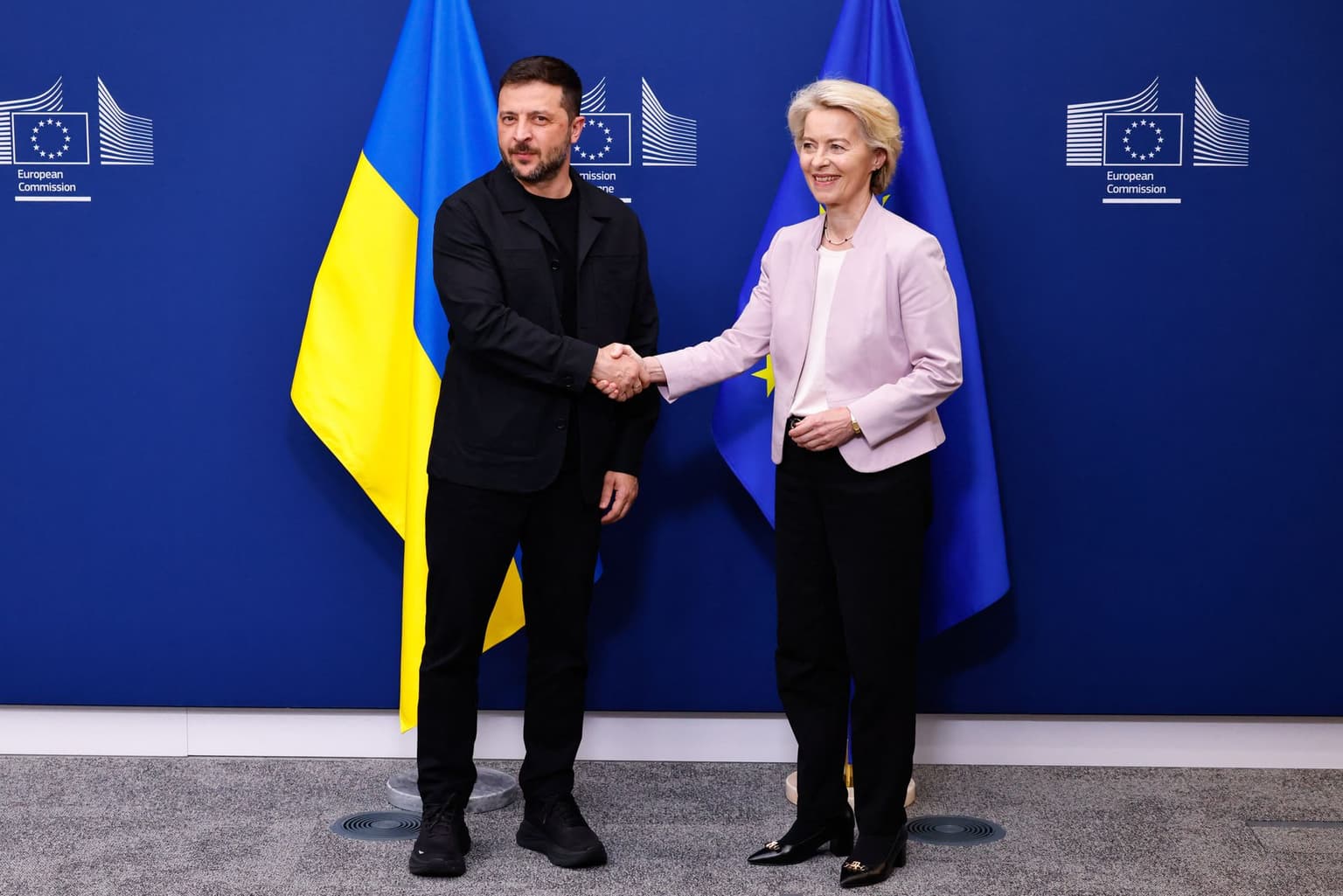
All 27 EU members agreed to launch the first cluster of negotiations with Ukraine and Moldova during an Intergovernmental Conference on June 15, European Commission President Ursula von der Leyen announced.
"We will open the cluster on fundamentals; the backbone of the accession process," von der Leyen said on June 12.
"It covers the core values and principles on which the EU is built, from the rule of law to strong democratic institutions."
President Volodymyr Zelensky welcomed the decision, thanking Ukraine's partners and calling it "a strong step for Europe."
"Ukraine is defending itself and, in doing so, all of Europe — the idea that European nations can live united, free, and in peace," Zelensky said on June 12.
Zelensky said the opening of the first accession cluster represents significant political and moral support for Ukraine, adding that Kyiv has fulfilled the necessary requirements and that it is important the EU is also "keeping its word."
He also thanked EU leaders for their support and congratulated Moldova on advancing alongside Ukraine in the accession process.
A range of EU and national diplomats have previously told the Kyiv Independent that the first of six so-called enlargement clusters is expected to be opened in Luxembourg, on the sidelines of a meeting of EU foreign ministers.
In a post on social media, Hungarian Prime Minister Peter Magyar said that Ukraine and Hungary have "formalised" an agreement on Hungarian minority rights, which had been the main obstacle to the launch of the talks.
Magyar previously has said he would not greenlight the launch of the first accession cluster unless Kyiv strengthens the rights of its 70,000-80,000-strong Hungarian minority in western Zakarpattia Oblast.
"The Ukrainian side has committed itself to implementing all provisions of the agreement and has also incorporated them into the EU Minority Action Plan," Magyar wrote.
While Budapest has been blocking Kyiv's EU bid for months, the ousting of Hungary's pro-Kremlin Prime Minister Viktor Orban in the April parliamentary elections has provided new momentum to Ukrainian-Hungarian relations.
"In just a few weeks, we have succeeded in resolving an issue that the Orban government was unable to address in ten years," Magyar added.
Following a series of bilateral consultations, Magyar announced on June 3 that Kyiv and Budapest "reached a comprehensive agreement with Ukraine regarding the expansion of the linguistic, educational, cultural, and political rights of the Hungarian minority."
Once Ukraine appends its agreement with Hungary to its EU action plan, Budapest would sign off on opening the first accession cluster, Magyar said earlier.
The Ukrainian government first approved its "Action Plan for the Protection of the Rights of Persons Belonging to National Minorities" in May 2025 as part of the EU accession process.
Back in 2024, Budapest presented Ukraine with 11 demands regarding the cultural, linguistic, and educational rights of the Hungarian minority, most of which require legislative changes on Kyiv's part.
However, Deputy Prime Minister for European and Euro-Atlantic integration Taras Kachka said that Budapest agreed the Hungarian minority rights would be ensured on the basis of current Ukrainian legislation, with only some "clarifications" to be introduced.
Magyar has said that resolving the national minority issue could open a new chapter in Hungarian-Ukrainian relations, which have been marred by tensions under the Orban government.
Hungary's new prime minister even proposed meeting Zelensky in Ukraine in early June, though no definite plans have been confirmed.
Kachka described the opening of the first cluster as "another milestone on Ukraine's path to the EU," adding that Kyiv expects to open the following clusters "shortly."
EU and national diplomats have told the Kyiv Independent that they expect the sixth cluster, on "external relations," to open without problems as well.
There could also be progress on clusters two and three, which cover broad economic issues. An EU document seen by the Kyiv Independent suggests cluster two, on the internal market, could open.
However, one EU official said that they doubt cluster two would open due to the war, making it hard to allow the free movement of goods and people.