Fire, smoke greet Putin's Economic Forum as Ukraine strikes St. Petersburg oil terminal
 on Google
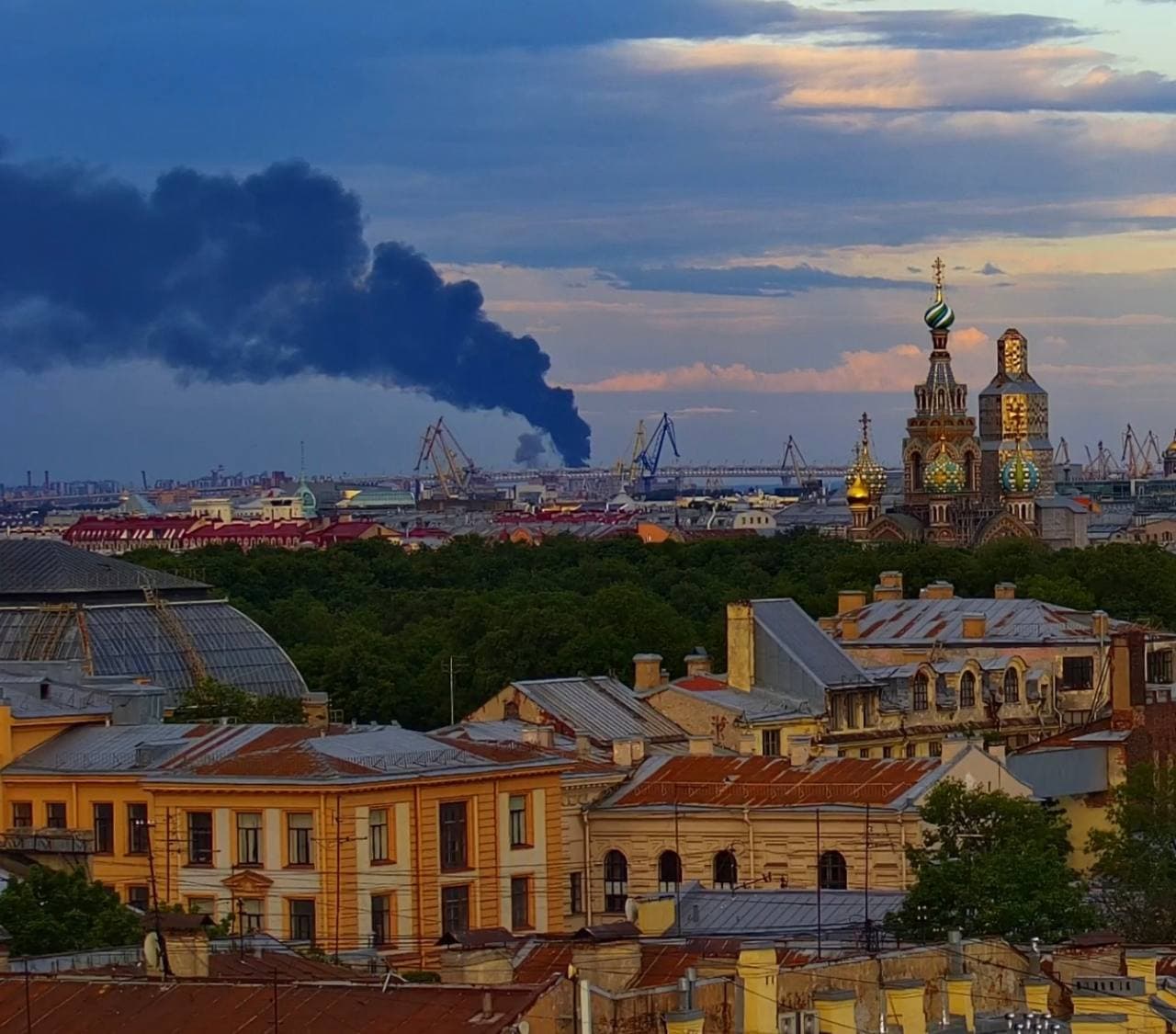
Black smoke hung over St. Petersburg on the morning of June 3 as the first delegates arrived for Russia's flagship economic forum. Ukraine had been busy in the night.
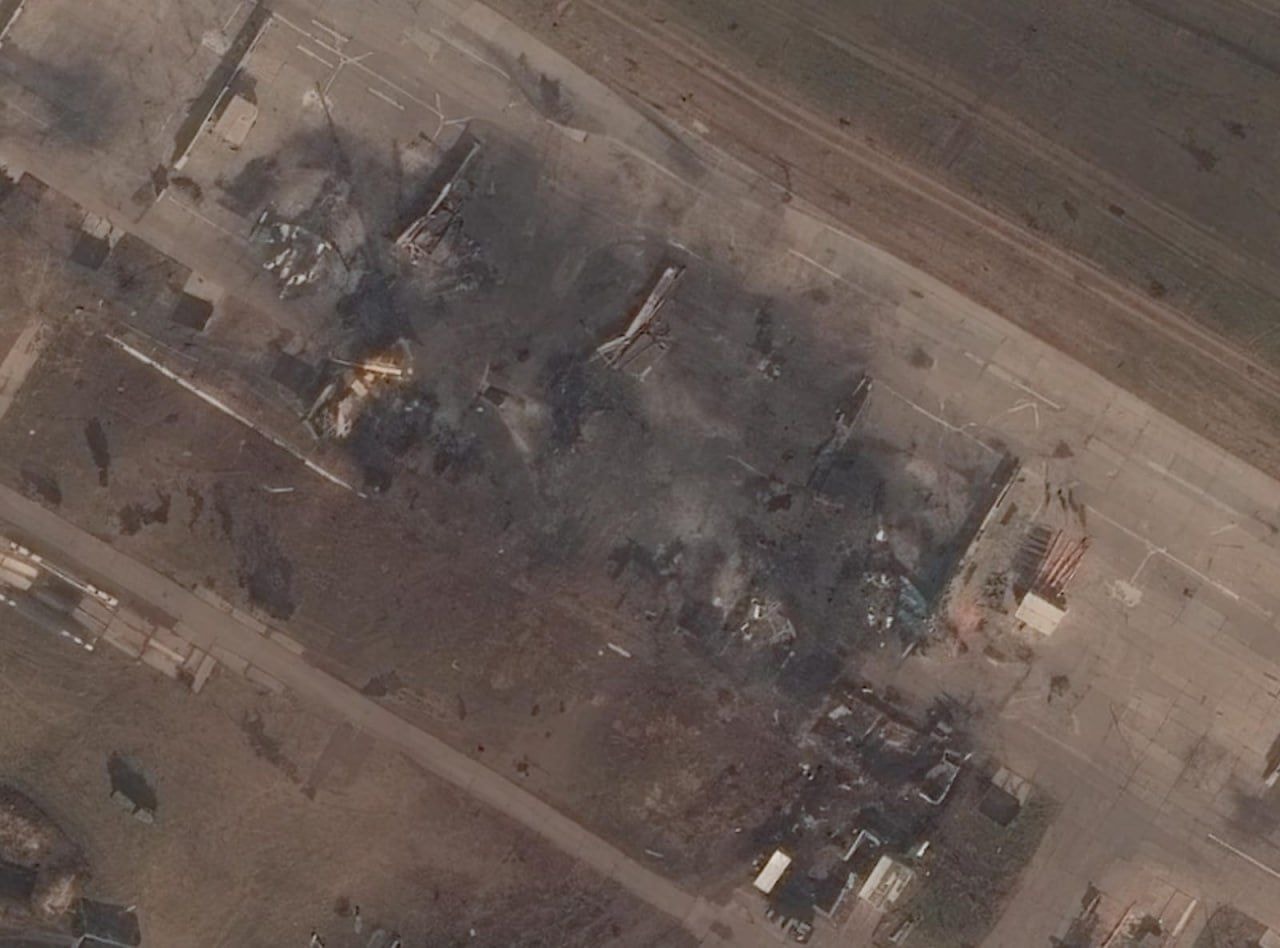
President Volodymyr Zelensky confirmed that Ukrainian forces struck the St. Petersburg Oil Terminal in Russia's Leningrad Oblast in the early hours of June 3. The attack unfolded as dignitaries arrived for the 2026 St. Petersburg International Economic Forum, an annual conference of business leaders and government officials hosted by Russian President Vladimir Putin.
Zelensky wrote on X on June 3 that "important facilities on Russian territory were hit," including the St. Petersburg Oil Terminal, located 1,100 kilometers (about 684 miles) from Ukraine's border.
The oil terminal, located on the Gulf of Finland at the city's Great Port of St. Petersburg, is one of Russia's largest fuel storage and export facilities. It receives and ships petroleum products by river, rail, and motor transit, and boasts a reported throughput of 12.5 million tons per year.
The Security Service of Ukraine, the Unmanned Systems Forces, the Special Operations Forces, the Defense Intelligence of Ukraine, and the State Border Guard Service of Ukraine were involved in the operations.
John Foreman, Former U.K. Defense Attaché to Moscow and Kyiv, told the Kyiv Independent that "It is exceptionally humiliating for (Vladimir) Putin's home city to be attacked on the opening day of St. Petersburg International Economic Forum."
"Instead of being able to project a narrative of inevitable victory and strength, the opposite is true and won't be lost on attendees," Foreman said.
Foreman added that the strike follows "a series of humiliations" for Putin, including the subdued Victory Day parade in Moscow, reported fuel shortages in occupied Crimea caused by Ukraine's strikes, as well as continued Ukrainian drone strikes across Russia.
"Putin owns these himself. By his personal identification with his war, any humiliations smack him in the face."
St. Petersburg residents reported large-scale explosions and fires at the site, posted photos and video footage of loud explosions and a massive fire as the city came under attack by Ukrainian drones the morning of June 3. The images showed black smoke rising over the St. Petersburg Oil Terminal.
Leningrad Oblast Governor Aleksandr Drozdenko reported that 50 drones were shot down over the region on June 3, but did not comment on the fires at the port.
Flights were disrupted at St. Petersburg's Pulkovo Airport due to the attack, with nearly 30 flights delayed for over two hours and nine others diverted to other airfields, according to the Russian state news outlet TASS.
Speaking alongside Zelensky in Kyiv during an unannounced visit, NATO Secretary General Mark Rutte referenced Russia's deadly mass missile attack on Ukraine overnight on June 2 which killed more than 20 people and injured over 100, saying Moscow's "recklessness is not new."
"But as Ukraine continues to stand strong, to innovate and to make battlefield gains, Russia is increasingly desperate," he added.
"Ukraine has now achieved such success that Putin can organize a parade on May 9 only thanks to the official decree of this president," Rutte said in reference to the tongue-in-cheek official decree Zelensky issued ahead of the event in Moscow.
Rutte also addressed Russian soldiers fighting in Ukraine directly.
"Guys like you are going to fight without proper military training," he said. "The equipment you will be given will be of poor quality. There is a very high probability that you will die or be injured in Ukraine.
"And, most likely, if you are injured, you will be left to die in the mud. So when we talk about tens of thousands of Russian victims, these are not abstract numbers. It will probably be you."
Zelensky added that military targets at the Kronstadt base, west of St. Petersburg, were hit alongside an enterprise involved in the production of Russian weapons in the Tambov Oblast.
Ukraine's General Staff later on June 3 confirmed the attacks. It added that, according to preliminary reports, the strike had hit ships and infrastructure in Kronstadt port.
In Tambov Oblast, the Michurinsky Progress Plant, a manufacturer of components for high-precision weaponry, was also hit, the General Staff said. A fire has been reported on the plant's premises.
Ukraine has attacked port and oil infrastructure in Leningrad Oblast in previous strikes. In January 2024, a Ukrainian drone was reportedly shot down over the St. Petersburg Oil Terminal, sparking a fire.
In September 2025, Ukrainian forces struck Leningrad Oblast's Primorsk, Russia's largest oil-loading port on the Baltic Sea, forcing the facility to suspend operations. Primorsk lies roughly 100 kilometers (60 miles) from St. Petersburg
The new attack on the St. Petersburg Oil Terminal comes one day after Russia launched a devastating mass missile and drone strike against Kyiv, Dnipro, and other Ukrainian cities. The large-scale attack killed at least 23 people, including two children, and injured over 100 others.
Ukraine launched its latest barrage of drones at St. Petersburg on the same day that Putin was set to commence his fifth wartime St. Petersburg International Economic Forum — the so-called "Russian Davos" where representatives from over 130 countries and territories convene for a three-day global business event.
The terminal that was targeted is located roughly 17 kilometers (10.5 miles) from the Expoforum convention center where the conference will take place.


A member of U.S. President Donald Trump's administration is set to appear at the forum, the first known attendance at the event by an American official in several years.
Putin has used the forum as a platform to project economic resilience and signal that Russia remains open for business despite Western sanctions and diplomatic isolation in the wake of the full-scale invasion of Ukraine.
During last year's forum speech, Putin proclaimed that "all of Ukraine" belonged to Russia.
Kremlin spokesperson Dmitry Peskov said on June 3 that, in response to attacks on facilities in St. Petersburg, Russia's response will be "systematic."
He also said that the main focus of Putin's speech at the forum will be economic issues, but political topics will also be addressed.
In its June 3 statement, the SBU said the strike was a sign of things to come.
"Therefore, a 'stable future' awaits it in the form of regular fires at oil refineries, oil depots, and terminals, through which the Kremlin earns petrodollars to finance its aggression. The longer Russia chooses war over peace, the more frequently the facilities that sustain it will go up in flames," the SBU said.
Jimmy Rushton contributed to the reporting.