Putin faces rising tensions as Russian economy weakens
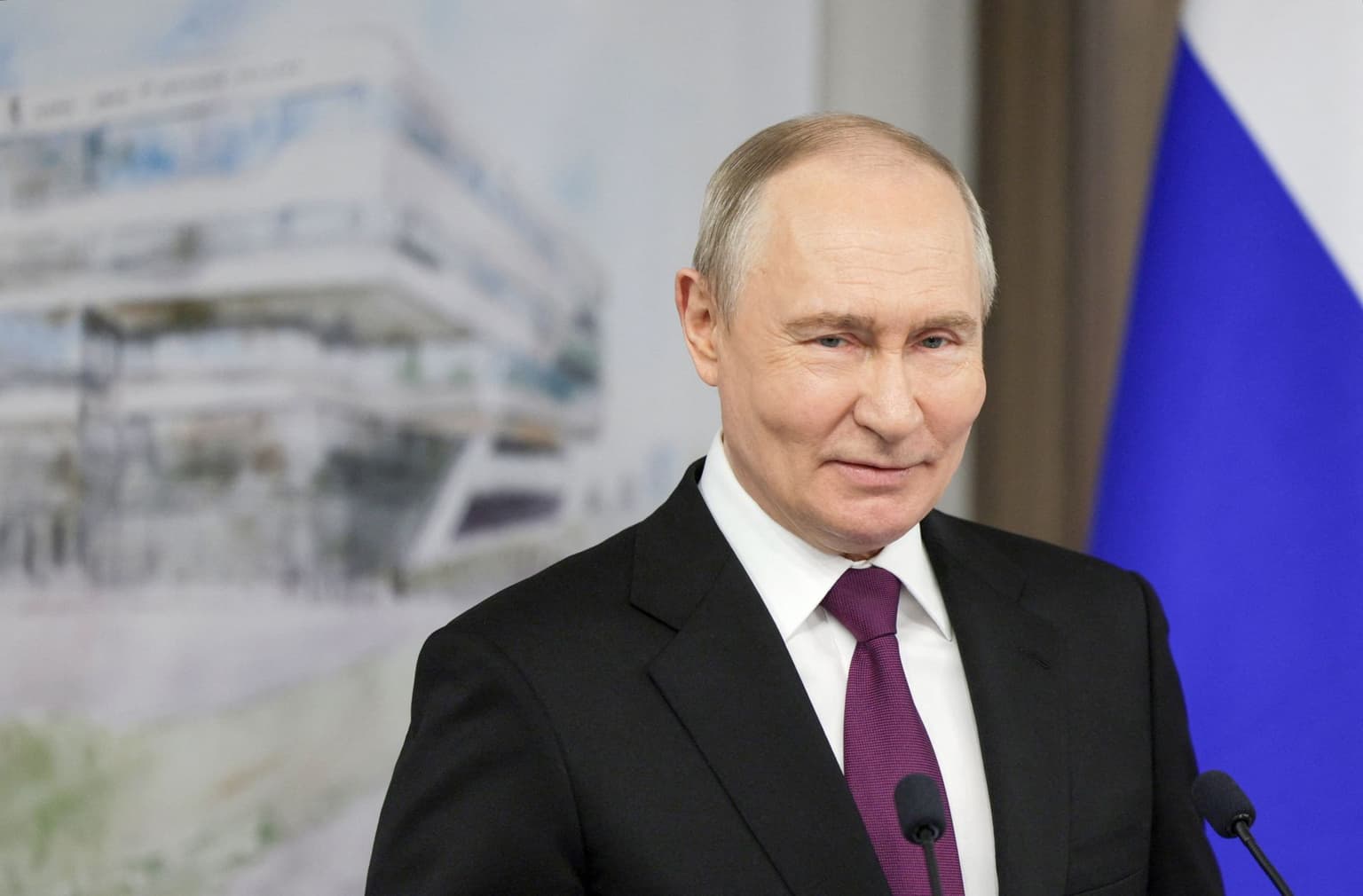
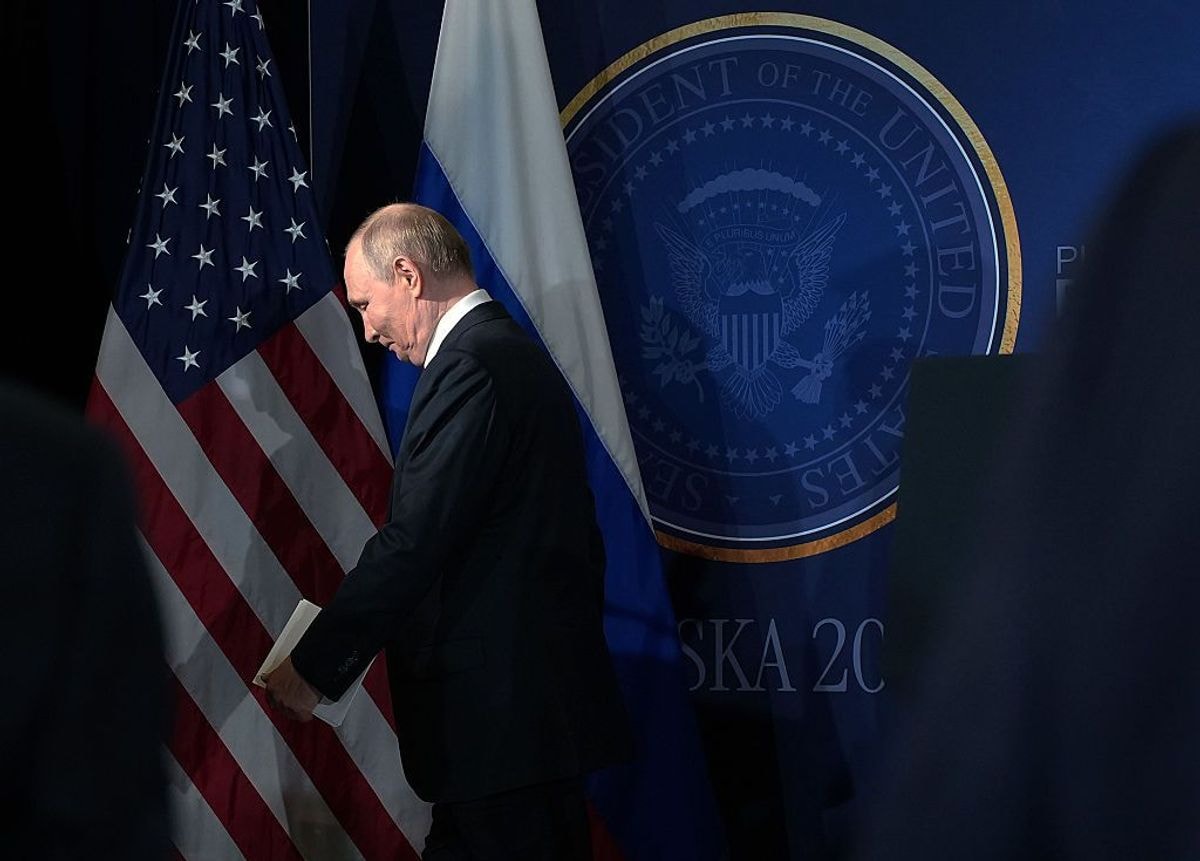
Russian President Vladimir Putin in Saint Petersburg, Russia, on April 27, 2026. (Gavriil Grigorov / Pool / AFP / Getty Images)
 on Google
The Russian economy is losing momentum as the cost of the war mounts — sowing discord at the highest levels of the state and posing growing problems for President Vladimir Putin.
After four years of proudly insisting that Russia could withstand sanctions imposed by the West in response to its full-scale invasion of Ukraine, the Kremlin is now confronting the reality that the war economy that initially spurred growth is increasingly straining the system.
Meanwhile, there is a growing sense that Russian forces are slowing down as Ukraine not only inflicts heavy losses along the largely static front lines but increasingly strikes deep within Russia — feeding disenchantment as ordinary Russians come face to face with the war.
Russia's economy expanded after Ukraine's surprising resistance to the invasion caused a sudden need to rapidly militarize. But sustaining such high levels of war expenditure is proving difficult, especially alongside wider weariness of the now 12-year-long conflict.
As the economy continued to grow — however feebly — Putin supported the central bank in its campaign to tackle persistent inflation with a prolonged period of interest rates as high as 21%.
But the economy unexpectedly contracted in January and February of this year, alarming officials and eliciting a distinctly frustrated tone from the president during a mid-April meeting on economic affairs.
"I hope to hear detailed reports today on the current state of the economy and why the macroeconomic indicators are still falling short of expectations," he told officials, including his finance minister, Anton Silyuanov, and head of the central bank, Elvira Nabiullina.

The situation was worse than forecast by the government and central bank, Putin noted. "And of course, as already stated, I look forward to proposals for additional measures aimed at reviving growth in the domestic economy," he said.
Limited leeway
With Putin appearing increasingly impatient over the state of the economy, the central bank opted for an eighth consecutive cut in the interest rate to 14.5% in late April — despite the war in Iran spurring inflation worldwide.
As if on cue, growth of 1.8% materialized in March, according to figures released by the state statistical agency, Rosstat, at the end of April. Perhaps more tellingly, a widely watched index of the business environment meanwhile deteriorated to its lowest level in a year, followed by a 40-month nadir in service sector confidence in April.
Putin has himself appeared to question the reliability of certain data in recent meetings — an issue that only complicates decision-making and efforts to revive the economy.

Aptly illustrating the problem, Rosstat said recently it would change how it calculates inequality after the Gini coefficient measure reached 0.422 in 2025, the highest reading since records began in 1995. The agency's new assessment for last year is 0.375 — already within a whisker of a target set by Putin in 2024 of reducing the rate to 0.37 by 2030.
Although Putin claims to have reduced poverty substantially from a rate of some 29% in 2000 to closer to 7% in 2024, wages remain very low, even by his own reckoning — leaving the poorest especially vulnerable to the grim cocktail of stagnation and persistent inflation.
On top of this, the recent clampdown on the internet is stirring up levels of discontent that have drawn comparison from the leader of the communist party, Gennady Zyuganov, to the restive conditions that preceded the downfall of the Romanov monarchy in 1917.
Trouble at the top
The fortunes of the elite are looking more mixed, too. While the war has created new opportunities for some, it has also triggered a typically ruthless jostling for position, with dramatic downfalls.
In one recent example, billionaire agricultural magnate Vadim Moshkovich lost control of his company after a Moscow court in early May ordered him to transfer his family's stake in the firm to the state. He was arrested last year for allegedly embezzling around $400 million.
Already isolated at the top, Putin, in turn, is stepping up his own security as tensions rise.

Since the start of March in particular, the Kremlin has reportedly grown more concerned about the risk of a plot or coup against the president — and of a possible assassination attempt using drones by members of his own political elite — according to an intelligence report from an EU member published and partially verified by the Important Stories investigative outlet.
Meanwhile, Putin’s approval rating has tumbled since the beginning of the year to 65.6% in April, the lowest since before the 2022 invasion, according to the main state polling agency.
As long as Putin presided over rising standards of living, a social contract whereby Russians effectively stayed out of politics and tolerated creeping authoritarianism and corruption held. While initially conceived as a short 'special military operation,' the war has morphed into a long, costly, and existential conflict with no end in sight.
Firms and officials have been voicing concern for some time — and ever more openly in recent months — with growth dwindling to just 1% last year from 4.9% in 2024.
Higher energy and fertilizer prices from the war in Iran have only provided limited relief, as Ukraine continues to damage vital export infrastructure with wave after wave of long-range attacks far behind the front lines.
The monetary policy problem
The main source of complaint is the high interest rate implemented by the Central Bank of Russia, which has raised borrowing costs for households and firms already contending with limited financing options.
Rates reached a peak of 21% in October 2024 and remained there until June 2025 — pouring cold water on the economy even as rising spending on the war continued to fuel inflation.
The civilian economy is meanwhile withering under the shadow of mushrooming militarization. Russia is experiencing losses of tens of thousands of troops per month in Ukraine — exacerbating labor shortages and inflation and further undermining the economy.
Such high rates have also strengthened the ruble, hammering the disproportionately export-dominated economy.

Meanwhile, the Central Bank of Russia has lowered its growth forecast for 2026 to between 0.5% and 1.5% but says it has little room to reduce rates further this year as it contends with not only inflation but rising risks from high levels of debt.
Behind the slowdown is weak private demand and lackluster growth in fixed investment, according to the Bank of Finland Institute for Economies in Transition. The institute expects growth to falter from 1% this year to 0.5% in 2027 and 2028 as the boost in commodity prices from the war in the Middle East fades.
Matters have reached such a point that the surge in the price of oil is not even translating into higher growth.
The realization of a wider impasse is not completely lost on the presidential administration, at least according to a leaked presentation published by the Dossier Center in May. The document examines possible means of presenting something less than the stated aims of the war as akin to victory, given that mass mobilization would be required to break the stalemate on the battlefield.
On May 9, Putin said following the annual Victory Day parade in Moscow — which took place without the usual array of heavy weaponry in view of the risk of Ukrainian drone attacks — that he thinks the war is coming to an end.
However any potential truce is spun to the public, it would be difficult to overlook the already enormous damage the war has caused to Russia. This will likely leave the Kremlin with another battle on its hands, with many pro-war nationalists already disaffected by the failure to decisively subdue Ukraine.
In Putin’s desperation to reclaim an imperial past and status that the Soviet Union never really even possessed, he has created conditions that resemble its dying days — an economy overstretched by unsustainable military spending on a failed war, a lack of any vision for the future, and widespread — and growing — discontent.