News from occupied Ukraine: Fuel rationing in Crimea, Storm Shadows 'destroy' Russian targets in Luhansk Oblast
 on Google

This weekly update from the Kyiv Independent aims to shed light on the situation facing Ukrainians living under Russian occupation and the ever-tightening control of information imposed by the Kremlin.
Key news as of May 31:
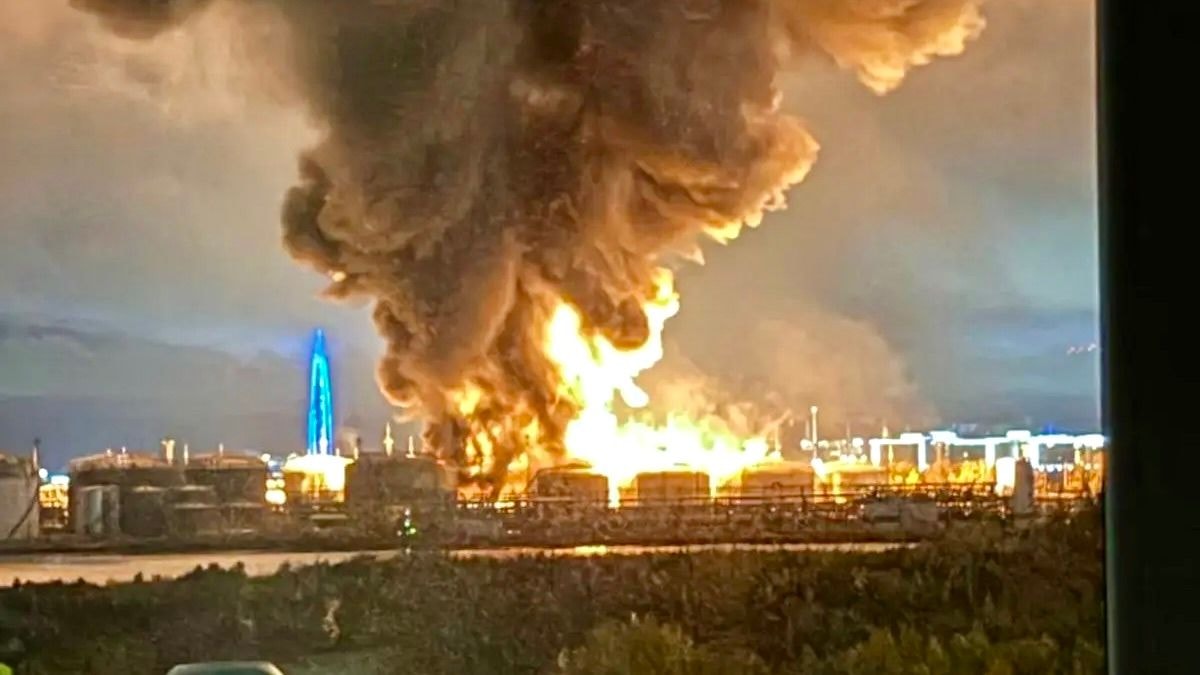
- Crimea introduces fuel rationing amid supply crisis caused by Ukrainian strikes
- IAEA reports communications blackout at occupied Zaporizhzhia nuclear power plant
- Human Rights Watch condemns Russia's unlawful property seizures in occupied Ukraine
- Ukraine is using strike drones to devastate Russian logistics on crucial highway in the occupied southern Ukraine
- Storm Shadow missiles "destroy" Russian military infrastructure in occupied Luhansk Oblast, General Staff says
- Kyiv brings back 11 children from Russian-occupied territories
Russian-installed authorities in occupied Crimea on May 30-31 have introduced fuel rationing measures after Ukrainian strikes on the land corridor connecting the occupied peninsula with mainland Russia disrupted fuel supplies.
The Russian-installed head of occupied Crimea, Sergey Aksyonov, announced on the evening of May 30 that gasoline coupons would be introduced for AI-95 fuel, while sales of AI-92 would be limited to 20 liters per customer. Aksyonov said authorities expect the situation to stabilize within a month.
"I call on Crimeans and visitors to the republic to remain calm and to rely only on official sources of information," Aksyonov wrote in a Telegram post.
Local authorities acknowledged disruptions after Ukrainian drone strikes reportedly affected traffic along the so-called land bridge through occupied southern Ukraine, a key logistics route used by Russia to supply Crimea.
Sevastopol occupation governor Mikhail Razvozhayev on May 31 confirmed that a coupon system would also be introduced in the city for both fuel grades, describing the measure as temporary and necessary to replenish fuel reserves at gas stations.
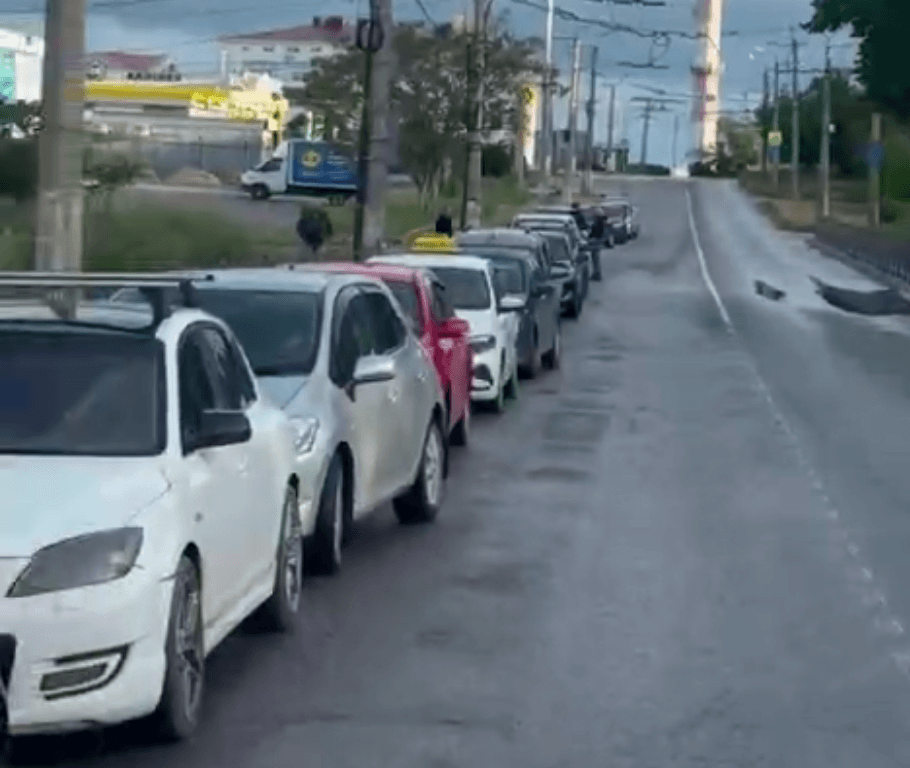
Razvozhayev said that on one day, fuel sales at TES, a major petrol station chain in occupied Crimea, began at 7 a.m., and within a few hours, the entire daily quota had been sold out.
The Telegram channel Crimean Wind on May 31 released a video showing a long queue of cars at a gas station, writing that "there is no point in queuing unless you're one of the lucky few who've managed to get hold of vouchers issued by companies for their own use."
The restrictions follow reports of fuel shortages at major gas station networks in occupied Crimea and other occupied territories.
The introduction of fuel coupons marks one of the largest fuel rationing measures in Russia and the occupied territories in recent years. Fuel shortages have periodically emerged in occupied Crimea and other occupied areas as Ukraine intensifies attacks on Russian military and logistics infrastructure supporting Moscow's war effort.
read also
Ukraine using 'secret' strike drones to devastate Russian logistics on crucial highway in occupied south of Ukraine
Russia has blocked the key "Novorossiya" logistics route in occupied southern Ukraine due to drone attacks, the 412th Nemesis Brigade said on May 26 on Telegram.
Highway R-280, which Russian occupation authorities have also named the "Novorossiya" route, runs through the occupied Ukrainian cities of Mariupol in Donetsk Oblast, Melitopol in Zaporizhzhia Oblast, and Simferopol in occupied Crimea.
The route serves as a key logistics corridor, linking mainland southern Ukraine with the occupied peninsula, and is used for transporting military equipment and other supplies supporting Russian forces.
The 412th Brigade Nemesis said it had tested a new "secret" attack drone, which it claimed proved effective deep behind Russian lines, destroying "dozens" of trucks and fuel tankers.
Following Ukrainian strikes, Russia has limited the movement of heavy equipment along the highway, with Ukrainian forces striking vehicles trying to circumvent it using dirt roads and field paths, the brigade added.
"We are using secret strike 'wings' that have not previously been seen in the public domain," the statement read.
"Thanks to close collaboration between the 412th Nemesis Brigade and the manufacturer, we have succeeded in creating a system that is perfectly tailored to these specific tasks."
The strikes form part of Ukraine's increasingly devastating middle strike campaign, hitting targets at the operational level, between 20 and 200 kilometers from the front line.
IAEA reports communications blackout at Zaporizhzhia nuclear power plant
The Zaporizhzhia Nuclear Power Plant experienced a prolonged communications blackout this week amid reports of increased military activity nearby, International Atomic Energy Agency Director General Rafael Mariano Grossi said May 28.
The plant lost both landline and internet connections for about 12 hours on May 27, marking the longest such outage at the facility since the start of Russia's full-scale invasion of Ukraine, according to the IAEA.
The cause of the outage was not immediately clear, but it coincided with reported attacks on the nearby Russian-occupied city of Enerhodar, where most plant employees live.
"For many hours, we were unable to contact our team of experts at the site, and the plant was unable to communicate with the outside world in the usual way," Grossi said.
"This was clearly a very concerning event in terms of nuclear safety and security. The IAEA team will continue to investigate what caused this communication blackout and discuss how to prevent a recurrence," he added.
The communications outage violated one of the seven core principles for maintaining wartime nuclear safety established by Grossi and the IAEA, which states that nuclear facilities must maintain reliable communication with regulators and outside authorities.
Human Rights Watch condemns Russia's unlawful property seizures in occupied Ukraine
Human Rights Watch called on Russia to end what it described as "illegal property seizures" in occupied Ukraine, along with pressure on residents to obtain Russian citizenship, nationality-based discrimination, and restrictions on Ukrainians' travel to Russian-occupied territories, in a report released May 26.
Russian President Vladimir Putin signed a law in December 2025 enabling the seizure of Ukrainian-owned housing in occupied territories by allowing occupation authorities to declare it "ownerless."
According to the report, displaced Ukrainians face major obstacles to reclaiming their property, including the need for a Russian passport and the dangers of traveling through Russia, as it is nearly impossible to return to the occupied territories from Ukrainian-controlled areas.
"On the one hand, authorities say owners must appear within 30 days to prove ownership. But no one gets through the filtration process," a 75-year-old displaced resident from Sievierodonetsk, Luhansk Oblast, told Human Rights Watch.
The report also said that over 8,000 court cases regarding property seizures were filed from March 2024 to January 2026 across 25 courts in occupied territories, though the actual number could be significantly higher.
"Court records show consistent disregard of evidence of ownership and efforts by owners to assert their rights," the report said.
Storm Shadow missiles 'destroy' Russian military infrastructure in occupied Luhansk Oblast, General Staff says
Ukraine's Air Force used Storm Shadow missiles to strike Russian military infrastructure in the occupied Luhansk Oblast on May 25, the General Staff said.
"Ukraine used Storm Shadow air-launched cruise missiles to successfully destroy an important enemy command-and-control and communications post in the temporarily occupied territory of Luhansk (Oblast)," the statement read.
Storm Shadow missiles, supplied by the U.K., have a range of between 250 and 560 kilometers (155-349 miles), depending on the version of the weapon. Equipped with advanced navigation systems, the missile is designed to fly close to terrain at high speeds, enhancing its effectiveness in striking critical targets.
"This strike underscores the strategic foresight, unity of planning, and deliberate actions that prove no position of the Russian aggressor is safe on Ukrainian soil," the General Staff said.
Ukraine regularly strikes military infrastructure deep within Russia and occupied territories in an effort to diminish Moscow's capacity to continue waging its war.
Kyiv brings back 11 children from Russian-occupied territories
Ukraine has brought back 11 children and teenagers from Russian-occupied territories to areas under its control over the past week, Save Ukraine, a Ukrainian humanitarian NGO, said on May 28.
"Each of them endured constant fear, psychological pressure, intimidation, and attempts to destroy their Ukrainian identity. Today, they are finally safe," a statement on social media read.
Among those rescued is a 17-year-old Stepan, whose home was searched several times by Russian soldiers, Save Ukraine said. Stepan was forced to obtain a Russian passport, undergo military registration, and he was threatened with punishment for failing to report to the military enlistment office.
The children were brought back with the help of partners under the Ukrainian President's initiative, Bring Kids Back UA.
According to Ukraine's national "Children of War" database, at least 20,000 Ukrainian children have been abducted from Russian-occupied territories and taken to Russia or Russian-controlled areas since February 2022.
Some 1.6 million remain under Russian occupation, according to Bring Kids Back UA.
Ukrainian officials estimate the real figure of abducted children could be far higher. Ombudsman Dmytro Lubinets puts the number at up to 150,000, while Presidential Commissioner for Children's Rights Daria Herasymchuk has given a range of 200,000 to 300,000.
In 2023, the International Criminal Court issued arrest warrants for Russian President Vladimir Putin and Russia's Commissioner for Children's Rights Maria Lvova-Belova for their role in state-sanctioned child abductions.