Kyiv air quality plunges after Russia's biggest attack on capital of entire war
 on Google
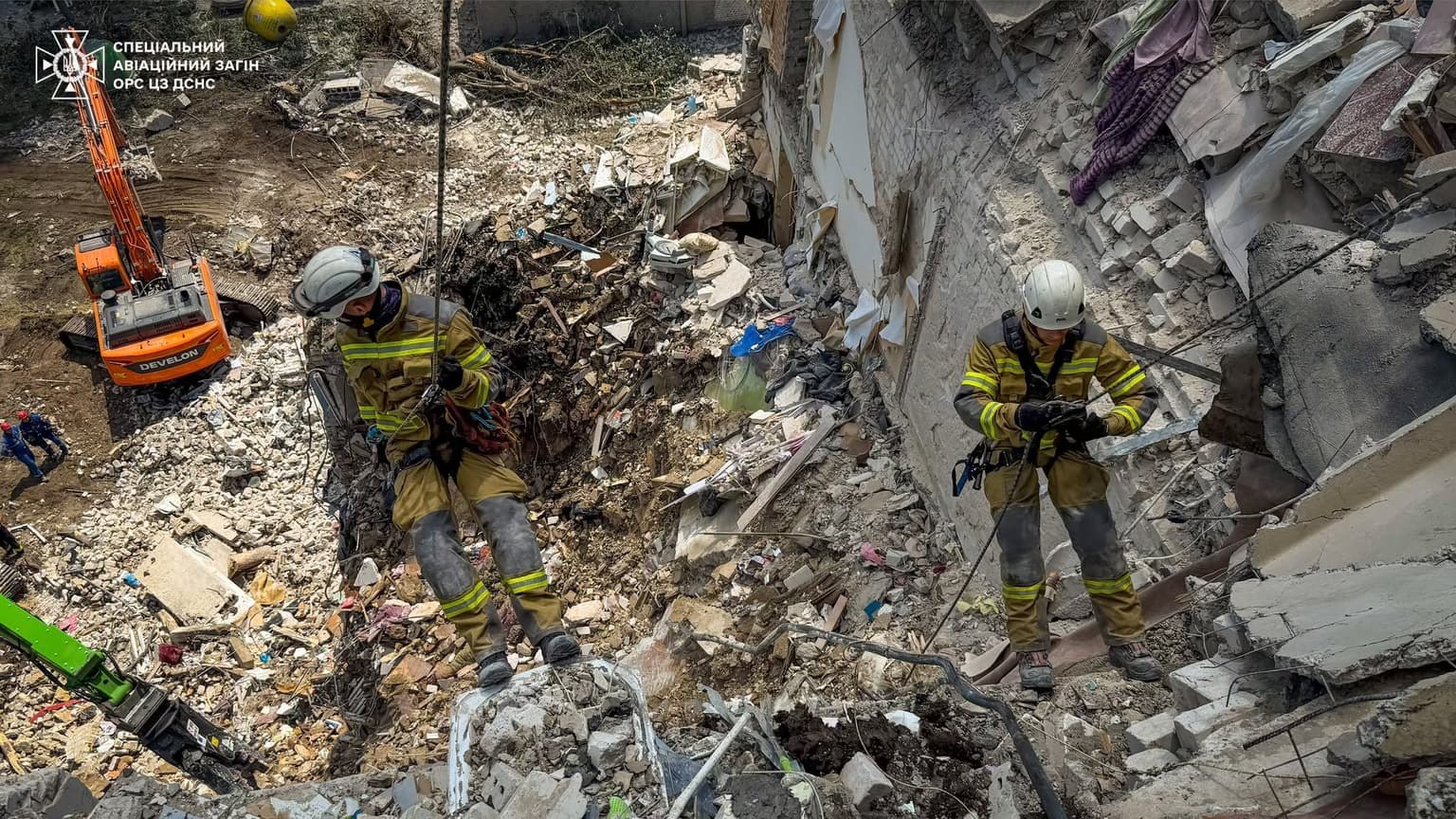
Kyiv's air quality deteriorated on July 3 due to fires caused by Russia's latest mass missile and drone attack and hot, windless weather, authorities said, as rescuers continued searching through the rubble for a second day.
The smell of smoke and haze lingered over the capital with authorities urging residents to keep windows closed, limit time outdoors, drink plenty of water, and use air purifiers if available.
The PM2.5 level — a measurement of harmful particles in the air — reached 160 during the morning, on a par with the 165 in the notoriously polluted Indian capital of New Delhi.
The Ukrainian Hydrometeorological Center said moderate rainfall expected later in the day should improve air quality.
Ukraine's State Emergency Service (DSNS) described the attack as Russia's largest assault on Kyiv's residential sector since the start of the full-scale invasion, saying emergency crews came under repeated Russian strikes at nearly every rescue site while searching for survivors.
Despite the conditions, emergency crews rescued 17 people at one of the strike sites, including seven pulled alive from beneath the rubble — the highest number of people rescued from under the debris at a single location since the beginning of Russia's full-scale invasion, DSNS said.
Search and rescue operations continued across three strike sites on July 3, with 10 people still missing, President Volodymyr Zelensky said.
The attack affected 40 locations across Kyiv, according to DSNS. The Darnytskyi district on the city's left bank suffered the heaviest damage, with a nine-story apartment building, a 16-story residential building, and eight homes damaged. Firefighters also extinguished a warehouse fire in the Obolon district on Kyiv's right bank.
Kyiv observed a day of mourning on July 3 for the 30 people killed in the attack. Emergency power outages were also introduced in Kyiv and Kyiv Oblast.
That night, Russia launched another wave of missile and drone strikes across Ukraine, again targeting civilian infrastructure. The attacks killed at least 17 people and injured 125 others, including two children killed and at least 10 children injured.