Ukraine's military intelligence reveals Russian missile production figures 'exceeding monthly targets'
 on Google
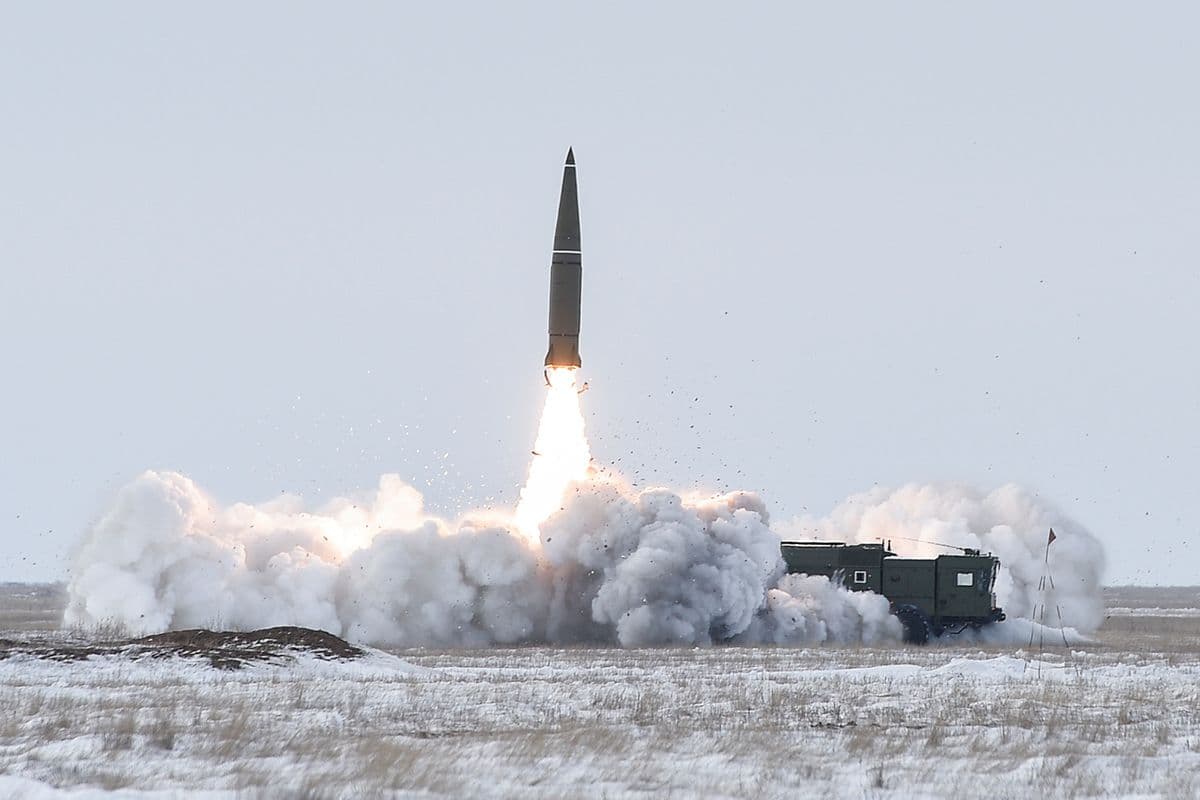
Russia's monthly production of key missiles is running 10–20% above target, while output of some models is even higher, Vadym Skibitskyi, deputy head of Ukraine's military intelligence agency (HUR), said in an interview with RBC-Ukraine, published on Aug. 10.
The statement comes as Ukraine faces a significant shortage of air defense capabilities needed to intercept Russian ballistic missiles. While Ukrainian forces have maintained high interception rates against other missile types, Russia's growing production is putting further strain on Ukraine's air defenses.
According to Skibitskyi, Russia produced 87 Kh-101 cruise missiles in July, reaching 140% of its planned monthly output. Moscow had set a target of 72 Kh-101 missiles for both July and August.
A similar pattern can be seen with the Kalibr cruise missile: Russia planned to produce 26 in each month but manufactured 29 in July, exceeding its target by 11%. The largest overperformance was recorded in Kh-35 production, which reached 200% of the planned monthly output, the official added, without specifying the exact number of missiles produced.
Skibitskyi added that, as of Aug. 3, Russia had already fulfilled its annual production targets for the Zircon and Oniks missiles, with 33 and 60 units manufactured in the first seven months, respectively.
Both were originally developed as anti-ship weapons but are now also used to strike ground targets. While the Oniks follows a conventional cruise missile trajectory, the Zircon is essentially a quasi-ballistic weapon, although Moscow has described it as a hypersonic cruise missile.
Ballistic missiles are among the most dangerous threats to Ukraine, as the U.S.-made Patriot is currently the only air defense system in the country's arsenal capable of intercepting them, and Ukrainian forces face a critical shortage of Patriot missiles. Russia launched nearly 70 ballistic missiles at Ukraine in the first 10 days of August, with only one intercepted, according to Ukraine's Air Force.
Skibitskyi said Moscow has significantly increased ballistic missile production partly because Russian defense plants are now operating under a "simplified system of technical controls" for missile production.
"However, there is another explanation here — the Russians have also been able to increase ballistic missile production because they have now stopped producing Kinzhal missiles. Accordingly, the rocket fuel is no longer going to the Kinzhal, but to other ballistic missiles," Skibitskyi said.
"In addition, they have suspended the production and use of Kh-32 missiles, so the funds and components allocated for them have been redirected to other types of missiles, which are considered more effective."
The official clarified that Russia stopped producing the Kinzhal, an air-launched aeroballistic missile carried by MiG-31 aircraft, in April. He also cited the weapon's "low precision" as another reason for the halt in production.
"For an effective missile, the deviation from the target should not exceed 5–7 meters, while theirs is 30 meters or more," Skibitskyi said.
Although production of some types has been put on hold, the overall trend points to an increase in their use during Russian attacks. According to Ukraine's military intelligence, July saw the second-highest number of Kh-101, Kalibr, and Kh-32 cruise missiles launched at Ukraine since the start of the year. Russia launched 157 such missiles in February and 153 in July.
The trend is even more pronounced with ballistic weapons. Russian forces launched 198 ballistic missiles at Ukraine in July, including 9M723 missiles from the Iskander-M system, RM-48U missiles from the S-400, and Zircon missiles — the highest monthly figure so far in 2026, Skibitskyi said.