Ukraine’s protest movement has run into a wall
Protesters say they have achieved part of what they set out to do, but now lack a clear path to force the president to meet their central demand.
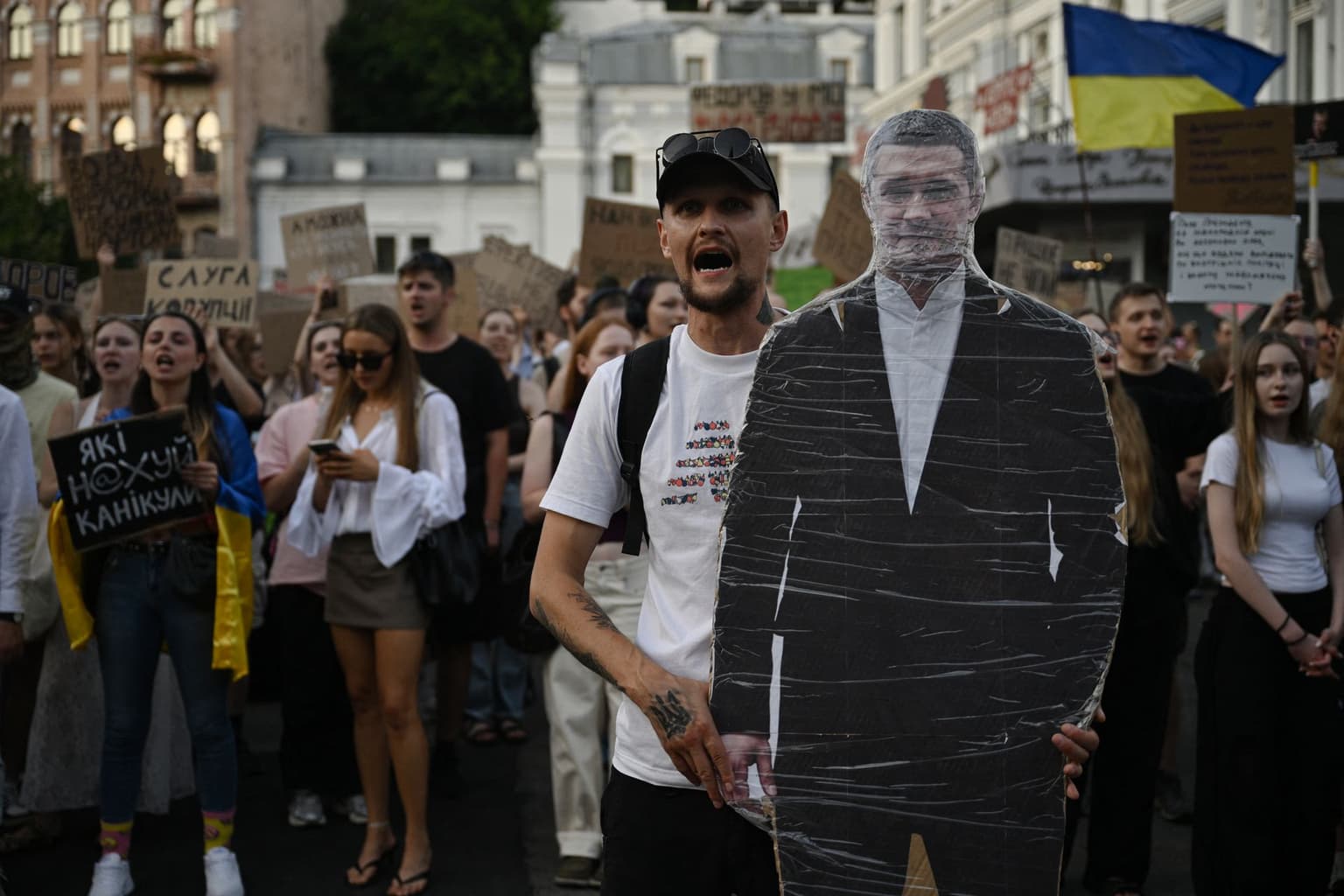
A protester holds a portrait of former Defense Minister Mykhailo Fedorov during a demonstration calling for defense sector reform in Kyiv, Ukraine, on July 31, 2026. (Genya Savilov / AFP / Getty Images)
 on Google
After weeks of protests over the dismissal of former Defense Minister Mykhailo Fedorov, the movement is losing momentum as organizers struggle to decide what comes next and President Volodymyr Zelensky continues to ignore their central demand.
Zelensky's lack of a public response has caught organizers off guard. While they say the protests have achieved some of their initial goals, they are now uncertain how to pressure the president into reinstating Fedorov.
"I've been feeling some total frustration and despair," said Dmytro Koziatynskyi, a war veteran and one of the protest organizers.
"It's unclear why the president continues to ignore the protests and doesn't find even one sentence in his evening addresses for an appropriate response."
For now, the President's Office appears to have the upper hand.
After weathering street pressure to reinstate the popular minister while conceding to demands to remove an unpopular army chief, the protests have largely faded, moving from daily to biweekly gatherings.
A 50% success rate
Protests erupted in mid-July after Defense Minister Fedorov lost his seat during a chaotic government reshuffle.
Fedorov had become one of Ukraine's most popular government officials during his tenure, overseeing high-profile reforms and initiatives to strengthen the military.
His ideas had won support among many Ukrainians, making his sudden dismissal difficult for the public to understand.
Zelensky has never offered a detailed explanation for the decision. Instead, he has pointed to an alleged conflict between Fedorov and then-Commander-in-Chief Oleksandr Syrskyi.
That explanation gradually changed the focus of the protests.
What began as demonstrations against Fedorov's dismissal soon turned into broader demands for changes in Ukraine's military leadership, with protesters outside the President's Office in central Kyiv also calling for Syrskyi to go.

Zelensky eventually granted them that demand.
He dismissed Syrskyi and appointed General Mykhailo Drapatyi, a widely respected commander, as his successor.
The move was welcomed by many Ukrainians, and some demonstrations that followed appeared to draw fewer people. But it did not resolve the dispute. Protesters continued to demand Fedorov's reinstatement.
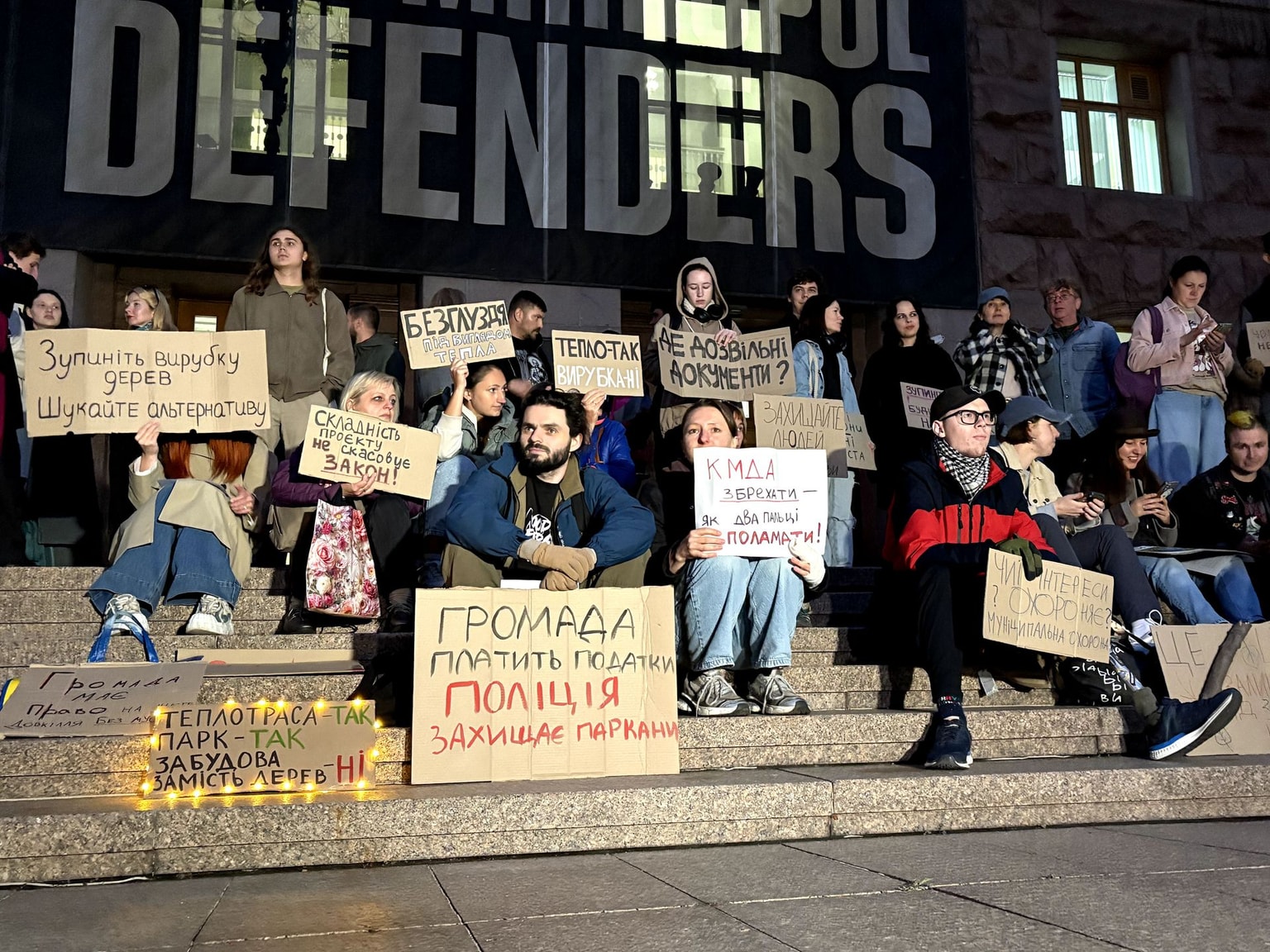
On July 31, Ukrainians again gathered in Kyiv for what organizers called a "march for dialogue and reforms in defense." Thousands gathered in a Kyiv park before marching through the city center, once again putting pressure on Zelensky to bring back the former defense minister.
"When are you ready to stop?" the Kyiv Independent asked Koziatynskyi during an interview at the protest.
"We are ready to stop as soon as our demands are fulfilled and as soon as Ukraine is back on the reform track and back on the strategic mission track," he responded.

The size of the march showed that the issue had not disappeared despite Zelensky's decision to replace Syrskyi. But after the march, the protests largely lost their momentum.
Instead of another large demonstration, small groups of around 100 or sometimes more people continued gathering in the square each day.
And that has left the organizers facing a problem they did not expect: they know what they want, but are increasingly unsure how to get it.
Zelensky is not giving them much to work with
The president has largely avoided engaging directly with the protests, although he has continued to address Fedorov's future.
On July 21, Zelensky said he had offered Fedorov "a prominent position in the government" focused on strengthening Ukraine's technological sector.
According to a person close to the president, the proposal envisioned either the position of deputy prime minister for military innovations or the leadership of Ukroboronprom, Ukraine's state-owned defense conglomerate.
Fedorov, however, has made clear that he wants only one job: defense minister. He has rejected the possibility of returning to the government in another position.
Since his dismissal, Fedorov has also given multiple interviews in which he suggested that his efforts to make defense procurement more transparent may have contributed to his removal.
"It's true that many people in our country are involved in the defense industry," Fedorov told Ukrainian news outlet Ukrainian Pravda. "It's true that there were different indications, and many events took place at the Defense Ministry."
Those comments have only added another layer to a dispute that Zelensky has so far declined to explain in detail.

People close to the president say, meanwhile, that Zelensky has no intention of reinstating Fedorov. Instead, Yevhen Khmara, a figure respected in Ukrainian military circles, has spent almost a month serving as acting defense minister.
"He's great for this position, and the president believes in him," one person close to Zelensky said.
That leaves another question hanging over the dispute: will Zelensky formally nominate Khmara when parliament returns from its summer recess on Aug. 18?
Some people close to the situation believe Zelensky could avoid putting Khmara's candidacy to a vote in an effort not to further inflame public anger.
But keeping him as acting minister also creates problems.
As an acting minister, Khmara cannot appoint his deputies and continues to work with Fedorov's team. That leaves the Defense Ministry operating under an interim arrangement at a time when Ukraine is fighting an existential war.
read also
Aug. 14 could be another test
The protesters are now looking toward the next date on the calendar. Four days before parliament returns, Ukrainians are expected to gather again in central Kyiv.
Koziatynskyi said the Aug. 14 demonstration will be another attempt to force Zelensky to engage with the movement.
"I propose making one more attempt to get through to the president: society demands dialogue, a clear action plan, and a vision for reforms."
Some protesters have suggested moving the next demonstration to parliament on Aug. 18, when lawmakers return.
Koziatynskyi, however, does not see much point in doing so. He argues that parliament cannot resolve the dispute unless Zelensky first sends lawmakers a proposal for who should lead the Defense Ministry.
That leaves the movement in an awkward position.
The protesters have already forced one major change by helping build pressure around Syrskyi's dismissal. But their original demand remains unaddressed, while Zelensky has given them little indication that he is prepared to reconsider Fedorov's firing.
Protest organizers are hoping another show of force will push Zelensky to act. The president's team appears to be betting that the demonstrations will eventually lose momentum.
With parliament due back on Aug. 18, the next few days could determine whether the dispute enters another phase or simply fades into the background. For now, neither the protesters nor Zelensky appears to know what happens next.
Note from the author:
Hi, this is Tim. The author of this article. Thank you for taking the time to read it.
At the Kyiv Independent, we don't have a wealthy owner or political backing. If you found this article interesting, consider joining our community today.