Ukraine wants foreign investors to buy its state assets. So far, they’re not biting
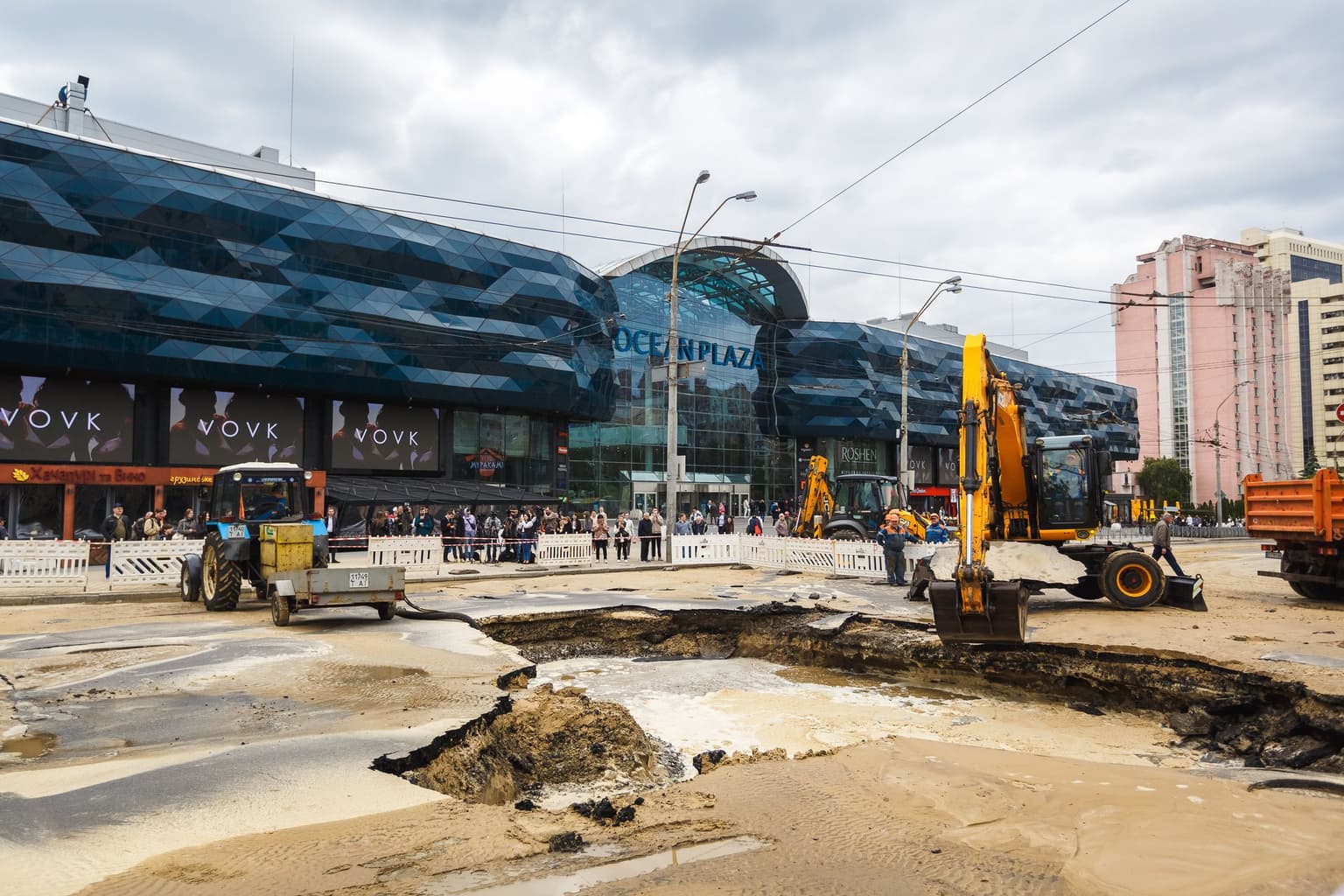
Specialists of an emergency recovery team inspect and shut down a damaged pipeline near the state-owned Ocean Plaza shopping mall in Kyiv, Ukraine, on May 14, 2024. (Yurii Stefanyak / Global Images Ukraine / Getty Images)
 on Google
Ukraine's government wants to sell thousands of state-owned assets that are overwhelmingly unprofitable, inefficient, or nonoperational — sometimes all three. But it's facing a problem. Low prices aren’t enough to attract the foreign investors Ukraine wants most, particularly those from Europe.
As Ukraine positions itself as an investment opportunity rather than a charity case to foreign partners, the country's State Property Fund, the government body overseeing privatization, is advertising state-owned businesses as an easy and secure path for foreign investment.
"It is probably one of the safest ways to enter the Ukrainian market," Dmytro Natalukha, the chairman of the fund, told the Kyiv Independent.
"The whole process is very straightforward. You take part in an online auction on the Prozorro platform (Ukraine's transparent public procurement website), meaning that there cannot be any infringements whatsoever. You have the possibility to access all the data beforehand, to sign a non-disclosure agreement, and even do a site visit," he added.

The fund currently lists 18 large-scale projects and 157 small-scale projects on its website, with around 1,200 projects in the pipeline from a pool of more than 3,000 state assets in total. The auctions have attracted local investors, with 168 small-scale sales bringing in over 1 billion hryvnia ($22.3 million) in the first half of 2026.
But in late June, Natalukha stood on stage at the Ukraine Recovery Conference in Gdansk, saying that no European investors were interested in bidding for state assets. This is despite there being a plethora of privatization opportunities in Ukraine, from an ammonia plant in Odesa to a bakery in Chernivtsi, he told the audience.
People involved say deep-rooted problems are turning off foreign investors. Poor communication by the government about viable projects and ongoing war risks are major roadblocks, as well as staffing issues at the fund, particularly with English-speaking employees, a person with direct knowledge of Ukraine’s privatization program told the Kyiv Independent on condition of anonymity.
"From what we have seen, many of the assets currently being offered require substantial restructuring and additional investment."
Ukraine also bars the government from disclosing an asset's financial details before announcing an auction, leaving investors just two to three months for due diligence checks. Meanwhile, the assets are often saddled with debt, in poor condition, or — if the asset was confiscated — in the firing line of potential lawsuits.
"From what we have seen, many of the assets currently being offered require substantial restructuring and additional investment," German Chamber of Commerce in Ukraine CEO Reiner Perau told the Kyiv Independent.
After the conference, Natalukha told the Kyiv Independent that the government has poorly advertised projects to foreign investors in recent years. The fund was even headless for nearly 18 months before he took the reins this January, putting privatization on the back foot while the government courted large financial institutions to other investment projects instead, like new industrial parks.
But he also says Brussels, despite pushing Kyiv toward privatization, could make it easier for European firms to enter the market by providing derisking instruments. Most investors, especially from Europe, don't have the risk appetite to take the plunge without insurance, which is hard to access for small and medium-sized investors.
In the case of German companies, the lack of participation in privatization auctions isn't necessarily an indictment of the process itself, according to Perau, but rather reflects investors’ reluctance to commit capital while the war and its risks persist.
"We want the buyers to be strategic and to be present not just in our economy, but physically on the ground, and to be willing to protect the assets that they have invested in."
Natalukha said that companies from more venturesome countries such as the U.S., Turkey, Israel, and Azerbaijan are inquiring about and visiting state-owned assets in agriculture, mining, and chemicals. But even then, only one foreign firm has bought a state asset during wartime — Azerbaijan's Neqsol, which purchased the UMCC Titanium mine last year for 4 billion hryvnia ($95 million).

The tide could turn later this year. The U.S. Development Finance Corporation (DFC) announced a partnership with the World Bank's Multilateral Investment Guarantee Agency at the Ukraine Recovery Conference to expand political risk insurance for American firms investing in Ukraine, covering government overreach as well as war risks.
According to the person with knowledge of the privatization process, the DFC is ready to provide political risk insurance to American investors willing to bid for the Odesa Portside Plant Facility — an inoperative ammonia plant that comes with its own port — which goes to auction in October for the sixth time since 2009.
Kyiv is more optimistic it can sell the plant this time around after the last attempt in 2025 collapsed because no one applied for the auction. According to Natalukha, the plant has attracted significant attention this year from American, Turkish, and Israeli companies after Iran strangled ammonia supplies by blocking the Strait of Hormuz.

But investors will have to face the same issues that plague so many other state assets during wartime. It's laden with heavy, swelling debt — $193 million — as the plant ceased operations in 2022, and it's located in a region frequently targeted by Russian missiles and drones.
Nonetheless, it remains a key asset in the government's large-scale privatization push this year, which aims to raise a total of $295 million by the end of 2026. The plant's starting price will be Hr 4.3 billion ($100 million), five times less than the 2009 auction. That would increase if more players join the auction.
"It's a trade-off for us because we are selling these assets for a discounted price for obvious reasons. But we want the buyers to be strategic and to be present not just in our economy, but physically on the ground, and to be willing to protect the assets that they have invested in," Natalukha said.
With one or two standout privatizations, cautious European investors could come round to bidding in auctions, Wojciech Kostrzewa, president of the Polish Business Roundtable, told the Kyiv Independent. But the first step for the fund should be improving communication with European firms, which have traditionally stuck to safer investments, he added.
"The leadership of Ukraine's privatization authority should do a proper roadshow with business associations in Europe," he said.
"Get out of Kyiv and visit Warsaw, Berlin, Paris, London, or Stockholm, and meet leaders of organizations to explain why investing in Ukraine now is attractive."