Russia's Central Bank slashes key rate to 14.5%
 on Google
Editor's note: The story has been updated with additional details.
The Central Bank of Russia on April 24 cut its benchmark rate by 50 basis points to 14.5%, offering relief to the Russian economy while warning of continued uncertainty.
The move marks the eighth consecutive rate cut from record highs previously imposed to curb inflation driven by wartime spending amid the invasion of Ukraine.
Russia's inflation rate slowed from 5.9% in March to 5.7% as of April 20, with the central bank forecasting a decline to the annual rate of 4.5–5.5% in 2026.
The regulator expects the benchmark rate to remain between 14% and 14.5% per annum this year and between 8% and 10% in 2027.
"Domestic demand dynamics have roughly corresponded to the economy's capacity to ramp up the supply of goods and services. However, measures of underlying price growth have not yet decreased," the regulator said in a press release.
"There is still significant uncertainty regarding the external environment and fiscal policy parameters."
The Russian economy slowed in early 2026, partly due to adjustments to earlier tax changes and other factors. Nevertheless, the central bank has kept this year's GDP growth forecast at 0.5-1.5%.
Russia's economy has faced significant headwinds at the start of the year, including mounting budget pressure and falling oil prices.
Energy prices later spiked amid the U.S.-Iran war and the closure of the Strait of Hormuz, allowing Russia to reap windfall profits while benefiting from a loosening of U.S. sanctions.
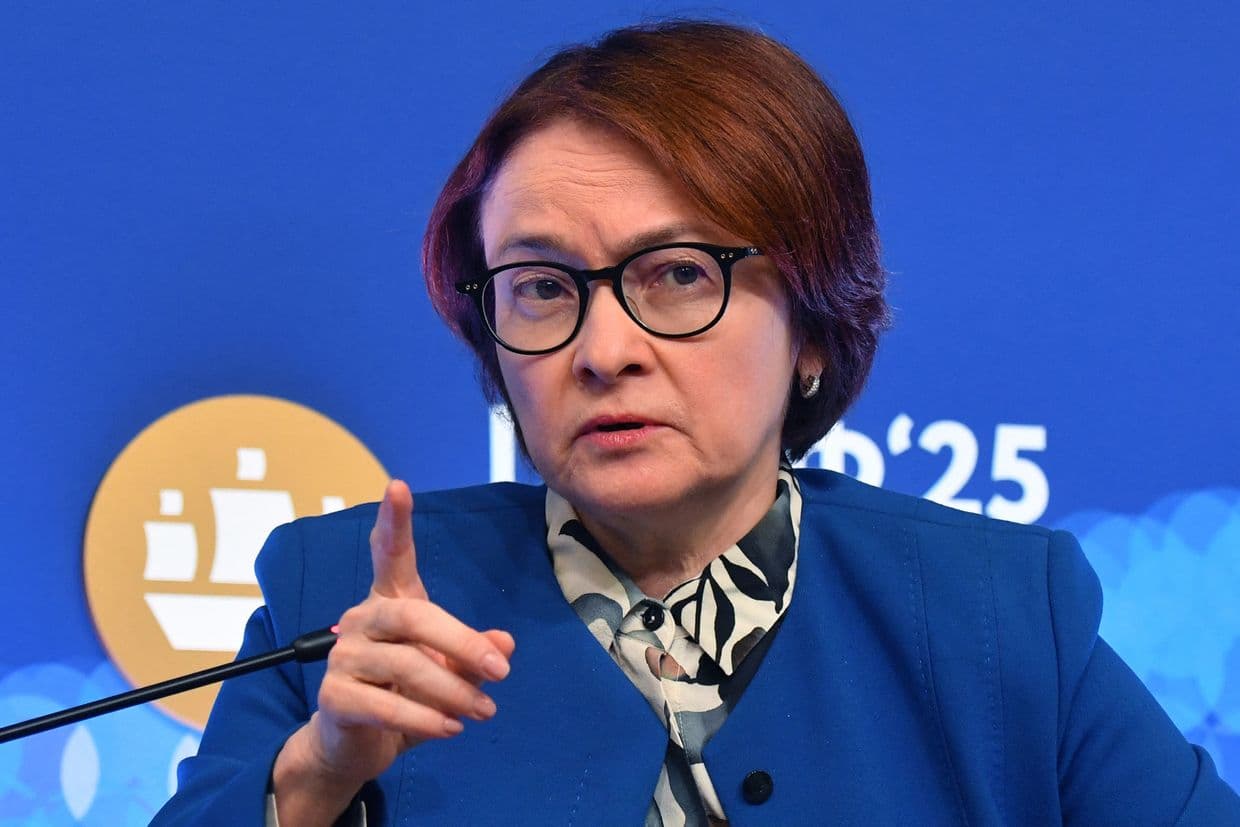
Russia's Central Bank Governor Elvira Nabiullina nevertheless warned that should the conflict in the Middle East drag on, it would negatively impact the Russian economy.
The war, currently under a tenuous ceasefire, has increased inflationary risks and driven up prices of services, Nabiullina said at a press conference.
"The consequences caused by rising global costs could outweigh the benefits gained from increased exports and a stronger ruble," she said, urging cautious and balanced decision-making.