'A Real Armenia:' Pashinyan heads to vote with Trump's support, Moscow's hostility
A landslide win could help Armenia's pro-European leader escape Moscow's influence.
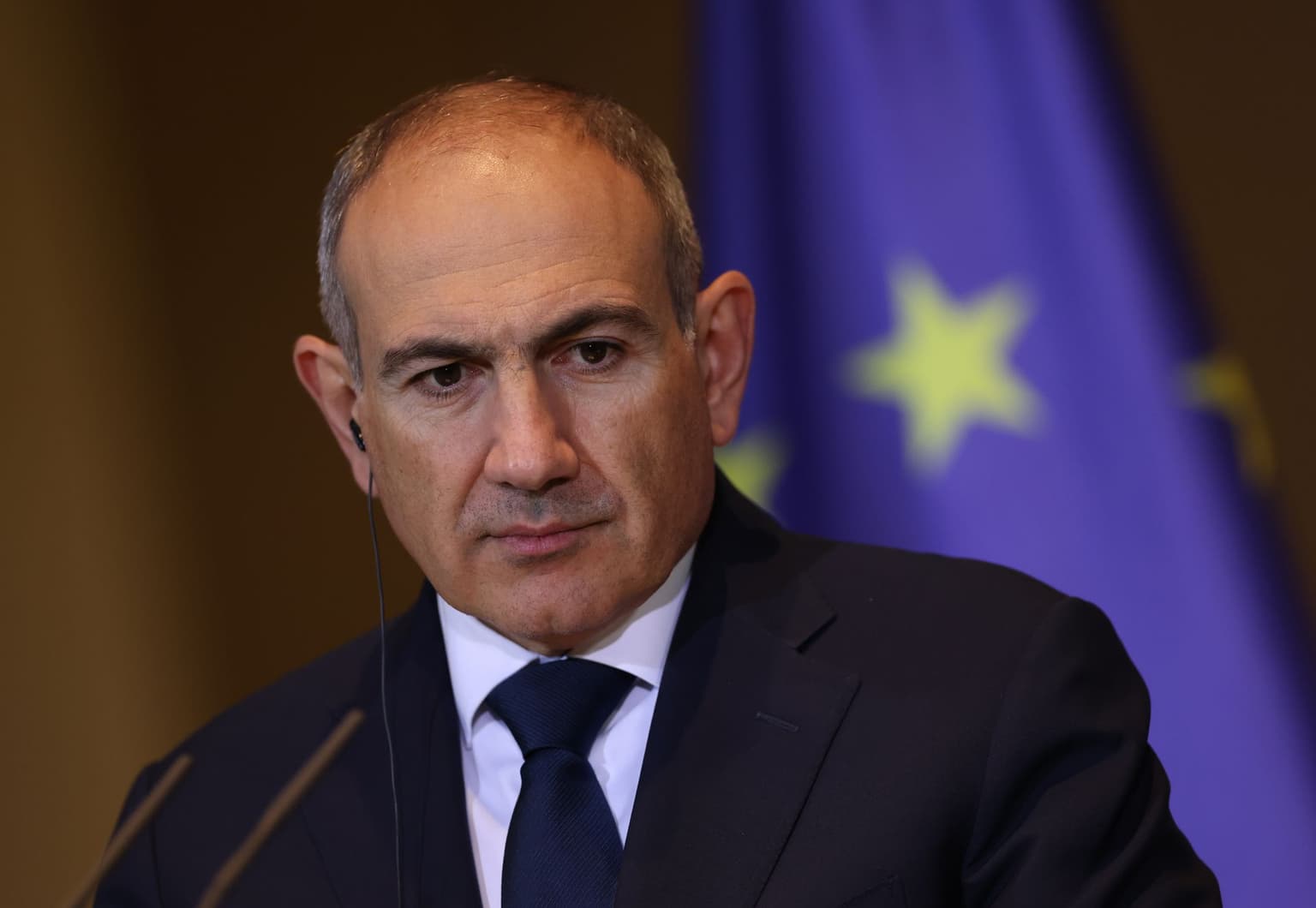
Armenian Prime Minister Nikol Pashinyan in Berlin, Germany, on Dec. 9, 2025. (Sean Gallup / Getty Images)
 on Google
Armenia will hold parliamentary elections on June 7, a vote most observers describe as crucial.
Eight years after the country's Velvet Revolution, Armenia's pro-European Prime Minister Nikol Pashinyan is seeking reelection for a third term, amid tensions with Russia and seemingly full support from the United States.
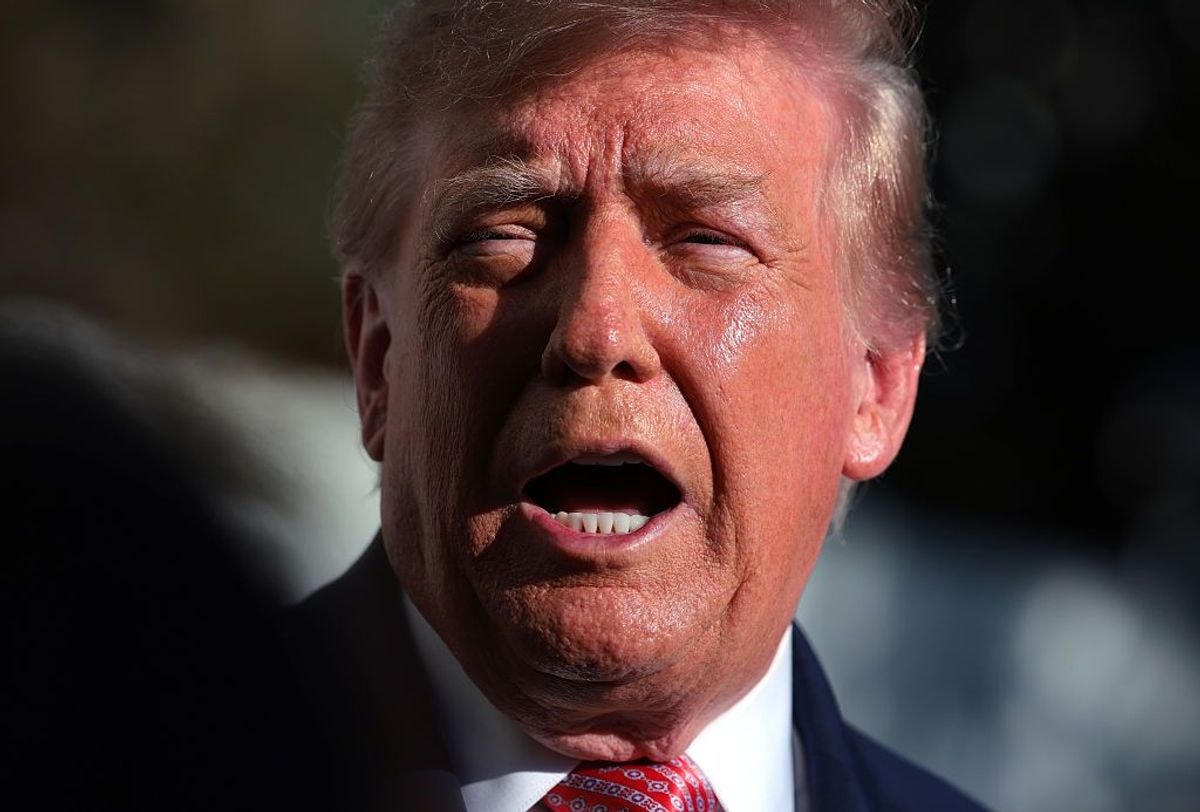
U.S. President Donald Trump took to social media on May 27 to offer his "COMPLETE and TOTAL endorsement" for Armenia's leader.
At the same time, Russian President Vladimir Putin threatened Armenia with a "Ukrainian scenario" if it continues building ties with the EU. Moscow most recently followed up on these threats by pulling its ambassador from Yerevan.
Whatever the outside pressures, Pashinyan's Civil Contract party is still likely to win the elections, experts who spoke to the Kyiv Independent said. But what comes next for the South Caucasus country is unclear, as much will depend on the scale of Pashinyan's win.
If his government secures a constitutional majority, Armenia could see real progress towards a peace deal with Azerbaijan, Yerevan's long-standing regional rival, analysts said.
A smaller win, on the other hand, could mean stagnation in the deal, locking Armenia into strategic dependence on Russia for years to come.
A classic and slightly outdated Russian interference playbook
According to Reuters' Western intelligence sources, Russia considers organizing flights home for tens of thousands of Russian Armenians ahead of the elections, in an attempt to sway the result. While this claim is difficult to verify, Russia's interference in the Armenian election is undeniable.
Over the past weeks, Moscow imposed an embargo on Jermuk, an Armenian mineral water popular in Russia, and then expanded the ban to cut flowers, vegetables, and strawberries.
The spokesperson of Russia's Foreign Ministry, Maria Zakharova, threatened that Russia could cancel a 2013 agreement guaranteeing duty-free exports of natural gas and petroleum products to Armenia.

"Ahead of the election, we are essentially seeing old methods of (Russian) blackmailing with trade, pseudo-sanitary measures (targeting agricultural products), and threats on gas supply," said Stefan Meister, a foreign policy analyst at the German Council on Foreign Relations (DGAP).
While Armenia's dependency on the Russian economy is real, and these measures can deal a great blow to its economy, these restrictions are also "part of an old playbook which by now is looking rather obsolete," said in turn Laurence Broers, an associate fellow at Chatham House.
What stands out in Armenia's case is the role of Russian Armenian businessmen, who are at the center of efforts to sway the country's political scene. Pashinyan's chief competitor, for instance, is Samvel Karapetyan, a billionaire who made his fortune in Russia and now heads the Strong Armenia party.
"For now, though, Armenian oligarchs have not really managed to sway the polls in any way, and we haven't yet seen anyone like Bidzina Ivanishvili in Georgia," Broers said, in reference to the de facto leader of the ruling pro-Russian Georgian Dream party.
Continued structural dependency on Russia
While Russia's heavy-handed influence operations have, for now, produced little result, this does not mean that Armenia is out of Moscow's orbit. In fact, geopolitics and structural links make the country vulnerable to Russian pressure, and these are not set to disappear anytime soon.
"If anything, Armenia's economy actually became more dependent on Russia in the past years," said Tigran Grigoryan, the director of the Regional Center for Democracy and Security, a think tank based in Yerevan.
These links — and the structural dependencies they entail — are numerous and affect core sectors of the South Caucasus country's economy.
"A hot topic over the past months was Russia's role in managing Armenia's railways," Grigoryan explained. Since 2008, these have been managed by state-owned Russian Railways, under a 30-year concession awarded in 2008.
While Pashinyan previously floated the idea of transferring this concession to countries seen as neutral, such as Kazakhstan or the United Arab Emirates, Moscow has firmly refused all such proposals.
Energy is another important issue: up to 40% of Armenia's electricity is generated at the country's only nuclear power plant, which is operated by a 50-50 Russian-Armenian joint-stock company. All the fuel needed to operate the plant is supplied by Russia.
To reduce its reliance on Moscow, Armenia plans to build a new nuclear power plant with U.S. help — and potentially shut down the current Soviet-era reactor, Grigoryan explained.

As for gas supplies, given that the borders with Turkey and Azerbaijan remain closed, Armenia currently has no options except for Russian imports, the director of the Yerevan-based think tank added.
Some structural dependencies, however, have been reduced over the past years. This is especially evident in the defense sector: Armenia has progressively reduced its participation in the Collective Security Treaty Organization (CSTO), a Moscow-led military alliance, and froze its membership in 2024.
Pashinyan's government has also diversified military procurement away from Russia through contracts with India, France, and other partners.
Peace deal with Azerbaijan as a potential game-changer
While Armenia is still structurally dependent on Russia, much of this is caused by its unresolved conflict with Azerbaijan.
The two countries have not signed a peace agreement to end their decades-old military conflict, although hostilities essentially ended after Azerbaijan's recapture of the Nagorno-Karabakh region in 2023.
Pashinyan stands out as a supporter of the peace process: his 2026 electoral slogan called for a "Real Armenia": one which would work for the future of its citizens, not on ambitions to regain control over the Nagorno-Karabakh region.
In the meantime, Armenia's border with Turkey, a close Azerbaijani ally, has been closed for decades, as is the border with Azerbaijan.
"If a peace deal is signed and the borders are reopened, this would be a real game-changer," Meister argued. "There would be alternative trade routes, sources of gas and other resources — even if this would not end all of Armenia's dependencies on Russia."

In this context, Trump's support for Pashinyan is linked to plans for the boldly worded Trump Route for International Peace and Prosperity (TRIPP). The project involves building a U.S.-supported transport corridor between Azerbaijan, Armenia, the Azerbaijani exclave of Nakhchivan, and Turkey.
The corridor — which the U.S. and Armenia signed a framework agreement on on May 26 — would drastically change the region's geopolitics, providing a crucial new trade route between Europe and Asia that bypasses Russia.
But TRIPP is likely to remain no more than a project until Azerbaijan and Armenia sign a peace deal formally ending the war, Broers explained.
The signing of this deal, in turn, can come faster than expected if Pashinyan obtains a constitutional majority.
"This would allow him to pass amendments to laws on changing Armenia's constitution, which Azerbaijan has set as a condition for a peace deal," the analyst said.
In any case, the upcoming elections point to a general weakness of pro-Russian forces, which are unlikely to gain much ground after the vote. According to Broers, from this point of view, Russia has "lost its main pillar of influence" in Armenia.
"Before the lost war over Nagorno-Karabakh — when Russia was seen as a guarantor of Armenia's security — polls showed that over 80% of Armenians saw Russia as a friendly country," Grigoryan concluded. "Nowadays, this figure is only around 35%."
Editor's note: Got an opinion on anything you've read in the Kyiv Independent so far? Send it to letters@kyivindependent.com, and it may appear in our Letters section.