After just 4 months in the job, calls grow for resignation of Ukraine’s veterans minister
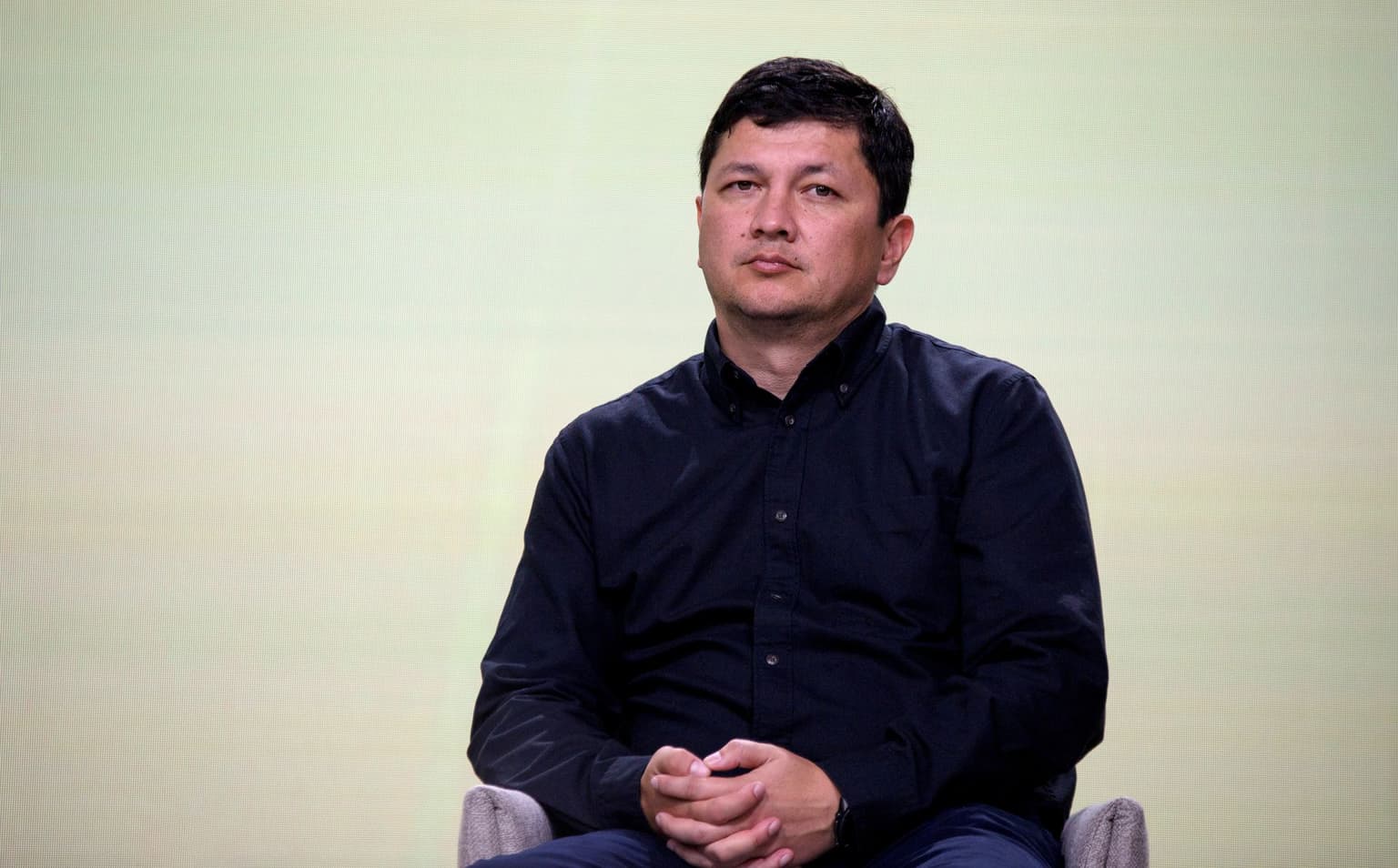
Vitalii Kim, Ukraine's veteran affairs minister, participates in a panel discussion during the Ninth International Veterans Forum in Kyiv, Ukraine, on Aug. 22, 2026. (Marianna Kotyk / Ukrinform / Future Publishing via Getty Images)
 on Google
When Vitalii Kim was appointed Ukraine's new minister for veterans affairs, the decision triggered an outcry among the very people he was tasked with supporting.
Three months later, criticism of his ministry continues. The controversy deepened further after an interview this week with RBC Ukraine in which Kim downplayed the importance of psychological support in veterans' recovery and said that crime in Ukraine would "definitely" increase as soldiers returned from the front.
His remarks fueled further indignation, adding to growing concerns about the direction of his ministry's policies and questions over whether his appointment was driven less by the interests of veterans than by political ambitions.
Meanwhile, the European Solidarity party announced that it would register a parliamentary resolution calling for Kim's dismissal and urged other lawmakers to support the initiative.
"The minister's resignation is also a demand from the veterans' community, which is outraged not only by his latest controversial remarks, but also by the ministry's inaction, its complete lack of understanding of the principles underpinning veterans policy, and its failure to show empathy or communicate properly," Iryna Herashchenko, a lawmaker from the European Solidarity party, said.
Who is Vitalii Kim?
A former businessman, Kim was head of the Mykolaiv Regional State Administration when Russia launched the full-scale invasion of Ukraine. He gained national and international prominence as one of Ukraine's most recognizable public officials through his calm, upbeat, and often viral video addresses.
Back then, Mykolaiv Oblast was one of the key battlegrounds, with Ukrainian forces fighting to stop Russia's advance into southwestern Ukraine. Around 5% of the region's territory was under Russian occupation in 2022, while fighting over the Kinburn Spit continues to this day, according to local authorities.
But once the front line moved further away, Kim's public profile waned, while the realities of governance during wartime mounted.
A major challenge was restoring water supplies to Mykolaiv after Russian attacks damaged the pipeline serving the city in 2022. A replacement pipeline was planned to connect the regional capital with Nova Odesa, but despite Kim repeatedly describing it as a priority, its launch was postponed at least four times until summer 2026, all while residents continued to face water supply problems.
Kim's tenure as regional governor was also marred by controversy over the costs of some state-funded fortification projects, and investigative journalists with the Ukrainian project Nashi Hroshi reported that the Mykolaiv Regional Military Administration had withheld information about the construction estimates.
Despite his track record, Kim was offered the post of veteran affairs minister on July 15.

A bigger plan?
Ihor Reiterovych, a Ukrainian political analyst, told the Kyiv Independent that Kim's appointment was primarily driven by the fact that he "had exhausted his political potential" in his previous regional role.
"Perhaps the thinking behind the appointment was that a charismatic figure with connections in the volunteer community could potentially handle the job and deliver certain results, which could later be turned into political capital linked to veterans," he said.
"Veterans could become a very powerful electoral base and a political force more broadly."
Reiterovych also noted that Kim has close ties to David Arakhamia, head of the Servant of the People parliamentary faction, who also lived and worked in Mykolaiv for many years. In an interview with the BBC, Arakhamia described Kim as "his man" in the current government.
According to a parliamentary source who spoke to the Kyiv Independent on condition of anonymity, Kim's appointment may be part of Arakhamia's plans to build a new political project in the future, with the ministerial post giving Kim "national weight and visibility."
Kim is also one of the few politicians who built their careers at the regional level but are regularly included in nationwide opinion polls, including surveys exploring the possibility of Kim joining forces with Kharkiv Mayor Ihor Terekhov and Servant of the People lawmaker Danylo Hetmantsev.

A spring poll by the Socis polling agency found that this hypothetical party could garner more support than the Servant of the People party, with 9.4% of respondents backing it compared to 7.9% for the ruling one.
Reiterovych did not rule out such a scenario either, adding that public discussion of forming new political forces during the war would likely face a negative reaction. As a result, such plans are not discussed openly.
"But everyone knows who can gather votes in parliament, and obviously, you need to maintain good relations with someone like (Arakhamia)," he said, referring to the faction leader's influence and ability to negotiate with other parties to secure votes.
A rocky start
Possible future political ambitions aside, Kim still had a ministry to run, and his first days in the job were anything but smooth.
Kim almost immediately came under scrutiny for his previous statements questioning the suitability of service members for political careers.
Kim also took office following a controversial government reshuffle that included the removal of former Defense Minister Mykhailo Fedorov. Kim's appointment provoked public backlash over his lack of experience in veterans policy, with some demonstrators demanding his dismissal during nationwide summer protests following Fedorov's departure.

In a video posted on Facebook in late July, Kim said he was giving himself a year "to deliver the results our veterans truly need." The minister added that he would have "nothing to be ashamed of" if he managed to implement his plans in the new role. Kim also called on the public to support him, describing his decision to take the position as "a risk."
But Kim faced one major challenge in particular — veterans policy itself.
"Those who supported the appointment failed to take one extremely important factor into account: veterans policy is a very specific field," Reiterovych said.
"And I find it difficult to imagine how someone who has no personal connection to the Ukrainian Armed Forces and is not a veteran can handle it."
Why veterans affairs is no easy win
Veterans policy in Ukraine is spread across a patchwork of state institutions rather than managed by a single authority. The Veterans Affairs Ministry largely serves as a coordinator, while local governments are also responsible for delivering support.
This fragmented system often leaves veterans caught between institutions, forced to navigate bureaucratic hurdles on their own despite the existence of government programs and allocated funding.
Ukraine currently has approximately 2 million veterans, a figure that could rise to 6 million after the war ends, according to estimates by the Ukrainian Ombudsman's Office. Since 2022, the number of veterans has nearly quadrupled, with approximately 30,000 new veterans added each month.

The number continues to grow each month, yet the ministry's budget has not increased proportionately to reflect the expanding veteran population and its needs.
Since its establishment in 2018, the Veterans Affairs Ministry has had six full-time ministers, with Kim becoming the latest to take the helm. The frequent leadership changes have often disrupted the implementation of reforms, leaving successive ministers to inherit unfinished initiatives from their predecessors.
"Instead of addressing the root cause of this fire, we're still running around with a fire extinguisher, putting out small fires," Bohdana Levytska, director of the Vesta Charitable Foundation and ex-advisor to the veterans affairs minister, told the Kyiv Independent.
How have Kim's first 100 days gone?
At the end of August, the ministry's new leadership presented its vision for veterans policy, and after his first 100 days in office, Kim introduced his new team and outlined the ministry's key achievements during that period. These included expanding the range of services available through the Veteran Pro digital platform; helping 1,325 veterans find jobs over four months; securing CAD 40.1 million ($28 million) in Canadian contributions to Ukraine's multi-donor fund; allocating Hr 5.67 billion ($124.5 million) in housing compensation to 2,150 people; securing additional funding for veterans' children's education and a family recovery program; and obtaining $1.2 million from the U.N. Development Programme (UNDP) to support seven veteran centers.
But Ivona Kostyna, co-founder of Veteran Hub, an organization specializing in veteran support, said the approach taken by Kim and the ministry so far placed "style over substance."
"The vast majority of these presentations are not backed by real calculations of how much they will cost, what results they are expected to achieve, or which specific problem they are intended to address," Kostyna told the Kyiv Independent.
While Kim has taken steps to address several key concerns of the veteran community, some of his decisions have faced criticism and prompted questions about the effectiveness of the approach.

Levytska, ex-advisor to the veterans affairs minister, in turn, pointed out in a post on X that the ministry had yet to conduct an audit of the effectiveness of its budget programs or assess the scale of the problems facing veterans. She also said the ministry had proposed no solutions for tracking veterans with mental health conditions, substance dependencies, or suicidal behavior to ensure they receive appropriate support.
Outside of the ministry, Kim's personal conduct has continued to come under scrutiny.
In September, investigative journalists from the Ukrainian outlet Bihus.Info uncovered assets allegedly used by Kim's family but not included in their online asset declarations, including an apartment and parking space owned by his wife's company, vehicles used by family members, and possible links to a hunting estate in Cherkasy Oblast. In a comment to Bihus.Info, Kim rejected the allegations that he had failed to declare the assets.
The next 100 days
Political analyst Reiterovych said that, given the controversies surrounding Kim and his appointment, the minister would have to "work very hard" and "deliver a very good veteran policy" to prove himself capable of holding the position. However, he may face another challenge that has little to do with his experience in the veteran or military sectors.
"I'm afraid that even under favorable circumstances, it will not be easy for him. And the reason is not just Kim himself, but also the fact that the state is currently allocating insufficient funding to this area," Reiterovych said.
"For Kim to prove himself as a successful manager and minister, he will literally have to fight for that funding."

Responding to a question from the Kyiv Independent, the minister said he felt that the veteran community's attitude toward him had improved and that his trips to different regions of Ukraine were "not in vain."
At the same time, Kim said that during the opening of one veteran center, a team of volunteers complained to him about facing "a significant amount of hate."
"I reassured them and told them not to take it personally, because these are my bots that I brought with me from Mykolaiv. Russia has funded a lot of this since 2023. I'm used to it," he said, suggesting that the negative reaction to the opening was part of a paid online campaign.
The source in Ukraine's parliament also told the Kyiv Independent that Kim's ability to work with key civil society organizations involved in veteran policy would be another important factor. These include Veteran Hub, the Pryncyp Human Rights Center for Military Personnel, and ReStart, an initiative focused on helping veterans reintegrate into civilian life after returning from the front lines.
"I think these organizations are now at a stage where they are trying to understand whether cooperation with (Kim) is even possible. They have some time to figure that out," the source said.
"If they conclude that working with him is impossible, they will start publicly calling for his replacement. What happens next will depend on whether they manage to achieve that."