Putin's ruling party set to claim 'victory' in Russian parliamentary election, in results deemed predetermined
 on Google
Editor's note: This is a developing story.
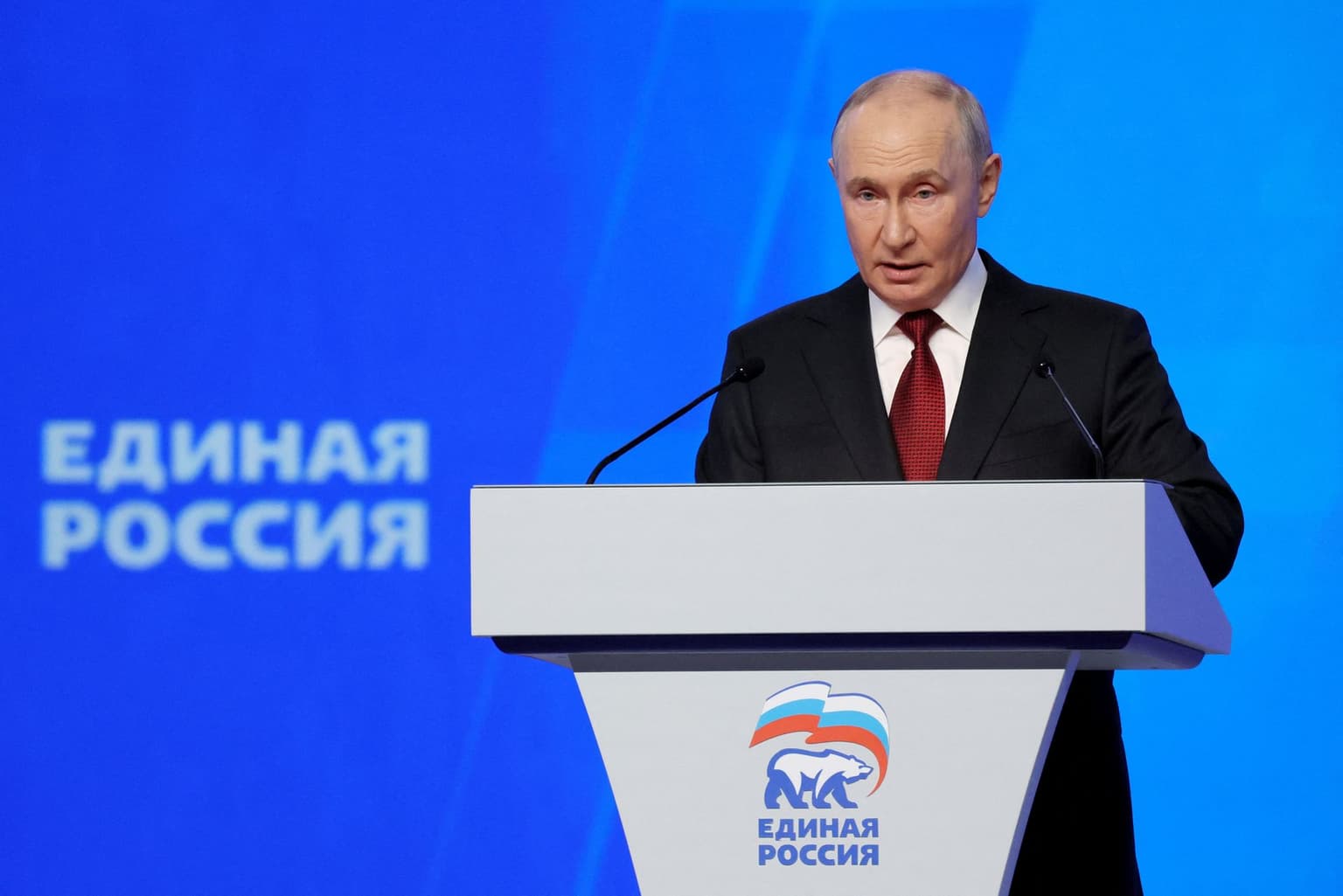
At the close of polls on Sept. 20, United Russia, the political party de facto led by Russian President Vladimir Putin, is poised for a dominant victory in Russia's first parliamentary elections since the full-scale invasion of Ukraine.
As is typical of elections in Russia, the results are widely considered by independent election monitors to be predetermined by Putin and his regime.
With 94.95% of the votes on the federal list counted, the ruling United Russia party is on track to secure 57.83%, though the final results of the three-day-long election will not be fully tallied before Sept. 25.
Putin himself was not on the ballot in the election as he is the sitting president, though he served as United Russia's leader from 2008 to 2012. In 2024, Putin secured 88% of the vote in the country's presidential election.
Other parties are set to win minority seats in the State Duma, with the Communist Party poised to gain 13.81%, the ultra-nationalist Liberal Democratic Party (LDPR) 8.97%, and the New People's Party — 7.06%.
With a state apparatus built on voter suppression and crackdowns on free speech, United Russia was positioned to win. According to the human rights organization OVD-Info, more than 2,000 Russians are currently imprisoned for political reasons.
Any genuine opposition parties left in Russia were banned from campaigning prior to the elections. Opposition politician Boris Nadezhdin fled the country in August amid fears that he was about to face criminal prosecution. The anti-war party Yabloko was barred from participating in the election by the Russian Supreme Court in August, as well.
In Ukrainian territories currently occupied by Russian forces, elections were held under threats of violence and repression, copying tactics used in Russia's 2024 Presidential elections.
Kaja Kallas, the EU's top diplomat, called the election "another major setback for Russian democracy."
"The Kremlin silenced dissent, barred the only registered party that opposed its war in Ukraine, and shut out international election monitors," Kallas said on X.
"The veneer of democracy is all that remains in Russia," she continued, adding that she had proposed measures against those facilitating Russia's sham elections in occupied Ukrainian territories.
Australia, Canada, New Zealand, Norway and the U.K. issued a similar denouncement.
"These regions are part of Ukraine and holding sham elections cannot alter the status of these territories under international law. We continue to stand with Ukraine," the five countries said in a joint statement.
Elections were also held for several local parliaments and administrations. Chechen dictator Ramzan Kadyrov, whose regime has become notorious for widespread suppression of human rights, claimed to have received 99.85% of the vote in Russia's North Caucasus republic.
With manufactured approval by Russian citizens, the parliamentary elections give Putin and his regime more leverage to continue their war on Ukraine.
"Your choice and determination will show once again that millions of people are backing our fighters and that we stand together, united by shared values, our historical memory, love for our Motherland, and that nobody can divide or intimidate us, undermine our statehood, our public and political system," Putin said in a speech on Sept. 16 ahead of the elections.
In Moscow, the final day of the election occurred amid a massive Ukrainian drone attack. Overnight on Sept. 20, Ukrainian forces struck the Gazpromneft-Moscow Oil Refinery, causing large fires and filling the capital with smoke.
"Moscow must end its brutal war and choose peace instead of building layered rings of air defense at the expense of other regions," Zelensky said in a post on X. "Steps toward de-escalation are on the table — in energy and food security. What is needed is political will."
Russian officials accused Ukraine of attempting to interfere with the election through other means as well.
On Sept. 19, Russian authorities claimed that electronic voting systems and communications infrastructure had come under attack amid the election.
Ella Pamfilova, head of Russia's Central Election Commission, claimed Moscow's online voting system had faced a major cyberattack overnight but that attempts to disrupt it were being repelled. Russia's Digital Ministry separately reported an attempted act of sabotage against communications infrastructure in the country's Far East. Officials said the attempt had been stopped and communications restored without disrupting voting.