Ukraine reveals new Operation Vivaldi gains in Donetsk Oblast
 on Google
Ukraine's 3rd Army Corps said it has liberated a further 40 square kilometers (15.4 square miles) of territory in Donetsk Oblast, as well as retaking several villages during the ongoing Operation Vivaldi offensive.
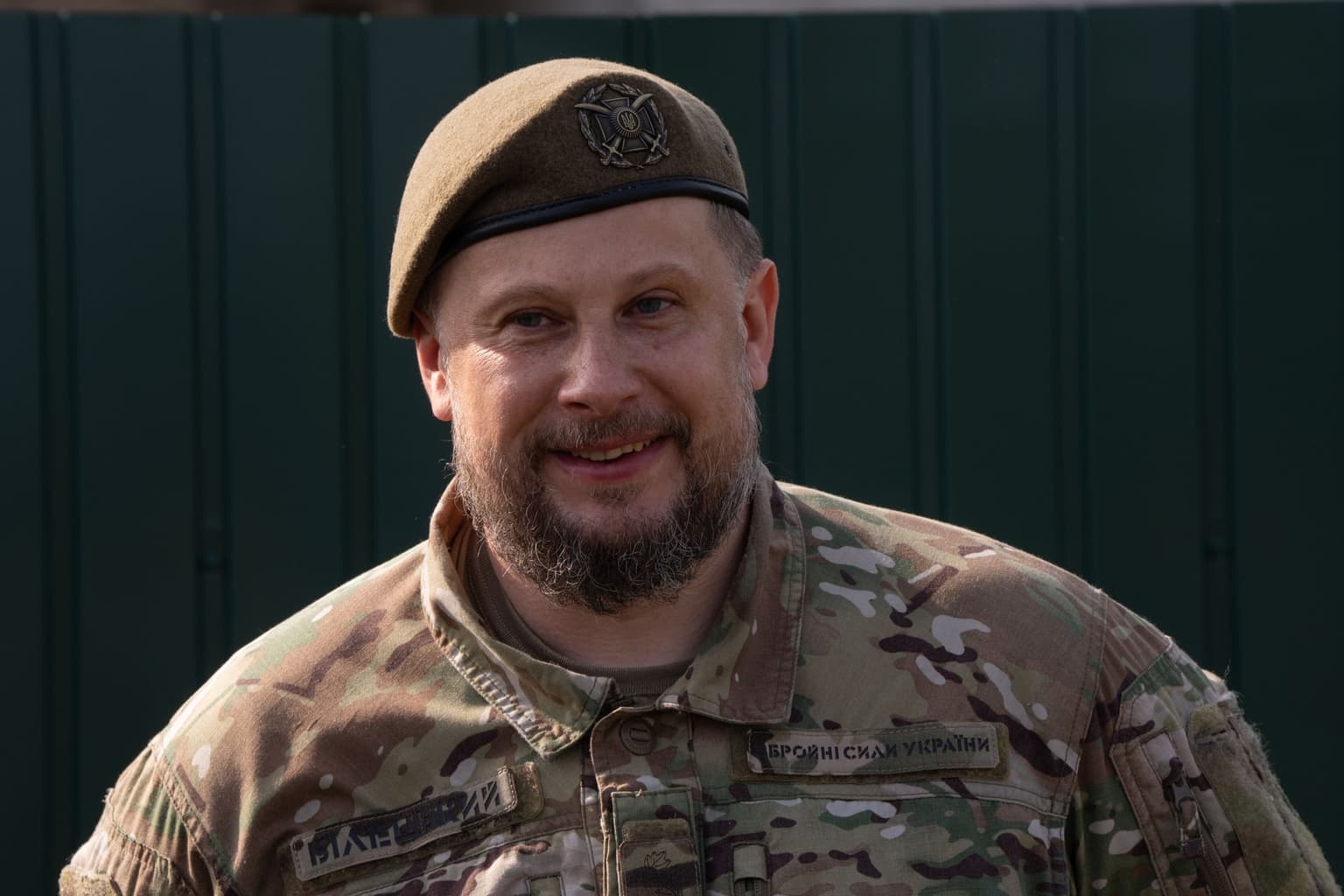
"As promised, I am reporting good news," corps commander Brig. Gen. Andrii Biletskyi said in a statement on Sept. 20.
"During the second 'season' of 'Vivaldi,' the 3rd Army Corps reclaimed another 40 square kilometers of Ukrainian land. Shandryholove and Derylove have been liberated. Drobysheve is under full Ukrainian control," he said.
"It is worth noting that Shandryholove is a critical point for both our troops and the enemy," he added.
Operation Vivaldi, the corps' offensive operation around Lyman in northern Donetsk Oblast, was only made public on Sept. 15, although Russian pro-war Telegram channels and independent open-source intelligence (OSINT) researchers on social media had been tracking Ukrainian attacks in the area since late spring 2026.
Until Sept.20 the 3rd Corps had only released details on the first phase of the operation and said it had cleared 75 square kilometers of Russian infiltrators and liberated a further 10 square kilometers.
Details of the operation from Ukraine have been sparse for operational security purposes, but Russian military bloggers have reported Ukraine pushed Russian forces back to the Zherebets River, potentially reversing over 18 months of steady Russian advances in the region.
"In accordance with the corps command's plan, the villages of Shandryholove and Derylove were enveloped from north to south — assault groups moved quickly and stealthily through ravines and gullies, ensuring the element of surprise," the 3rd Army Corps statement said.
"The units operated in close coordination — while some breached the defenses, others held the flanks along the demarcation lines, preventing the enemy from launching a counterattack. Assault groups were organized into mobile tactical units that dug into every tree line and strongpoint, burning out enemy pockets of resistance," it added.
"The operation is ongoing."
On Sept. 17, in an acknowledgment of broader operational success in the Lyman area, Biletskyi said that the "northern pincer" of Russia's attempt to surround Ukraine's hold on Donetsk Oblast had been "routed and destroyed."
A day later, the corps said Russia had pulled units of its elite unmanned systems formation Rubicon from the front line in northern Donetsk Oblast after suffering heavy losses.
The Rubicon Center for Advanced Unmanned Technologies is a sprawling Russian drone unit and the core of Russia's recently formed Unmanned Systems branch of the military.
The unit specializes in cutting off logistics, hunting Ukrainian drone teams on the ground, and intercepting high-value reconnaissance and strike drones, and is made up of detachments, each numbering several hundred personnel.
When deployed to priority areas of the front line, Rubicon and other units like it often create particular difficulties for the Ukrainian brigades facing them by making the existing "kill zone" deeper and deadlier, just as elite Ukrainian drone units do to Russian forces.
Effectively spotting and destroying the personnel and assets of enemy elite drone teams, equivalent to counterbattery fire in artillery terms, can thus create a major impact on the overall power balance in a given sector.