All EU sanctions linked to Russia's war may expire as France, Slovakia seek to delist oligarchs
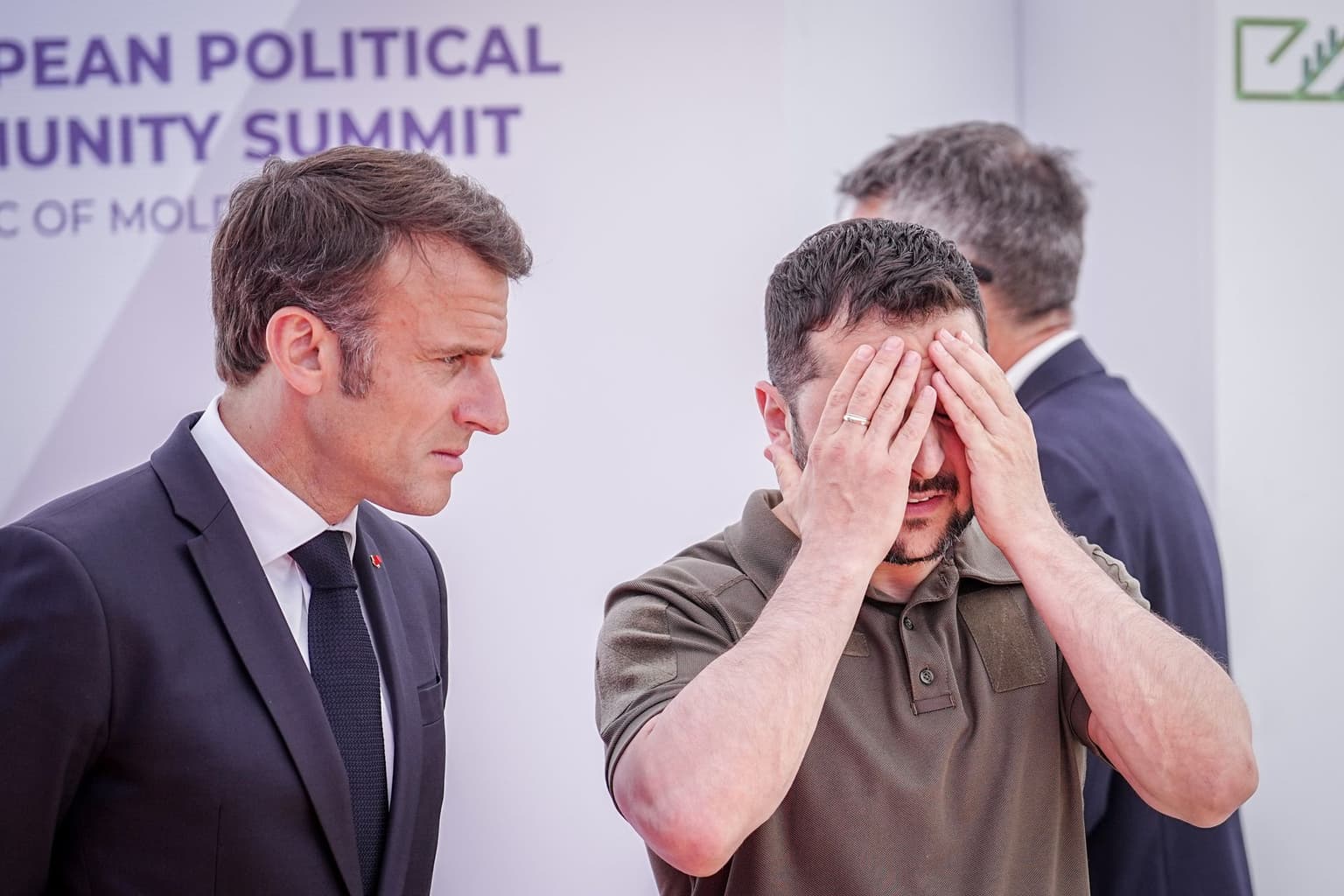
President Volodymyr Zelensky clutches his head next to French President Emmanuel Macron at the European Political Community (EPC) summit in Moldova, June, 1, 2023. (Kay Nietfeld/picture alliance via Getty Images)
 on Google
All of the EU's 3,000 sanctions against individuals helping Russia's war effort could be extinguished overnight if Brussels, Paris, and Azerbaijan fail to find a compromise by Sept. 21, EU diplomats told the Kyiv Independent.
The EU is set to renew the sanctions against Russia-linked individuals on Sept. 21. The package accounts for about half of the EU's total sanctions listings.
Given that Russia has not changed its behavior towards Ukraine since 2022, the vote to renew sanctions against those helping Moscow was supposed to be a formality.
But starting with former Hungarian Prime Minister Viktor Orban, some leaders have tried to use such votes to extract concessions from the EU, because any sanctions decision requires unanimity.
This time, Slovakia launched a push to delist two oligarchs, Mikhail Fridman and Alisher Usmanov.
But the push to delist Usmanov gained a second supporter – France.
France did not respond to a request for comment, and Slovakia declined to comment.
While Slovakia has not backed down, EU and national diplomats have told the Kyiv Independent that they "would have agreed by now," were it not for France's involvement.
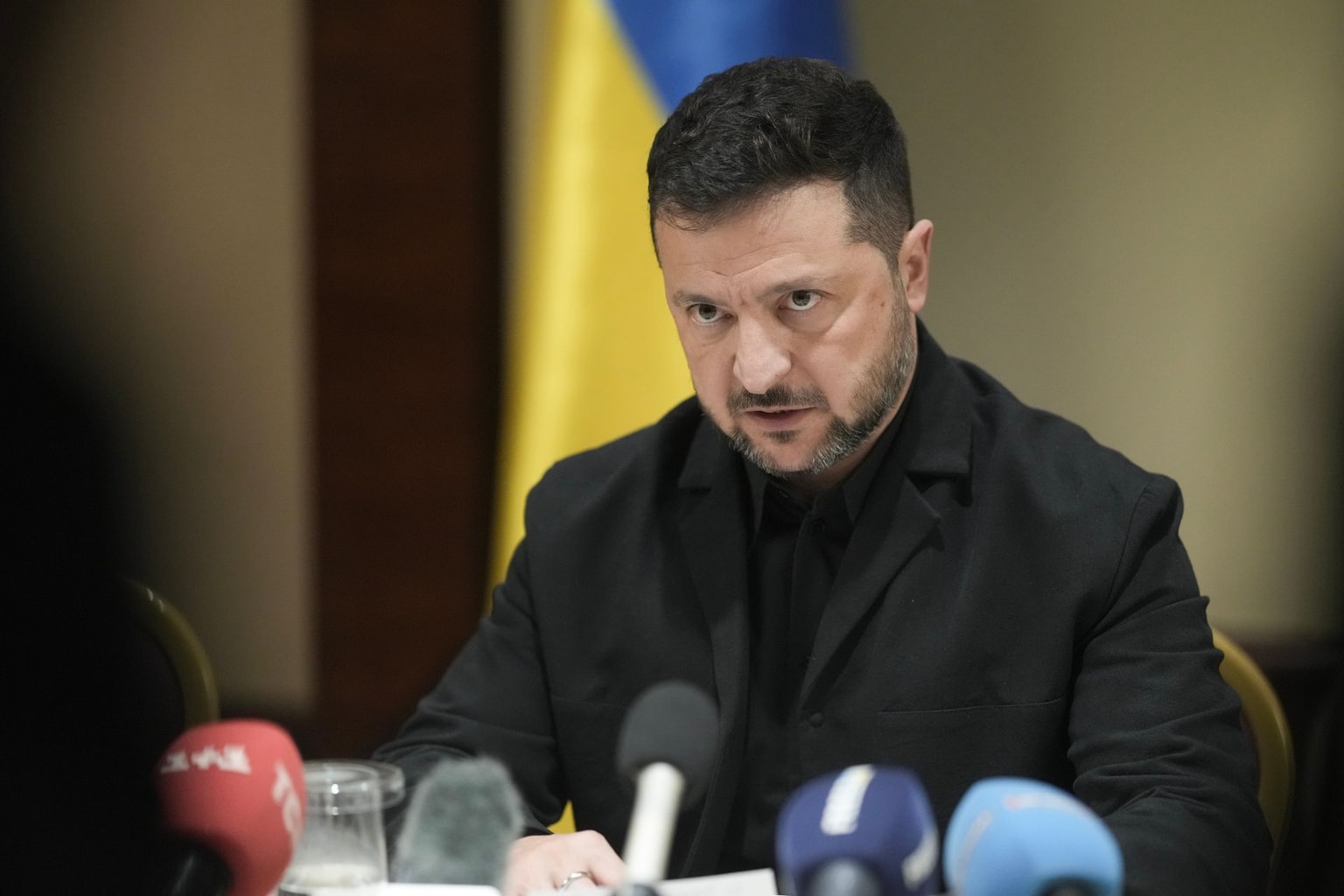
And President Volodymyr Zelensky has criticized the idea of lifting sanctions on the two men.
"This is definitely not the time to lift sanctions, definitely not the time to shield Russian oligarchs from sanctions, and definitely not the time for Europe to give Russia any gifts," he said.
Following the latest, unsuccessful meeting of EU ambassadors on Sept. 18, one national diplomat painted the situation in stark terms.
"On Monday we will either delist nobody, delist two people, or delist 3,000," they said.
What's so special about these people?

One of the sanctioned individuals, Mikhail Fridman, is a co-founder of the Russian conglomerate Alfa-Group and a member of Russian President Vladimir Putin's inner circle.
Investigative reporters revealed in May 2023 that subsidiary Alfa Insurance provided insurance for vehicles used by Russian forces in Ukraine. The company has also reportedly serviced the Main Office of Special Programs, which is responsible for guarding Putin.
Alisher Usmanov, meanwhile, is a Russian-Uzbek businessman who made his fortune in metal and mining operations following the collapse of the Soviet Union. He was referred to as "one of Putin's favorite oligarchs" in the EU's original 2022 sanctions decision.
Exactly why these two names are the recurring favorites for de-listing from EU sanctions is not clear, although both have repeatedly disputed the claim that they have close ties to the Kremlin.
Slovakia, and Hungary also requested the delisting of Fridman and Usmanov in March.
That attempt was unsuccessful, but France's joining the push to delist Usmanov has increased the pressure.
The Financial Times first reported that Paris wants to delist Usmanov because Azerbaijan has made it a condition to release two prisoners with French nationality.
Reuters reported that an Azeri diplomat confirmed they want Usmanov to be delisted, but denied trying to influence decision-making.
And national diplomats from six different countries confirmed the FT's claim to the Kyiv Independent.
The French Foreign Ministry's website says that travel to Azerbaijan is "not recommended, unless there is a compelling reason."
"French nationals, including dual nationals, whether resident or passing through, are exposed to a risk of arrest, arbitrary detention and unfair trial in Azerbaijan," the website reads.
But why Azerbaijan is trying to negotiate a prisoner swap with France to delist an Uzbek-Russian oligarch over any of its own sanctioned citizens or companies remains unknown.
Reuters reported that its Azeri diplomatic contact described Usmanov as a "renowned philanthropist and public figure."
What can Europe do?

Meanwhile, the French government has remained silent on Azerbaijan's detention of the two French nationals.
An EU diplomat explained to the Kyiv Independent that the bloc is responsive to the wishes of the specific country in such hostage situations, and that often countries ask for a more discretionary approach.
A second EU official confirmed that hostage negotiations almost always take place in private, telling the Kyiv Independent that they find media scrutiny rarely helps such things.
One national diplomat said that such scenarios are very difficult for the victim country, which has to be seen to be doing everything possible to help bring their nationals back home.
Even so, behind closed doors frustration is building.
Multi-hour meetings of EU ambassadors have failed to reach anything resembling a compromise, and after the latest such meeting on Sept. 18, national diplomats vented their frustration, saying that there was "no progress at all."
The 25 EU countries against delisting Usmanov and Fridman show little readiness to compromise.
In July, EU countries agreed to grant an exemption to the Greek shipping company Dynagas, that would allow it to continue transporting Russian Arctic LNG. At the time, some feared it would open a Pandora's box of new exemption requests.
Now several officials have used the phrase "Pandora's box" again about the Franco-Slovak request, which they fear would cement the trend of granting exemptions, and seriously hurt EU credibility.
"France needs to tell Azerbaijan bilaterally that it’s a no-go to convince 25 other countries to shift their positions that dramatically and that Azerbaijan will have to shift its demands," one diplomat fumed.
The option of letting all 2,960 listings expire, for many, is simply unthinkable.
One potential compromise suggested by yet another EU diplomat could be to extend the sanctions for six months rather than one year, but that risks simply kicking the can further down the road, specifically to just one month before France's presidential election.
Most expect France somehow to drop its demand and begin talks with Baku about other ways to secure the release of its citizens.
Note from the author:
Hi, this is Chris Powers. Thanks for reading this article. The EU is a famously complicated beast to understand, but for Ukraine, it has also never been so important.
Whether it's Russia sanctions, fighting corruption, keeping Ukraine's finances in the black, or the process of joining the EU itself, many Kyivan roads eventually pass through Brussels.
If you like reading about these fiendishly complex topics and want to support journalists in Kyiv and Brussels to shine a light on it all, please consider supporting The Kyiv Independent.