The winter that will reach Russia's rear
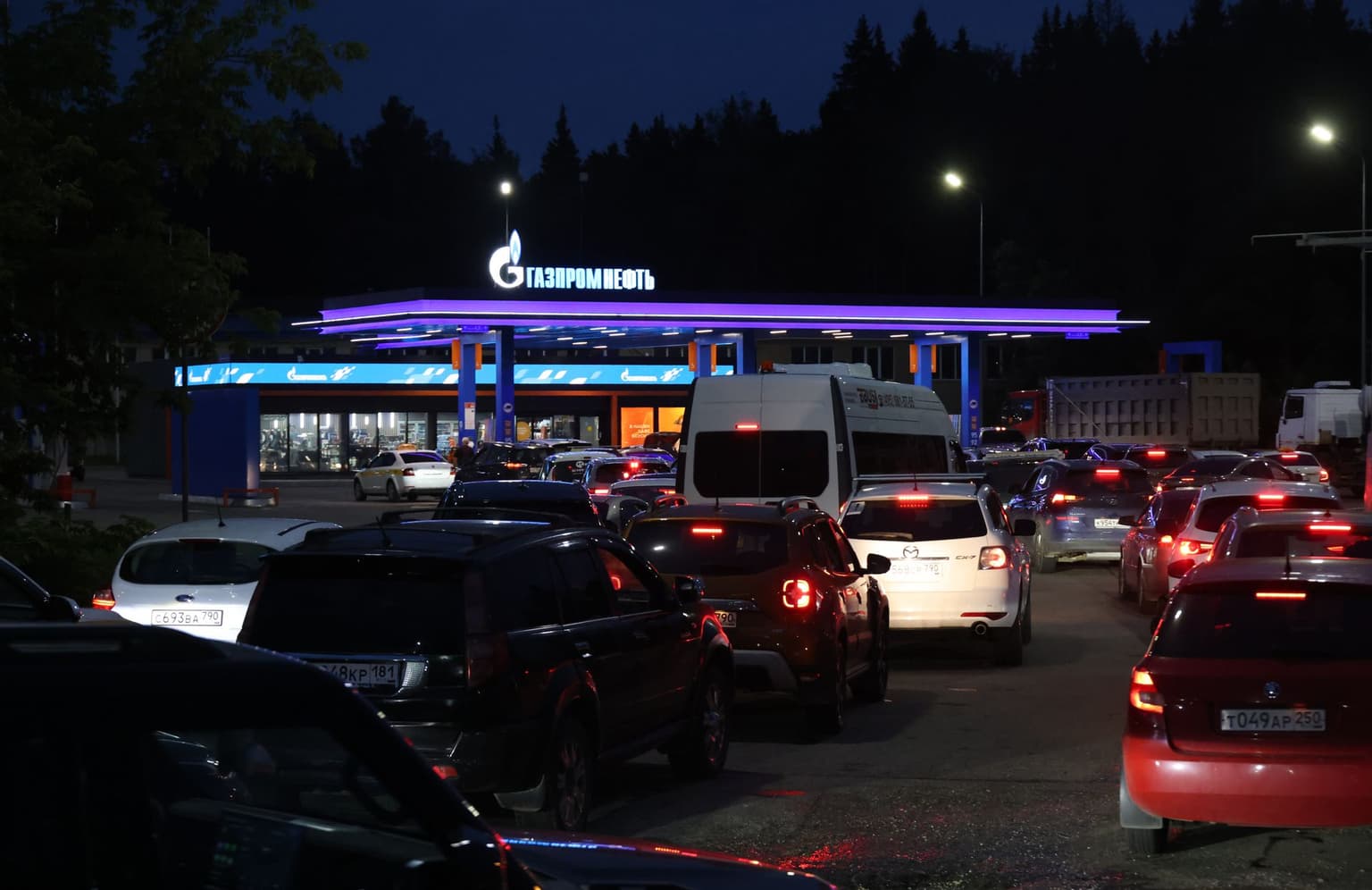
Cars queue at a Gazpromneft gas station in the suburbs of Moscow, in Istra, Russia, on July 10, 2026. (Contributor / Getty Images)
 on Google
Liubov Tsybulska
Director of Join Ukraine
In late August and early September, it began to look as though Russia was winning the exchange of strikes.
According to Zelensky, in late August, jet-powered drones made up more than half of all unmanned aerial vehicles launched. Ukraine shoots them down at a rate of six in ten, compared with more than nine in ten for propeller-driven ones.
There is almost nothing to shoot down ballistic missiles with: the interception rate was 40% in June and 15% in July; on the night of Aug. 1, Russia launched 27 ballistic missiles at Ukraine, with Kyiv as the main target, and only one was shot down.
According to an estimate by the Center for Strategic and International Studies, U.S. stocks of PAC-3 MSE interceptors have shrunk almost threefold as a result of combat operations against Iran.
In late August, the capital went through 13 air raid alerts in a single day.
The winter ahead may be the hardest of the full-scale war. Russia will once again try to make life in large cities impossible: electricity, water, heating, and food. The calculation is the same as in 2022: to make Ukraine break. Against this backdrop, it is fairly easy to fall into a funk. But the situation is not so one-sided.
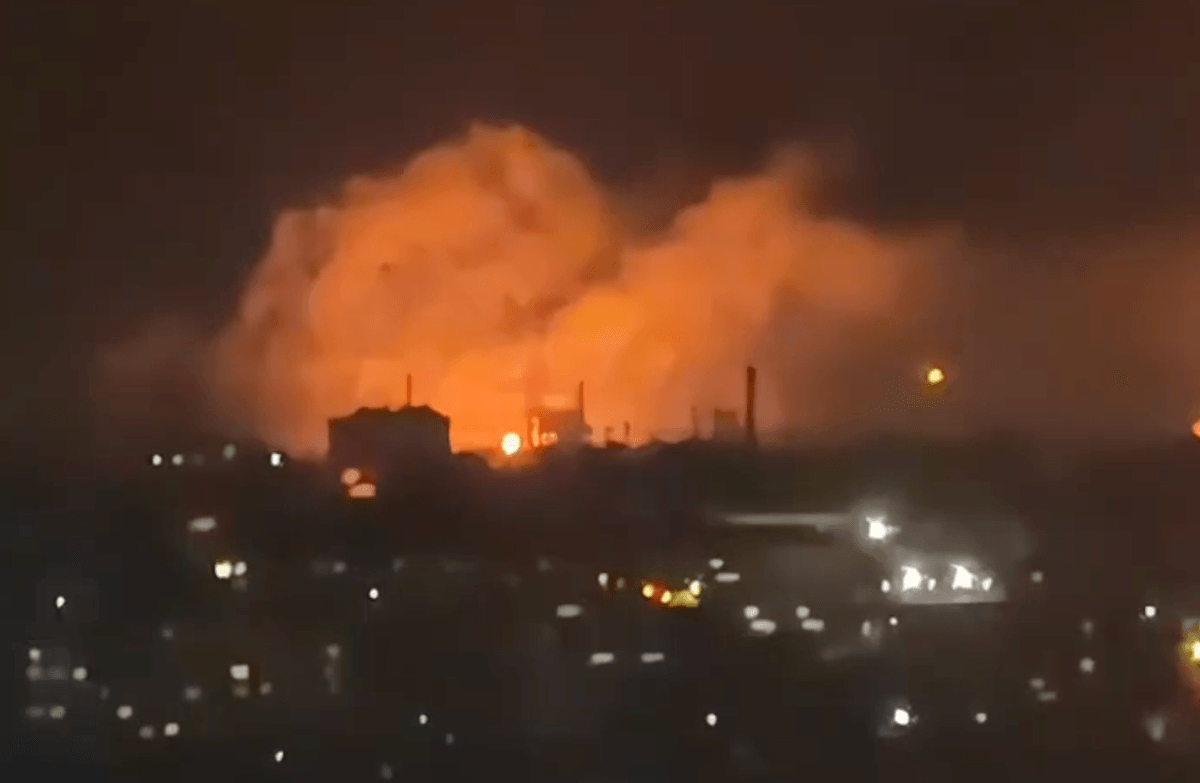
On the night of Aug. 12, Novorossiysk was under attack for eight hours. The next day, the Russian regional communities we track published more than 300 posts about it.
In 112 of the 300, the story was about civilian deaths; in 98, about damaged buildings; in 29, about a collapsed overpass. Ships came up in only eight.
The frigates "Admiral Makarov" and "Admiral Essen," whose launchers, according to an analysis of satellite imagery, were likely knocked out of action by the strikes and fires, were not mentioned by anyone at all. Nor does the Russian reader ever hear about the shutdown of three grain terminals that previously handled exports of around 25 million tons of Russian grain.
Why do we bring up this example? Ukraine focuses on targets that matter for stopping the Russian war machine. Russians, meanwhile, see in their information environment almost nothing but what matters to them personally.

Russians feel the hardships of war before analysts do.
In our databases, which cover around a thousand regional Telegram and VKontakte communities, the fuel topic grew by 85% over the four weeks of August: hours-long lines in Perm, purchase limits in Moscow, "gasoline availability maps" as the most in-demand of all digital services.
Despite the large number of successful strikes on facilities in Russia's rear throughout August, practically none of them became a nationwide topic in Russia (as Wildberries did in July).
Russians rally around a topic in the information space only when their own skin is in the game: the most reactions and comments still go to the same Wildberries and Ozon — everyone wants to know what will happen to deliveries and whether their parcels have burned.
The social distance between Russian regions is so great that the explosions in Novorossiysk were of little interest even to residents of relatively nearby Stavropol.
Of course, strikes on Russia's rear provoke anger. But it is not aimed where the Kremlin would like it to be.

Anti-Ukrainian jabs in the comments under posts about the strikes are consistently few: 5–7% in both July and August, and that counts any mention of Ukraine at all, while outright hatred along the lines of "khokhly" (a slur for Ukrainians) is two to three times rarer.
Roughly the same share of comments is addressed to their own authorities and air defenses, and, across individual events, that share ranges from 10–16%.
The most upvoted comment under one of the posts about the already mentioned attack on Novorossiysk: "We hit them, they hit us. And for the sake of protecting facilities, complete disregard for people's safety." The second most popular: "If they can't protect us, let them wrap up this Special Military Operation. Meanwhile, all the air defense and electronic warfare systems around Moscow are lined up several rows deep."
Attention to the other August strikes was distributed the same way.
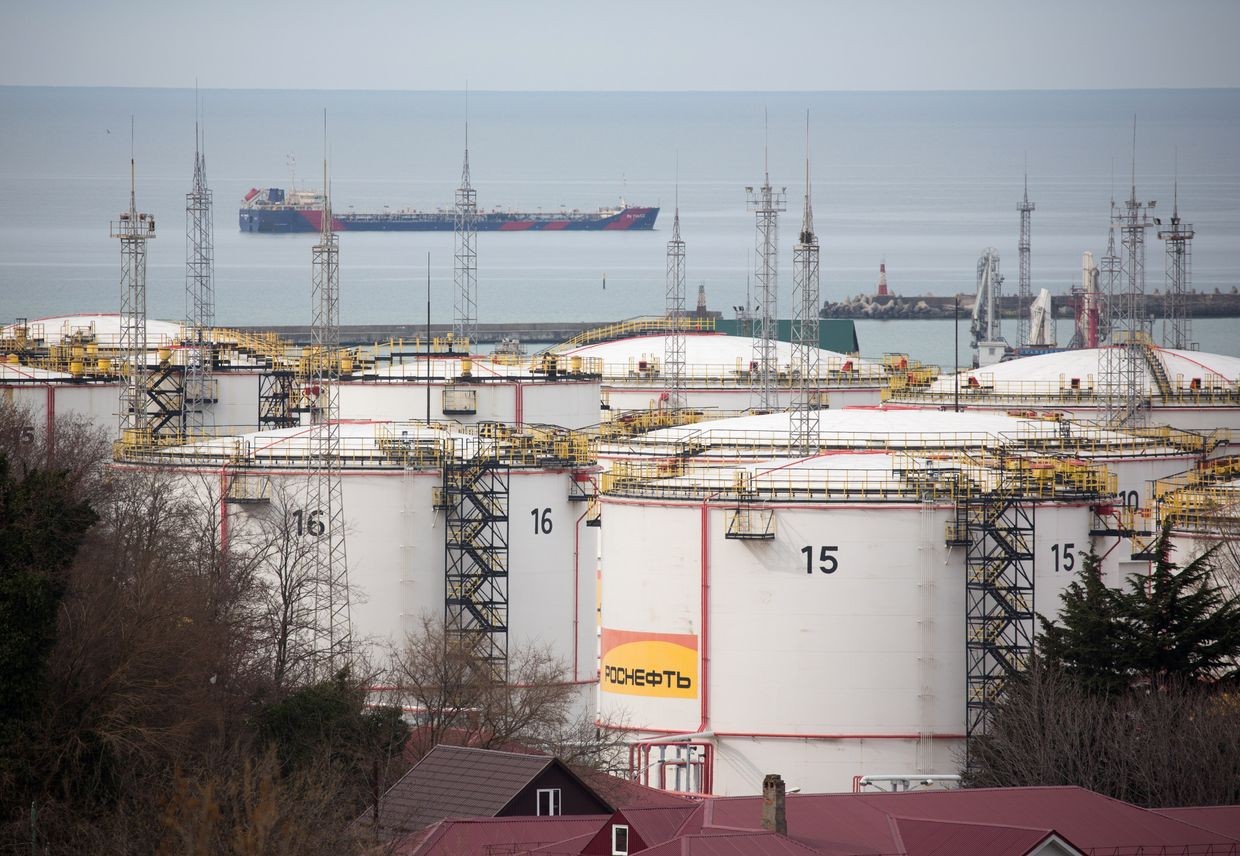
The strikes on the Syzran oil refinery were discussed almost exclusively in Samara Oblast, and the governor never named the plant.
The plant in Kamensk-Shakhtinsky, which makes propellant for "Smerch" and "Tornado-S" multiple rocket launchers, exists in the feeds only as "5 dead in Rostov Oblast."
The strike on the "Sivash" drilling rig in the Black Sea, where Russians had placed surveillance equipment, was not mentioned even once.
The only strike to become a nationwide topic was the one on Koledino, Wildberries' largest warehouse, damaged by a strike and fire on August 16: 38% of reactions under posts about it were the angry emoji, a record for our monitoring.
The result of this systematic work: oil refining in Russia fell in August to an average of 3.8 million barrels per day, the lowest level in 20 years, no matter what Putin said about "only 10% of the oil refineries still left to repair"; the gasoline export ban has been extended to Jan. 31, 2027, and since Sept. 1, gas stations have been allowed to sell Euro-2, a fuel that can damage modern cars.
So let's go back to where we started.
Russia will bet on terror and on making survival in Ukraine's large cities impossible in winter. That means strikes on energy, water supply, warehouses of food, medicine, and essential goods, and gas stations. It is absolutely clear that this winter will be extremely difficult.
But we have been through something like this before. This will be the fourth hard winter, and the country knows roughly what to prepare for. Betting that this time it will not hold out, after three previous attempts, is a dubious investment.
We know a hard winter awaits us. But for the first time in this war, Ukraine can respond at least roughly in kind.
For Russia, however, this will be the first winter in which its rear is this vulnerable. There has never been such depth before, nor such numbers.
As for the depth, in August, Ukrainian drones reached Tobolsk, 1,900 kilometers (1,180 miles) away, and twelve large oil refineries were hit within the month. And on Sept. 9, according to the Special Operations Forces, their drones reached Novy Urengoy and the Purovsky plant in Yamal, more than 3,000 kilometers (1,864 miles) from the border; the previous record, Omsk in July, was 2,500 kilometers (1553 miles).
This is the heart of Russian gas production, which until now was considered a safe rear area.
Now numbers are also hitting records. The Russian Defense Ministry itself claims a record 1,671 drones allegedly shot down in a single day, and the mayor of Moscow reports 8,670 drones in August headed toward the Moscow region, compared with 6,225 in July.

Defending such a vast territory is impossible.
We know a hard winter awaits us. But for the first time in this war, Ukraine can respond at least roughly in kind.
How delighted Russian society will be with its own hard winter remains an open question. Judging by the comments, not very.
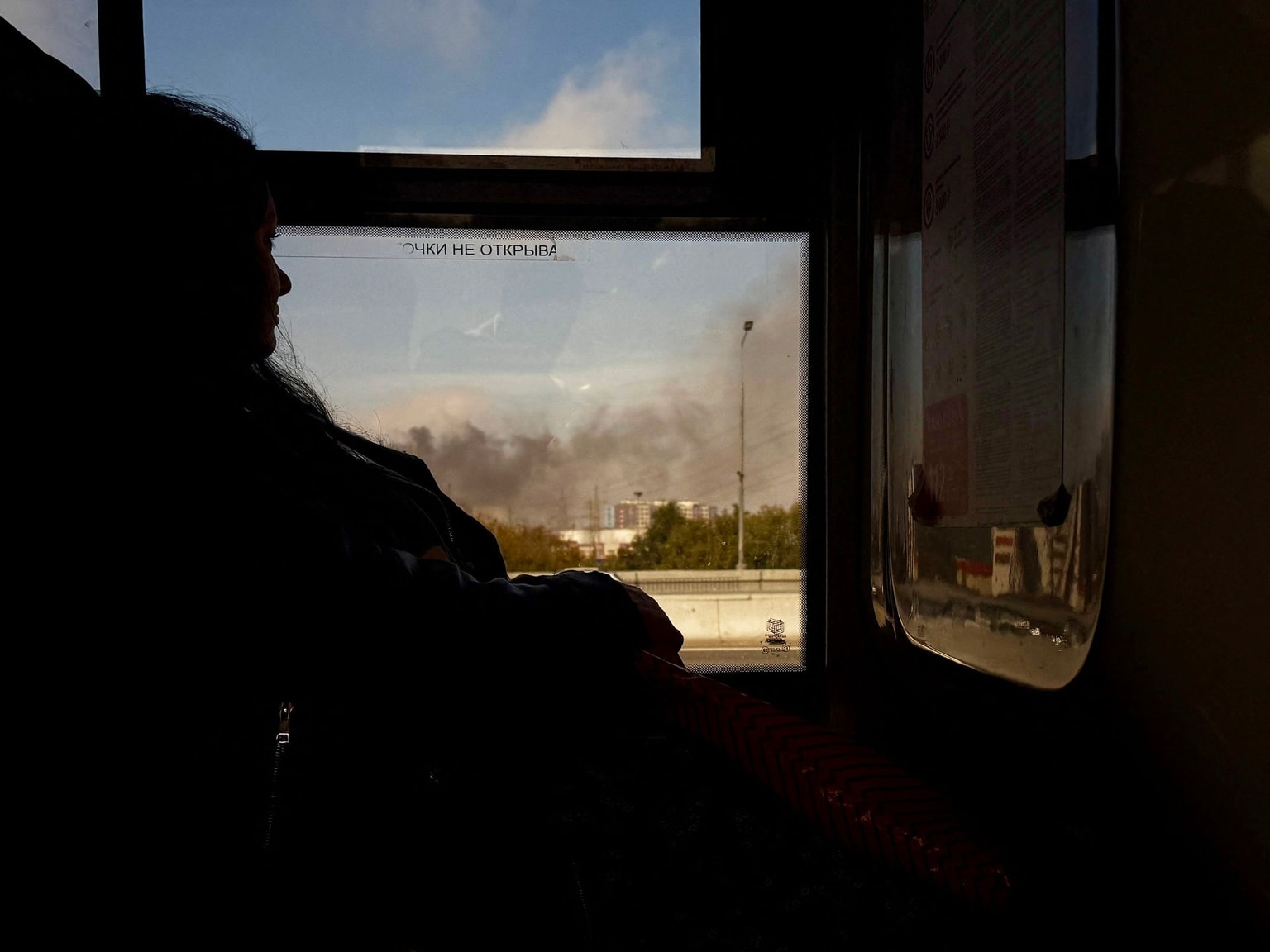
On Aug. 18, when more than 600 drones were flying toward Moscow, two comments under a "Moskva 24" post collected more than 800 likes each: "They fly in every day, it's no longer treated as an emergency, it's taken like the rain. Look where it's got us — couldn't just live in peace!"
And: "Are we really getting used to what's happening... or are we just ceasing to notice how our idea of normal life is changing?"
In Samara, where missiles struck on Aug. 15, the most popular reply is shorter: "We've got no damn air defense at all. They only protect Moscow."
Moscow, the Russians will probably manage to defend through the winter. The rest of Russia, they won't.
Editor's note: The opinions expressed in the op-ed section are those of the authors and do not purport to reflect the views of the Kyiv Independent.