Exclusive: Ukraine, Russia are done with Steve Witkoff. Trump sees no problem
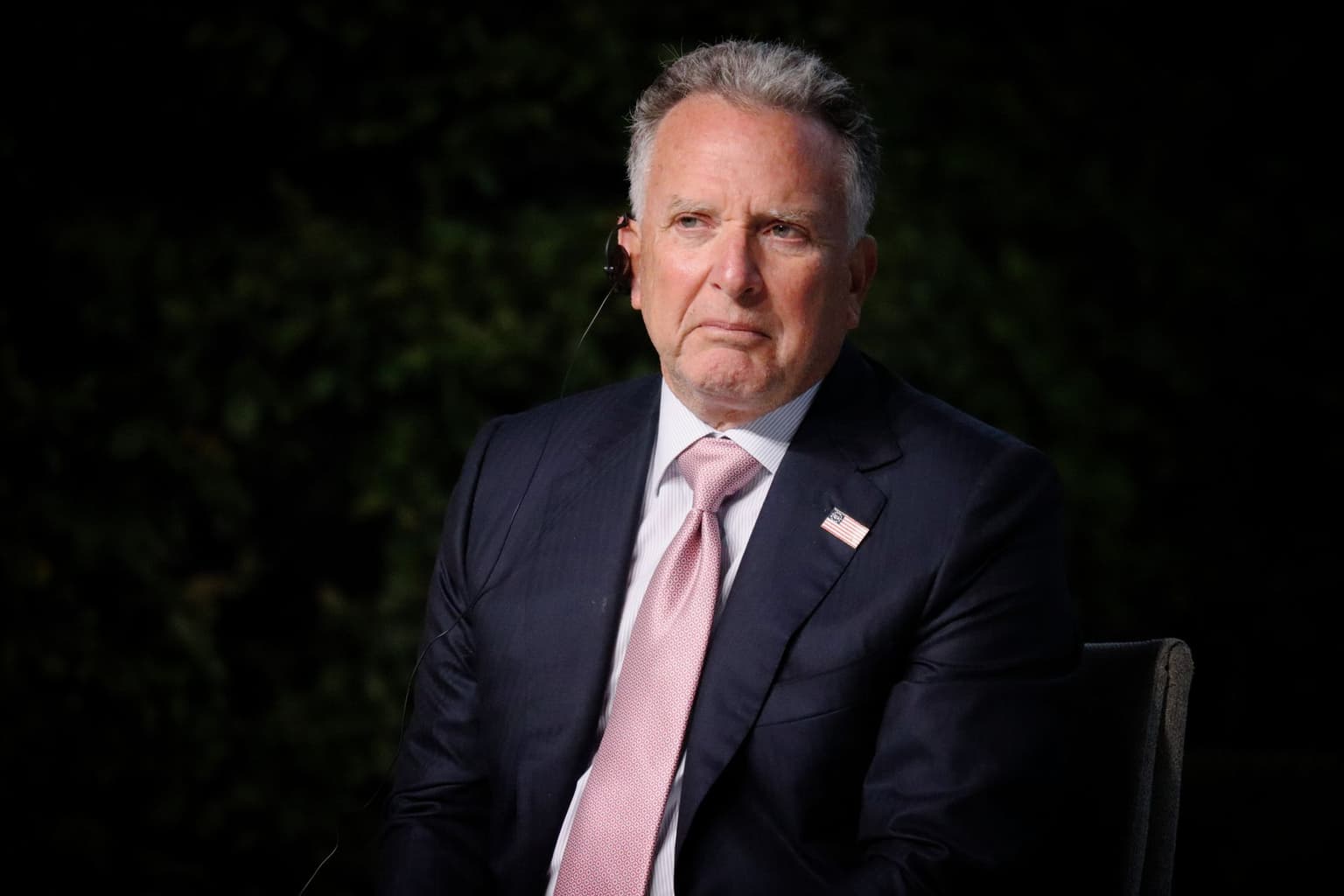
U.S. Special Envoy for Peace Missions Steve Witkoff in Kyiv, Ukraine, on Sept. 6, 2026. (Andriy Zhyhaylo / Oboz.ua / Global Images Ukraine via Getty Images)
 on Google
Kyiv and Moscow are growing increasingly frustrated with the U.S.-mediated peace process — and with Washington's Envoy Steve Witkoff, people familiar with the matter told the Kyiv Independent.
Witkoff and Trump's son-in-law, Jared Kushner, who has emerged as a key peace negotiator, traveled to Russia and Ukraine in early September in an attempt to restart stalled negotiations. They left both countries with little to show for the effort.
Behind the scenes, however, several separate efforts are underway to sideline Witkoff. The Kyiv Independent can reveal that multiple initiatives are also seeking to disrupt his close relationship with Russian envoy Kirill Dmitriev.
Officials and people close to the process in both Kyiv and Moscow are questioning Witkoff's role. At the same time, Trump appears reluctant to dislodge Witkoff.
This frustration comes amid a broader problem with Washington's approach. Ukrainian officials say they are seeing few new ideas from the U.S. side and little willingness to increase pressure on Russia, while the Kremlin increasingly blames Witkoff for "diplomatic" failures and his inability to pressure Ukraine into giving up territories that Russia failed to capture militarily.
"They keep telling us that 'you have to end this war.' As if we don't f***ing want to end it," one Ukrainian official involved in the peace talks, who was granted anonymity to discuss sensitive matters, told the Kyiv Independent.

That frustration has now spread beyond Kyiv. Ukrainian officials who participated in the peace talks and are familiar with the Kremlin's thinking say Russian officials increasingly believe Witkoff played a role in the failure of last year's summit in Alaska and sometimes passes information to Trump in ways that did not accurately reflect what Moscow intended.
For now, that leaves the peace process in an unusual position: the negotiator who has become a source of frustration in both capitals remains the person Trump trusts to carry it forward.
How Kyiv, Moscow grew frustrated with Witkoff
Kyiv's skepticism toward Witkoff dates back almost to the beginning of his involvement in the negotiations.
Ukrainian officials have long questioned his understanding of the war and his approach to diplomacy. One person who attended a round of trilateral negotiations told the Kyiv Independent that Witkoff sometimes left the negotiations without telling other participants where he was going.
"He's more into restaurants and other stuff," the person said. "It really looks like the guy is not interested at all. He could leave the scene and go for a short walk."
For Ukrainian officials, such episodes have become part of a larger concern: that Witkoff does not appear to treat the negotiations with the seriousness they require.
His relationship with Russian President Vladimir Putin has only deepened those concerns.
Witkoff has met Putin at least seven times and has repeatedly spoken warmly about those encounters. During their latest meeting on Sept. 5, he told Putin, "After I retire, I'll look back on my meetings with (you) in the Kremlin as some of the best and most unforgettable moments of my life."

Ukrainian officials view such praise as an overly accommodating approach toward the Russian president, a wanted war criminal. They argue that this approach is unlikely to persuade Putin to make meaningful concessions.
But the problem, in their view, goes beyond Witkoff's personal style. His understanding of the war and its history has also become a recurring source of frustration.
"They keep telling us that 'you have to end this war.' As if we don't f***ing want to end it."
That became particularly visible in the spring of 2025, shortly after Witkoff took responsibility for the peace track.
In April, Witkoff described his first discussions with Putin as "compelling" and said they focused on a potential peace agreement involving what he called "five territories."
"This peace deal is about these so-called five territories," Witkoff said. "I think we might be on the verge of something that would be very important for the world at large."
The Kyiv Independent can reveal that Witkoff's public description echoed details discussed during an earlier meeting with Putin.
During their April 11 meeting, Putin was sketching on a sheet of paper when Witkoff asked what he was drawing. Putin showed him the page, which contained the notation "3+2" — a reference to the territorial concessions the two men had discussed.
Witkoff took the paper with him back to Washington.
The five territories in question were the Russian-occupied parts of Donetsk, Luhansk, Zaporizhzhia, Kherson, and Crimea. Russia later illegally incorporated all five into its constitution following sham referendums.
The episode became emblematic of what Ukrainian officials saw as a deeper problem: Witkoff was discussing some of the most consequential questions of the war without appearing to fully understand the territorial issues at stake.
For Kyiv, such unseriousness and the lack of understanding of the sensitivity of the issue are the main problems.
The Kremlin, meanwhile, was developing its own frustrations with the U.S. envoy.
People briefed on Ukrainian intelligence said Russian officials had come to believe that Witkoff was partly responsible for the failure to achieve a breakthrough at last year's summit between Trump and Putin in Alaska.
One person briefed on Ukrainian intelligence and familiar with the negotiations described Witkoff as someone Putin initially viewed as a useful channel into the Trump administration. The Russian president, the person said, believed Witkoff could be persuaded to accept or relay Moscow's proposals to Trump.
That relationship became more complicated in the weeks leading up to Alaska.
Just a week before the summit, Witkoff returned from a meeting with Putin without a stenographer. He relied on the Kremlin's translator, not a U.S. embassy interpreter, thereby breaking traditional diplomatic protocol.
After that meeting, Witkoff told Trump that Putin was prepared to discuss an arrangement under which Ukraine would withdraw from parts of Donetsk and Luhansk oblasts, while Russia would pull back from territory it controlled in parts of Kherson and Zaporizhzhia oblasts, one U.S. official said.

But the Russian president was not prepared to offer those concessions, according to the source. Witkoff misunderstood Putin's "3+2" position.
When U.S. officials briefed Ukrainian and European counterparts on what Witkoff had conveyed, the reaction was disbelief. In Kyiv, there was an immediate understanding of miscommunication between the two, one person said.
The discrepancy became impossible to ignore when Trump announced plans for the Alaska summit, and it emerged that Putin was not prepared to make the territorial concessions Witkoff had described.
More importantly, one participant in the peace talks alleged that Witkoff failed to convey to Trump that Putin wanted the understandings reached in Alaska to be formally documented.
That left the summit without a concrete written framework that could serve as the basis for subsequent negotiations. One former U.S. official who attended the meeting described it to the Kyiv Independent as "a complete failure," adding that the Russian delegation left without even touching its lunch.
Russian officials later referred to what emerged from the meeting as the "spirit of Anchorage," or "Alaska agreements," while U.S. officials rejected the idea that the summit produced such an understanding.
The Alaska episode was not the only diplomatic setback subsequently linked to Witkoff by people familiar with the process.
One Ukrainian official familiar with the matter also attributed later problems in the U.S.-Russia diplomatic track to the envoy, including the collapse of a 28-point memorandum that Witkoff and Russian envoy Kirill Dmitriev had worked on together.
White House spokesperson Anna Kelly rejected the Kyiv Independent's reporting as "fake news nonsense," while defending Witkoff's role in the peace negotiations.
"President Trump and Special Envoy Witkoff are working incredibly hard to bring an end to this brutal conflict, which has taken hundreds of thousands of lives," she said.
"The Special Envoy speaks almost daily with representatives from both sides of the war in order to find a path to peace, and pays all of his own expenses while traveling around the world to facilitate negotiations."
"This included his recent trip to Kyiv, where he participated in meetings with President Zelensky and top negotiators, and his trip to Abu Dhabi, where he hosted historic trilateral talks with representatives from both Russia and Ukraine."
"It's a shame that the Kyiv Independent failed to reach out to the White House on this story because they knew it was fake news nonsense," she added.
The Dmitriev problem
Dmitriev, the wealthy, Kyiv-born, Western-educated head of Russia's sovereign wealth fund, is in many ways Witkoff's opposite number in Moscow.
Like Witkoff, Dmitriev — who serves as Putin's "Special Presidential Envoy" — occupies a position outside the Kremlin's traditional foreign policy structures — one that rankles Russia's long-term Foreign Minister, Sergey Lavrov.
And like Witkoff, Dmitriev is increasingly viewed by people familiar with the negotiations as someone who has overpromised and under-delivered.
Dmitriev was a key figure pushing for the Anchorage Summit, and, like Witkoff, its failure reflects poorly on him, a source in Ukrainian intelligence told the Kyiv Independent.
Dmitriev had a history of making grand promises but not delivering that much, the source said, adding that each failure weakens Dmitriev's position within the Kremlin whilst strengthening the positions of Lavrov's Foreign Ministry.

His faction is viewed as favoring a peace deal with Ukraine — one heavily slanted in Moscow's favor — whilst Kremlin hardliners, such as Lavrov and Director of Russia's Federal Security Service (FSB), Alexander Bortnikov, believe that a military victory over Ukraine is both possible and desirable.
Even so, many in the Ukrainian government would be happy to see Dmitriev's downfall, the source told the Kyiv Independent, as even the "dovish" faction that Dmitriev represents is pushing a settlement to the war that would include terms and conditions that would be viewed as disastrous for Ukraine.
But like Witkoff, for now, Kirill Dmitriev maintains a close relationship with his patron, despite his lack of concrete success.
Familial connections to Putin might explain why his lack of success continues to be tolerated by the Russian leader. Dmitriev's wife, Natalia Popova, is said to be a close friend of Putin's daughter Katerina Tikhonova and serves as her deputy at Moscow's Innopraktika Foundation.
Even if Dmitriev maintains his position within the Kremlin, as continued failure saps his influence and power, the usefulness of Witkoff, as his U.S. counterpart and key interlocutor, continues to weaken.
"When Dmitriev is gone — Witkoff is gone," one person familiar with the peace talks told the Kyiv Independent.
"For now, this Dmitriev faction hopes that Witkoff will deliver them what (Russia) wants."
No change to Witkoff, for now
Those failures and the attempts to sideline Witkoff have increasingly raised a question that neither Kyiv nor Moscow appears able to answer: if the current negotiating channel has produced so little, who should replace it?
Moscow has publicly signaled that it is open to maintaining multiple channels of communication with Washington. After the envoys' latest visit to Russia, Kremlin's foreign policy aide Yuri Ushakov said that work would continue through Witkoff's channel "as well as other diplomatic tracks."
There has been speculation that the Trump administration could turn to another senior official to take a larger role in the negotiations.
CIA Director John Ratcliffe traveled to Moscow in late August, where he discussed Ukraine, among other issues, with senior Russian security officials.
That visit fueled speculation that Ratcliffe could eventually assume a more prominent role in the peace process.

The Financial Times reported, citing unnamed sources, that Trump was considering giving Ratcliffe a broader diplomatic role in negotiations over a peace deal between Russia and Ukraine.
The White House rejected that report, calling it "totally fake news."
A person familiar with the matter also told the Kyiv Independent that such an arrangement was unlikely.
The source said Moscow views Ratcliffe as too supportive of Ukraine to serve as an acceptable replacement for Witkoff.
For now, then, the diplomatic track remains largely where it was.
Kyiv wants Washington to apply more pressure on Moscow, or at least help disrupt Putin's plans to freeze Ukraine in the upcoming winter. Moscow increasingly questions whether Witkoff accurately represents its positions to Trump.
And people close to the U.S. president say Trump remains reluctant to remove a longtime friend from a process he still wants to control.
That leaves Witkoff in place — even as confidence in his role appears to be eroding on both sides of the negotiating table.