Hungary's Orban accuses Zelensky of 'moral blackmail' over Ukraine's EU bid
 on Google
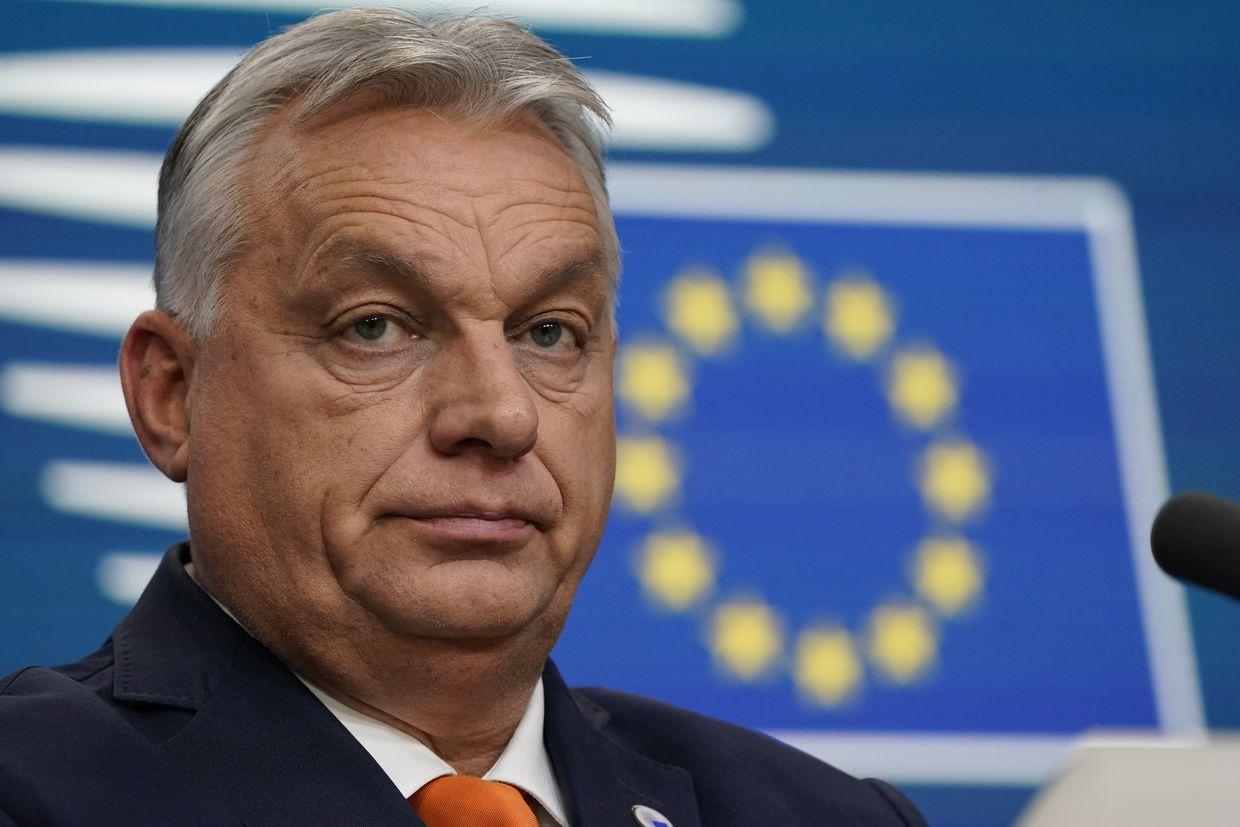
President Volodymyr Zelensky is employing a "tactic of moral blackmail" against Hungary to push Ukraine's bid for EU membership, Hungarian Prime Minister Viktor Orban said on Oct. 6.
Orban's increasingly sharp rhetoric on Ukraine aligns with his anti-EU and nationalist messaging ahead of Hungary's 2026 parliamentary election.
"(Zelensky) is once again using his usual tactic of moral blackmail to push countries into supporting his war efforts," Orban wrote. "Hungary has no moral obligation to support Ukraine's EU accession."
"No country has ever blackmailed its way into the EU — and it won't happen this time either. The EU Treaty leaves no room for ambiguity: membership is decided by the member states, unanimously."
Orban cited a survey showing that most Hungarians allegedly oppose Ukraine's EU membership.
The poll has faced criticism over its credibility and transparency. Testing reportedly showed that respondents could vote multiple times using different email addresses.
Since 2010, Orban's government has conducted more than a dozen similar national consultations — non-binding letter campaigns with leading questions designed to reinforce government positions.
Ukraine applied for EU membership shortly after Russia launched its full-scale invasion in February 2022 and was granted candidate status a few months later.
As an EU member, Hungary has the power to veto any future progress in Ukraine's accession process.
Orban, the EU's most openly pro-Russian leader, has maintained close ties with the Kremlin, repeatedly blocked or delayed military assistance to Ukraine, and echoed Kremlin narratives.
His government has been accused of weakening democratic institutions and aligning with Moscow.
The remark followed Zelensky's claim on Sept. 26 that reconnaissance drones, likely belonging to Hungary, violated Ukraine's airspace near the shared border.
In response to the allegations, Orban said Ukraine was "not a sovereign country."