News from occupied Ukraine: 11 Ukrainians, including 96-year-old woman, evacuated from Russian occupation
 on Google
This weekly update from the Kyiv Independent aims to shed light on the situation facing Ukrainians living under Russian occupation and the ever-tightening control of information imposed by the Kremlin.
Key news as of Oct. 17:
- Eleven Ukrainians, including 96-year-old woman, return from Russian-occupied territories, ombudsman says
- Russia sends terrorism case against 6 teenagers in occupied Luhansk Oblast to court
- Ukrainian troops struck Russian drone sites, ammunition depots in occupied territories
- Equipment wear at occupied Donbas coal mines reaches 80–90%
- From Oleshky to Mariupol, crises across Russian-occupied Ukraine deepen
Eleven Ukrainians, including 96-year-old woman, return from Russian-occupied territories, ombudsman says
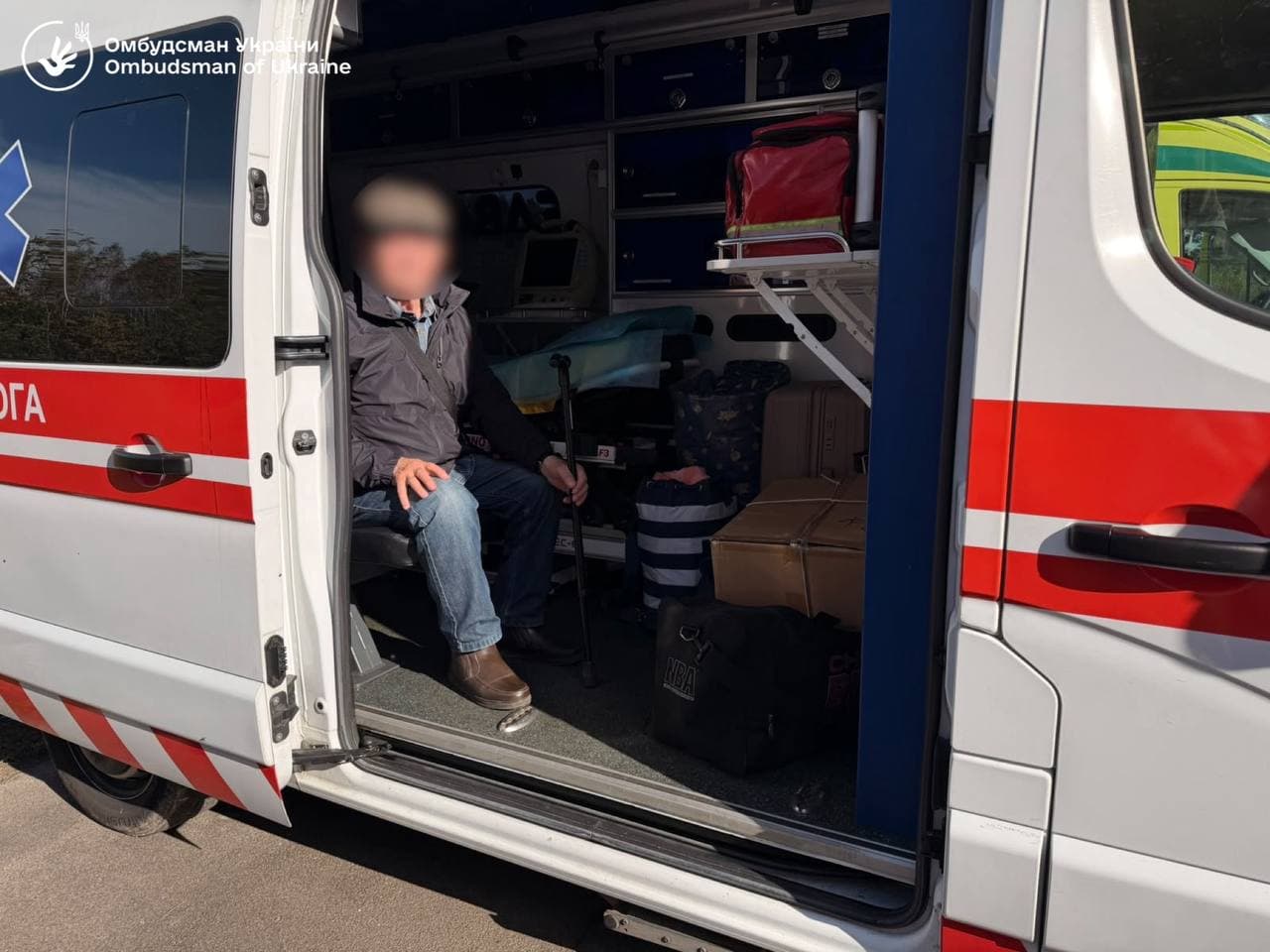
Eleven Ukrainian citizens have returned to Ukrainian-controlled territory from Russian-occupied areas, including a 96-year-old woman and her son, Ukraine's Human Rights Ombudsman Dmytro Lubinets said on Oct. 16.
One of those evacuated was a man who had remained in occupied Luhansk after his wife died in 2018. His relatives had already left and were waiting for him in Ukrainian-controlled territory, but he had struggled to leave his home. After suffering three heart attacks and developing problems with blood pressure and mobility, he needed specialized transport to make the journey, Lubinets said.
Another case involved a 96-year-old woman and her son from the Russian-occupied village of Tavriiske in Kherson Oblast. The son had been caring for his mother when he was wounded in a Russian air attack in September. He sustained severe injuries, lost an eye, and was hospitalized.
Both needed assistance to return to Ukrainian-controlled territory, as the son was recovering from his injuries and his elderly mother could not travel independently. They returned together on Oct. 15, according to Lubinets.
Separately, Save Ukraine, a Ukrainian humanitarian NGO, said on Oct. 11 that 33 children were returned to Ukraine from the Russian-occupied territories over the past week.

The Volyn humanitarian corridor in Ukraine's northwestern Volyn Oblast is usually used for such evacuations, as it is the only working checkpoint between Ukraine and Belarus. There are currently no functioning checkpoints between Ukraine and Russia.
Given that the territory of Belarus was used by Russia to launch its full-scale invasion, the area around the crossing is heavily fortified with mines and anti-tank hedgehogs.
The last direct route from Russia to Ukraine through a checkpoint in Sumy Oblast was closed in August 2024 amid escalating Russian attacks in the oblast.
The fate of thousands of Ukrainians currently in captivity, as well as those living under occupation, remains uncertain. Between 3.5 million and 5 million Ukrainians remain in Russian-occupied territories and in Russia itself, according to an estimate cited by Lubinets in July.
Many Ukrainians cannot leave for various reasons, such as age, illness, disability, financial constraints, family responsibilities, and the threat of property expropriation by the occupation authorities.
Russia sends terrorism case against 6 teenagers in occupied Luhansk Oblast to court
Russian occupation authorities have sent a criminal case against six teenagers accused of carrying out arson attacks on infrastructure in occupied Luhansk Oblast to court, Russia's Investigative Committee branch in the occupied region claimed on Oct. 6.
According to the statement on Telegram, the teenagers allegedly carried out 20 arson attacks between May and September 2025, targeting electrical substations, gas infrastructure, mobile phone towers, and vehicles in the occupied town of Sverdlovsk and its surrounding area.
The alleged damage exceeded 2.5 million rubles ($32,000), the agency said. The teenagers face charges including terrorism, incitement to commit a terrorist act, and intentional property destruction.
The claims cannot be independently verified.
The case comes amid broader repression in Russian-occupied Ukrainian territories. The UN Human Rights Office said in a September 2025 report that Russian authorities have used arbitrary detention and criminal prosecutions against Ukrainian civilians, with frequent violations of procedural safeguards.
Ukrainian troops struck Russian drone sites, ammunition depots in occupied territories
Ukraine's military struck Russian drone launch sites, military supply and ammunition depots, troop concentrations, and communications infrastructure in Russian-occupied parts of Donetsk, Luhansk, Zaporizhzhia, and Crimea between Oct. 11 and Oct. 16, Ukraine's General Staff said.

Donetsk Oblast
Near the occupied city of Donetsk, Ukrainian forces struck a Russian site used to store, prepare, and launch attack drones overnight on Oct. 14. Military supply depots and Russian troop concentrations near several settlements were also targeted, according to the General Staff's Oct. 14 report.
Luhansk Oblast
Ukrainian forces struck a fuel and lubricants depot near Dovzhansk and an ammunition depot near Rubizhne on Oct. 12 and overnight into Oct. 13. Russian troop concentrations near Kuzemivka were also targeted, the General Staff said in its Oct. 13 report.
Zaporizhzhia Oblast
Ukrainian forces struck a Russian troop concentration near Naberezhne on Oct. 12 and overnight into Oct. 13. They also hit a concentration of personnel from the Russian military's Rubikon drone unit near Novokostiantynivka on Oct. 14 and overnight into Oct. 15, according to the General Staff's Oct. 13 and Oct. 15 reports.
Crimea
Ukrainian forces struck four storage facilities for Russian attack drones near occupied Hvardiiske. Damage was confirmed in the General Staff's Oct. 15 report. On Oct. 15 and overnight into Oct. 16, Ukrainian forces also struck two telecommunications towers equipped with antenna systems near Olenivka, according to the General Staff's Oct. 16 report.
Equipment wear at occupied Donbas coal mines reaches 80–90%
Coal mining equipment in Russian-occupied parts of Donbas has deteriorated by 80–90% after 12 years without modernization, Alexander Klimenko, chairman of the board of directors of the Rodina industrial group, said, according to the Russian-backed Luhansk Information Center on Oct. 15.
Rodina, an investor in the coal industry in occupied Luhansk Oblast, has purchased one of only two new mining complexes acquired in Russia this year, the company said. It did not specify where the equipment would be installed or when it would enter operation.
The admission comes amid a wider decline in the region's coal industry. Coal production in occupied Luhansk Oblast fell from 6.7 million metric tons in 2018 to 1.34 million metric tons in 2024, while 68 mines were undergoing liquidation as of July 2026, according to figures cited by Ukrainian media Realna Gazeta.
Donbas was historically central to Ukraine's coal industry, supplying fuel for thermal power plants and coking coal for steel production. The deterioration of mines threatens an industrial sector that once supported regional employment, steelmaking, and energy production.
The 80–90% wear estimate was provided by Rodina's chairman and was not independently verified. The Russian-backed report did not identify the mines assessed or explain how the figure was calculated.
read also
From Oleshky to Mariupol, crises across Russian-occupied Ukraine deepen
While the humanitarian crisis in the Russian-occupied front-line city of Oleshky recently garnered media attention, all regions of occupied Ukraine face worsening humanitarian issues at the hands of Russia's occupation authorities, the Kyiv Independent reported on Oct. 15.
Across all occupied territories, civilians face failing water and electricity systems, shortages of qualified doctors, deteriorating municipal services, and mass depopulation, while specific problems differ from one occupied region to another.
Petro Andriushchenko, head of the Center for the Study of the Occupation, told the Kyiv Independent that the problems are driven by the failure of Russian occupation authorities to maintain basic services, as well as wartime destruction, proximity to the front line, and a lack of qualified personnel.
Russia currently occupies all of Crimea, 99% of Luhansk Oblast, 73% of Donetsk Oblast, 65% of Zaporizhzhia Oblast, and 57% of Kherson Oblast, according to geolocation estimates from the open-source intelligence project DeepState. Crimea, as well as parts of Donetsk and Luhansk oblasts, have been under occupation since 2014, while parts of Kherson and Zaporizhzhia oblasts have been under occupation since Russia's full-scale invasion in 2022.
Read more here.