Life in Russian-occupied Oleshky was dire. Now it's 'hell'
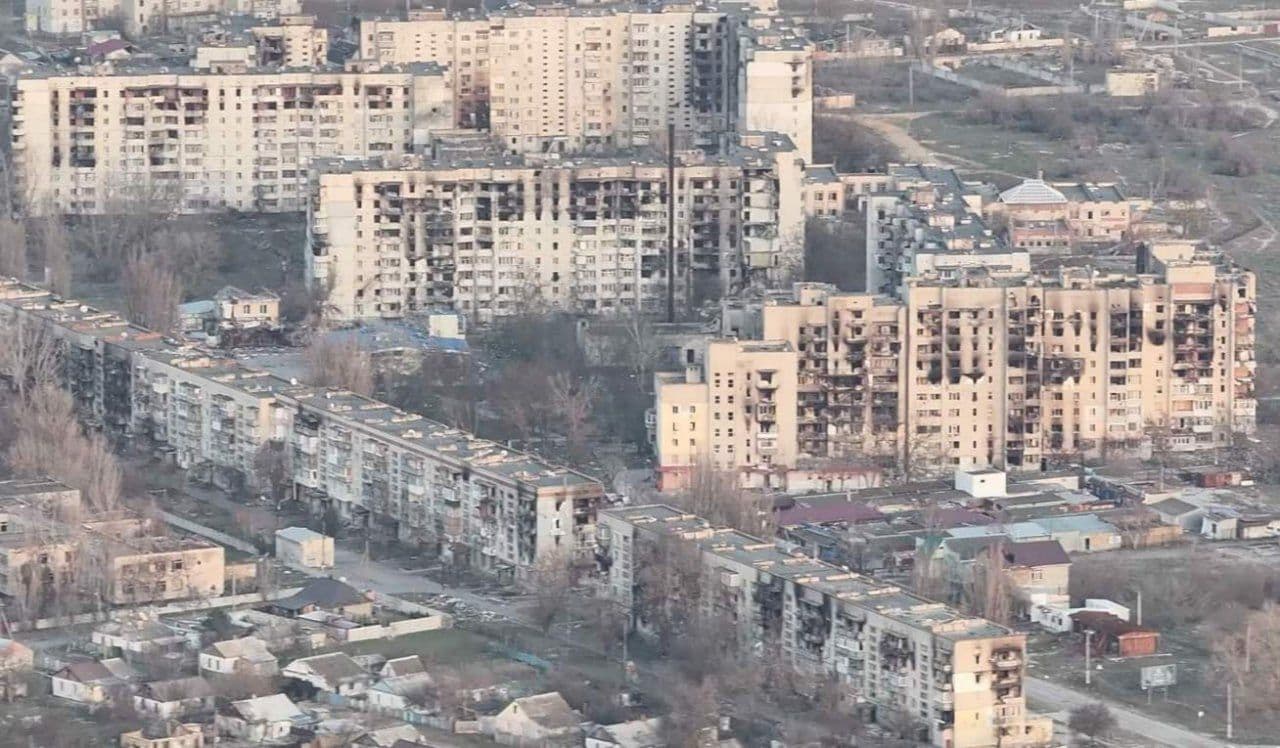
The aerial view of Oleshky, a Russian-occupied town in Kherson Oblast, Ukraine in a photo published on Sept.16, 2026. (Oleshky Lubinets / Telegram)
 on Google
Residents in Russian-occupied Oleshky in Kherson Oblast face an escalating humanitarian crisis, as constant Russian drone attacks and artillery shelling have made it impossible to deliver essential food and medicine supplies or evacuate civilians by road.
"These people need to be saved," Dmytro Lubinets, Ukraine's human rights ombudsman, said on Sept. 16, adding that residents are desperate to escape "from this hell."
"People are driven to despair and are simply walking along mined roads (to escape)," an Oleshky resident — whose identity is being withheld for security reasons — told the Kyiv Independent.
Of the city's prewar population of about 24,000, about 2,000 people remain in Oleshky, including about 50 children, Tetiana Hasanenko, exiled head of the Ukrainian Oleshky City Military Administration, told the Kyiv Independent.
This spring, amid a deteriorating humanitarian situation, volunteers could still evacuate civilians from the city despite the risks, the Kyiv Independent reported. Now, several months later, volunteers say even those evacuation efforts are no longer possible, as Russia refuses to cooperate and leaves Ukrainian civilians trapped in the occupied city, facing starvation.
Russian troops continue to use towns and villages on the eastern bank of the Dnipro River in Kherson Oblast to launch attacks across the river, including on Kherson, which Ukrainian forces liberated in November 2022. Oleshky is an occupied front-line city on the eastern bank, where civilians live amid a Russian military presence and attacks from both Ukrainian and Russian forces.

Ukraine had prepared a humanitarian evacuation mission for Oleshky and approved a list of civilians who needed to leave, according to Lubinets. The International Committee of the Red Cross (ICRC) had also expressed readiness to participate, while Ukrainian forces had been preparing to ensure a ceasefire during the mission, he said.
But Russia has not confirmed its readiness to proceed, Lubinets said. Ukraine continues to press Russia to allow the evacuation and remains in contact with the ICRC and other international organizations, he added.
Hasanenko told the Kyiv Independent that "Russia remains silent" about the situation.
At first, Russian authorities pretended not to notice the disaster and tried to portray Oleshky as a functioning city, staging visits and taking photographs there this spring, Hasanenko said.
But as the humanitarian situation has become impossible to conceal, those visits have stopped, she added.
No food
The Oleshky resident told the Kyiv Independent that the food situation has been deteriorating for months.
"By New Year's, there were already shortages of eggs, and we barely managed to buy any apples. Then we didn't see any of that stuff again until spring. When we did, it was at astronomical prices," the resident said.
"Suddenly, bread deliveries stopped," they added. "I'm having tea with honey. And that's all."
According to Hasanenko, the last successful food delivery to the city was on May 26.
"There is absolutely no meat, flour, oil, butter, ready-made bread, and other basic products in the city," she said. Some local residents have posted photographs online of bread preserved in jars.

There were two further attempts to bring supplies into Oleshky, Hasanenko said. On June 2, Russian drones attacked vehicles carrying food, killing two drivers and injuring others. On Sept. 1, Russian forces cut short another attempt to deliver food to the city when they attacked five vehicles with drones.
Hasanenko said civilians in Oleshky were trying to exchange food with one another, but the Oleshky resident told the Kyiv Independent that "there's absolutely nothing to buy, and there's not even the option of bartering."
Ukraine's Holodomor Museum, dedicated to preserving the memory of the 4.5 million Ukrainians starved to death by Joseph Stalin from 1932-1933, on Sept. 16 issued a statement highlighting "famine" as "among the most severe problems" in Oleshky and the surrounding area.
"We are convinced that silence around a mass humanitarian crisis is unacceptable, and we call on the international community not to ignore the situation in Oleshky," it said.
read also
Medical care
The local hospital, left without basic medical supplies, electricity, or running water, is also struggling to operate, Hasanenko said. Four doctors, all elderly former hospital staff, continue to work there, she said.
"But there are absolutely no medical supplies. The only thing they can do is … to stop the bleeding. There are no medicines," Hasanenko said.
Since Russia destroyed the nearby Kakhovka Dam in 2023, the hospital has had to rely on generators for electricity, but fuel supplies have also become increasingly difficult to obtain, according to Hasanenko.
She said ambulances have not been operating in the city for years because Russian drone attacks have made it too dangerous.


Evacuation
May 26 was the last time people were evacuated from Oleshky, and nobody has entered the city since, according to Hasanenko.
In recent weeks, some residents have started walking out of Oleshky to the neighboring village of Radensk alone or in pairs, on roads mined by Russian forces.
"They risk being blown up by a land mine or struck by a drone, but they go anyway, because staying in Oleshky is even worse for them," Lubinets said.
Stefan Vorontsov, a volunteer coordinator with the Humanity NGO, which helps evacuate civilians from occupied territories, said the walk takes five to six hours under the constant threat of Russian air attacks.
"Four or five months ago, it was still possible to leave by car. Now the only option is to walk."
Once people reach Radensk, volunteers can pick them up and help them travel farther, he said. Volunteers helped a family leave the area about a week ago, according to Vorontsov.
"Some are leaving, while others have to return (after picking up supplies) because they have children or grandchildren at home, or relatives with limited mobility," the Oleshky resident said.

Crisis in surrounding settlements
The crisis is not confined to Oleshky itself. The worsening humanitarian situation is spreading across the surrounding settlements, leaving more civilians trapped in critical conditions.
"Oleshky is not the only place where there is hunger," Vorontsov said. "Ukrainian villages around it — Hola Prystan, Radensk — the geography of the problem is getting bigger."
The Oleshky community includes 13 settlements, five of which have been completely destroyed, according to Hasanenko. While settlements such as Solomky, Pidlisne, and Kozachi Laheri have suffered extensive destruction, some civilians still live there.
In other villages such as Radensk, vehicles can either no longer reach people, or have to make a "quite risky" journey navigating the threat from mines and drones, Vorontsov said.
"I don't even remember what it's like to have cars driving on the roads anymore," the Oleshky resident said.
Lubinets gave a broader estimate on Sept. 16, saying more than 6,000 people may remain in Oleshky and the surrounding area, including about 200 children. His office said it had verified 358 people who urgently need assistance to leave safely.
"People's moods are very panicked and depressed," Hasanenko said.
Residents are increasingly worried about how they would survive the winter without regular food deliveries, medicine, electricity, or reliable transport, she added.
"They understand that the summer has passed and no evacuation has been organized."