Lithuania to accelerate Ukraine's EU accession during its 2027 presidency, but Kyiv must still pass reforms
 on Google

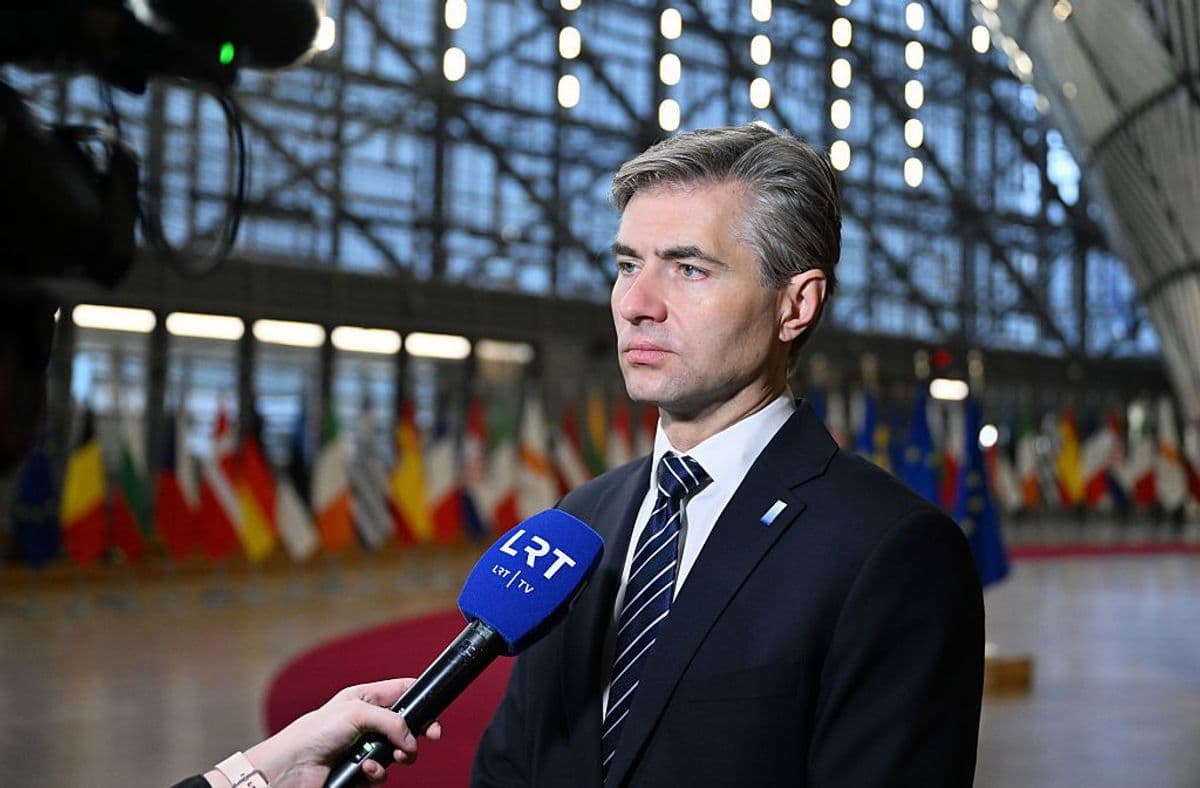
BRUSSELS, Belgium — Lithuania will push Ukraine's membership bid as much as possible when it chairs the EU's council presidency in 2027. Ukraine still needs to pass reforms, Lithuanian Foreign Minister Kestutis Budrys told the Kyiv Independent in a Nov. 16 interview.
"We politically treat Ukraine as the locomotive of the whole enlargement process… we have to prioritize this locomotive to move forward," Budrys said.
In 2026, Ukraine unlocked four of six reform to-do lists, with the final two clusters expected to open in December, one month before Lithuania takes the helm of the EU for the next six months.
Budrys said he expects that Ukraine will succeed in fulfilling interim rule-of-law requirements, the next step in the process, during the Lithuanian council presidency, matching the estimate of the EU's Enlargement Commissioner, Marta Kos.
But the foreign minister thinks Ukraine can go further in 2027 than the European Commission has estimated in its Nov. 4 enlargement report.
While the Commission expects Ukraine to close eight chapters in 2027, Budrys said: "We are a bit more ambitious than the Commission in the roadmap on Ukraine… we want more chapters to be closed."
He later repeated that particular remark at a panel discussion during the EU's Enlargement Forum in Brussels, taking place that same day.
Budrys said that there are two main obstacles to his ambitious plans for Ukraine: the elections calendar across Europe in 2027, and Ukraine itself.
France, Poland, and Italy are all larger EU countries expected to hold elections that year, with significant challenges from anti-Ukrainian politicians; in France's case, both the far-right and the far-left.
But Budrys said he remains hopeful that more critical positions on EU enlargement won't be implemented.
"During elections, everyone is a bit more sharp than afterward, and we will continue. I think that we are on a good track," Budrys said.
But for Ukraine itself, where the parliament has been slow to pass reforms this year, the solution can also only come from within.
"There is no other way. There is no shortcut here," Budrys said.
He went on to explain that when Lithuania was working to join the EU over 20 years ago, Vilnius streamlined the legislative process to pass EU laws more quickly, something he hopes Kyiv will do too.
"Just please make everything as simple as it is possible," Budrys said. "And let's get on it, because otherwise we will waste this time."