For Putin, foreign troops in Ukraine are unacceptable — unless they're fighting for Russia
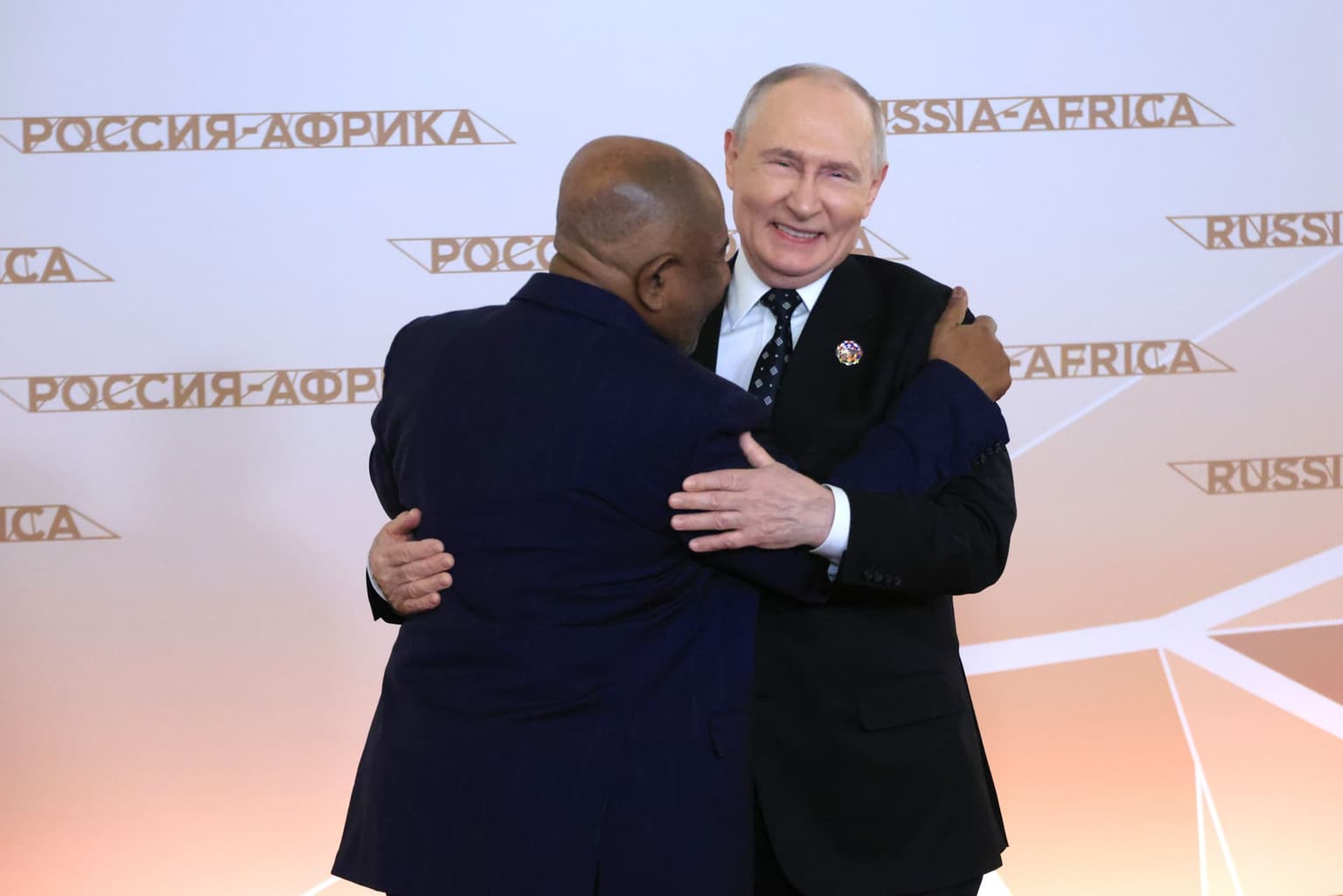
Russian President Vladimir Putin (R) greets Comoros President Azali Assoumani (L) during the Russia-Africa Summit in Moscow, Russia, on Oct. 28, 2026. (Contributor / Getty Images)
 on Google

Amar Singh Bhandal
Managing Director of Lesedi Geopolitical Advisory
Moscow repeated demands last week that no foreign soldier ever set foot in Ukraine, as a precondition to a peace deal. Meanwhile, it is recruiting Africans by the thousand to replace the Russians it can no longer afford.
Moscow reiterated both in Abu Dhabi and to U.S. envoys that any foreign troops on Ukrainian soil would be "absolutely unacceptable" and a "legitimate target." Meanwhile, Exercise Koalicja in Turkey marked the first military exercises of the "coalition of the willing," preparing to enter Ukraine as part of a negotiated end to the war.
The Kremlin's objection to foreign soldiers turns out, as usual, to be highly selective.
By the latest count from Ukraine's foreign ministry, at least 2,982 citizens of 37 African countries have been recruited to fight for Russia, and around 500 of them are dead.
Ukrainian military intelligence says Moscow wants 20,000 foreign recruits this year. As Russian President Vladimir Putin cannot abide a British peacekeeping battalion in Lviv, a Kenyan jobseeker crouched in a trench in the Donbas is another matter, apparently.
The reason is money.
Since 2022, the Kremlin has avoided a second mobilization by buying its army instead; the first call-up sent hundreds of thousands of Russians fleeing across the border.
Every region now has a recruitment quota, and every recruit gets a signing bonus. By Putin's decree, regions must pay at least 400,000 rubles ($4,900), matched by Moscow. Desperate to hit their targets, governors bid far above that floor. Until October, St. Petersburg was offering 3.5 million rubles (about $43,000).
But over the last few weeks, the auction fell apart.
In mid-October, St Petersburg cut its bonus to a million rubles ($12,000). By early November, it had fallen to 400,000 ($4,900), the legal minimum. One Russian pro-war commentator complained this month that regions have cut death benefits for soldiers' families by between half and all their value.
When even Russia's propagandists are grumbling about the injustice of a widow's payout, the war economy is in serious trouble.

This is not the first wobble. Several regions trimmed bonuses late last year, then restored them in 2026.
In the first quarter of this year, just 71,200 troops received their enlistment bonuses - the lowest figure in three years. Perhaps the cuts just mean Moscow needs fewer men?
If so, it is odd that it is going to such lengths to find them abroad. Nor is the front getting any cheaper: Ukraine's General Staff reported 2,500 Russian casualties on Nov. 1, its highest daily figure of the war.
In February 2026, Kenya's intelligence service and criminal investigators told parliament that more than 1,000 Kenyans had been recruited, five times the government's earlier estimate.
"The same pool of African recruits is also meant to sustain Russia’s ambitions in Africa itself – and they are ambitious."
Many left on tourist visas, promised civilian jobs with monthly wages of $1,000-2,700, but instead have been deployed on the front line.
Ghana's foreign minister put it plainly: "They have no security background. They have no military background." These young men are assault infantry bought at a discount, filling the role Russian convicts did in 2023.
The Russian embassies in their African host countries deny everything.

The same pool of African recruits is also meant to sustain Russia's ambitions in Africa itself – and they are ambitious.
The Africa Corps, the defense ministry's successor to Wagner, grew from 4,618 personnel at the end of 2025 to 6,180 by July, according to Ukrainian military intelligence. The Kremlin reportedly wants 12,000 more by the end of the year.
Moscow is recruiting Africans to fight in Ukraine and Russians to fight in Africa and is running short of both.
As I wrote in May, the Africa Corps could not hold Kidal, its showpiece base in northern Mali, for a single day when jihadists and Tuareg rebels came for it in April. A force that cannot defend its trophies for a friendly government in the Sahel has no men to spare for the war in Ukraine.
This should change how Washington reads the talks in Abu Dhabi. The temptation is to treat Russia's willingness to talk as a sign that it is negotiating from strength, and to buy a winter ceasefire with sanctions relief.
On my visits to Ukraine, the phrase "peace negotiations" was generally met with laughter from soldiers and academics alike. Ukrainians assume Putin talks to keep U.S. President Donald Trump onside, not to end the war, and they are probably right about his motives. But the recruitment data suggest Moscow is also arriving with a problem it cannot fix with money, because the money is running out.
A Russia that needs to trick Africans into uniform should not be offered concessions without hard compromises from Moscow.

Three things follow.
First, future prisoner exchanges should cover the foreign nationals Ukraine holds, including 35 Africans from 17 countries. That would give their governments a reason to expose the networks that sent them, rather than hoping the problem goes away.
Second, Grushko's demand deserves the obvious reply: Russia's foreign fighters can go home first, then we'll discuss Ukraine's volunteers.
Third, the U.K. has unique leverage it is not using. Kenya, Ghana and South Africa are Commonwealth partners, and London has intelligence and policing ties with all three.
It should be helping them dismantle the trafficking pipelines and make sure every African capital knows how Moscow treats the men it recruits.
The Ukrainian Foreign Ministry has launched stoprussianrecruiters.org to shed light on the issue. Russia has spent a decade selling itself to Africa as the partner that respects sovereignty. The reality is clear in the interviews given by African POWs in Ukrainian captivity
While Putin wants a Ukraine without foreign troops, he should first ask how long his own army would last without them.
Editor's note: The opinions expressed in the op-ed section are those of the authors and do not purport to reflect the views of the Kyiv Independent.