EU says Ukraine must speed up rule of law reforms to meet accession goals
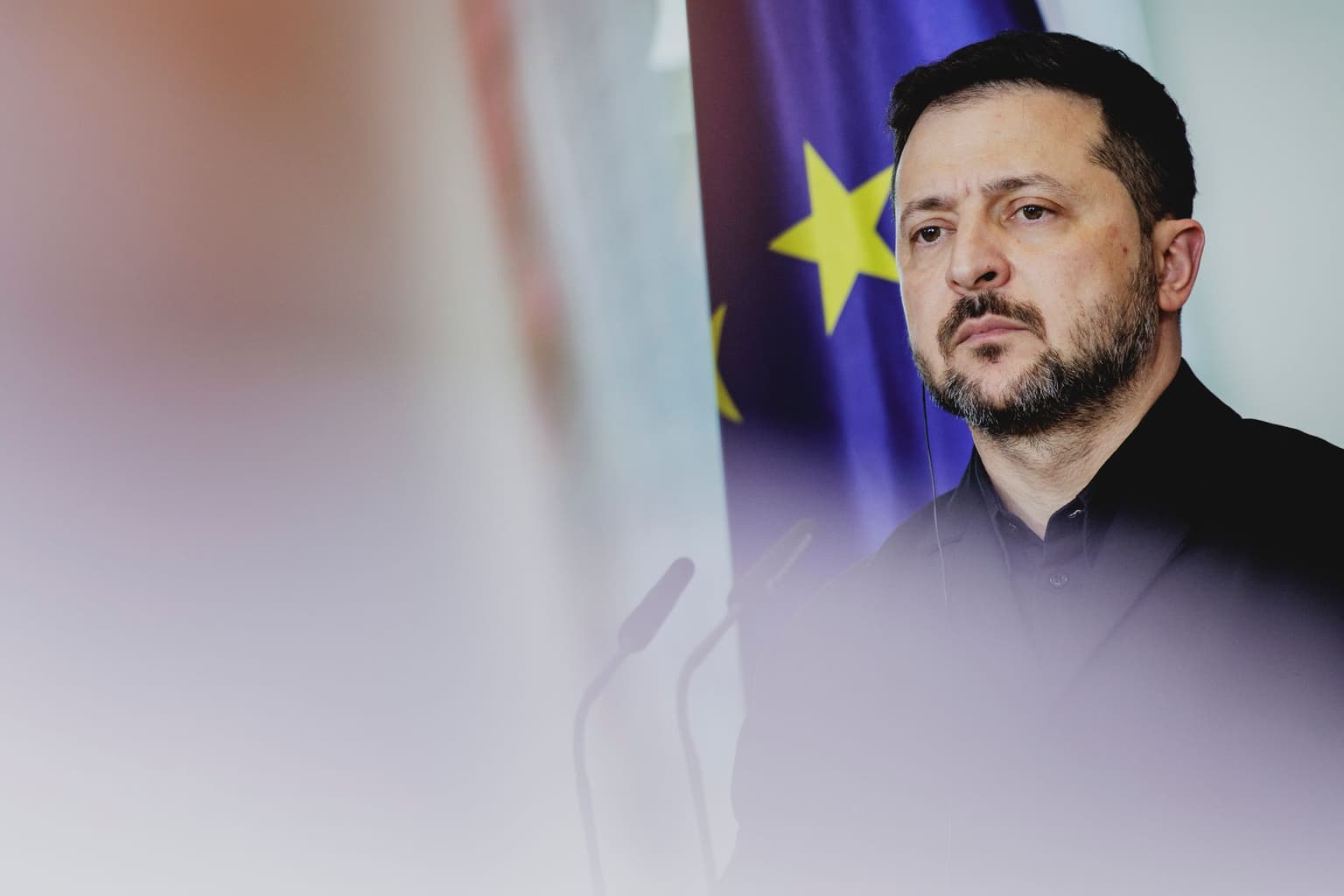
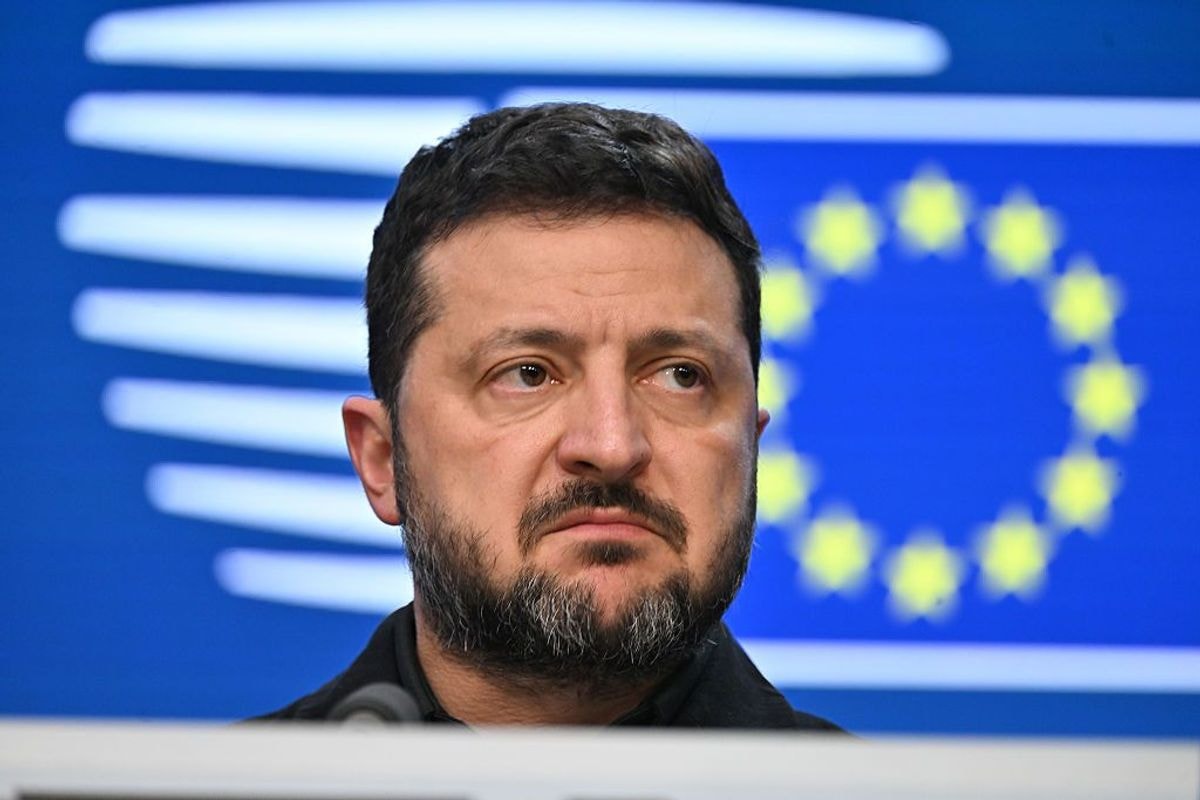
President Volodymyr Zelensky in Berlin, Germany, on Nov. 3, 2026. (Florian Gaertner / Photothek via Getty Images)
 on Google
The EU is championing Ukraine's future membership louder than ever, but its Nov. 4 annual report on the state of Kyiv's integration process makes clear that the country must get serious about the rule of law.
In this year's annual reports on the progress of EU candidate countries towards membership, Ukraine was singled out by the European Commission as a "frontrunner," along with Moldova, Montenegro, and Albania, leapfrogging long-time candidates such as Serbia.
"Ukraine has shown steadfast commitment to European integration through continued reform implementation, even in the face of (the) most difficult circumstances brought by Russia's war of aggression," reads a Commission summary of the report.
The Commission is pitching Ukraine's "potential" to the bloc in "critical raw materials, energy, agriculture, digital technologies, and defense production," and stresses that the country is "already contributing" to the EU's defense readiness and response to hybrid threats.
And on digitalization, the Commission's report calls Ukraine "a global frontrunner."
But while the Commission says it is committed to supporting Ukraine's "ambitious" objective of closing accession negotiations by the end of 2028, it also says "that to meet it, an acceleration of the pace of reforms is required."
The mountain still to climb
Ukraine expects to open the final two of the six so-called enlargement clusters in December 2026.
The clusters are lists of reforms across 33 chapters that Kyiv must carry out to align with the bloc. Once the talks are complete, a treaty of accession can be drafted.
But before Ukraine closes all chapters, it will have to get sign-off on some rule of law reforms, classified as "interim benchmarks."
And unfortunately for Ukraine, the 109-page report contains repeated criticisms, namely regarding the lack of progress on the rule of law and anti-corruption efforts.
"Limited progress" was made on the rule of law roadmap, according to the document.
And the December 2025 10-point reform plan, spearheaded by EU Enlargement Commissioner Marta Kos and then-Deputy Prime Minister for European Integration Taras Kachka, "remains mostly outstanding."
"No laws were adopted to significantly advance the anti-corruption legal framework."

"Ukraine did not make progress in aligning its legislation with the EU… on the fight against serious and organized crime," the report read.
And "no laws were adopted to significantly advance the anti-corruption legal framework."
Because of that, the report repeatedly mentions the need for "urgent" reforms that Kyiv needs to adopt to meet the interim benchmarks.
Among those urgent reforms is bringing independent international experts into the process of nominating judges. The Commission describes Ukraine's "continued resistance" as a cause for "concern."
Reforming the process of appointing the Prosecutor General was also deemed urgent. The process needs to be "more transparent and merit-based," says the Commission report, as opposed to the current arrangement, in which the Prosecutor General is appointed by the president and confirmed by the parliament.
The role has been in the spotlight in recent months after the previous office holder, Ruslan Kravchenko, was dismissed amid a corruption probe and fled to Austria.
And despite Ukraine's continued climb in world press freedom rankings, the Commission stressed that further work is needed.
"Harassment and intimidation of journalists… continued to be recorded at similar levels as in previous years," notes the report.
The report also, for the third year in a row, called on Ukraine to reconsider the so-called "telethon."
Branded as "Yedyni Novyny" ("United News"), the telethon was launched at the beginning of Russia's full-scale invasion in February 2022. It was created by merging the coverage of Ukraine's biggest TV channels.
The telethon was initially seen as a legitimate response to Russia's aggression, but later, it was accused of monopolizing television coverage and sidelining independent and opposition voices.
"In 2026, substantial public funding of around (Hr) 1.5 billion ($32.9 million)... for the telethon continued, despite declining levels of public trust and outreach," reads the Commission report.
At the same time, the public broadcaster Suspilne is still receiving "below the legal requirement" of state funding, the report notes.
Reasons to be hopeful
Despite the significant amount of work to be done, the report shows that Brussels believes Ukraine is capable of rising to the challenge.
"Recently there has been a renewed focus in Ukraine on the reforms," the Commission notes repeatedly, echoing what EU diplomats have been telling the Kyiv Independent since Serhii Koretskyi took over as prime minister in July.

And the Commission likewise mentions its new joint task force with Ukraine. Launched in October, it aims to wrap up the rule of law reforms laid out in the interim benchmarks within around four months.
Ukraine does not have to start from scratch when it comes to closing the chapters. The report is laced with dozens of references to "good progress" and "some progress" having already been achieved.
According to an accompanying roadmap document, the Commission estimates Ukraine could close seven of the 33 chapters by the end of 2027, based on current progress.
For some of the reforms yet to be enacted, the Commission is also trying to communicate their tangible benefits to the Ukrainian public.
One example of this is the Single European Payments Area (SEPA), which Ukraine has yet to join.
For that, Kyiv must pass anti-money-laundering legislation. In return, the Commission notes that SEPA membership "facilitates faster and less costly euro payments."
Given that the EU accounts for 65% of Ukraine's trade in goods, the benefit of joining SEPA could well be significant for Ukrainian businesses.
The Commission also cites Ukraine's joining the bloc's mobile roaming area in January 2026 as an example of how integration steps have already yielded concrete benefits.
But perhaps the strongest sign of trust is the Commission essentially telling EU countries to get ready for new member countries.
"Enlargement preparedness should become an integral part of Union policymaking," the Commission notes.
As the next step, it says EU countries "need to lead the national debate about enlargement, especially where public support and awareness are comparatively weaker."
"The Commission stands ready to support them in this effort," reads their communication.
Note from the author:
Hi, this is Chris Powers. Thanks for reading this article. The EU is a famously complicated beast to understand, but for Ukraine, it has also never been so important.
Whether it's Russia sanctions, fighting corruption, keeping Ukraine's finances in the black, or the process of joining the EU itself, many Kyivan roads eventually pass through Brussels.
If you like reading about these fiendishly complex topics and want to support journalists in Kyiv and Brussels to shine a light on it all, please consider supporting The Kyiv Independent.