'It's war against the West' — Latvian PM on Russian provocations against European countries
 on Google
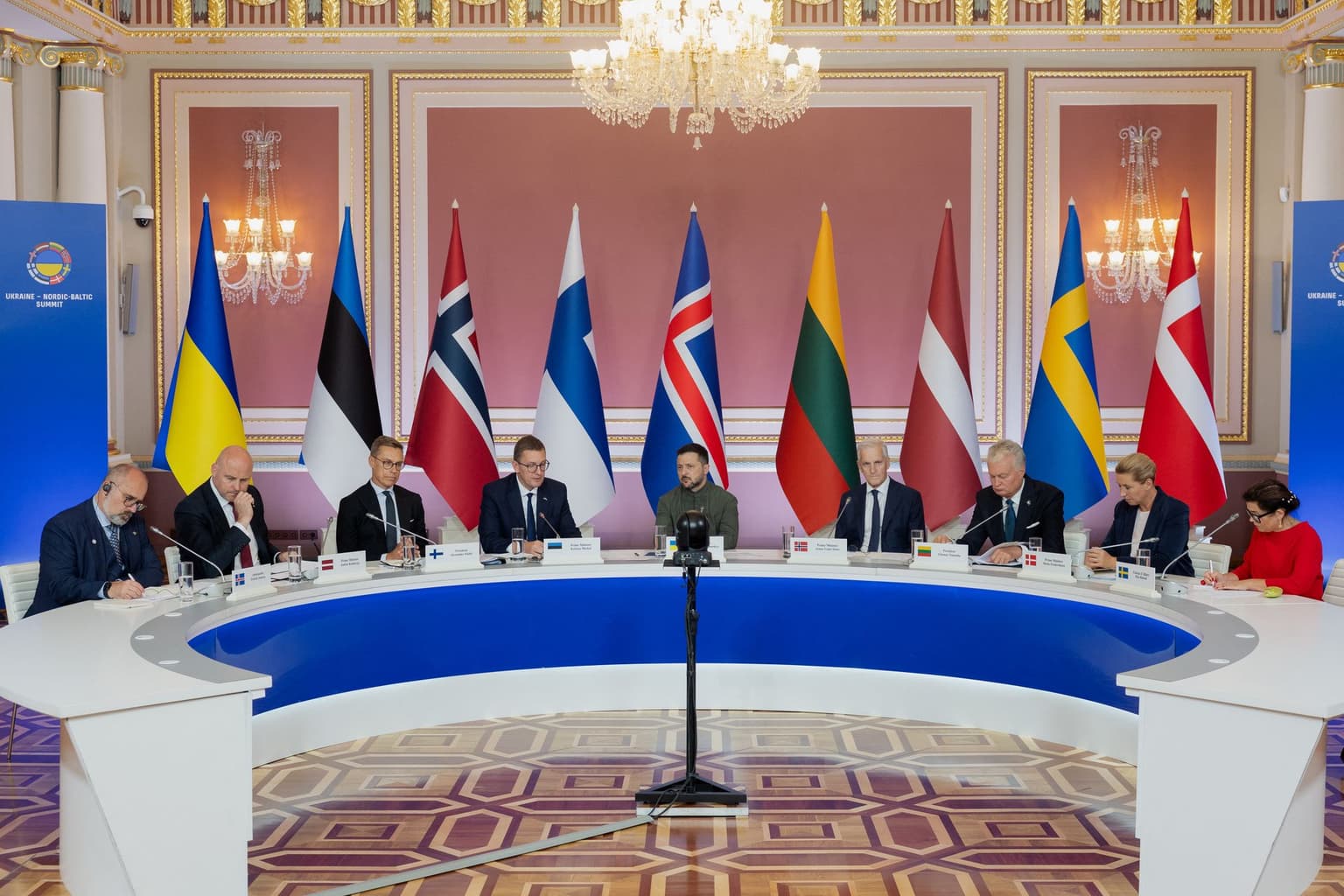
Russia poses a growing hybrid threat to Europe, using disinformation, migration, and other tactics to destabilize the continent, Latvian Prime Minister Andris Kulbergs said on Aug. 24 during a meeting of the Coalition of the Willing in Kyiv.
"That's the war of Russia against the West, the EU, and NATO, as we've seen," Kulbergs said.
Russia has long used hybrid warfare tactics across Europe including sabotage cyberattacks, disinformation. Cases of each have escalated since the launch of Russia's full-scale invasion of Ukraine, with several drone incursions recorded in recent years.
Kulbergs said the EU was also seeing attacks on its border, highlighting how Russia is using Belarus to organize a migration crisis toward the bloc.
"We see that it is one of the highest threats, with a case that is well organized by the Kremlin through the hands of Belarus and through criminal organizations that are also making money from it as a service," Kulbergs said.
"This is testing our ability to fight back, our technical ability, our reaction times," he added.
Belarus has previously been accused by European countries of deliberately facilitating irregular migration to the EU's eastern borders as a form of hybrid warfare. Minsk helped channel migrants from the Middle East, Africa, and Asia toward Lithuania, Latvia and Poland after the EU imposed sanctions on Belarus in 2021. The Kremlin has also been accused of supporting the renewed campaign.
Kulbergs said migration was only one part of a broader campaign that also includes cyberattacks and attempts to disrupt elections and influence public opinion.
"We also see cyberattacks happening. We see potential disruptions of public aspects, as we've seen in many countries — attacking elections, trying to disrupt the mindset of the people," he said.
The Baltic states have faced a series of drone incidents in recent months. In May, Lithuania issued its first air raid alert over a suspected drone threat after an unidentified drone crossed into Lithuanian airspace from Belarus. Fighter jets operating as part of NATO's Baltic Air Policing mission shot down a drone that entered Latvian airspace on Aug. 14, according to the Latvian military.
More recently, Lithuania said on Aug. 6 that it had intelligence suggesting Russia could use Ukrainian-made drones in false-flag attacks against critical infrastructure in the Baltic region. Lithuanian Defense Minister Robert Kaunas said Russia was considering "unconventional kinetic attacks" as tensions rose following repeated drone incursions across the region.
Kulbergs said Russia's actions had ultimately strengthened NATO rather than weakening it.
"Russia does not understand. They have actually made us stronger together. They have made NATO stronger. We now have Sweden and Finland joining in," he said.