Casualties increase as Iran, Israel continue exchanging strikes
 on Google

Editor's note: This is a breaking story and is being updated.
Iran and Israel continued to exchange attacks on June 14, more than 24 hours after Israel launched its first strikes on Iran's nuclear sites and military leadership.
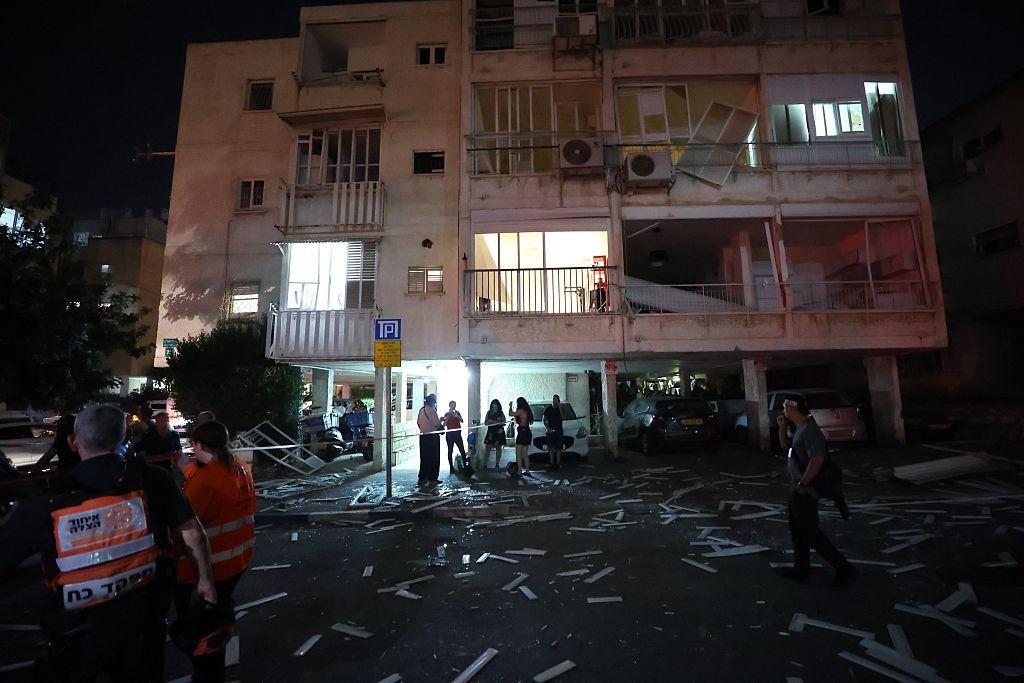
According to recent reports, there are civilian casualties in both countries. In Israel, two people have been killed and more than 40 injured since Iran launched its initial wave of retaliatory strikes.
In Iran, more than 70 people have been killed and 329 injured, according to the country's United Nations ambassador, Amir Saeid Iravani.
Responding to Israel's preemptive strikes on Iran overnight on June 13, Tehran responded with multiple waves of ballistic missiles, as well as an earlier barrage of drones.
The drone attack followed heavy air strikes launched by Israel against Iran, targeting the country's nuclear program and reportedly killing Hossein Salami, the commander-in-chief of the Islamic Revolutionary Guard Corps (IRGC), and other top officials.
Amid the escalation, Prime Minister Benjamin Netanyahu vowed to respond to the most recent attack.
"More is on the way. The (Iranian) regime does not know what hit them, or what will hit them. It has never been weaker," Netanyahu said in an address.
U.S. President Donald Trump said earlier in the day that the U.S. military is on high alert and watching for any kind of retaliation, adding that the U.S. will respond to defend itself or Israel if Iran strikes back.
Before the attacks, Trump emphasized that despite tensions, he is committed to avoiding conflict and prefers a diplomatic solution to Iran's nuclear aspirations. "I want to have an agreement with Iran," Trump said, referring to ongoing Iran-U.S. nuclear talks in Oman.
Iran insists its nuclear program is for peaceful purposes and has expressed willingness to accept limited restrictions in exchange for the lifting of sanctions.
Beyond the Middle East, Iran has emerged as a key ally of Russia in its war against Ukraine, supplying Moscow with drones used in attacks on Ukrainian cities. Iran's Islamic Revolutionary Guard Corps (IRGC) confirmed on June 13 that its aerospace commander, Amir Ali Hajizadeh, who led Iran's Shahed drone supply to Russia, was killed in the strike on June 13.
Just hours after Russia launched its own missile and drone assault on Ukraine, Russian President Vladimir Putin decried the "numerous civilian casualties" in Iran and condemned Israel's actions as violations of the UN Charter and international law.
Following the initial strikes by Israel, Kyiv expressed concern over the security situation in the Middle East after Israeli air strikes against Iran, but stressed that Tehran remains a "source of problems" in the region "and beyond."