EU agrees 21st sanctions package against Russia after Greece drops veto
 on Google
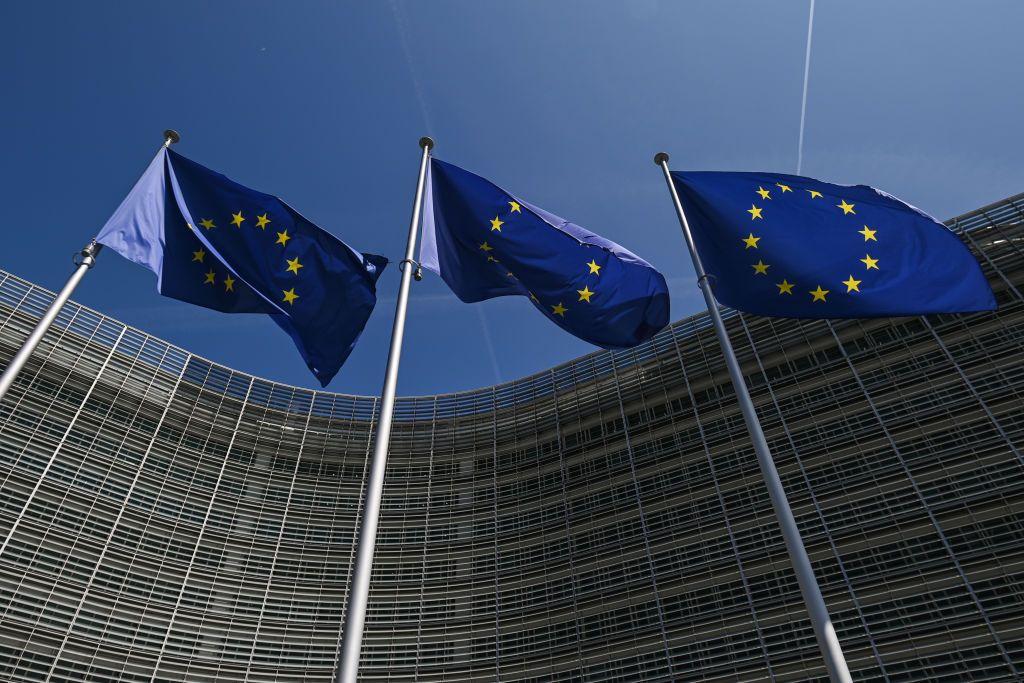
BRUSSELS, Belgium — EU ambassadors agreed on the bloc's 21st package of sanctions against Russia on the morning of July 23, after multiple delays due to objections from Greece.
Full details are yet to be released, and the package of measures has not yet been formally voted through by EU ministers, but it is already known to be significantly watered down compared to the European Commission's original proposal.
"The negotiations on this package have been challenging, but we found agreement on the remaining issues while maintaining EU unity as we have in the previous 20 packages," an EU diplomat told journalists following the ambassadors' agreement.
The agreement was also welcomed by Ukraine's sanctions chief Vladyslav Vlasiuk.
"It is good that the EU has finally reached an agreement on the 21st sanctions package. The negotiations again showed how politically difficult some decisions can be," Vlasiuk said.
Still, this is the 21st time the EU has demonstrated its unity. The package is particularly strong on financial sanctions, and work on the 22nd package has already begun," he added.
One of the main proposals of the Commission survived intact, namely a price cap on Russian oil for 12 months.
The EU price cap formula sets a price for Russian oil permanently below the market price, but if market prices go up, as they have done since the U.S. began attacking Iran in February, then the upper limit at which Moscow can sell its oil can also tick upwards.
The recent agreement means Russian oil will be priced at $44 a barrel for the next year. It will not be able to tick up to $58, as it would have done had there been no agreement, and the price will not be able to move up if prices remain unstable in the next 12 months.
"This measure will deprive Russia of significant oil revenues against a backdrop of volatility in the energy markets," an EU diplomat said.
The agreed package also retains almost all of the roughly 250 entities proposed by the EU's External Action Service to be added to the sanctions list.
The list represents the highest number of listings in a single package since 2022.
And other measures targeting Russia's financial sector and cryptocurrencies have survived intact.
Commission President Ursula von der Leyen welcomed agreement on the package. Highlights for her include the addition of "32 Russian banks" to the sanctions listings, and "for the first time, we’re targeting vessels assisting Russia’s shadow fleet."
But other proposals by the Commission did not make it into the final agreement. Plans to set trade restrictions on Russian fish have been removed entirely, and an effective ban on Russian soldiers has been kicked into the long grass, though ambassadors have agreed wording that "commits" them to bring forward such measures in the future.
Several countries also lobbied for their own small victories to bring home. Bulgaria prevented the inclusion of the head of Russia's Orthodox Church, Patriarch Kirill, in the list of sanctioned individuals.
Austria secured a win for its Raiffeisen Bank during negotiations, which has continued to operate in Russia despite the full-scale war in Ukraine.
And Greece struck a compromise on measures aimed at preventing European companies from transferring Russian LNG to third countries.
Essentially, Greece was able to lift its veto after countries agreed that contracts signed before Russia launched its full-scale invasion will be allowed to continue, with an annual review, an EU diplomat told journalists.
Expansion of those contracts, or new contracts, would both be banned, they added.
EU ministers will vote by written procedure to adopt the package, expected to be a formality, which means more details on the final package could be made public later the same day.