Fire Point confirms ballistic missile to be combat-ready in September, hikes Denmark plant investment
 on Google
The Ukrainian defense company Fire Point is tripling its budget for the construction of a solid rocket fuel plant in Denmark to 150 million euros ($175 million), CEO Iryna Terekh said on Aug. 19.
The extra money will go to the construction of a new building, as the originally intended production site did not meet the requirements, the CEO said. The plant is expected to start operations by late 2027.
The comments follow uncertainty about the plant's future after Denys Shtilerman, the co-founder of Fire Point, claimed in May that the construction had been "put on ice."
The Danish government denied the claims, saying that the "cooperation to establish production in Denmark by Fire Point's Danish subsidiary is ongoing."
The company, a major player in Ukraine's defense market specializing in long-range drones and missiles, has faced intense scrutiny amid a major corruption investigation into Timur Mindich, a former business associate of President Volodymyr Zelensky.
Audio tapes revealed as part of the investigation appeared to confirm links between Mindich and Fire Point.
Last year, the Kyiv Independent was the first to report that Mindich was alleged to be the company's unofficial beneficiary. The company has denied its connection to Mindich.
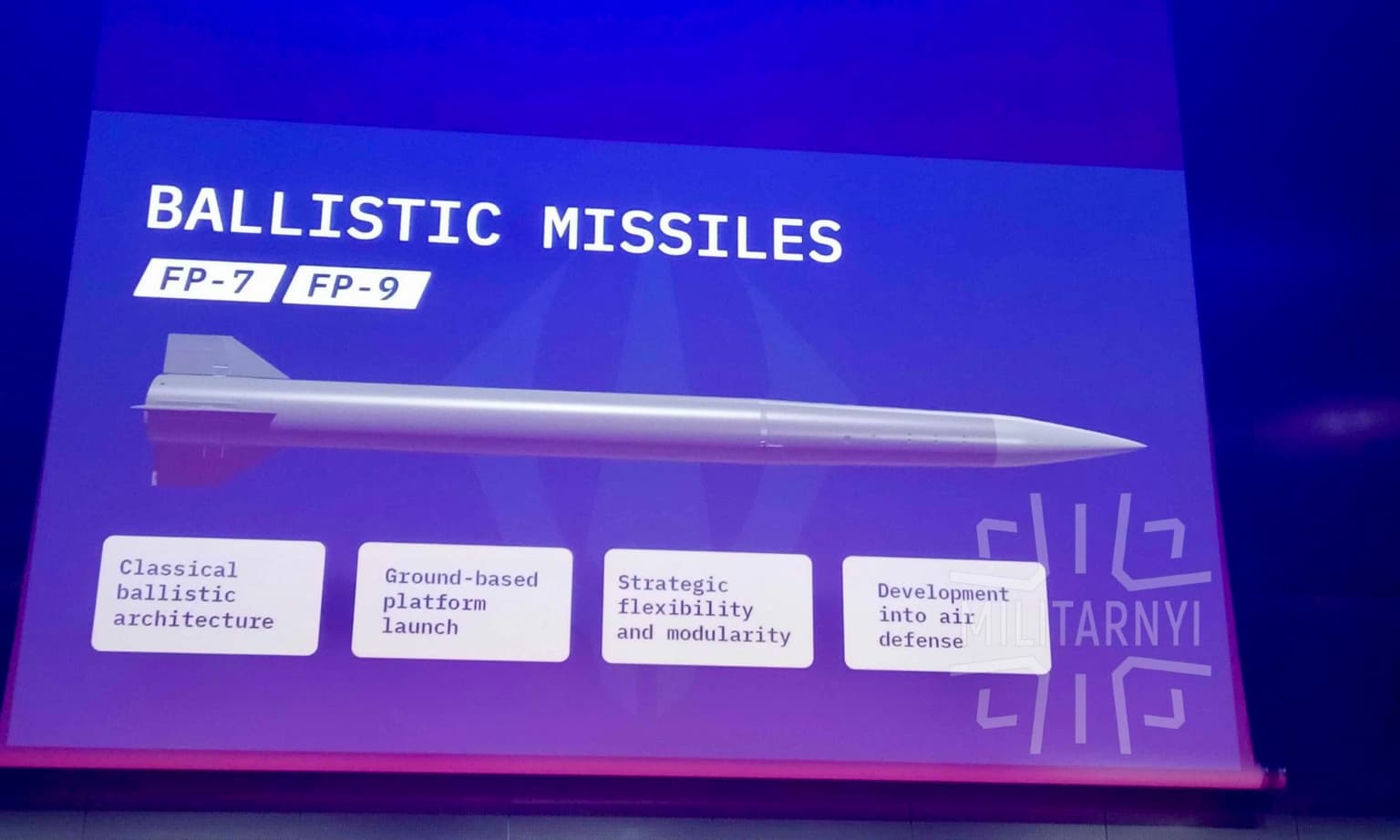
Separately, Terekh also confirmed a timeline for the rollout of its two ballistic missiles, first announced in September 2025.
Terekh said that the FP-7 missile, with its 300-kilometer (190-mile) range, should be ready by the end of September, and that another missile, the FP-9, which can hit targets 800-850 kilometers (500-530 miles) away, should be ready by the end of the year.
Russia has ramped up strikes on Ukraine with ballistic missiles over the last few months, taking advantage of Kyiv's dwindling air defense stockpiles. Deploying its own ballistic missiles may help Ukraine level the playing field.
Speaking at a press conference during the DALO Industry Days exhibition in Denmark, the CEO said the new missiles should help put Kyiv in a stronger negotiating position in peace talks with Russia, Forbes Ukraine reported.
"Russians understand exclusively the language of strength," Terekh said.
The Fire Point CEO's comments also mirror earlier statements made by Zelensky, namely that he expects the company to have a ballistic missile ready within weeks, and a longer-range ballistic missile capable of hitting Moscow by the end of the fall.
Unlike cruise missiles, which are jet engine-powered and fly in a relatively flat trajectory, ballistic missiles are rocket-powered and launched high into the atmosphere before arcing back down onto their target.
They are only guided during the initial stages of launch, so they can be less accurate than cruise missiles, but have the advantage of reaching incredibly high speeds — sometimes more than 3,200 kilometers per hour (2,000 miles per hour) — as they approach their targets.
As such, they are more difficult to intercept, and only the most advanced air defense systems can shoot them down.
Fire Point is also part of a European consortium working to develop such an interceptor system, the Freyja project.