Ukraine’s defense tech boom needs more than battlefield innovation, deputy minister says
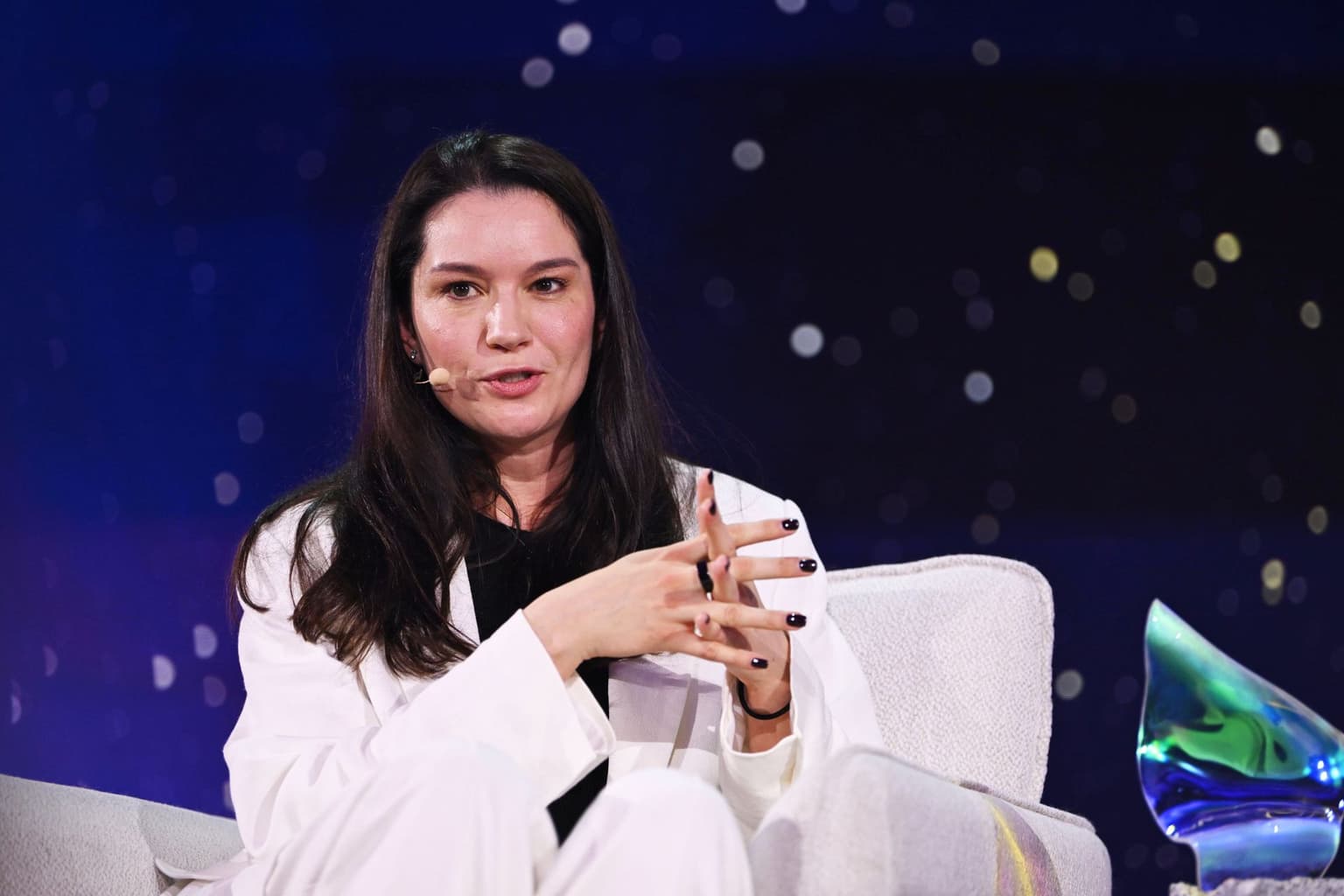
Ukraine's Deputy Minister of Digital Transformation Natalia Denikeieva, at the VivaTech conference in Paris, France, on June 18, 2026. (Benjamin Girette/Bloomberg via Getty Images)
 on Google
Ukraine’s defense technology industry has moved fast to meet battlefield demands, but it rests on a fragile foundation as it depends on foreign suppliers for essential components.
Natalia Denikeieva, a deputy minister of digital transformation, says producing more of those components at home is a question of survival.
"We are not technological and innovative because one day we woke up and decided to be," she told the Kyiv Independent in an interview in central Kyiv. "For us, it’s a matter of survival."
One way her team is trying to respond to these threats is by preparing a Ukrainian Chips Act, which aims to integrate Ukraine into the EU microelectronics market and move away from a dependency on other countries.
But the process is still at the stage of laying the groundwork, identifying potential producers and assessing what the country can realistically produce. Denikeieva said the government plans to submit the bill this year, ideally securing a first reading before year-end.
Another challenge is persuading businesses to keep their intellectual property and financial interests in Ukraine. Doing so would allow more of the profits and investment generated by Ukrainian innovation to stay in the country.
As Europe faces ever-increasing threats from Russia, the Kyiv Independent sat down with Denikeieva to discuss what Ukraine's allies can learn from its wartime adaptability and what it will take to turn that ingenuity into lasting economic strength.
This interview has been edited for length and clarity.
The Kyiv Independent: What threatens the growth of Ukraine’s defense technology industry?
Natalia Denikeieva: Our defense industry is booming. But what would happen if, tomorrow, foreign suppliers stopped selling us batteries, semiconductors, or motors?
We all understand that if China stopped selling us batteries or semiconductors tomorrow, we might have to close our companies. We have to think much more urgently about our personal safety. Ukraine and Europe are critically dependent.
Greater technological independence is a matter of survival. We should have started creating conditions for domestic component production several years ago. But better late than never. Addressing our dependency on imported components is one of the Digital Transformation Ministry's top priorities.

The Kyiv Independent: What can European governments learn from Ukraine’s approach to supporting industry?
Natalia Denikeieva: It starts with flexibility and with the government being an enabler, not a bottleneck. Governments should provide special tax and legal conditions for industries they want to encourage.
Our strengths have been speed and flexibility. Unfortunately for Ukrainians, the whole country has become a huge testing ground, both for our own equipment and technology and also for the rest of the world.
The Kyiv Independent: How would producing more components in Ukraine benefit Europe?
Natalia Denikeieva: Ukraine and Europe face a common threat here. We don’t only want to meet our large domestic demand. We also want to become part of European supply chains. Some critical components are much cheaper to buy abroad than to produce in Ukraine. Outsourcing can be a good way to optimize costs, but it can also make our country dangerously dependent.
Producing chips and other components in Ukraine would make us a more attractive partner for European countries and the European Union.
The Kyiv Independent: What are you doing to support semiconductor production in Ukraine?
Natalia Denikeieva: Semiconductor production is extremely expensive and almost impossible without substantial government involvement. That means more than legislation, but my team is working on a Ukrainian Chips Act. It is a necessary foundation for producing microelectronics.
I’m not talking about the most advanced, complicated, expensive chips, but at least some chips.
The government’s plan requires us to submit the bill to parliament by the end of this year. We ideally want a first reading this year and hope to have the legislative framework by the end of next year. But you never know when parliament will vote.
The Kyiv Independent: Which parts of the semiconductor industry can Ukraine realistically compete in?
Natalia Denikeieva: We’re still mapping what we have and what we need. We’ve interviewed defense technology companies to understand what kinds of chips they need and what they produce themselves.
At this stage, I don’t have a concrete answer to your question.
We have a semiconductor strategy, but frankly it is a high-level, visionary document. Before talking about something very large, we need to cover the basics and understand which direction the country should take.

The Kyiv Independent: What would persuade businesses to keep their intellectual property and financial interests in Ukraine?
Natalia Denikeieva: You cannot keep anything inside. Water will always find a hole. The only thing a government can do is provide conditions, protection, and convenience that make businesses want to be in its jurisdiction.
Ukraine is a high-risk jurisdiction. That isn’t only about the full-scale war. It was high-risk before the war, and it will remain so afterward.
The teams and products will most likely remain in Ukraine. But if we are talking about where the intellectual property and the center of financial interest are located, the government still has a great deal to do to keep companies in this jurisdiction.
The Kyiv Independent: How much has Diia.City, the special legal and tax regime for technology companies, changed that?
Natalia Denikeieva: Long before the full-scale invasion, we had large companies with thousands of people working for them as contractors. But the money they transferred to Ukraine was just for salaries, rent, and cookies.
Ukraine was a high-risk jurisdiction in terms of intellectual property protection, the rule of law, taxation, and corporate structure. Diia.City helped address many of those issues. It provided a transparent corporate structure, an appropriate legal tax model, and tools based on English law.
We saw this as a significant achievement. But honestly, these are basic requirements.
The Kyiv Independent: What role does domestic investment play for growth of technology companies today?
Natalia Denikeieva: There is a lot of money in Ukraine that was earned outside IT, in sectors such as real estate and retail. Because of wartime restrictions on transferring money abroad, it is kept here.
We have a project with the working name Diia.City Invest. It is politically complicated. But if the legislation is adopted, it would make it possible to establish a Ukrainian venture capital fund through a much simpler procedure.
We have an opportunity to change the legislation so that this money can be invested in innovative technology companies, rather than in another property or parking space.