Ex-defense minister Fedorov announces new 'Army of Robots' initiative in latest move since leaving office
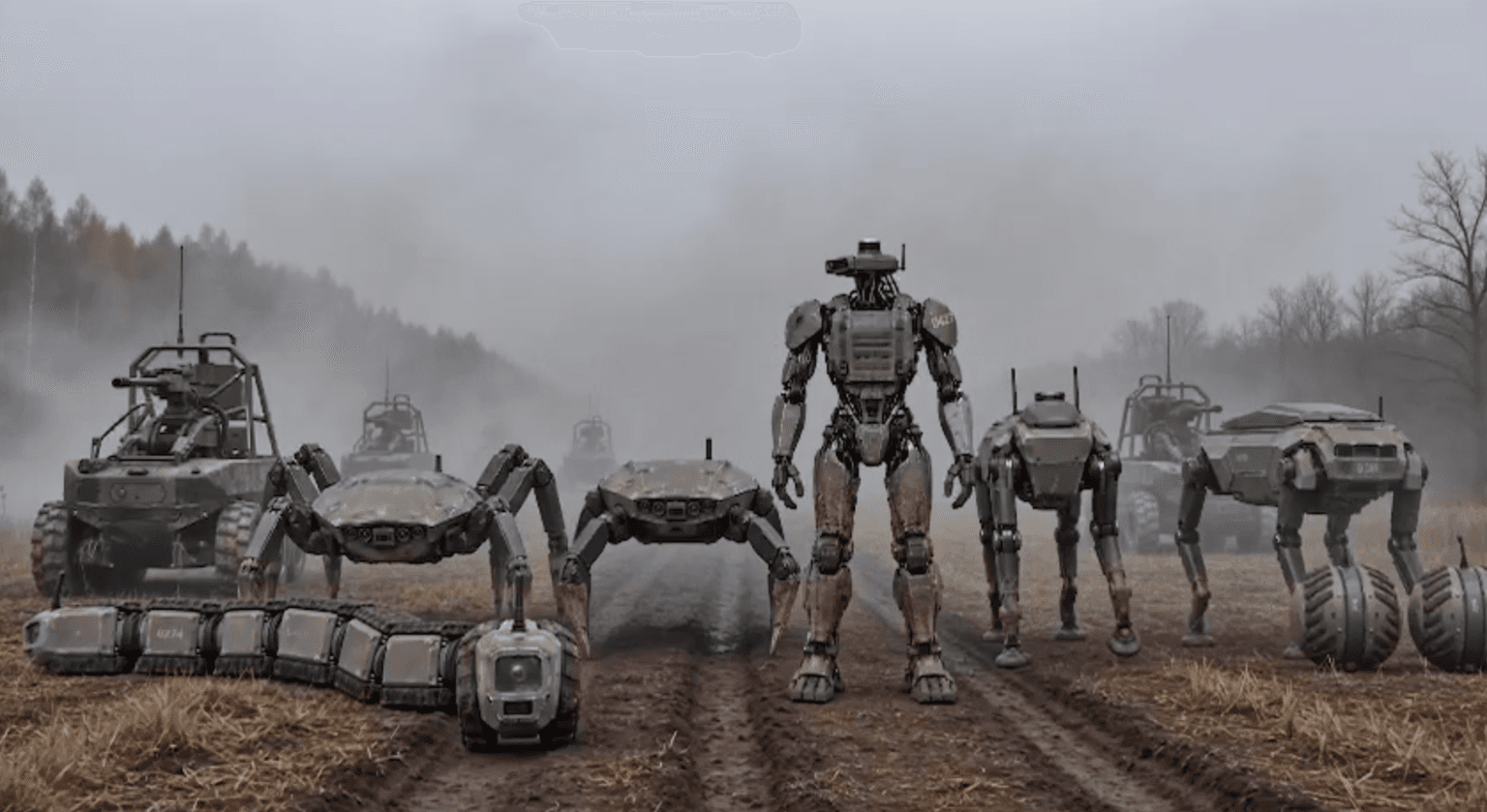
A screenshot from an AI-generated video showing hypothetical military robots, posted by former defense minister Mykhailo Fedorov on Sept. 26, 2026. (Mykhailo Fedorov / Telegram)
 on Google
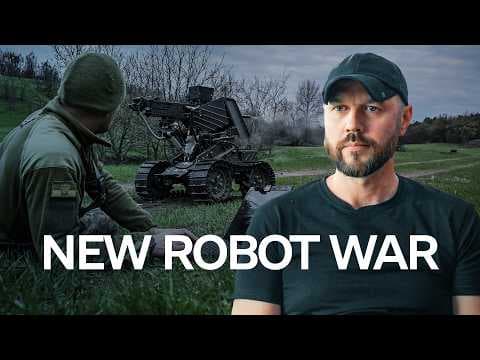
Former Defense Minister Mykhailo Fedorov has announced the launch of a new defense tech initiative called the "Army of Robots," which will look to replace human beings on the battlefield.
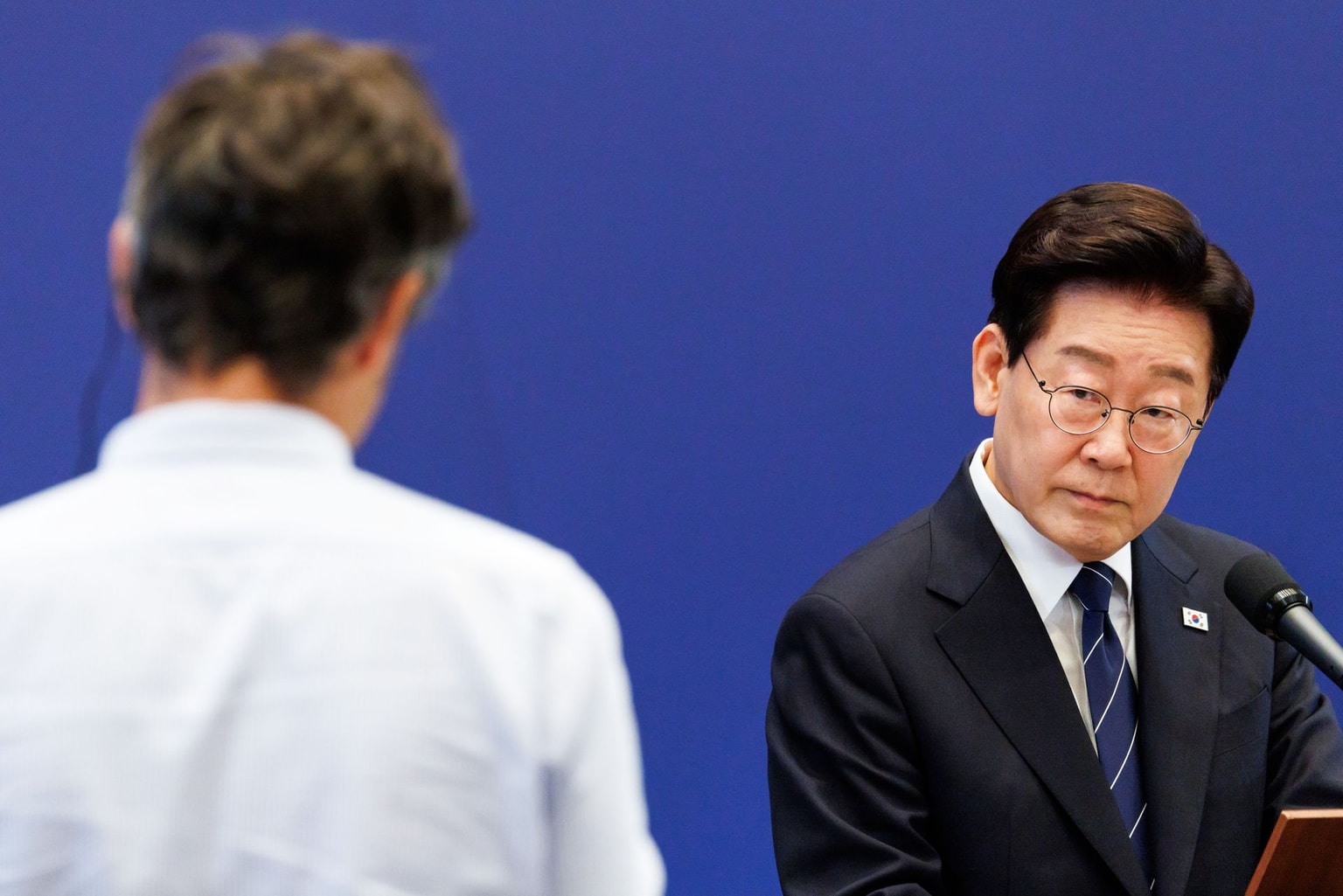
The announcement — made simultaneously on social media and in a presentation at this years's IT Arena conference in Lviv on Sept. 26, in Fedorov's latest move into defense tech after he was controversially dismissed by President Volodymyr Zelensky in July.
According to Fedorov, the initiative, modeled on the success of his Army of Drones project launched in 2022 while Digital Transformation Minister, will be not one company, but an "ecosystem."
"We will invest in defense tech companies, launch our own technology projects, create R&D capabilities, test solutions together with the military, and scale up as quickly as possible the things that actually work on the battlefield," the minister said.
After his dismissal from the post of Defense Minister, Fedorov did not initially make clear what his next move would be, as thousands of Ukrainians protested across the country for weeks, calling for the reinstatement of the popular tech-minded reformer.
After delivering a major challenge to Ukraine's wartime political order by calling for elections in mid-August, Fedorov has since turned his attention to defense tech.

During a much-publicized trip to the United States at the end of August to meet with supporters, donors, and tech leaders, Fedorov announced the creation of a fund to help drive innovation and scale up production to meet Ukraine's most important defense needs.
Just days later, the ex-minister said he would launch his own defense-tech company, one of the first investors of which would be Alex Karp, CEO of controversial tech company Palantir, whose products are used in the Ukrainian war effort.
In his announcement of the Army of Robots, Fedorov didn't specify what organization was behind the initiative.
"Even outside government, now from the private sector, we are continuing to work on our vision of technological warfare — Air. Land. Economy. — and on our main mission: to create technologies that help Ukraine win and save the lives of our service members," Fedorov said.
Asked by the Kyiv Independent to specify, Fedorov's press team did not reply at the time of publication.
Fedorov also called for skilled robotics engineers to join the Army of Robots team.
Fedorov's vision for the Army of Robots initiative places a particular focus on the advancement of humanoid robots to replace infantrymen in trenches.
According to Ukrainian media watching his presentation at IT Arena in person, Fedorov said that the initiative aims to achieve the first enemy soldier killed by a humanoid robot in six months, and the first successful assault of an enemy position with no infantry involved in twelve months.
Even in famous cases of all-UGV "assaults," described by some of Ukraine's top units, ground was not yet considered taken until it is done so by human boots on the ground.
On social media, the announcement came accompanied with an AI-generated video showing fancifully designed robots of different shapes and sizes fighting in trenches and fields. The video shows soldiers with Ukrainian uniforms and patches, but the English-language voiceover doesn't mention Ukraine.
"Robots intercept the enemy, defend against attacks, destroy targets, move on to enemy positions first;" the voiceover said, "people control the systems from a safe distance and enter the cleared position only when it is safe."
"Yeah, it sounds like the war of the future, but we are already there."
Unmanned ground vehicles (UGVs) — known as "ground robotic complexes" in Ukraine — have come to play an increasingly important role for both sides on the battlefield, especially in logistics roles, as the saturation of enemy first-person view (FPV) drones makes conducting supply runs or casualty evacuation on vehicles close to the front line a near-suicidal task.
These machines, while unmanned, are almost never autonomous robots in the true sense, instead being directly piloted by human operator, usually via Starlink internet connection.

While more capable units sometimes use UGVs to fire upon the enemy directly or assault positions on the ground, the practical experience of "robots fighting instead of people" on the ground in Ukraine is still in its early stages, and held back by multiple complicating factors.
Ground drones, like any other combat vehicle, have a finite store of energy and ammunition, and need to be serviced, recharged, and reloaded by humans in the field.
Even though they are smaller and less noticeable than larger manned vehicles, UGVs also have a high rate of loss from enemy drones when operating close to the front line all the same.
Most of the robot designs featured in Fedorov's video, including humanoid, spherical, as well as dog and spider-like robots, are not currently used in combat in Ukraine.