Unfreezing Europe's Russian assets debate
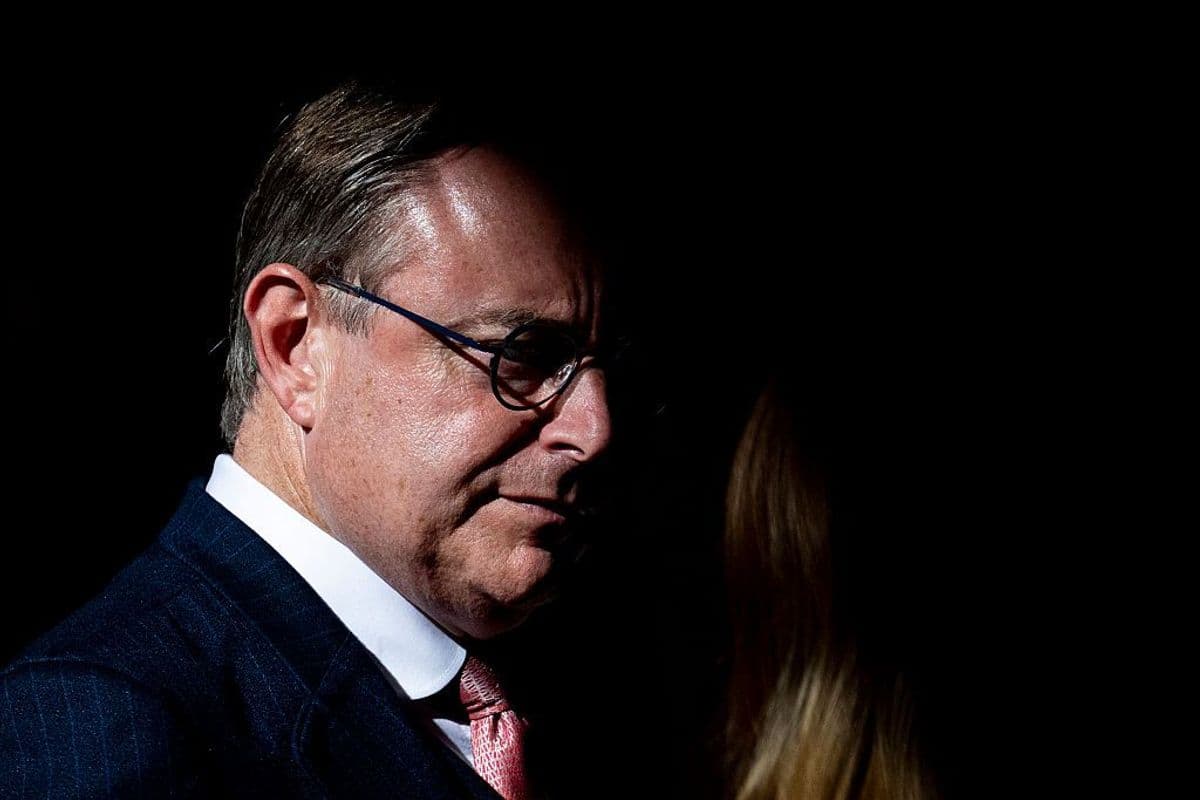
Belgian Prime Minister Bart De Wever meets with Italian Prime Minister Giorgia Meloni (not in picture) before their meeting at Palazzo Chigi on Sept. 7, 2026 in Rome, Italy. (Antonio Masiello/Getty Images)
 on Google
There has been little movement in EU circles on the question of using over 200 billion euros ($227 billion) of immobilized Russian assets since Sweden reopened the topic a month ago, but those wanting to move the matter forward are increasingly going public with their ideas.
Months after the idea of directly using Russian assets was shot down in Brussels, Sweden led a new push on Aug. 27 to reopen the question as a way to deliver new support to Ukraine without hurting EU taxpayers and voters.
The idea was given a fresh sense of urgency with President Volodymyr Zelensky's claim that Kyiv faces a $27 billion hole in its budget for 2026, and because third countries have yet to step in to cover the remaining third of what Ukraine needs, not already paid for by the EU's 90 billion euro ($102 billion) support loan.
But three European Commission officials told the Kyiv Independent that, despite Sweden's wish to push the issue through, it will not do so until there is a "clear instruction from the member states" on what they want.
European Commission President Ursula von der Leyen first announced the plan to use Russian assets in her 2025 State of the Union speech, only to see it fall apart in the face of determined opposition, notably from Belgium.
National diplomats, for their part, have also not taken the initiative to formulate a clear proposal of their own, and Sweden has had a caretaker government since its Sept. 13 election, meaning less scope to lead the charge — for now.
Cue the think-tankers
Absent a push from EU governments themselves, the discussion is instead playing out in newspaper columns, and at think tank events.
Ex-British Prime Minister Rishi Sunak took to The Times newspaper to say that "using the frozen Russian assets would show Putin the steel he believes we lack," on Sept. 26.
He dismissed the nervousness of some about using them as "crippling, hyper-legalistic caution … increasingly absurd in a world in which EU airports are menaced by explosive-laden drones."
And at an event organized by the European Policy Center think tank on Sep. 28, Ukraine's Finance Minister Serhii Marchenko teamed up with financial commentator Hugo Dixon to try to persuade attendees of their proposed workarounds.
Marchenko said the EU should introduce a mechanism to shift custodianship of the Russian assets away from Belgium and its clearing house Euroclear, so that the legal risk is assumed by the EU as a whole, something he first called for in a Sept. 4 interview with Euronews.
Fellow panelist Dixon presented his website, The Russian Transfer, which includes a draft regulation that he said is "designed to take Belgium out of the line of fire," were the EU to adopt it.
It includes wording that would effectively bind the EU to reimburse any actor for any "loss, cost, or expense," incurred for transferring the assets to EU protection, as well as for retaliatory actions taken by Russia or on its behalf.
Dixon argued that his proposal is an improvement on the European Commission's December proposal, which entailed the EU borrowing money from Euroclear, because that required a line of liquidity to cover the full amount, which did not exist.
While such a wording could potentially compensate for Russia successfully pressuring friendly jurisdictions to seize Belgian assets in third countries, that scenario still remains unlikely to most.
The greater financial risk is lost business opportunities for Euroclear from countries less democratic than the EU.
Investors "economically see it (the transferring of assets away from Euroclear) as a confiscation," said Wim Schoutens, a finance professor at the Belgian university, KU Leuven.
He argued on the panel that their perception and trust in markets matters, and that such moves could lead to long-term damage.
If a state fears that the EU could appropriate its assets in the future, the argument goes that it is more likely to keep them outside the EU's jurisdiction from the outset, and thus Euroclear, in particular, loses business.
And so long as Belgium maintains a Bilateral Investment Treaty with Russia, there remains a vehicle that the Russian Central Bank could theoretically use to challenge any transfer of its assets from Euroclear.
Compromis à la Belge
In addition to shielding Euroclear from legal and financial risks and sharing the burden of potential lawsuits, Belgian Prime Minister Bart De Wever previously said he would not be able to support using immobilized Russian assets without commitments from other countries holding such assets to also take action.
Other significant holders of assets are Japan, the U.K., France, Canada, Luxembourg, Switzerland, and the U.S., in that order.
Two EU officials with knowledge of the negotiations over the Russian assets in 2025 said that on the technical level, Belgian and EU experts were "seeing eye to eye," on the outlines of a potential deal, but that the matter had remained stuck at the political level.
And there is little to suggest that political deadlock has been resolved.
On Sept. 2, Luxembourg's Foreign Minister Xavier Bettel told journalists "I am still waiting for the solidarity mechanism," but complained that when the topic is broached, he finds some leaders "burying their heads in the sand, like ostriches."
This raises the question of whether there remain other, underexplored options for the EU to support Ukraine without directly using its assets.
Another think tank, the Center for Development Finance Studies, believes it has such an idea: the Windfall Optimization Loan Framework, or WOLF.
The think tank's director, Thomas Venon, shared in an interview with the Kyiv Independent that his career in the finance industry taught him "if you want something to work, keep the innovation to an absolute minimum."
For him, the EU has already taken two innovative steps, which pave the way for another use of the Russian assets, namely to generate a new loan using the interest they accumulate.
The G7's agreement in 2024 to use interest generated on Russia's immobilized assets to provide Ukraine a 45 billion euro loan already set a precedent for Venon's idea, but he argues that a much better-performing loan could be created.
To make that happen, the WOLF would entail the EU agreeing to immobilize Russia's assets for a fixed (long) time, such as 15-20 years, instead of the "indefinite" freeze in place now, which could theoretically be undone at any time, if the EU decides to do so.
Venon argues that a specific time frame helps attract financiers to back the loan, because there is in-built certainty over the timespan of the loan, and that the EU"s agreement in December 2025 to immobilize Russia's assets indefinitely already showed the bloc is able to think in a longer-term.
The only thing left to be done, in Venon's view, would be for the EU to instruct Euroclear to invest the Russian assets like it was doing before they were immobilized.
Since then, Euroclear has essentially taken a hands-off approach to those assets, but that means the income generated from them could be much higher.
"90 billion euros with a 20-year freeze could be realistic," Venon said.
And creating this loan could be "strategically wise," Venon argues, as it leaves the assets intact for another decision later on, if needed.
One senior EU official familiar with the negotiations around using Russian assets said "the formula can work if all member states agree," but they were not sure of the precise amount the WOLF could generate as a new loan.
And two national ambassadors agreed the idea could work, as an alternative to simply using the assets as a whole, for which they doubt there is enough political will.
"Theoretically speaking, it's possible," Marchenko said at the event, when asked if a new, higher-yielding version of the G7 loan could work.
"But then you introduce market risk," Schoutens said.
"If it pays out, four, five, or six percent, this is fine. But if not, who is going to make up the losses?" he asked.
Ultimately, for any idea from any think tank to gain traction, it needs to be wholeheartedly embraced by an EU country, who will gather consensus around it.