'Hide-and-seek with death' — Ukraine details grim situation in Pokrovsk
 on Google
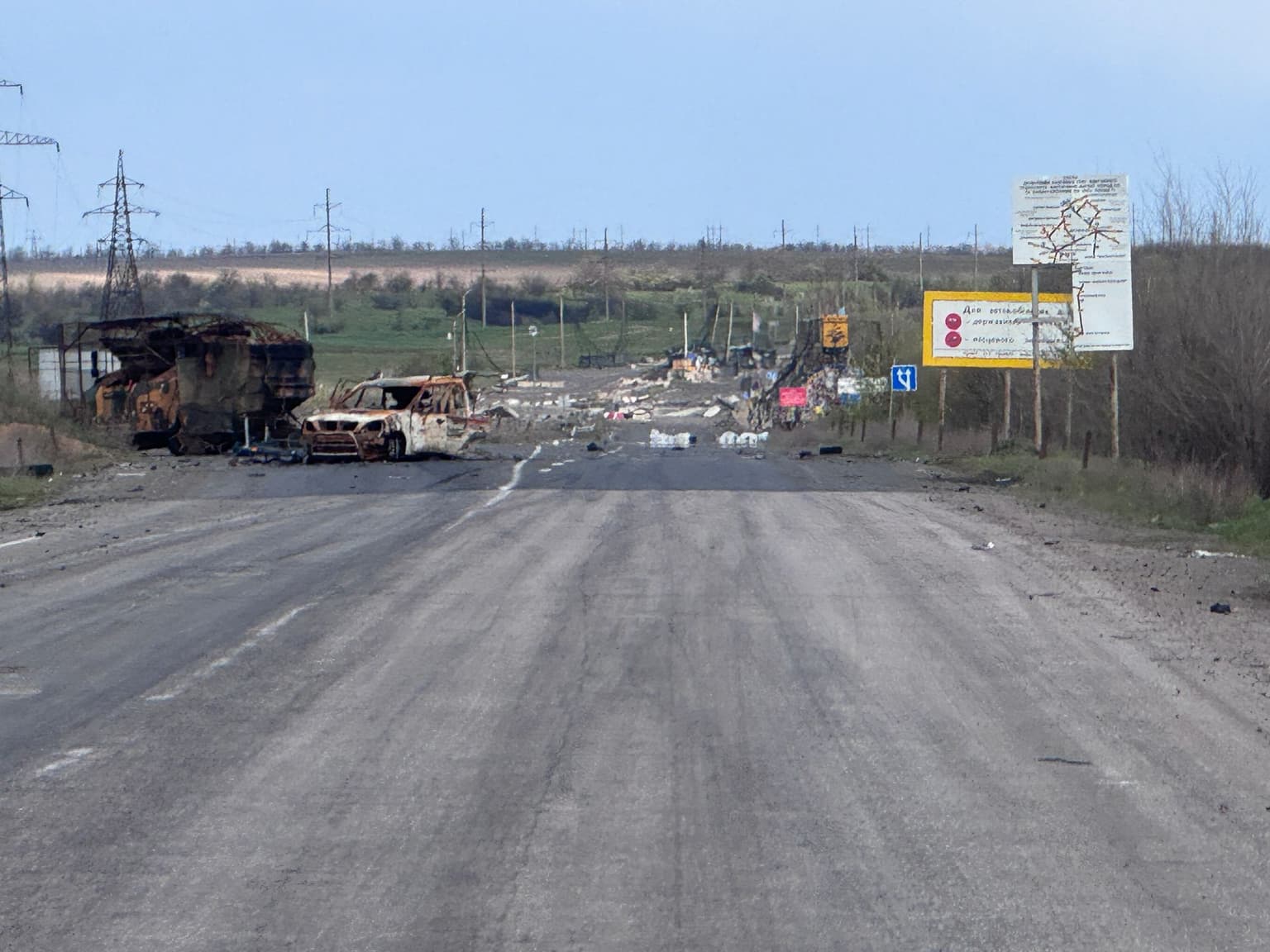
Ukrainian troops are holding several positions in northern Pokrovsk that are "almost cut off" as Russian forces increasingly dominate the skies, logistics routes, and high ground around the embattled Donetsk Oblast city, Ukraine’s 7th Rapid Response Corps said in a detailed battlefield assessment published on X on May 18.
The statement offers a sobering picture of the deteriorating situation north of Pokrovsk, where Ukrainian troops say Russian drone superiority has made troop rotations, evacuations, and resupply missions nearly impossible.
According to the corps, Russian forces "control the high ground and the city’s buildings," while deploying surveillance and electronic warfare systems that dominate the skies over northern Pokrovsk and nearby Hryshyne.
Pasi Paroinen, an analyst with the Finland-based Black Bird Group, told the Kyiv Independent that the positions described by the corps "should have been withdrawn months ago."
"Keeping those soldiers there is frankly just waste of good soldiers. There is no reason to try to cling on to those small positions just outside Pokrovsk. Maybe there are still some forces trapped inside the town itself, but their impact on the battlefield is very limited," Paroinen said.
He added that Russian forces have already "practically gained control" over Pokrovsk and nearby Myrnohrad, though they have so far struggled to exploit those gains and push further.
According to Paroinen, Russian forces continue attempting to infiltrate westward past Pokrovsk toward Dobropillia and nearby villages such as Hryshyne, but those efforts have yielded only "very small incremental gains" against heavily fortified Ukrainian positions.
"Right now Russia has well enough trouble just basically trying to get forward at all in this direction," he said, adding that the last three to three-and-a-half months have been "really painful for Russians."

Pokrovsk has long served as a key logistics hub for Ukrainian forces, located at the intersection of major rail and highway routes. In a costly operation that has lasted more than a year, Russia has committed a large number of troops in an effort to capture the city.
Russian President Vladimir Putin claimed on Dec. 1 that Russian troops had captured the Ukrainian cities of Pokrovsk and Vovchansk, a claim denied by Ukraine at the time and contradicted by continued fighting since.
The 7th Rapid Response Corps corps described a roughly 25-kilometer (15-mile) "kill zone" north of Pokrovsk covered by Russian drone operators launching strikes from industrial areas in Pokrovsk and mining sites near Rodynske. Russian forces hold an "unquestionable advantage" in drone warfare in the area, the statement said.
"Our logistics to these positions are minimal and only possible by air — via drones," the statement said, adding that unmanned ground vehicles are immediately destroyed by Russian first-person-view (FPV) drones.
According to the corps, Ukraine's broader goal is to turn Pokrovsk itself into a "kill zone" for Russian forces in order to push them out of the Hryshyne area, where Russian positions are severely complicating Ukrainian logistics into the northern part of the city.
Paroinen said the "kill zone" around Pokrovsk is, to a large extent, already in place due to strong Ukrainian defensive positions around the city and the difficulties Russian forces face advancing further.
"It doesn't require these last holdouts," he said, referring to isolated Ukrainian infantry positions north of Pokrovsk that the 7th Corps described as nearly cut off.
He added that Ukraine previously conducted limited counterattacks north of Pokrovsk that "did not go well," and argued that Kyiv should focus on defense and carefully determine which positions are truly necessary to hold.
Describing the difficulties of reaching the front line, the military said armored vehicles can only move through limited sections of the route under anti-drone mesh tunnels, which are themselves regularly targeted by Russian attacks.
"Any closer, and the vehicles would simply be burned out. The group is visible as if in the palm of a hand. Reconnaissance drones are overhead, followed by ranging rounds from artillery or MLRS. You either move quickly or hide in cover," the corps said, explaining why infantry units are often forced to dismount around 15 kilometers (nine miles) from the front line.
The challenge is compounded by the terrain and constant drone surveillance. Although troops may be dropped off roughly 15 kilometers from the front, they cannot move in a straight line and instead must travel around 26 kilometers through tree lines and ravines to avoid detection by Russian drones.
The journey can take up to three days of what the corps described as "hide-and-seek with death."
The corps added that Ukrainian infantry entering Pokrovsk often does so without armored support or reserves while being "constantly detected and targeted by omnipresent drones whose launch points he cannot see."
Pokrovsk has remained one of the key focal points of Russia’s offensive in Donetsk Oblast for months due to its role as a major logistics hub for Ukrainian forces in the region.