Analysis: Through the fog of war, Ukraine reveals 'Operation Vivaldi' counterattack near Lyman
Ukraine's offensive success presents a major setback for Russian designs on capturing the Donbas, but real-time news about progress on the ground has been kept tightly under wraps.
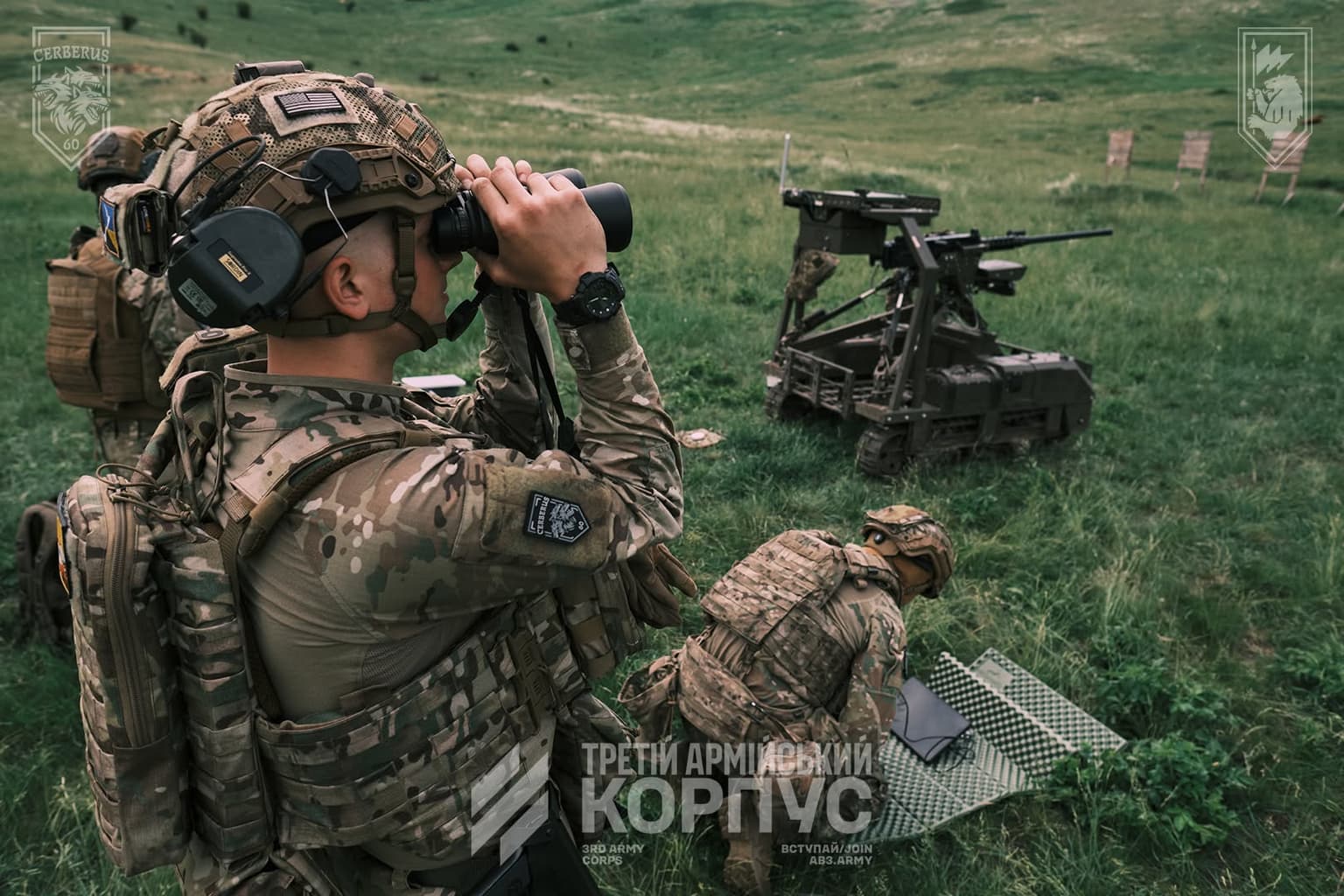
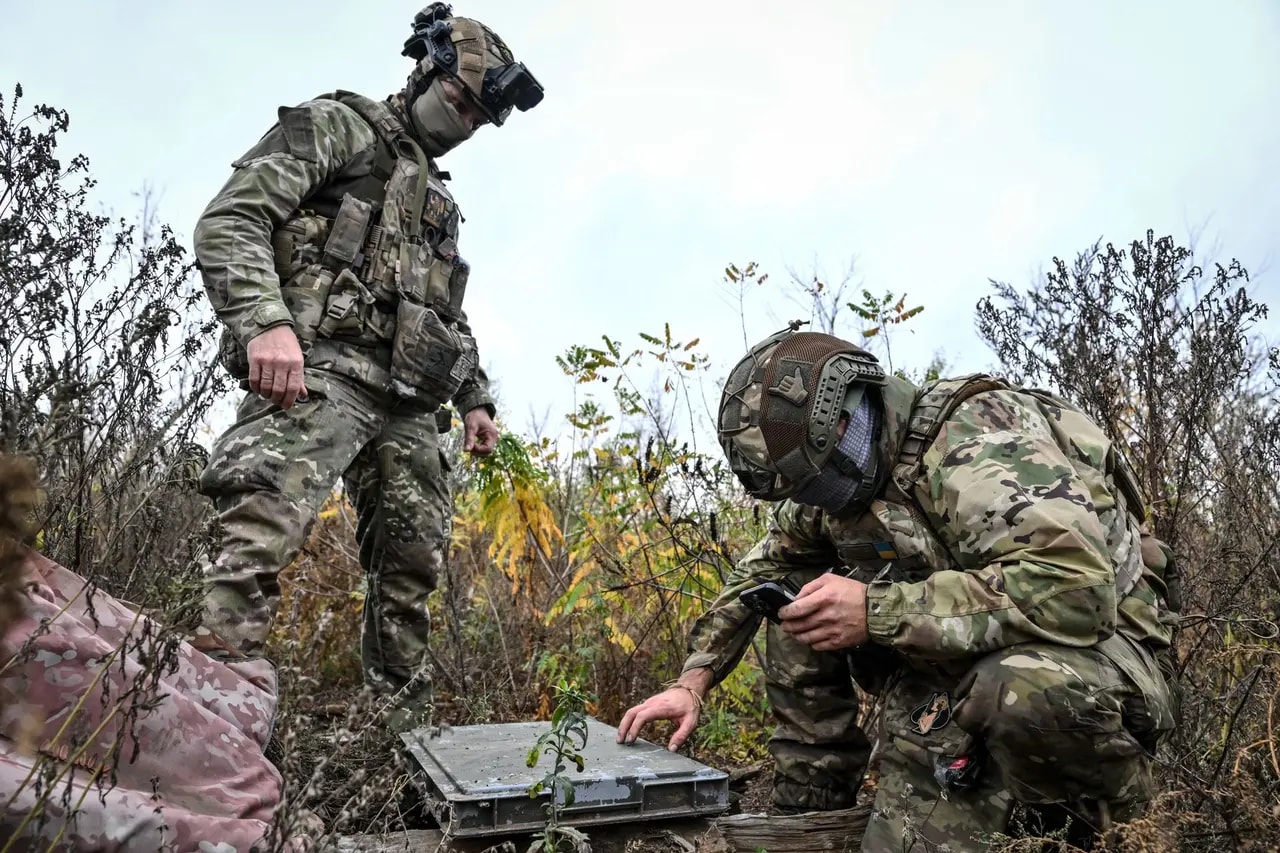
Soldiers of Ukraine's 60th Mechanized Brigade, part of the 3rd Army Corps, train with ground drones ahead of combat operations in Donetsk Oblast, in a photo posted by the unit on 1 June, 2026. (60th Mechanized Brigade / Facebook)
 on Google
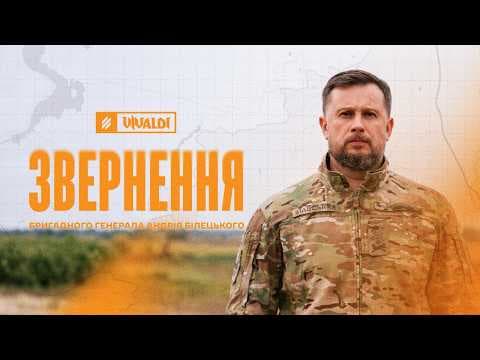
Ukrainian forces under the command of the 3rd Army Corps are conducting a series of counterattacks north of the front-line city of Lyman in Donetsk Oblast, corps commander Brig. Gen. Andrii Biletskyi confirmed on Sept. 15.
"The 3rd Army Corps has launched an offensive operation in this direction under the name Vivaldi," Biletskyi said.
"This operation is being conducted under conditions of maximum information silence."
Biletskyi said Ukrainian troops had cleared 75 square kilometers in northern Donetsk Oblast of Russian infiltrators and liberated 10 square kilometers, including the village of Serednie.
The operation dealt "a heavy blow to the combat capabilities of Russia's 20th and 25th Combined Arms Armies," Biletskyi said, adding that Ukrainian drone strikes had pushed Russian supply hubs across the state border.
According to open sources, including Russian pro-war military bloggers, the Ukrainian offensive has likely pushed much farther, all the way to the Zherebets River, running north-south near the border with Luhansk Oblast.
Biletskyi hinted at major Russian battlefield failures in the area a week earlier on Sept. 7 in a video filmed in front of Ukraine's historic Sviatohirsk Lavra cave monastery. The commander debunked Russian President Vladimir Putin's claim that Russian forces had captured the town in northern Donetsk Oblast a few days earlier.
"I want to address the Russian military and military-political leadership. Take off your clown noses and colorful wigs. Stop making fools of yourselves."
Far from being even close to the front line, Biletskyi said, Sviatohirsk was deep inside the Ukrainian rear.
Leveraging lies
Putin's announcement of the taking of Sviatohirsk suggests Russian commanders in the field were sending false reports up the command chain.
Ukraine's military leadership, including the 3rd Corps itself, has maintained a strict informational blackout surrounding the counterattacks for operational security reasons.
The 3rd Corps' press service, along with other sources in the unit, declined to comment on the offensive operations beyond the official statements released.
If Russian commanders lacked a clear picture of Ukraine's progress, Moscow is less likely to allocate the appropriate resources and make tactical changes in response. The Russian command's possible detachment from reality on the ground could foster favorable conditions for the offensive to continue, rather than culminate.

Russian military bloggers, who write about daily front-line developments with some degree of independence from the Kremlin line on popular Telegram channels, first sounded the alarm and talked of a "difficult situation."
"It seems to me that the Ukrainians have been conducting a counteroffensive for 2.5 months, which our command is trying not to notice," said Russian military blogger Anatoly Radov on Sept. 6.
Russian pro-war channel Rybar on Sept. 13 also acknowledged Ukrainian success in the counterattacks, writing, "Information about the extent of the Ukrainian advance remains contradictory, however, small groups of the enemy still reach at least the Zherebets River."
On Sept. 8, French open-source intelligence (OSINT) analyst Clement Molin assessed the entire Lyman salient was likely cleared, with "likely more than 200 square kilometers" liberated, based on additional independent geolocations and satellite images of airstrikes.

Ukrainian independent mapping project DeepState, considered one of the most reliable sources for front-line movements, has not noted any changes in the area.
While Biletskyi confirmed that Ukraine was on the attack on Sept. 15, he remained tight-lipped on further information in his announcement of Operation Vivaldi.
"Over the past few weeks, there have been ongoing discussions about the withdrawal of Russian troops in the Donetsk direction and the elimination of the so-called Lyman salient," he said.
"Settlements that have come under the control of the Ukrainian Defense Forces are being named, and military maps are changing. I would not say that this attention is helping our operations, which are only now beginning to gather momentum."
Setting the scene
In early September 2022, Ukrainian forces swept forward in a lightning counteroffensive in Kharkiv Oblast that triggered a panicked forced mobilization in Russia and has remained one of Kyiv's landmark achievements in the war.
Ukrainian forces collapsed Russian defenses around the key city of Izium, then pushed farther over the next few weeks, crossed the Oskil River, and completed a near encirclement of Russian forces in the city of Lyman.
Less than 24 hours after Russia declared the annexation of Donetsk Oblast on the back of sham referendums, Ukrainian forces liberated Lyman on Oct. 1, 2022.
Over the following months, Ukraine tried to push farther east toward the city of Kreminna in Luhansk Oblast, but Russia consolidated its defense over the winter, backed by flows of mobilized recruits and the Wagner mercenary group.
Russian forces slowly pushed back over the next two years, inching forward through Serebrianskyi Forest, east of Lyman, and trying to push Ukrainian forces farther north all the way to the Oskil.

Taking charge
In summer 2024, Ukraine's 3rd Assault Brigade, led by Biletskyi and by then one of Ukraine's largest and most combat-effective units, was transferred to the area and held a sector of the front line much wider than most of Ukraine's depleted brigades could.
Biletskyi was given more responsibility in February 2025, when his brigade's command was promoted to lead the newly formed 3rd Army Corps, amid an army-wide corps reform by then-Commander-in-Chief Oleksandr Syrskyi.
Many newly formed corps struggled to function as intended, as their native brigades were split up and scattered across the front line, and in practice assigned to the command of other corps.
But in the 3rd Army Corps, Biletskyi soon brought the new brigades under his command together in one coherent sector. Meanwhile, the 3rd Assault Brigade went to great lengths to share its resources and best practices with the mechanized brigades joining the corps.
Russian pressure on the Lyman area remained high, and Moscow's forces moved farther west over summer 2025, bringing the key highway between Izium and Sloviansk within range of Russian first-person view (FPV) drones.

Slowly but surely
Lightning maneuver breakthroughs like the Ukrainian success in Izium are practically impossible on the battlefield of 2026, which is defined by a dense kill zone of reconnaissance and strike drones on both sides.
The past few years of fighting have shown that even small-scale mechanized assaults that take advantage of bad weather conditions almost always end in failure.
Instead, territory is taken by small groups of infantry and assault teams that focus on concealment, while being supported constantly by drones that scan the battlespace, strike enemy targets and shelters, and drop supplies and ammunition to the teams on the ground.
In the Lyman counterattacks, months of Russian infiltrations meant that in addition to moving forward and taking territory, Ukrainian forces also had to systematically clear the rear area of Russian infiltration groups.
These operations, called "strike-search actions" in Ukraine, are conducted by special clearing teams on the ground in combination with drones in the air.
The areas Biletskyi announced as cleared or liberated on Sept. 15 — Oleksandrivka, Yarova, Korovii Yar, and Novoselivka — mostly saw this type of operation and never fully left Ukrainian control according to most open-source maps.

Crucial counterpunch
Should the extent of the reported Ukrainian success be confirmed, the counterattacks near Lyman would be a crushing blow to Russia's attempts to overwhelm Ukraine's Donetsk Oblast defense.
Rather than directly assaulting the cities of the so-called Donbas fortress belt — Sloviansk, Kramatorsk, Druzhkivka, and Kostiantynivka — Russian forces have tried to envelop the urban agglomeration from both sides to cut off all logistics routes going in and out of the area.
Russian attacks near Lyman have formed the northern pincer of the Russian Donetsk Oblast offensive, and now these gains seem to have been not only stopped but reversed.
In the south, Russian attempts to take the city of Dobropillia, defended by the 1st Azov Corps of the National Guard, are intensifying.
The news of the counteroffensive is particularly welcome amid the Ukrainian leadership's changes to the organization of the Donetsk Oblast defense.
The zone of responsibility currently under 1st Azov Corps leadership will be expanded west to cover the Pokrovsk sector, while Biletskyi himself will lead a new task force that extends south to the contested city of Kostiantynivka.

The fight for the heart of the fortress belt will be crucial going into the winter months, when Russia will look to maximize its foothold in urban areas to prepare for a 2027 offensive campaign.
Pushing back Russian forces in the original 3rd Corps sector will not only delay any threats of Russian forces approaching from the north and relieve logistics routes that previously came under drone attack; it will also allow Biletskyi's new task force to focus more attention and resources on the new frontage it has been given.
With the fog of war partly lifted, and with a difficult fall period ahead on the front line, it is unclear how much farther the 3rd Corps' offensive will push.
"Our operation is called Vivaldi. Vivaldi, as we know, has four seasons, and this is only the first of them," Biletskyi said at the end of his announcement.
"So follow our official announcements and don't rush to give away the spoilers. There will be good news, but for now, our actions require silence."
Note from the author:
Hi, this is Francis Farrell, the author of this piece. This has been a year full of the highest of highs and the lowest of lows for Ukraine, on the battlefield and beyond. For me, the way things have been developed has been yet another reminder of how important it is for supporters of Ukraine's fight not to be made hostage to the ebb and flow of the narrative wars, but to keep a cool head in what will no likely be a long fight going forward. For that, you need good information, and that's what we try and bring here at the Kyiv Independent. If you appreciate what we do, please consider supporting our reporting.