Ukraine war latest: Germany supplies Kyiv with interceptors, air defense missiles in $1.5 billion aid package
 on Google
Key developments on Oct. 3-4:
- Germany announces $1.46 billion in aid for Ukraine, including interceptor drones, air defense missiles
- Russian Su-35, Su-34 fighter jets hit by drones at airfield in Adygea, SBU says
- Russia targets Kyiv bridges for fourth consecutive day, hits Northern Bridge
- U.S. peace negotiations with Russia could now involve multi-billion dollar Lukoil deal, NYT reports
- Moscow unveils 'new doctrine' targeting Ukrainian civilians, Zelensky vows to respond with more energy strikes
Germany on Oct. 4 announced a new support package worth more than €1.3 billion ($1.46 billion) for Ukraine, including funding for interceptor drones and energy assistance.
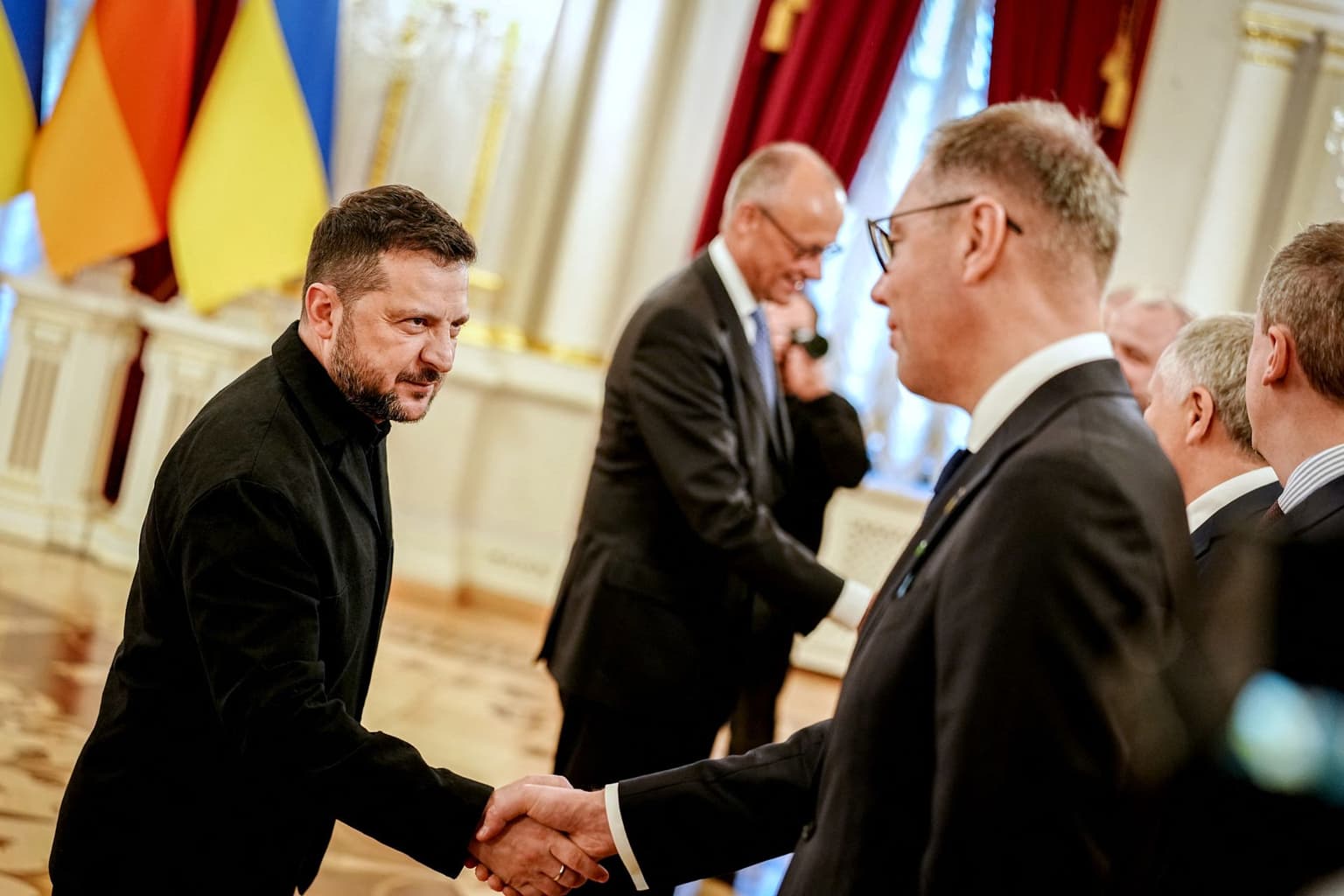
The package was announced by President Volodymyr Zelensky and German Chancellor Friedrich Merz at a joint press conference in Kyiv.
"The total value of today's agreements is more than €8.5 billion ($9.57 billion)," Zelensky said. "A special agreement was signed that creates more opportunities for our joint counter-drone efforts."
Zelensky said the package included weapons needed immediately, support for Ukraine's energy sector, and funding to produce new interceptors specifically designed to counter Russia's jet-powered attack drones.
"These are weapons that will help now, support for our energy sector — this is very important," Zelensky said.
The package includes €1 billion ($1.13 billion) in military aid, including financing the production of interceptor drones capable of countering Russian jet-powered weapons, Merz said.
The defense package also includes "thousands" of missiles for the German-made IRIS-T air defense systems and the delivery of additional IRIS-T fire units.
Additionally, the chancellor announced around €350 million ($394 million) in energy assistance, including support for generators and repairs to infrastructure damaged by Russian attacks.
He added that the energy package was intended to mitigate the impact of Russian attacks on Ukraine's power infrastructure ahead of winter.
The European drone manufacturer Quantum Systems will receive financing from Germany to produce tens of thousands of interceptors in Ukraine. The joint production program is designed to adapt to Russia's evolving threats, including the increased use of deadly high-speed jet drones in aerial attacks.
Quantum Systems also signed a memorandum of understanding (MOU) with the Ukrainian defense company Fire Point on Oct. 4. The two companies have agreed to jointly develop new technologies for unmanned systems.
A number of other German and Ukrainian companies also signed MOUs during Merz's visit.
Ukraine's Culver Aerospace signed a letter of intent with the German company Helsing to cooperate on the mass production of long-range strike systems for Ukraine. The Lviv-based Roboneers also signed an MOU with Germany's ARX Robotics on the development of ground drones.
German and Ukrainian companies also reached a framework agreement regarding 25 and 40 mm air defense systems and 155 mm artillery systems.
Russian Su-35, Su-34 fighter jets hit by drones at airfield in Adygea, SBU says
Ukrainian drones struck two Russian fighter aircraft and an ammunition depot at the Khanskaya military airfield in Russia's Republic of Adygea, the Security Service of Ukraine (SBU) said on Oct. 4, .
Drones operated by the SBU's Alpha special operations unit hit a Su-35 multirole fighter jet and a Su-34 fighter-bomber at the airfield, located around 500 kilometers (310 miles) from Ukrainian territory.
"Both aircraft are carriers of guided aerial bombs, which the enemy massively uses along the front line and against Ukrainian cities," the SBU said.
The agency estimated the export value of a Su-35 at around $100 million and a Su-34 at around $50 million.
An ammunition depot on the airfield was also struck, according to the SBU.
The extent of the damage could not be independently verified.
"The SBU systematically targets Russian military facilities, consistently reducing its ability to wage war against Ukraine," the agency said. "Enemy strikes on Ukrainian cities, civilian and critical infrastructure will not go unanswered."
The Su-34 is a multifunctional fighter-bomber used to deploy different types of guided bombs (KAB) and high-explosive bombs (FAB), as well as air-to-surface missiles. It can also be used for reconnaissance and electronic warfare missions.
The Su-35 is a multirole fighter designed primarily for air superiority but also capable of striking ground targets. It can carry air-to-air and air-to-surface missiles, as well as guided bombs, and is among the most advanced combat aircraft currently operated by Russia.
Russia targets Kyiv bridges for fourth consecutive day, hits Northern Bridge
Russia struck the roadway of Kyiv's Northern Bridge across the Dnipro River with a drone on the morning of Oct. 4, injuring two people, Mayor Vitali Klitschko said.
The attack marked the fourth consecutive day that Russian forces targeted bridges across the Dnipro River in the capital.
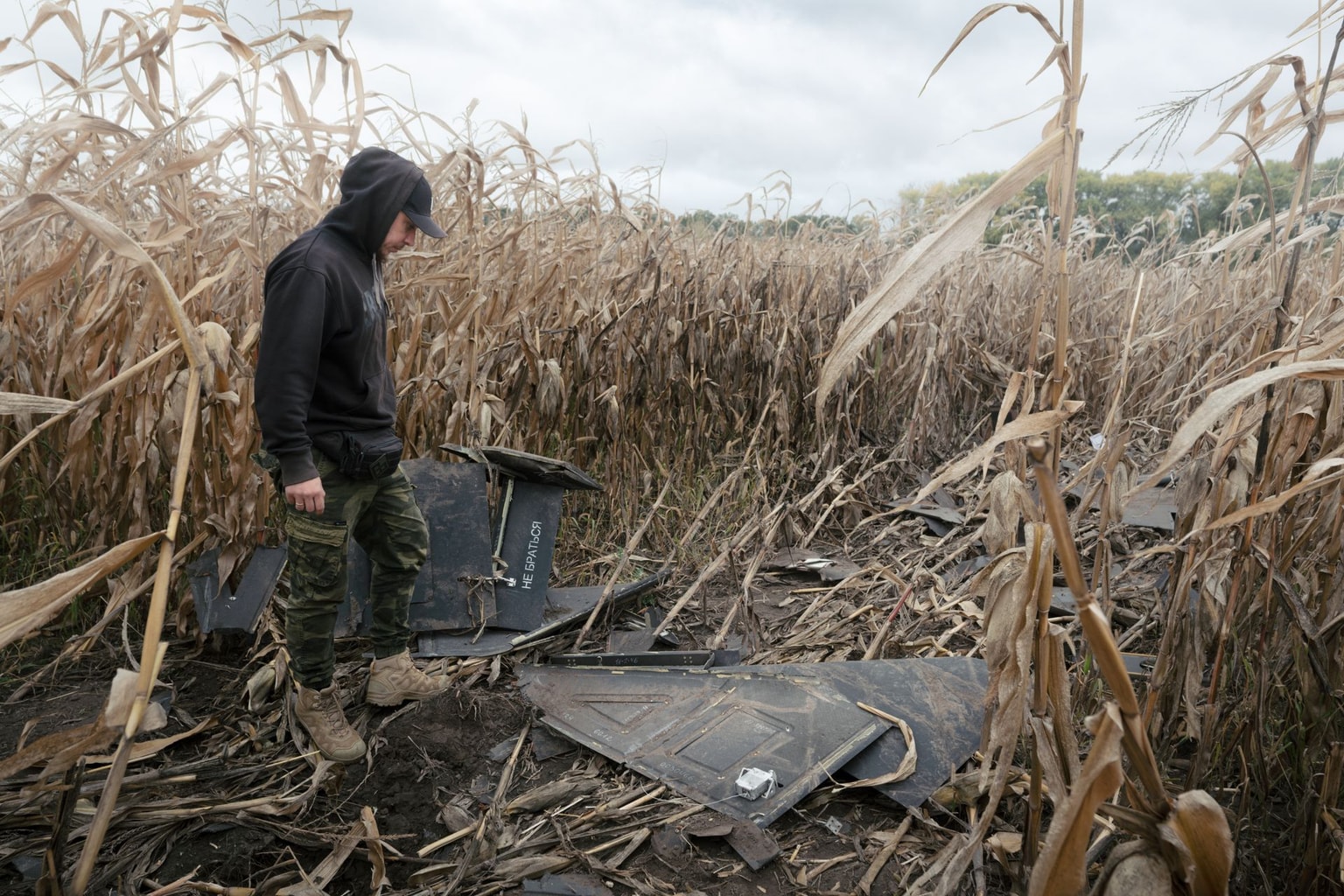
"This morning, the Russians once again struck Kyiv's Northern Bridge with a drone," Zelensky said. "Just this week, Russia has used more than 1,900 attack drones, 1,700 aerial bombs, and 25 missiles against Ukraine. More than 800 of the drones were jet-powered."
Klitschko said emergency services were sent to the Northern Bridge after the roadway was hit. Two people were injured in the strike, with one hospitalized and the other treated at the scene.
He later said a heating main was also damaged in the Russian attack, temporarily cutting hot water to parts of Kyiv's Desnianskyi district.
The full extent of the damage caused was not immediately clear.
From Oct. 1 to Oct. 3, Kyiv's Southern and Northern bridges were targeted in multiple Russian drone strikes amid an intensifying campaign against infrastructure in the capital.
Kostiantyn Kryvolap, an aviation expert and former Antonov test engineer, told the Kyiv Independent that destroying the bridges was unlikely to be the primary objective of the attacks.
"Destroying a bridge with a 50-kilogram explosive charge, even with a highly effective warhead designed to destroy steel bridge structures, is a major exaggeration. It is practically impossible," Kryvolap said. "For a bridge like this, these strikes are more like mosquito bites."
Instead, the strikes may be intended to disrupt traffic and logistics and exert psychological pressure on Kyiv residents, according to Kryvolap.
Both the Northern and Southern bridges are among Kyiv's main transport arteries, carrying tens of thousands of residents across the Dnipro each day.
The repeated strikes have prompted preparations for pontoon crossings that could be used if key bridges across the Dnipro are damaged or become unusable. The Kyiv City Military Administration (KMDA) also announced new restrictions on movement across Kyiv's bridges during air raid alerts.
read also
U.S. peace negotiations with Russia could now involve multi-billion-dollar Lukoil deal, NYT reports
The Trump administration's peace negotiations with the Kremlin have come to include discussions of a multi-billion-dollar deal involving assets owned by Russian oil company Lukoil, the New York Times (NYT) reported on Oct. 3.
The newspaper reported that business executives with ties to U.S. envoys Jared Kushner and Steve Witkoff are pursuing a potential deal involving Lukoil refineries, oil fields and gas stations around the world. The deal would require approval from both the U.S. government and the Kremlin, according to the NYT.
Russian President Vladimir Putin raised the potential deal with Kushner and Witkoff during their visit to Moscow on Sept. 5, proposing it as a way to demonstrate to Russians that they could still do business with the United States, NYT reported, citing people familiar with the matter.
The two envoys responded that they would work on the proposal, as a way to build good will with the Russians, according to the NYT report. Another benefit for the Americans is that global oil prices, which have skyrocketed following the U.S. war with Iran, could go down as a result of the deal, following sanctions against Lukoil assets potentially being lifted.
Lukoil is Russia's second-largest oil producer and one of the country's largest companies, accounting for 2% of global oil output. The corporation has been under U.S. sanctions since 2025, with the American government freezing its U.S.-based assets and threatening secondary penalties for foreign entities engaging with them.
The sanctions, the first such measures imposed by the second Trump administration, were designed to pressure Moscow into peace talks in Ukraine, as fossil fuel revenues play a key role in sustaining Russia's war efforts. The U.S. government then proceeded to issue a limited sanctions waiver on some of Lukoil's foreign assets, which was extended earlier this year.
While the U.S. Senate recently passed a bill that would make it easier to impose sanctions on countries that subsidize Russia’s war economy, this new potential agreement could allow Lukoil's assets to be relieved of sanctions, potentially increasing their value, according to NYT
Moscow unveils 'new doctrine' targeting Ukrainian civilians, Zelensky vows to respond with more energy strikes
In response to a new airstrike policy targeting Ukrainian civilians by Moscow, President Zelensky said on Oct. 3 that Ukraine would increase attacks on Russian energy infrastructure.
Zelensky told Reuters that Ukrainian intelligence obtained documents revealing that Russian President Vladimir Putin issued a "new doctrine" allowing Russian forces to launch broader strikes against Ukrainian civilian targets this upcoming winter.
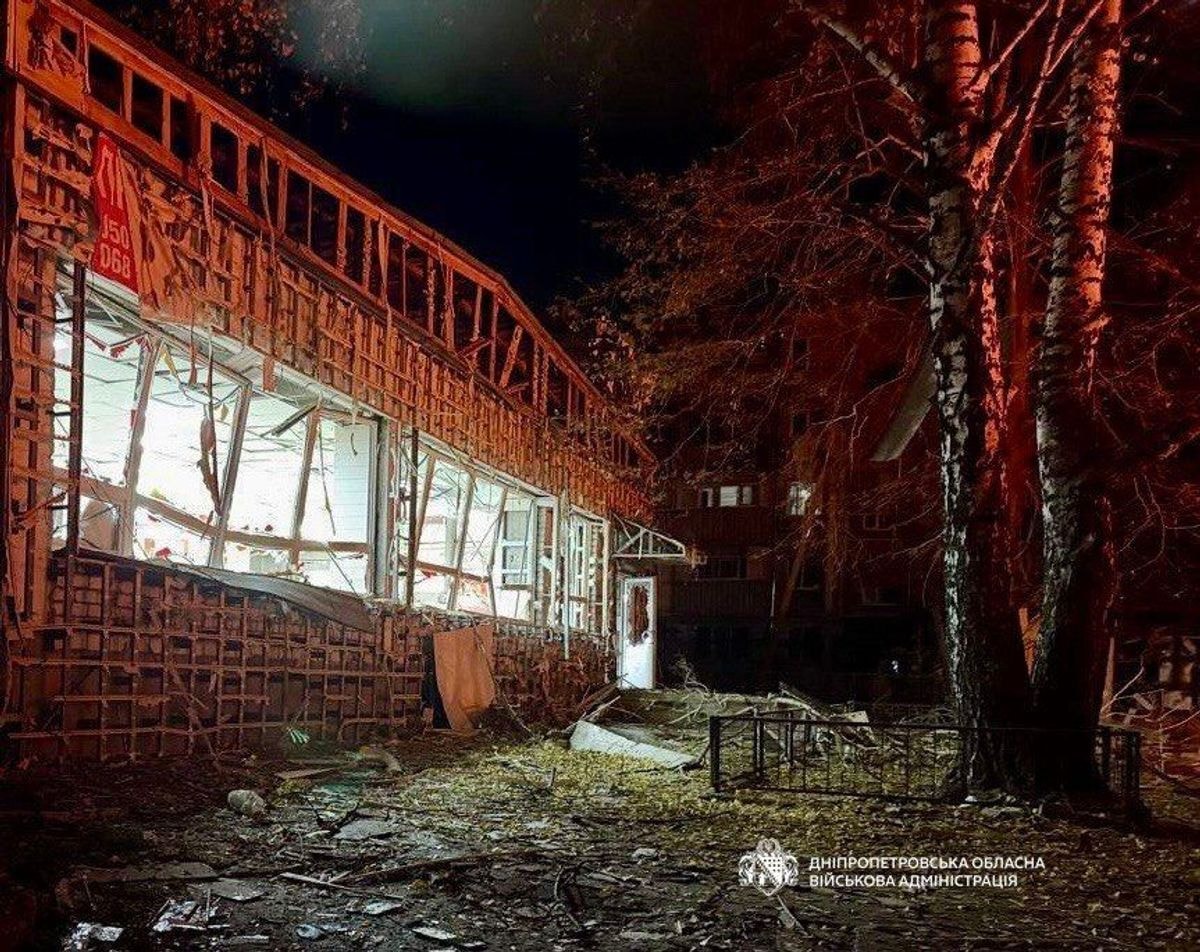
"We saw documents and we know that they allow them [to] attack infrastructure ... logistics ... roads, schools, hospitals, to pressure people to leave the capital, leave different cities," Zelensky said. With this shift, Putin wants to appear strong even as Russian troops continue to lose ground while suffering massive casualties, said Zelensky.
The president's comments come as Russian forces have increasingly battered Ukrainian civilian infrastructure in recent weeks, including attacks on key bridges and medical and educational facilities.
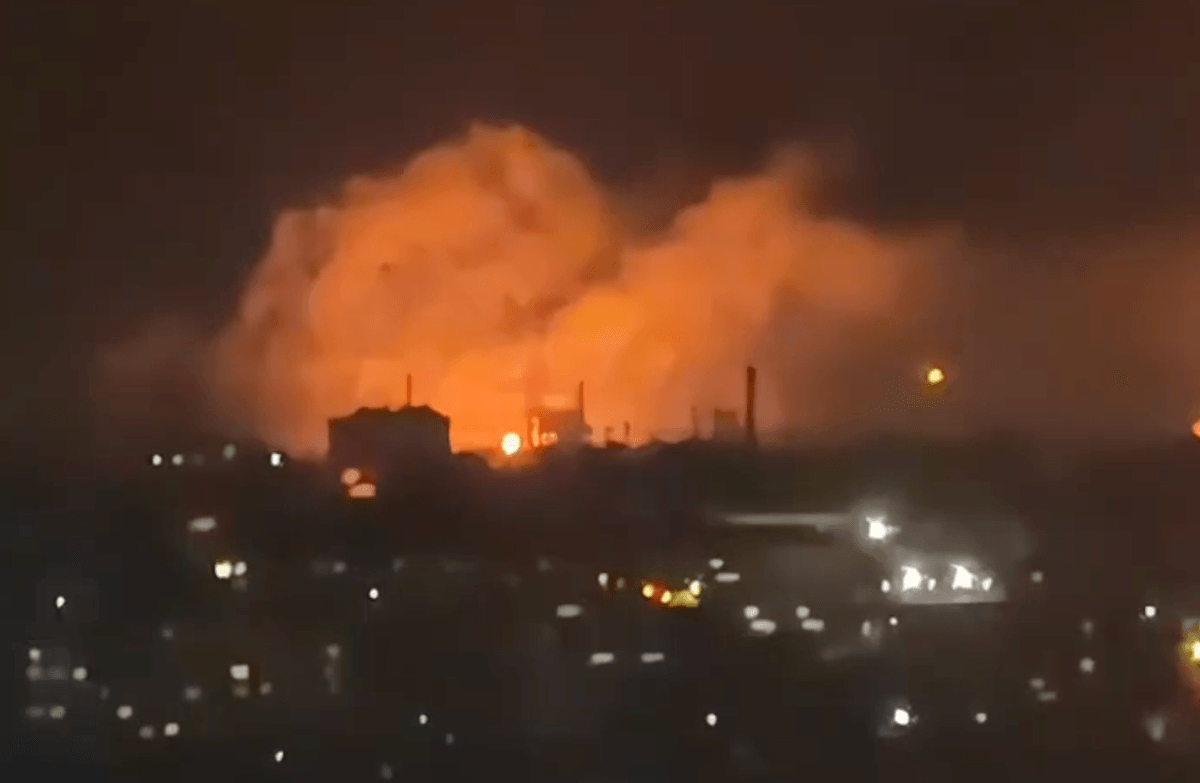
In response to Moscow's changing tactics, Zelensky vowed to increase strikes on Russian energy sites, though without indiscriminately targeting Russian civilians.
"We have to respond in any way (we can). With their attacks on our energy, we have to respond on their energy. First of all, oil refineries: what gives money to them for this war," Zelensky said. "But we will not respond, of course, just like them, on any civilian objects."