Ukraine war latest: Russia unleashes one of its 'largest ballistic missile attacks on Kyiv'
 on Google
Key developments on July 18-19:
- Russia unleashes one of its 'largest ballistic missile attacks on Kyiv,' at least 1 killed, 17 injured
- Russian logistics centers, oil depot hit as Kyiv launches hundreds of drones towards Moscow
- Russia bolsters 'shadow fleet' defenses at expense of front-line drone units, military says
- Ukraine reportedly strikes Russian oil depot in Stavropol Krai, hits targets in occupied Crimea, Luhansk
- 'Changes are definitely coming' — Ukrainians take to streets for 3rd day of protests over military leadership crisis
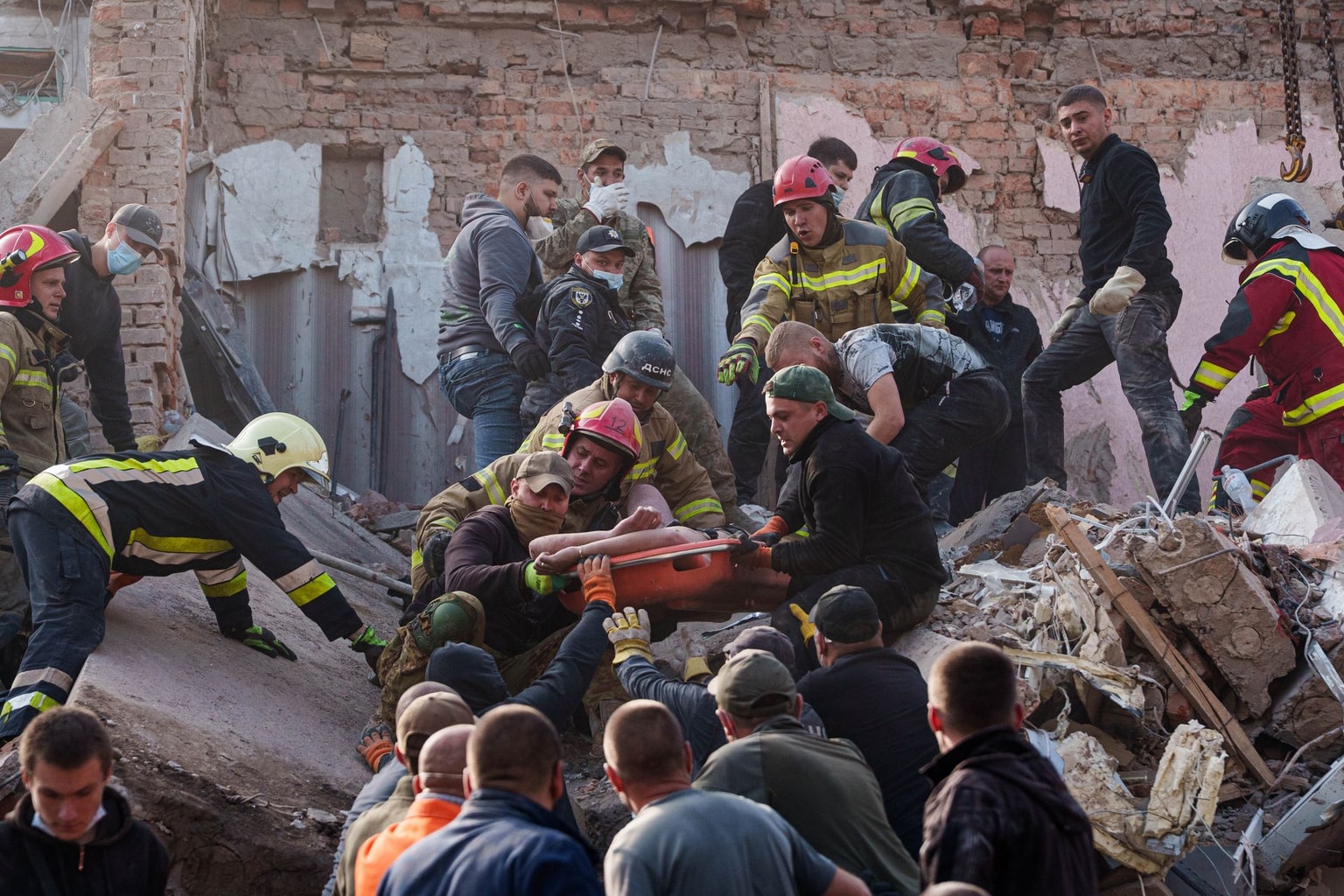
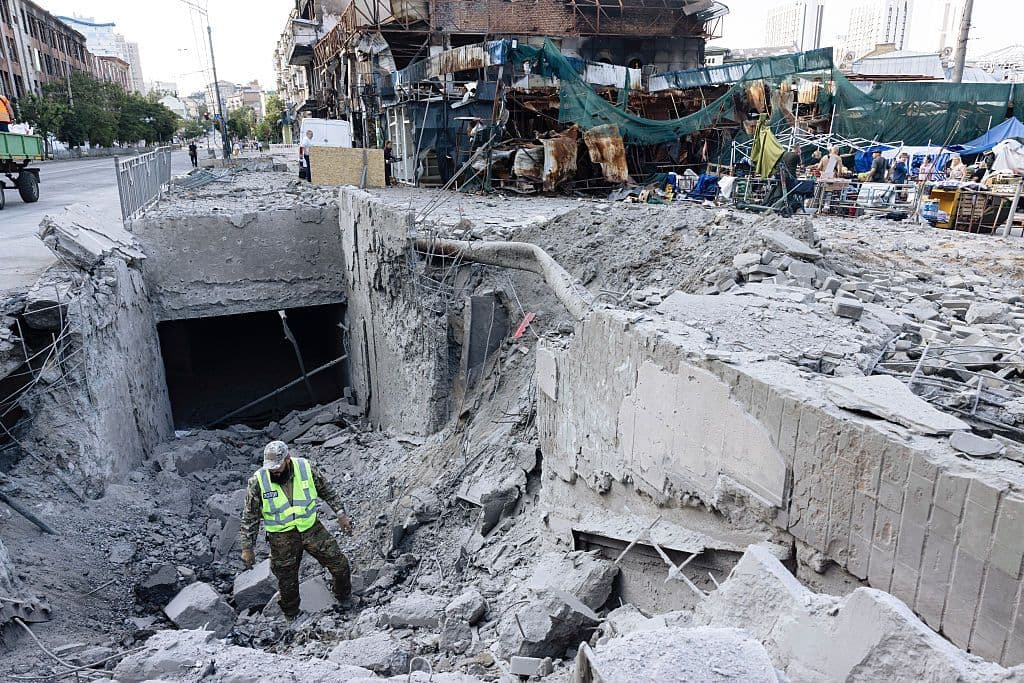
At least one person has been killed, and 17 others injured, after a major Russian ballistic missile attack on Kyiv and the surrounding oblast overnight on July 19.
Russia deployed 125 drones, 25 ballistic missiles, 10 Zirkon hypersonic missiles, and six other missiles, Ukraine's Air Force reported, with most of the projectiles targeting the capital.
President Volodymyr Zelensky described the strike as one of Russia's "largest ballistic missile attacks on Kyiv."
"It was the scariest night of my life," 30-year-old Eleonora Belei told the Kyiv Independent outside her damaged apartment building in the Lukianivska district, an area in the north-western section of central Kyiv that is frequently targeted by Russia.
"This district was attacked almost every month this year, but it was the first time it was that close," Belei added.
Belei's mother, Nadiia, said that one man was injured in a shelter by the blast wave. In the morning following the attack, the ambulance crew continued to carry the injured out of the residential building.
"People are just happy to be alive," Nadiia said, as around her, locals swept broken glass from the ground amid several completely burnt-out cars.
Another resident, Olha, said it was not the first time the blast wave shattered her windows.
"We'll fit new windows. The main thing is that everyone's safe," Olha said.
Air raid sirens sounded across central and eastern Ukraine shortly before a series of explosions rocked Kyiv at around 1:30 a.m. local time, marking the start of the attack.
Russian forces continued bombarding the capital until about 2:38 a.m., firing an unusually large number of ballistic and hypersonic missiles.
The Air Force said 23 missiles and 10 drones struck 10 locations, while falling drone debris was recorded in 18 additional areas.
Further drone attacks were reported in Kyiv Oblast at around 10 a.m.
Kyiv Mayor Vitali Klitschko said at least nine people were hospitalized, including three in serious condition.
Fires broke out across the city, including in the Dniprovskyi, Solomianskyi, and Shevchenkivskyi districts, and damage was reported in several other districts.
Russian logistics centers, oil depot hit as Kyiv launches hundreds of drones towards Moscow
Ukrainian forces struck two Russian logistics centers, an oil depot, and several targets in the Azov and Black Seas overnight on July 18, President Volodymyr Zelensky and the General Staff confirmed.
"Today, our long-range sanctions worked across three areas on Russian territory, as well as on our temporarily occupied land and at sea," Zelensky said on X.
Logistics centers used by Russian forces to supply sanctioned components for drone manufacturing and navigation equipment were hit in Moscow and Tambov oblasts, located more than 500 kilometers (310 miles) and 700 kilometers (430 miles) from the front lines, respectively, Zelensky said.
In Moscow Oblast, Ukrainian forces also struck the "Nafto-Service" oil depot in the city of Noginsk, causing a fire at the facility, the General Staff said on Telegram. The depot is used to store and supply fuel and lubricants, including for the Russian army, according to the statement.
Russian authorities reported that the Ukrainian attack caused a fire at a warehouse belonging to the major Russian online retailer "Wildberries" in the city of Elektrostal, south of Noginsk in Moscow Oblast.
The attack on the "Wildberries" fulfillment center marked the second strike of the night targeting the major online retailer's facilities. A similar attack struck a fulfillment center in the town of Kotovsk in Russia's Tambov Oblast earlier in the night.
Zelensky did not specify in his July 18 post whether the "Wildberries" warehouse stored equipment intended for the Russian military. But in a video address later that evening, he said the warehouses targeted in the overnight operation were linked to the military.
"These are Russian logistics facilities, specifically warehouses used to supply war materiel: navigation equipment, components for drone production, and other supplies for the Russian army," Zelensky said.
Initial estimates of the damage point to heavy losses for "Wildberries." According to the independent Russian investigative outlet Important Stories (IStories), the Moscow facility processed up to 7.4 million items per day, while the Tambov center handled up to 1.4 million items. Additionally, the Tambov facility reports a storage capacity of up to 54 million units.
Based on comparisons to a 2024 fire at a "Wildberries" facility in St. Petersburg, IStories estimated that the damages from the latest strikes could exceed 100 billion rubles (approximately $1.2 billion).
Russia bolsters 'shadow fleet' defenses at expense of front-line drone units, military says
Russian forces are reallocating drone units away from the battlefield to protect their "shadow fleet," amid intensified attacks on vessels in the Black Sea and the Sea of Azov, Robert "Madyar" Brovdi, commander of Ukraine's Unmanned Systems Forces, said on July 18 on Facebook.
Ukrainian forces launched on July 6 an operation dubbed "MoLoCHKa," an acronym that translates from Ukrainian as "Moscow will fall because of Crimea," aimed at destroying Russia's "shadow fleet." Russia relies on a "shadow fleet" of mostly aging tankers operating under foreign flags to transport oil in an effort to bypass sanctions, embargoes, and the G7 price cap.
Russian forces have deployed up to 200 groups from the Rubicon unit, one of the most effective drone warfare units in the Russian army, Brovdi said.
The Ukrainian commander added that the deployment means each "shadow fleet" vessel will have an assigned group of soldiers tasked with its protection.
In addition to the Rubicon unit, which is being partially withdrawn from the front line, Russia has also deployed personnel and equipment from the 51st Air Defense Division, as well as from an anti-aircraft regiment of the Black Sea Fleet, according to Brovdi.
Ukrainian Unmanned Systems Forces units hit 172 Russian "shadow fleet" vessels in a 13-day operation, including tankers, dry cargo ships, ferries, floating cranes, and tugs, the commander added.
Ukrainian forces struck 13 more Russian vessels, including eight dry cargo ships, one oil tanker, one gas tanker, two floating cranes, and one tugboat over the past day. The oil tanker was hit in the Sea of Azov, while all other vessels were targeted in the Black Sea, Brovdi said on July 18.
Ukraine regularly targets Russian military infrastructure deep inside Russia and in occupied Ukrainian territories in an effort to weaken Moscow's ability to continue its war.
This summer, Ukraine also launched a campaign known as the "logistical lockdown," aimed at disrupting Russian military supply routes in occupied Ukrainian territories, including Crimea, which Russia has occupied since 2014.
Former Defense Minister Mykhailo Fedorov said in a June 17 interview with Pressing that Crimea could become "fully isolated" as a result of Ukrainian strikes, effectively turning the peninsula into "an island."
"Crimea is being isolated with the help of drones. And in the near future, it appears that Crimea will become an island. This could lead to very unexpected consequences for Russians," Fedorov said.
Ukraine reportedly strikes Russian oil depot in Stavropol Krai, hits targets in occupied Crimea, Luhansk
Ukrainian forces struck an oil depot in Russia's Stavropol Krai and hit several targets in the occupied territories overnight on July 19, monitoring channels reported.
An oil depot in the town of Mikhailovsk, Stavropol Krai, was struck by Ukrainian forces for the third time within weeks, Telegram news channel Exilenova Plus reported.
Days earlier, on July 13, social media channels reported that Ukraine struck an oil depot in southern Russia's Stavropol Krai.
Residents of occupied Luhansk reported explosions in the city on July 19, according to Exilenova Plus.
In the occupied city of Yalta, Crimea, an electric substation caught fire after being struck by Ukrainian drones, resulting in power outages, pro-Ukrainian Telegram channel Crimean Wind reported.
Explosions were also heard in the city of Kerch in eastern Crimea, with the Kerch bridge to Russia closed as a result, according to the channel.
An electric substation in the village of Myndalne, near the city of Sudak, was also struck by Ukrainian drones amid strikes on several targets in occupied Crimea, Crimean Wind reported.
'Changes are definitely coming' — Ukrainians take to streets for 3rd day of protests over military leadership crisis
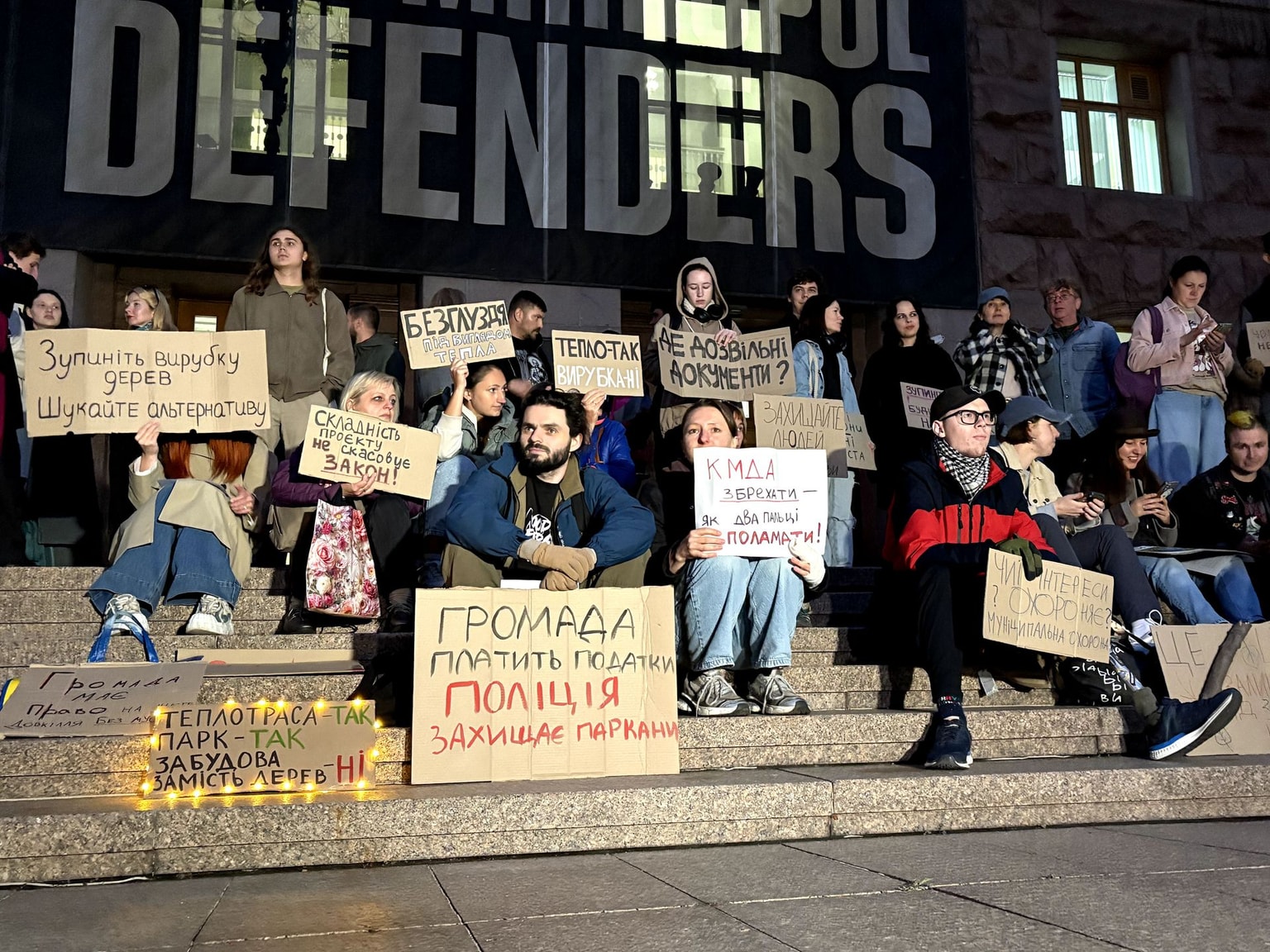
Crowds of Ukrainians gathered in Kyiv and other cities on the evening of July 18 to protest President Volodymyr Zelensky's dismissal of former Defense Minister Mykhailo Fedorov.
The demonstration marks the third consecutive day of collective action since Fedorov was dismissed on July 15. The firing of the popular defense minister after only six months in office sparked public outrage, with soldiers, veterans, activists, and everyday Ukrainians sounding the alarm on a crisis in the country's military leadership.
Protesters took to the streets again on July 18 with two demands: reinstate Fedorov, and fire Commander-in-chief Oleksandr Syrskyi.
Thousands of demonstrators rallied in central Kyiv to make their voices heard. Protests were also held in Odesa, Lviv, Lutsk, Dnipro, Cherkasy, Zhytomyr, Vinnytsia, Chernivtsi, Rivne, and Ivano-Frankivsk, among other cities.
"Changes are definitely coming," Fedorov said on social media as the protests were underway.
"There is a dialogue. I believe everything will work out."
In his evening address on July 18, Zelensky assured the Ukrainian people that he was paying attention to their demands. He also said he had spoken with both Fedorov and Syrskyi earlier that day.
"Today, there have been many consultations," he said. "Of course, I hear what people are saying. I spoke at length with Mykhailo Fedorov today. I also spoke with Oleksandr Syrskyi today. Decisions regarding the army will be worked out."
Zelensky did not disclose the details of either conversation.
After Fedorov's shocking dismissal, reports emerged of his deepening conflict with Syrskyi, framed as fundamental differences in leadership and strategy between the young, reform-minded technocrat and the old-guard Soviet commander.
Syrskyi has repeatedly faced criticism from military personnel and analysts for excessive micromanagement and for fostering what critics describe as a Soviet-style military culture — a culture rife with corruption, abuse, and high personnel losses.
Many Ukrainians now believe Zelensky chose to back Syrskyi over Fedorov despite the defense minister's impressive achievements during his short tenure — a track record that includes persuading Elon Musk to cut off Russian troops' access to Starlink and coordinating long-range strikes on Russian logistics in occupied Crimea.