Zelensky rejected push to fire Syrskyi as commander-in-chief, Fedorov reveals
 on Google

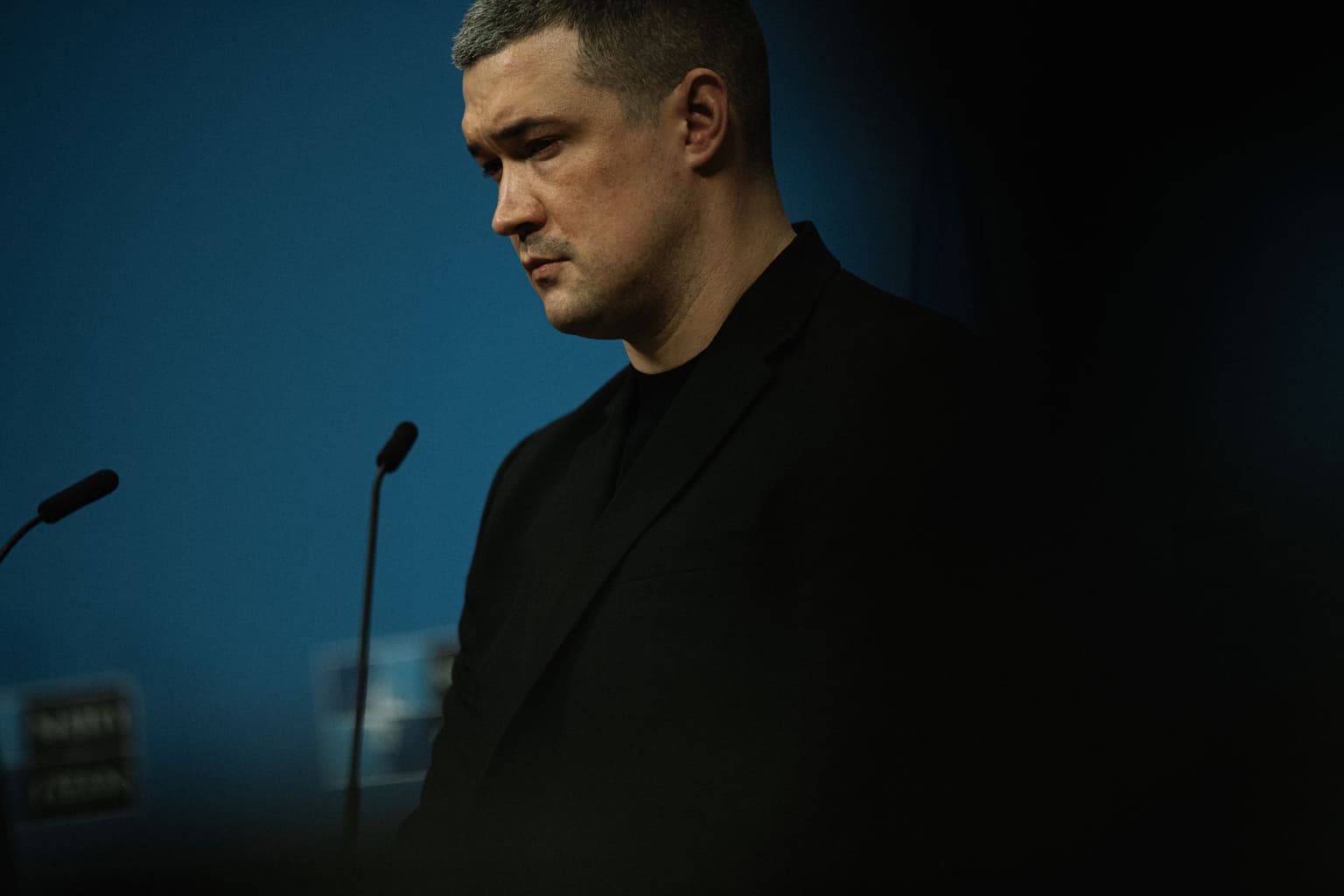
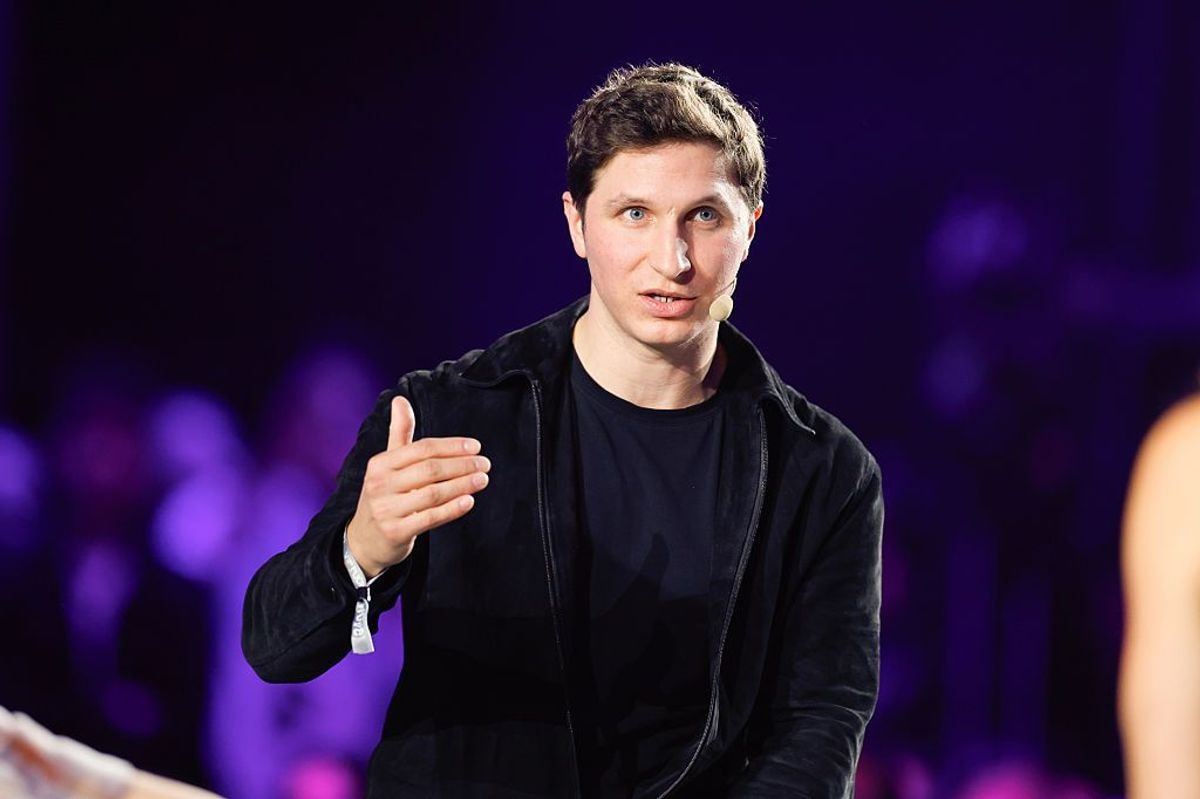
Former Defense Minister Mykhailo Fedorov admitted on July 16 that he pushed for Commander-in-Chief Oleksandr Syrskyi to be replaced, a move he said President Volodymyr Zelensky rejected.
Speaking at a press conference in Kyiv, Fedorov said he suggested "drastic personnel decisions," which involved replacing both Syrskyi and Chief of the General Staff Andrii Hnatov, both of whom are often criticized by younger soldiers and commanders for their top-down, Soviet-era command culture.
Fedorov, a young defense minister who had tried to drastically reform the army and air defense sectors during his half-year tenure before he was ousted by Zelensky on July 15, stressed that "we have no other choice if we want to defeat the enemy asymmetrically, with minimal losses."
His press conference came the day after his dismissal as defense minister, a move that caused a seismic political shock in Ukraine.
Approximately 1,000-2,000 people gathered in Kyiv on the morning of July 16 to protest his dismissal, some of whom were soldiers and veterans who had hoped Fedorov would help resolve Ukraine's long-standing military issues, from mobilization to the severe lack of manpower.
Fedorov said during the press conference that he told Zelensky he would learn to work with Syrskyi despite their differing visions of the war, because "our client is the Ukrainian people."
Fedorov said the initiatives were then blocked and that he remained patient until, according to him, Syrskyi issued an ultimatum.
"And instead of thinking about how to win the war asymmetrically, he figured out how to divide the country," Fedorov said of Syrskyi during a press conference in Kyiv.
Fedorov insisted that he had never set an ultimatum and said, "Then we will win over Russia with such a commander-in-chief."
While noting that Syrskyi's achievements saved Ukraine in the early stages of the full-scale war, from the defense of Kyiv to the 2022 counteroffensive in northeastern Kharkiv Oblast, Fedorov stressed that the war has now changed completely, with drones dominating the front lines.
Asked about his evening meeting with Zelensky on July 15, Fedorov said that the president offered him an advisor role or to look for other ways to remain on the team. Fedorov said he declined the advisor role.
Fedorov, who has focused on advancing drones and technology to defend the country against a much bigger foe, said he believes Ukraine has the tools to stop Russia from continuing to wage its war.
During his half-year tenure as the defense minister, Ukraine scaled up its long-range strikes across Russian-occupied territories and deep inside Russia, gradually severing Crimea from Moscow's logistical supply lines and enforcing a siege of the occupied peninsula for the first time.
To deter Russia asymmetrically with minimal losses, it is important to ensure strong leaders and commanders can develop, and "not be suppressed and will not be written off, reprimanded, suppressed, and so on," Fedorov said when mentioning his push for Syrskyi and Hnatov's dismissal.
"We shouldn't be like the Russians, we should change our approaches, and we should tell the truth," Fedorov said at the press conference.
Commenting on the protest and Fedorov's dismissal later on July 16, Syrskyi opened his statement by referring to the defense of Kyiv in 2022, which he commanded.
"I am proud that thanks to the Kyiv defense operation in 2022, we managed to defend our capital," Syrskyi wrote on Telegram. "And now this city can host briefings, shape visions, and make decisions."
Syrskyi said he would "do everything possible" to ensure such events could continue to take place "in a free and independent Ukraine," adding that Ukraine must remain focused on the war and on "an effective strategy that is now demonstrating concrete results."
He also thanked Fedorov for his work as defense minister and wished him "to remain part of Team Ukraine."
Fedorov-Syrskyi conflict
The strained relationship between Fedorov and Syrskyi stems from a difference in leadership styles and approaches to military culture.
Yuriy Hudymenko, a prominent veteran and head of the Public Anti-Corruption Council at the Defense Ministry, told the NV news outlet the two men approach problems from "fundamentally different perspectives" in a June 17 interview.
"This is a conflict between a young technocrat and a general from a largely post-Soviet military school," Hudymenko said. Fedorov was a key proponent of the "mission command" style of military leadership, a Western method of command and control that empowers subordinates, ensures that all levels of military leadership understand the commander's overall intent, and gives them a high degree of tactical flexibility in carrying out assigned orders.
Syrskyi, who graduated from the Moscow Higher Military Command School in 1986, favors the heavily centralized style of command and control used by the Soviet Union and many post-Soviet militaries, and has been frequently criticized for micromanagement and for favoring unsophisticated, brute-force assaults that result in heavy casualties.
The differences in culture also extend to the way they approach information management. The technocratic Fedorov believed in a data-heavy approach to military management, prioritizing the accumulation of large amounts of accurate data.
In contrast, Syrskyi was accused by prominent Ukrainian military figures of promoting a "culture of lying" within the Ukrainian military, in which subordinates were afraid to pass accurate information up the chain of command for fear of punishment.
"I think that Russians stopped their lying culture in the army, maybe in the beginning of 2024," Bohdan Krotevych, former chief of staff of the Azov Brigade, said in an interview in November 2025.
"They stopped lying, and we started lying."
Major General Mykhailo Drapatyi, commander of the Joint Forces and one of Ukraine's most respected commanders, also weighed in following Fedorov's dismissal. He praised the Defense Ministry's reform efforts and warned against allowing them to stall.
"The army needs change, but without justice, no change will have meaning for the people who carry this war on their shoulders every day," Drapatyi wrote on Facebook.
Drapatyi said the arrival of Fedorov's team at the Defense Ministry marked "a real attempt to change the rules" by tackling long-standing systemic problems rather than simply reorganizing institutions on paper. He said the ministry had become "a partner" to the armed forces over the past six months by listening to commanders, accelerating decision-making, and backing officers willing to take responsibility.
Referring to Fedorov's remarks that many reforms had been implemented despite resistance from within the system, Drapatyi said, "I know this is true." If the right decisions have to be made despite the system rather than because of it, he added, "it means the system itself needs to change."
He argued that the transformation of Ukraine's armed forces "cannot end with the replacement of a minister, a team, or the head of a particular branch," and must continue until "fair and understandable rules become the norm."