Help us keep bringing the truth to light, even when Russia turns the lights out.

Shop and support
Canada

Ukraine gets $1.7 billion loan from Canada backed by Russian assets

• 2 min read
Ukraine gets $1.7 billion loan from Canada backed by Russian assets
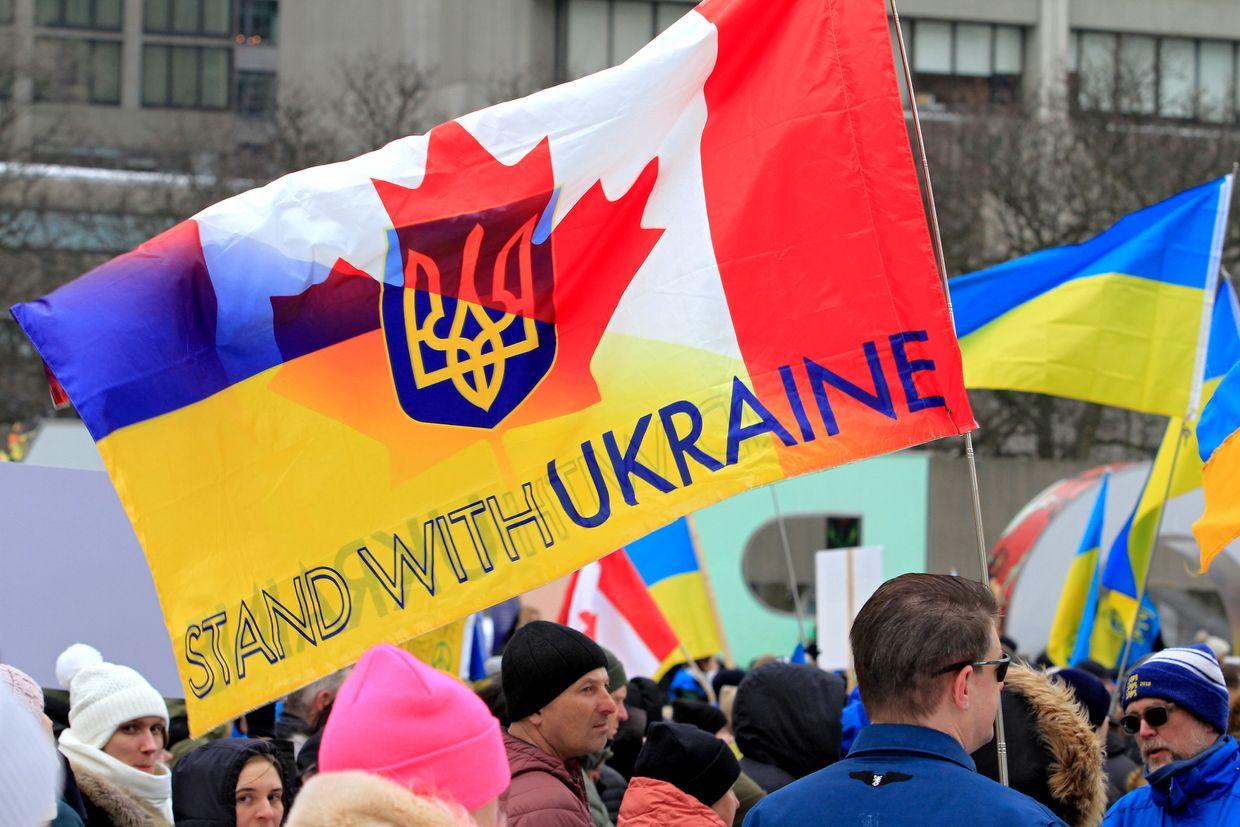
Participants hold a combined Canadian-Ukrainian flag during a rally to support Ukraine in Toronto, Canada, on Feb. 23, 2025. (Mike Campbell / Getty Images)

Ukraine has received a 2.5 billion Canadian dollar ($1.7 billion) loan from Canada under the Group of Seven's (G7) Extraordinary Revenue Acceleration (ERA) initiative, Prime Minister Denys Shmyhal announced on June 30.

Under the ERA mechanism, Ukraine is expected to get $50 billion in loans that will be repaid using future profits from frozen Russian assets.

Canada's contribution to the initiative is $3.5 billion, and the loan will be granted for 30 years. The Canadian government sent the first tranche in March.

Since the beginning of the year, Ukraine has received about $17.6 billion from Russia's frozen assets, according to Shmyhal.

"We insist on the complete confiscation of the frozen funds of the Russian Federation. They are needed to pay compensation to victims of the aggression and to rebuild our country. This will also be an act of justice to prevent future wars of aggression," Shmyhal said.

Since Russia's full-scale invasion in 2022, G7 countries have frozen approximately $300 billion in Russian sovereign assets.

The ERA initiative, backed primarily by the U.S. and the EU, aims to use profits from these frozen assets to finance Ukraine's defense and reconstruction.


News Feed
Video

In May 2026, Ukraine’s 3rd Army Corps launched a secret counteroffensive now known as Operation Vivaldi, aiming to strengthen Ukraine’s defensive positions in the Lyman and Sviatohirsk sectors and disrupt Russia’s plans to encircle Ukraine’s key strongholds – the cities of Sloviansk and Kramatorsk.

"Russia is building the military-industrial capacity to continue waging wars even after the war in Ukraine ends. These are not the actions of a country preparing for lasting peace," Oleksandr Danylyuk, chairman of the Center for Defense Reforms and former chief adviser to Ukraine’s defense minister, told the Kyiv Independent.

 (Updated:  )

For almost two years, student-led demonstrations in Serbia rallied against Vucic's right-wing incumbent Serbian Progressive Party. Protesting against alleged corruption in the government, the movement was triggered when a train station canopy in the city of Novi Sad collapsed in 2024, killing 16 people.

Show More