Ukraine's Supreme Court upholds Zelensky's sanctions against rival Poroshenko
 on Google
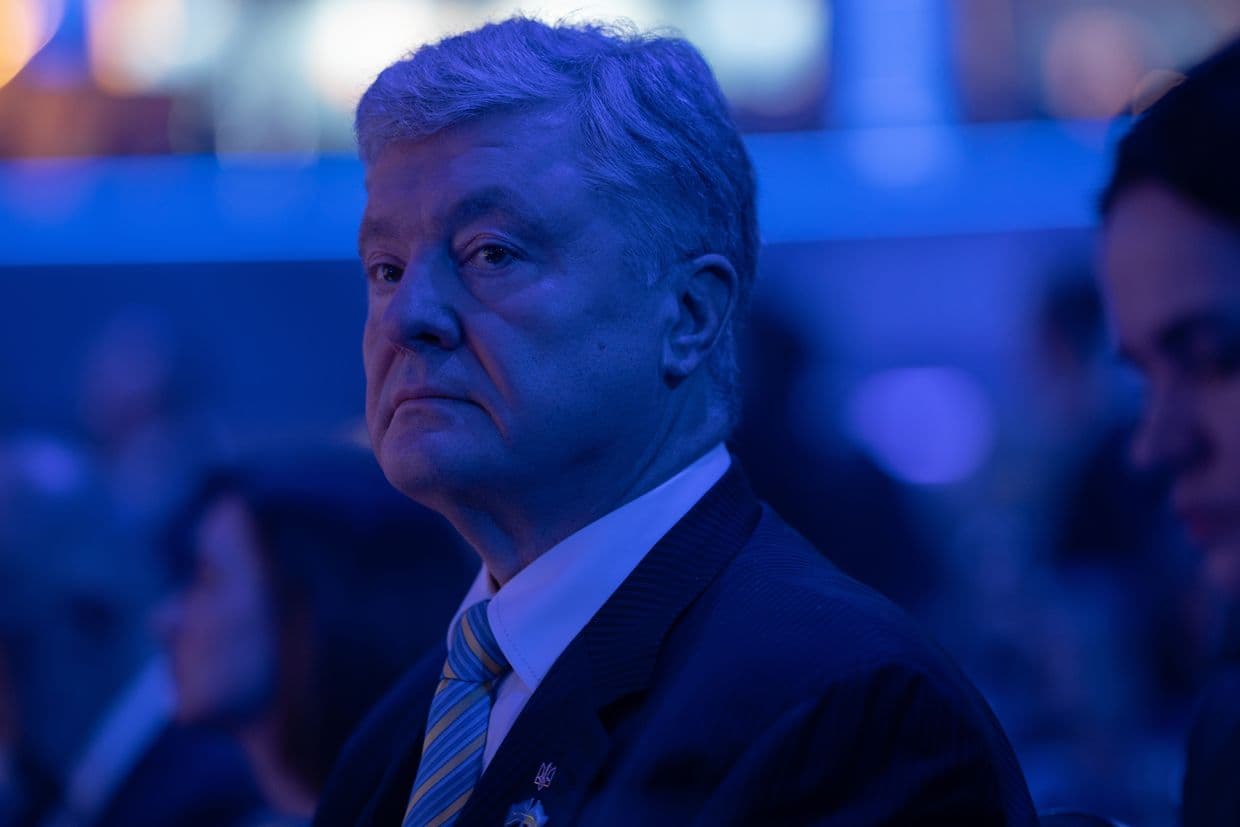
Ukraine’s Supreme Court on July 10 rejected ex-President Petro Poroshenko’s lawsuit seeking to overturn his successor Volodymyr Zelensky’s sanctions against him.
Ukraine introduced sanctions after Russia launched its war in 2014, initially using them as a tool to target Moscow and its proxies.
Under Zelensky, however, sanctions have increasingly been imposed on Ukrainian citizens as well. Legal experts describe the practice as highly questionable and warn that it is used to punish government critics and political opponents.
Many of those targeted have no apparent pro-Russian affiliations, and their main perceived offense appears to be their opposition to the Zelensky administration. Poroshenko, who lost to Zelensky in the 2019 presidential election, is his main political opponent and the leader of European Solidarity, an opposition party.
One problem is that the legality of imposing sanctions without any court decisions on Ukrainian citizens is dubious. Legal experts argue that the procedure itself is illegal.
Furthermore, Zelensky's decrees on sanctions usually contain general phrases but no specific reasons for imposing the sanctions. This is why their critics argue that they lack any legal justification.
The ruling has also revived controversy surrounding Ukraine's unreformed Supreme Court, which has faced multiple corruption scandals. The court did not respond to a request for comment.
Poroshenko's reaction
The sanctions against Poroshenko were imposed in February 2025.
Poroshenko was also charged with treason in 2021. He was accused of aiding Russian proxies in the occupied areas in Ukraine's Donetsk and Luhansk oblasts by organizing coal supplies to Ukrainian companies.
Since then, however, the criminal case has seen little progress.
Despite the charges, it would be difficult to present Poroshenko as even slightly pro-Russian, as he has consistently opposed Moscow since being elected president in 2014.
Poroshenko said that he would appeal the decision to the Supreme Court’s Grand Chamber and the European Court of Human Rights.
“Ukraine has been pushed off the path toward European integration, with its prospects for EU membership effectively blocked,” Poroshenko said while commenting on the ruling. “The reason is a government that is building authoritarianism instead of democracy.”
He accused the Security Service (SBU) and the President’s Office of “pressuring judges… who fabricated the case against the leader of the opposition.” The SBU and the President's Office did not respond to requests for comment.
“I fear for Ukraine's future and its European aspirations,” he added. “There is a strong likelihood that in July the EU will not open seven negotiating clusters needed to advance our accession process. The reason is the erosion of democracy and the rule of law in Ukraine.”
The authorities' reaction
Vladyslav Vlasiuk, Zelensky’s commissioner for sanctions policy, wrote on Facebook that “the Supreme Court has ruled that sanctions are both lawful and constitutional.”
He argued that “Ukraine's Law on Sanctions expressly allows sanctions to be imposed on individuals regardless of their citizenship.”
Vlasiuk also argued that EU member states, the UK and the US also sanction their own citizens. The Ukrainian authorities have been criticized, however, for sanctioning Ukrainian citizens en masse without any due process or legal safeguards.
Vlasiuk’s counter-argument is that “sanctions are not a form of punishment and therefore do not require the same procedural safeguards as criminal penalties.”
He said that “propagating the Russian regime, promoting Russia's armed aggression against Ukraine as a terrorist state, and financing terrorism” are “grounds for imposing sanctions.”
But when asked by the Kyiv Independent for comment, Vlasiuk did not elaborate which activities by Poroshenko and ex-lawmaker Boryslav Bereza, who was sanctioned on July 7, fall into these categories.
Supreme Court controversy
The ruling has re-ignited the controversy over Ukraine’s Supreme Court, which has been engulfed in corruption scandals.
When the current Supreme Court was created in 2017, a state-sanctioned judicial watchdog established that 22.2% of its judges did not meet integrity and ethics standards, and another 28.8% of the Supreme Court judges could have violated ethics standards.
The authorities ignored the conclusions and appointed the judges nonetheless.
Chickens came home to roost in 2022, when Bohdan Lvov, the Supreme Court’s deputy chairman, was fired due to his concealed Russian citizenship.
The failed reform came back to haunt the judiciary again when a court sentenced Vsevolod Kniazev, a former head of the Supreme Court, to five years in jail for bribery on June 8, 2026.
According to the investigators, Kniazev instructed subordinates to put the money into 13 bags for 13 Supreme Court judges.
In May 2026, the National Anti-Corruption Bureau (NABU) charged three incumbent Supreme Court judges and one former judge of the court with receiving bribes in exchange for rulings as part of the same case.
Ever since Kniazev was arrested in 2023, the European Union has demanded a reform of the Supreme Court. However, the Ukrainian authorities have so far failed to do so.
Mykhailo Zhernakov, head of legal think-tank DEJURE, attributed the ruling on Poroshenko to the failure to reform the Supreme Court. He said that Poroshenko himself had failed to carry out a successful reform of the court when he was president.
“It took the fifth president nine years to begin having those doubts,” Zhernakov said on Facebook. “Yet to anyone who followed the situation even casually at the time, the outcome was obvious. With so many allegedly corrupt figures, Russian citizens, relatives of (pro-Russian politician) Serhii Kivalov, and other judicial heavyweights concentrated on the Supreme Court, it was hard to expect much from this bench — especially in politically sensitive cases.”
He said that he didn’t “know what kind of legal gymnastics the justices will resort to in order to justify keeping what are clearly unconstitutional sanctions in force, but that is beside the point in this context.”