Concerns mount as Zelensky turns sanctions into tool for punishing critics, former allies
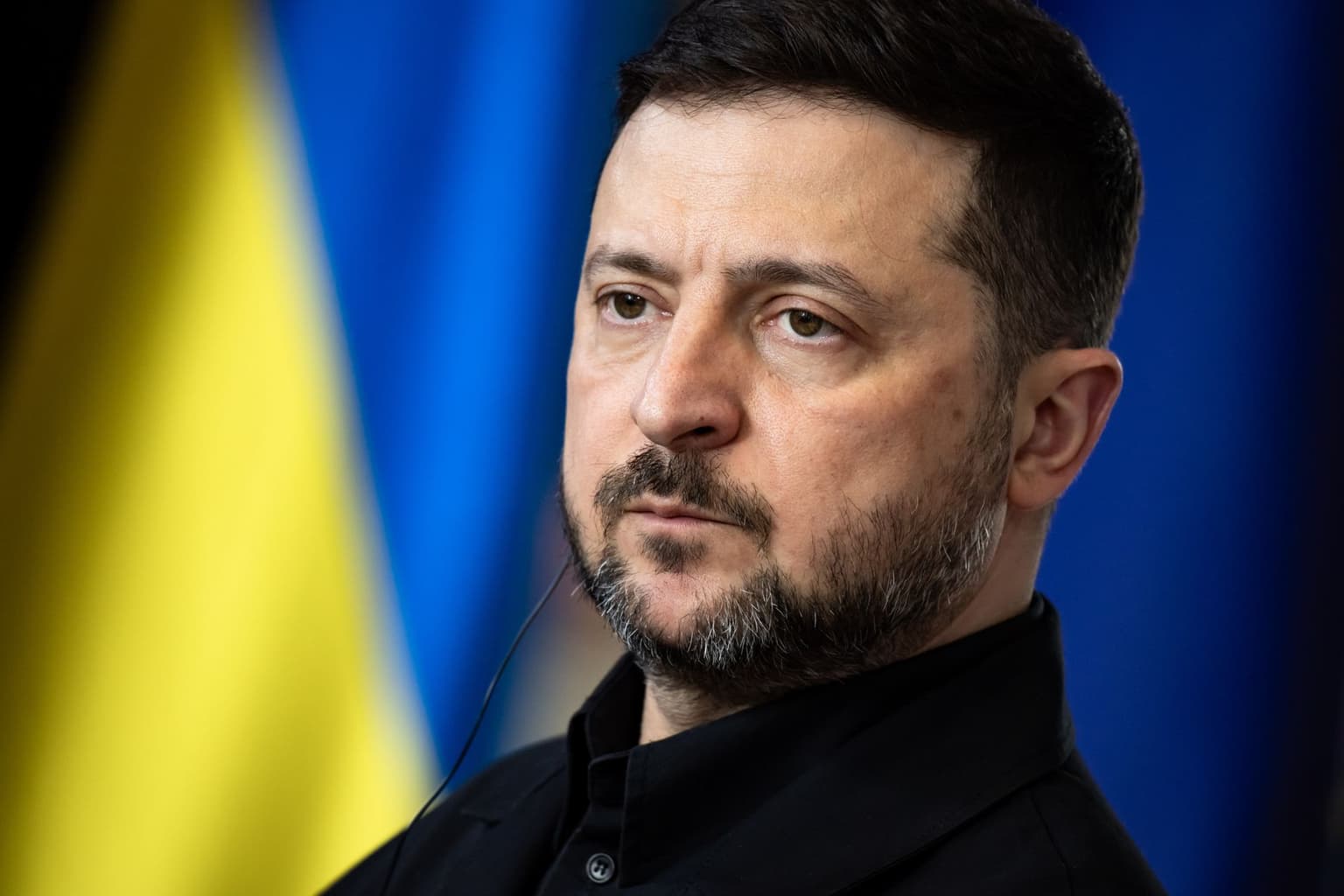
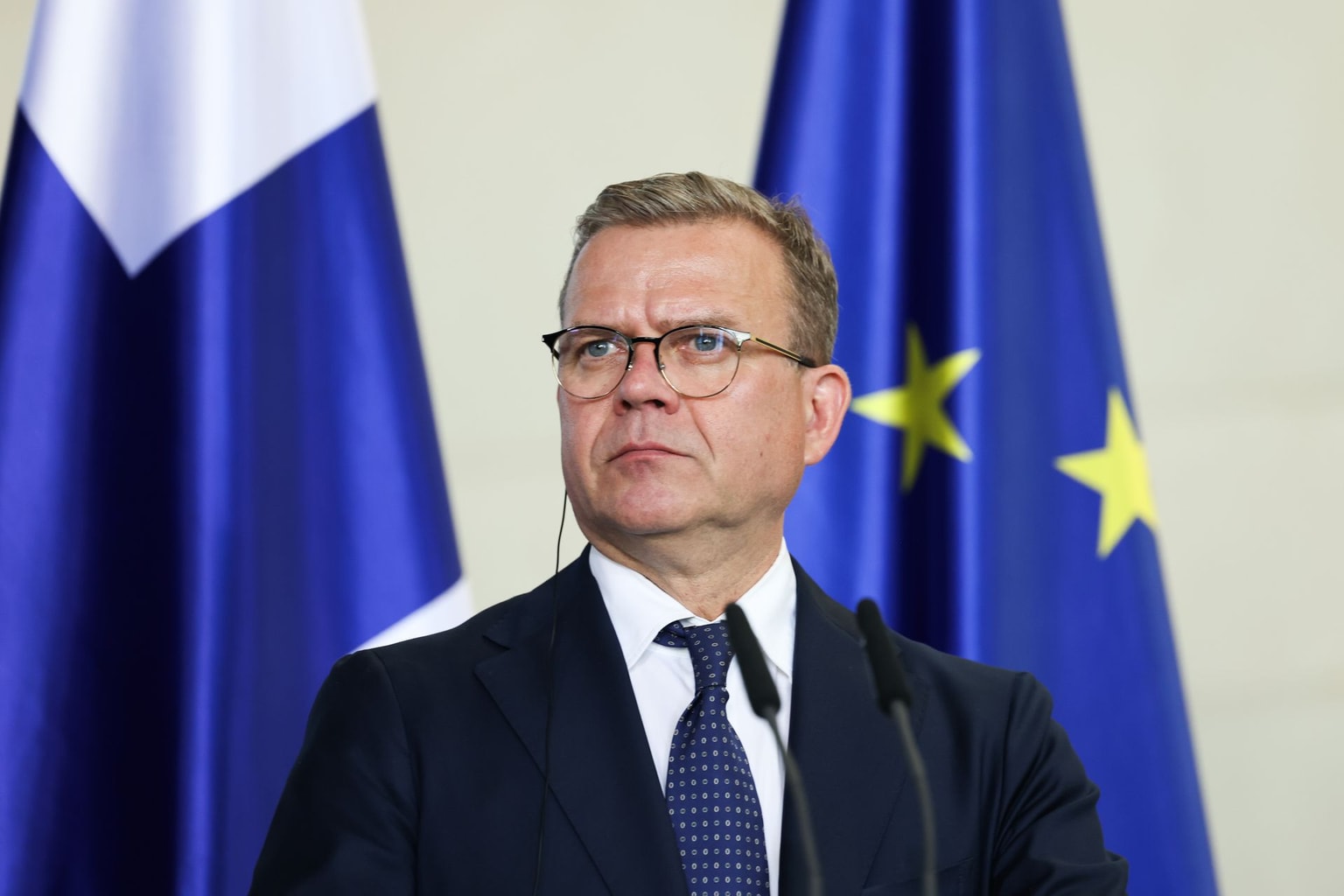
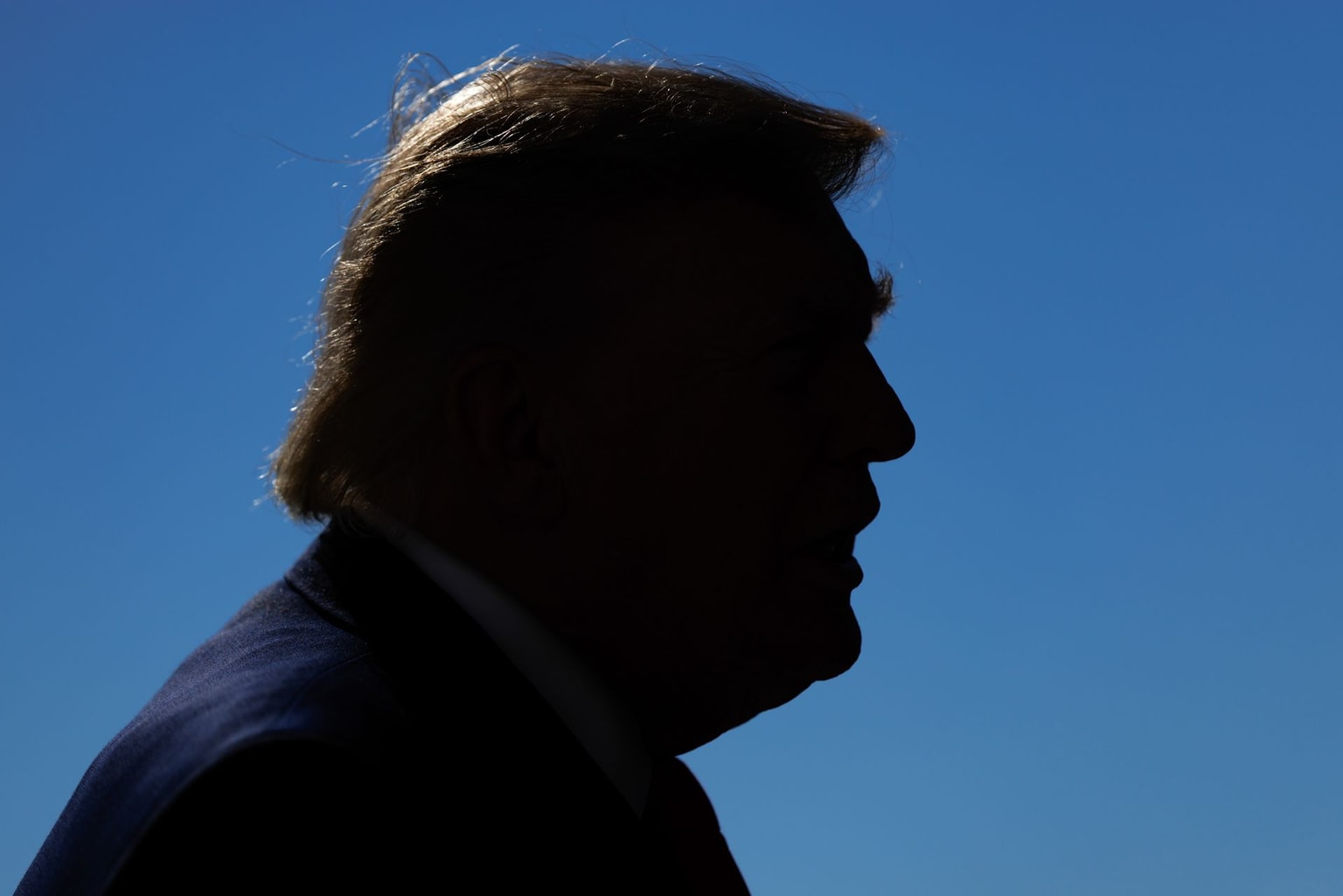
President Volodymyr Zelensky in Berlin, Germany, on April 14, 2026. (Emmanuele Contini / NurPhoto / Getty Images)
 on Google
Editor's note: Ukraine’s Supreme Court on July 10 rejected ex-President Petro Poroshenko’s lawsuit seeking to overturn his successor Volodymyr Zelensky’s sanctions against him. Read about this here.
When President Volodymyr Zelensky slapped sanctions on ex-lawmaker Boryslav Bereza on July 7, many were left wondering what, if anything, linked him to Russia or posed a threat to Ukraine's national security.
Bereza has never publicly expressed any sympathies for Russia and has been a pro-Western politician and blogger throughout his entire career.
Sanctions, which were introduced by Ukraine when Russia started its war in 2014, were initially intended as a tool for fighting Moscow and its proxies.
They were deemed necessary because Russian officials and pro-Russian individuals who had fled Ukraine were beyond the reach of Ukrainian law. Experts agree that sanctions against Russian nationals and Kremlin allies still remain an important method of thwarting Russia's aggression.
But in addition to the anti-Kremlin sanctions, Zelensky has increasingly used sanctions against Ukrainian citizens, a legally dubious practice that experts say may serve as a tool to punish critics and opponents.
Many of them are not pro-Russian, and their only fault appears to be in their opposition to the Zelensky administration.
"There was a fairly strong rationale for (the anti-Russian sanctions)," Yaroslav Yurchyshyn, a lawmaker from the liberal Holos party, told the Kyiv Independent.
read also
"Despite criticism from some Ukrainian and international experts, the vast majority of those sanctions proved effective. However, Zelensky and his team later began interpreting this mechanism much more broadly. The fact that official public messaging no longer clearly links sanctions to activities directed against the state or posing a threat to Ukraine's national security gives reason to believe that the mechanism is becoming increasingly politicized."
Ukrainian political analyst Volodymyr Fesenko said that Zelensky's sanctions have "become associated with internal political infighting."
"The problem is that sanctions are increasingly being used for domestic political purposes, without sufficient legal justification," he told the Kyiv Independent.
Legal experts argue that the procedure itself is illegal.
"First, if an offense or a crime has been committed, there must be evidence to prove it," Mykhailo Zhernakov, head of judicial watchdog Dejure, told the Kyiv Independent. "Sanctions and similar measures operate under a different framework. In that framework, there is no evaluation of evidence by a court; a political decision is simply made and enforced."
He argued that it is "incompatible with the rule of law" and sanctions should be used exclusively as a "tool against foreign nationals who are beyond the reach of the domestic justice system."
The President's Office did not respond to requests for comment.
Why did sanctions emerge?
The instrument of sanctions appeared in 2014, when Russia began its war by annexing Ukraine's Crimea and invaded the eastern Donetsk and Luhansk oblasts. Then President Petro Poroshenko used sanctions primarily to target Russia and its proxies.
"Under Poroshenko, legal constraints were still taken into account," Fesenko told the Kyiv Independent.
He added that Zelensky "has a somewhat different attitude toward the legal limits on his authority" and is "more radical, more abrupt and more inclined to make quick decisions."
Zelensky can also afford to use sanctions more actively because of the unprecedented concentration of power in his hands.
"Poroshenko's government was far less politically homogeneous than the current administration," Yurchyshyn said. "The risk of abuse rises in proportion to the concentration and monopolization of power. Today, virtually the entire governing team consists of people personally loyal to the president. That reduces the number of people capable of saying, 'No, we should not do this."
Fesenko also argued that in many cases, Zelensky had opted for sanctions rather than the judicial process because it is slow.
"He does not want to get bogged down in court battles that can last for years," he said. "That's why he would rather use sanctions than fight someone through the courts."
The magic wand
A watershed moment came in 2021, a year before the start of the all-out war, when Zelensky began using sanctions against Ukrainian pro-Russian politicians who had not been penalized by the country's justice system.
He targeted pro-Kremlin lawmaker Viktor Medvedchuk and the TV channels linked to him as "they were actively attacking Zelensky," Fesenko said.
He added that these sanctions could have been proposed by Oleksiy Danilov, who was the secretary of the National Security and Defense Council at the time.
When asked for comment, Danilov told the Kyiv Independent that he initiated not only the sanctions against Medvedchuk but also other ones as well. He did not elaborate.

"And it worked," Fesenko said. "The sanctions imposed on Medvedchuk in 2021 proved highly effective. I think this was something of a revelation for Zelensky. For the first time, he saw that there was a powerful instrument available that did not depend on courts… and a tool capable of delivering very rapid and very significant results. I think that was a turning point."
The sanctions were largely backed by Ukrainian society because Medvedchuk's pro-Kremlin credentials were never in doubt.
Medvedchuk, who has enjoyed close relations with Russian President Vladimir Putin, was charged with high treason in 2021 and handed over to Russia as part of a prisoner exchange in 2022 following the start of the all-out war.
Wartime powers
In 2022, when Russia launched its full-scale invasion and Zelensky received unprecedented wartime powers, the sanctions mechanism came in handy once more.
"Power has undoubtedly become more concentrated in the hands of the president, who is also the commander-in-chief," Fesenko said. "In a war like this — an existential war — there is a broad understanding that decisions must be made quickly."
Together with another tool — the stripping of citizenship — the president acquired virtually unlimited power to influence the lives of anyone he saw fit.
Hennady Korban, a former business partner and political ally of oligarch Ihor Kolomoisky, was stripped of his Ukrainian citizenship in 2022. He tried to enter Ukraine, but border guards refused to let him enter and confiscated his passport.
No official grounds for terminating his Ukrainian citizenship were provided, but observers suspected that it was due to his Israeli citizenship.
Ukrainian law doesn't explicitly allow double citizenship. Legal experts disagree on whether this justifies stripping a person of Ukrainian citizenship, given that the Constitution contains a provision prohibiting it.
"Ultimately, only the Constitutional Court of Ukraine can give a definitive answer as to whether this is lawful or not," Fesenko said.
Ukrainian media outlet Dzerkalo Tyzhnyia attributed the sanctions, among other things, to a meeting between Korban and Victoria Spartz, a U.S. congresswoman who criticized Zelensky and his former Chief of Staff Andriy Yermak.
Unlike Medvedchuk, Korban was not pro-Russian: he helped to organize volunteer battalions in Dnipropetrovsk Oblast in 2014 and became the head of the region's territorial defense in February 2022.
read also
Sanctions against main rival
In February 2025, Zelensky went further and imposed sanctions on his main political opponent, former President Poroshenko.
Fesenko and Yurchyshyn said that the idea to sanction Poroshenko could have been suggested by Yermak.
"I suspect that (Yermak), together with (Zelensky's Deputy Chief of Staff) Oleh Tatarov, pushed for increased pressure on Poroshenko through sanctions," Yurchyshyn said. "I am convinced that Yermak was the main driving force behind the use of sanctions against political rivals."

Yermak and Tatarov did not respond to requests for comment.
Poroshenko was charged with treason in 2021. He was accused of aiding Russian proxies in the occupied areas in Ukraine's Donetsk and Luhansk oblasts by organizing coal supplies to Ukrainian companies.
Since then, however, the criminal case has seen little progress.
"In Poroshenko's case, I believe a key factor (for introducing the sanctions) was the inability of a politically controlled law enforcement system to achieve the desired outcome through ordinary legal mechanisms," Yurchyshyn said. "The decision to sanction Poroshenko effectively opened a Pandora's box and created a temptation to use sanctions as a faster alternative to ordinary legal procedures."

Despite the charges against Poroshenko, it would be difficult to present him as even slightly pro-Russian, as he has consistently opposed Moscow since being elected president in 2014.
Punishing all the others
Along with Poroshenko, Zelensky sanctioned oligarch Kolomoisky and his business partner Hennadyi Boholyubov in February 2025. Before that, Zelensky had also stripped Kolomoisky of his Ukrainian citizenship in 2022.
Kolomoisky has admitted to being a citizen of Israel and Cyprus.
Zelensky used to work for Kolomoisky during his time as a producer and comedian; however, their relationship deteriorated soon after Zelensky became president.

In 2023, Kolomoisky and his alleged accomplices were charged with embezzling $250 million from Privatbank, the country's largest bank, which was nationalized in 2016 following mismanagement by the oligarch.
Similar to Poroshenko, Kolomoisky cannot be considered pro-Russian, and he played a crucial role in the creation of Ukrainian volunteer units fighting Russia when he was governor of Dnipropetrovsk Oblast from 2014 to 2015.
In May 2026, Zelensky also sanctioned Andriy Bohdan, who served as his chief of staff from 2019 to 2020. Since his dismissal, Bohdan has regularly criticized Zelensky.
Bohdan himself and many other observers attributed the sanctions to alleged suspicions at the President's Office that Bohdan was behind the publication of leaked tapes as part of a major corruption scandal engulfing the country in April and May. Bohdan denied the allegations that he organized the leak.
The sanctions against ex-lawmaker Bereza, imposed on July 7, are also controversial.
Bereza participated in the 2014 EuroMaidan Revolution, which ousted pro-Kremlin President Viktor Yanukovych, and was the spokesman for the Right Sector nationalist group at the time.
He was a member of parliament from 2014 to 2019 and represented a nationalist group called Ukrop. Since Zelensky came to power in 2019, Bereza has consistently criticized him and often backed Poroshenko.
He said on Facebook on July 7 that "these sanctions were imposed to silence me and prevent people in Ukraine from seeing my posts and videos."
"Well, I guess I got under (Zelensky's) skin," Bereza argued. "Honestly, having sanctions imposed on you by both Putin and Zelensky at the same time is like hitting the jackpot. I wonder how they're going to explain that one. If it's because I exposed corruption and criticized the government, that would be pretty telling."
A number of dubious Ukrainian figures have also been targeted by Zelensky's sanctions in recent years, among them the president's controversial former adviser Oleksiy Arestovich, controversial businessman Hennady Balashov, and provocateur Myroslav Oleshko, who has long criticized the president and Ukraine's handling of the war.
"We may yet see a situation where most sanctions imposed on Ukrainian citizens — including those against Bohdan and Poroshenko — are eventually overturned," Fesenko said.
"And if that happens — whether during Volodymyr Zelensky's presidency or years after it ends — it could create problems for Zelensky himself. Because if Ukrainian courts, such as the Supreme Court, or the European Court of Human Rights, rule that these sanctions were unlawful, that could open the door to lawsuits accusing him of abusing power or exceeding his authority."