0of 5,000

Help us find 5,000 new members. Bring one friend.

Share your personal link and make us stronger in 2027.

0 found so far

Goal 5,000

News Feed

Russian attacks on Sumy Oblast town injure 4

• 1 min read
Russian attacks on Sumy Oblast town injure 4
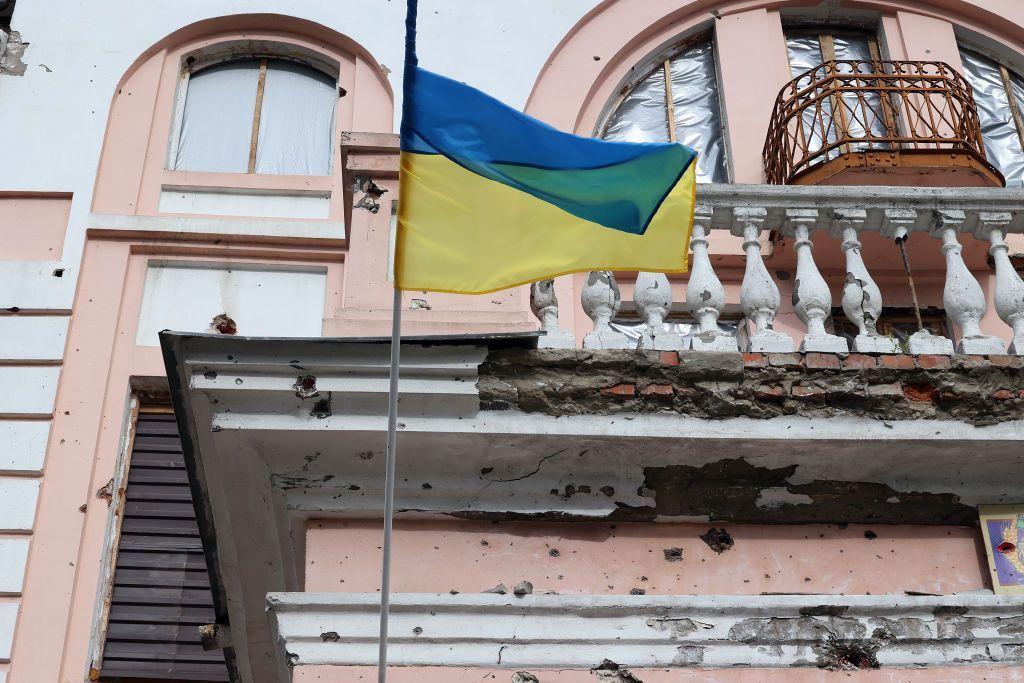
Illustrative purposes only: A Ukrainian flag flies outside a building in the city center damaged by Russian shelling, Okhtyrka, Sumy Oblast, northeastern Ukraine. (Vyacheslav Madiyevskyy/Future Publishing via Getty Images)

Russian attacks against the town of Seredyna-Buda in Sumy Oblast on the morning of March 14 injured four civilians, the regional prosecutor's office said.

At around 10 a.m., Russia carried out a mortar strike against the town, inflicting light injuries to a 44-year-old man and a 43-year-old woman, the prosecutors said.

Russian forces simultaneously attacked the town with drones, again injuring the man and two other civilians aged 43 and 64.

At least seven houses and one car were damaged as a result of the attack.

Seredyna-Buda lies at the very border with Russia's Bryansk Oblast and some 150 kilometers north of Sumy. The surrounding area and other border regions of Sumy Oblast suffer daily attacks by Russian forces.

The regional center, Sumy, came under a deadly attack on March 13, resulting in three people killed and a dozen injured.

Avatar
Martin Fornusek

Assistant Editor

Martin Fornusek is an assistant editor at the Kyiv Independent. Until recently, Martin held the role of foreign affairs reporter specializing in international and regional politics, history, and disinformation. Based in Lviv, Martin often reports on international politics, focusing on developments related to Ukraine and Russia. His career in journalism began in 2021 after graduating from Masaryk University in Brno, Czechia, earning a Master's degree in Conflict and Democracy Studies. Martin has been invited to speak on Times Radio, France 24, Czech Television, and Radio Free Europe. He speaks English, Czech, and Ukrainian.

Read more
News Feed

The alleged criminal network allegedly protected scam call centers, trafficked drugs, produced counterfeit currency, and used violence to intimidate critics. Recordings released by investigators suggest that members of the group maintained contact with Russia's Federal Security Service (FSB).

Show More