Russia working to stop Ukraine's EU accession, report finds
 on Google
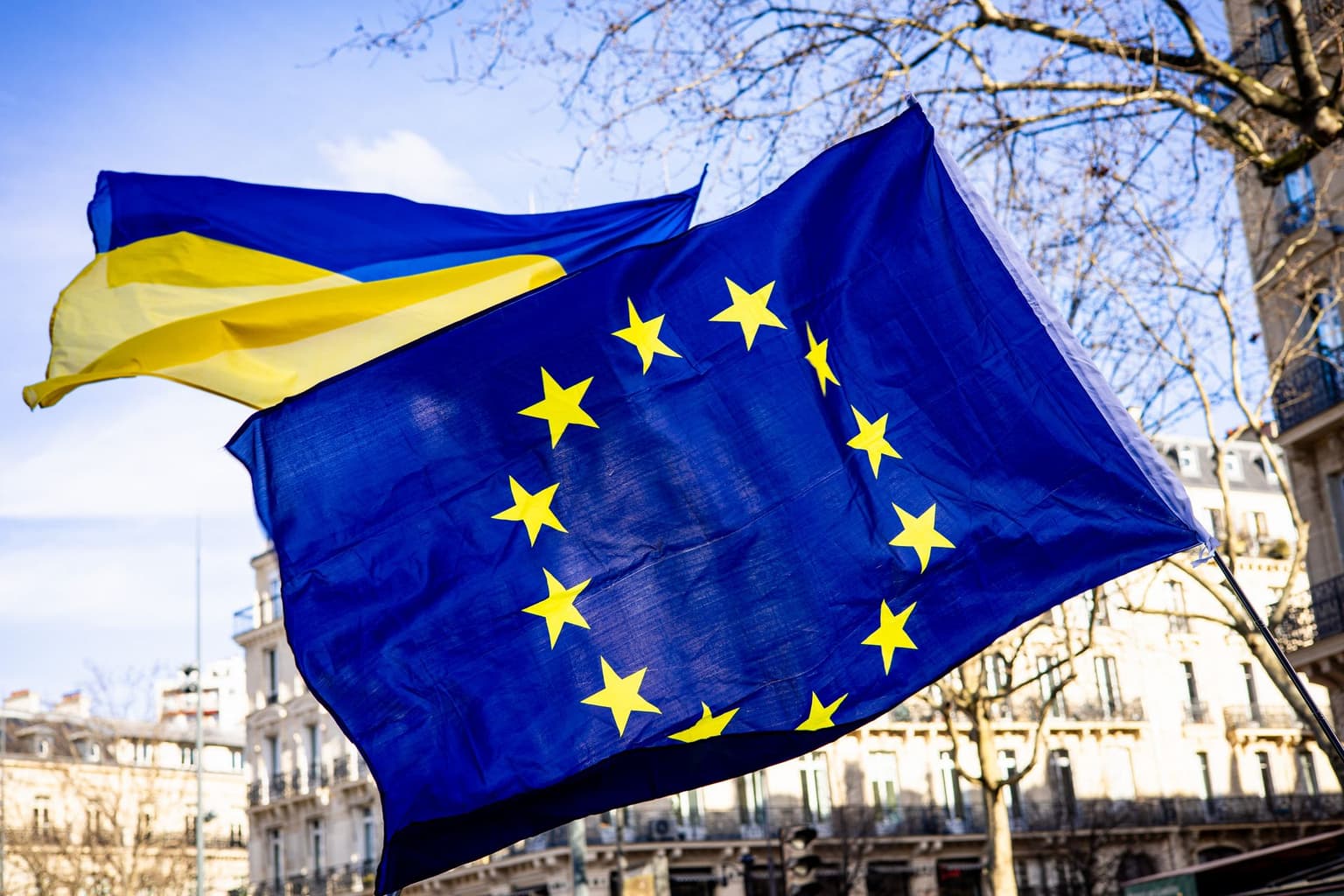
BRUSSELS, Belgium — Online foreign influence operations are targeting Ukraine and EU countries in a bid to erode support for Kyiv's accession to the bloc, according to a new report published by Ukraine and the EU on June 23.
The report arrives as EU countries are being called on to unlock the next steps in Ukraine's membership process: the opening of five of six lists of reforms. The bloc already agreed to open the first one on June 15.
"A democratic, sovereign, and successful Ukraine within the European family, on Russia's border, represents a strategic failure of the Kremlin's imperial ambitions in Europe," writes the EU's top diplomat Kaja Kallas in the foreword to the report, co-produced by the European External Action Service, which she leads, and Ukraine's Center for Countering Disinformation, part of Kyiv's National Security and Defense Council.
Russia "seek(s) to exploit fears related to corruption, security, identity, and economic costs," Kallas said.
The report examines foreign information manipulation and interference efforts (FIMI) connected to Russia. Of the 500 incidents investigated by the EU's diplomatic arm between January 2025 and May 2026, 80 were linked to the topic of Ukraine's accession to the EU, according to the report.
Those investigations have recorded "steady patterns of behavioral and narrative alignment" between Russian state channels and other assets that appear to be separate from the government, but which "launder, repurpose, and amplify" Kremlin talking points.
The report notes that Russia's FIMI operations also distinguish between different national audiences.
Ukrainians are told the EU is prolonging the war to weaken Russia, that some EU countries want to partition Ukraine, that the EU wants to control the country, and that European and Ukrainian values are fundamentally incompatible.
In the EU, however, FIMI operations work on persuading Germans that Ukraine is to blame for their financial hardship while convincing French audiences that Ukraine is irredeemably corrupt.
One campaign "specifically leveraged historical narratives surrounding the killings in Volhynia and Eastern Galicia, presented as failures to respect Polish victims and their memory."
The latter constitutes an example of "event hijacking," according to the report, where real-world events are used to amplify destructive narratives.
President Volodymyr Zelensky and his Polish counterpart Karol Nawrocki have publicly feuded over Kyiv's decision to rename a serving unit after the Ukrainian Insurgents' Army (UPA), which resisted the Soviet Union during World War II but also carried out ethnically-motivated massacres against Poles.
The report calls on the EU and Ukraine to work together to address the threat of Russian influence operations head-on.
"Our joint response must be equally robust and systematic: strategic communication, explaining the European integration process, identifying FIMI operations, active cooperation with digital platforms, and sanctions against key actors," writes Kyrylo Budanov, head of Ukraine's presidential office, in the report.