Fact check: Russian disinformation takes aim at Poland-Ukraine rift
 on Google
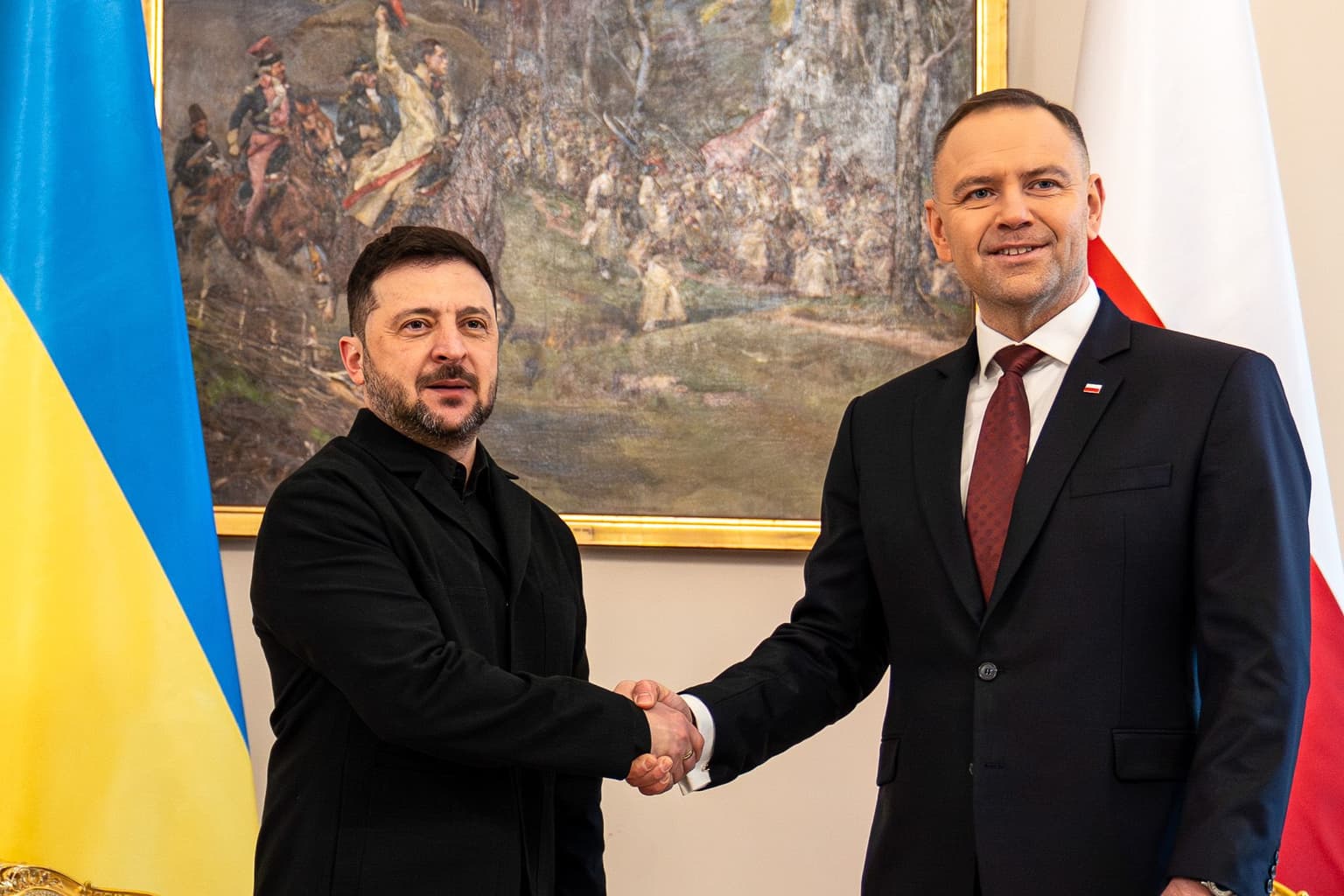
A Russian-linked disinformation operation seeks to fan Polish-Ukrainian tensions amid the latest rift over historical grievances, a monitoring group told the Kyiv Independent on June 23.
The Matryoshka bot network ran on June 22 fake social media posts exploiting the Kyiv-Warsaw dispute over a military unit being granted a title honoring the World War II-era Ukrainian Insurgent Army (UPA).
Ukraine's step sparked the most serious crisis between the two neighbors in years, as Polish President Karol Nawrocki stripped President Volodymyr Zelensky of Poland's highest state honor.
In posts detected by the Antibot4Navalny monitoring group, Matryoshka bots present the rift as a result of rampant "Nazism" among the Ukrainian elites and public, leaning into tested Russian propaganda talking points.
One fake post claims that Piotr Cywinski, a Polish historian and director of Auschwitz-Birkenau State Museum, called for barring Zelensky from attending Holocaust commemoration events.


Other claims extend the accusations of "Nazism" to Ukraine's partners as well.
One social media video falsely claims that Estonian officials have begun returning their Polish state awards in solidarity with Ukraine, and that an Estonian member of the European Parliament invited Zelensky to a "gathering of SS veterans."
Some of the claims go beyond the topic of historical grievances.
One post falsely alleges that Polish "mercenaries" — Russia's label for foreign fighters in Ukraine — are being killed by their Ukrainian brothers-in-arms, who view the Polish nation as "slaves."

The clips falsely use logos of established media outlets and organizations such as Euronews, Der Spiegel, or the Institute for the Study of War (ISW), alongside unrelated stock footage and overlaid text — a technique commonly employed by Matryoshka.
While the posts averaged around 30,000 views on X, Antibot4Navalny has said that Matryoshka often inflates views on the network, making it difficult to establish real reach.
This is not the first instance of Russian disinformation seeking to stoke tensions between Ukraine and other countries.
A similar campaign was launched during the Ukraine-Israel dispute over shipments of Russian-stolen grain, and in a run-up to Hungary's parliamentary elections.
The latest campaign comes amid warnings from officials and public figures in both Poland and Ukraine that Russia will seek to use the latest dispute to drive a wedge between the two nations.
Warsaw and Kyiv have been close partners since Russia launched its full-scale invasion of Ukraine in 2022.
Poland has opened its doors to around 2 million Ukrainian refugees since March 2022, and provides a key logistical route for Western arms flowing to Ukrainian front-line soldiers.
However, both nations share a complicated and painful history, which has intermittently complicated bilateral ties.
The latest dispute centers around the historical role of the UPA, remembered in Ukraine primarily for its resistance against Soviet occupation, while Poland chiefly remembers its role in the 1943-1945 Volyn massacres in what is today western Ukraine, then under Nazi occupation.